Artwork
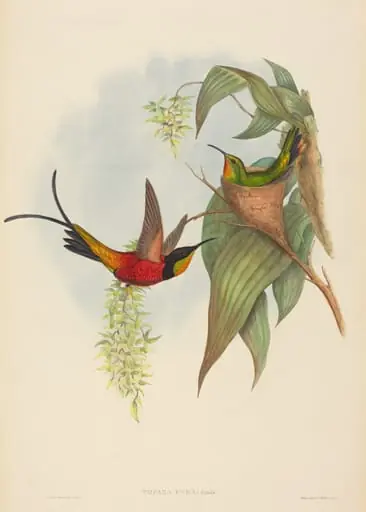
Helianthea eos (Golden Star-frontlet)
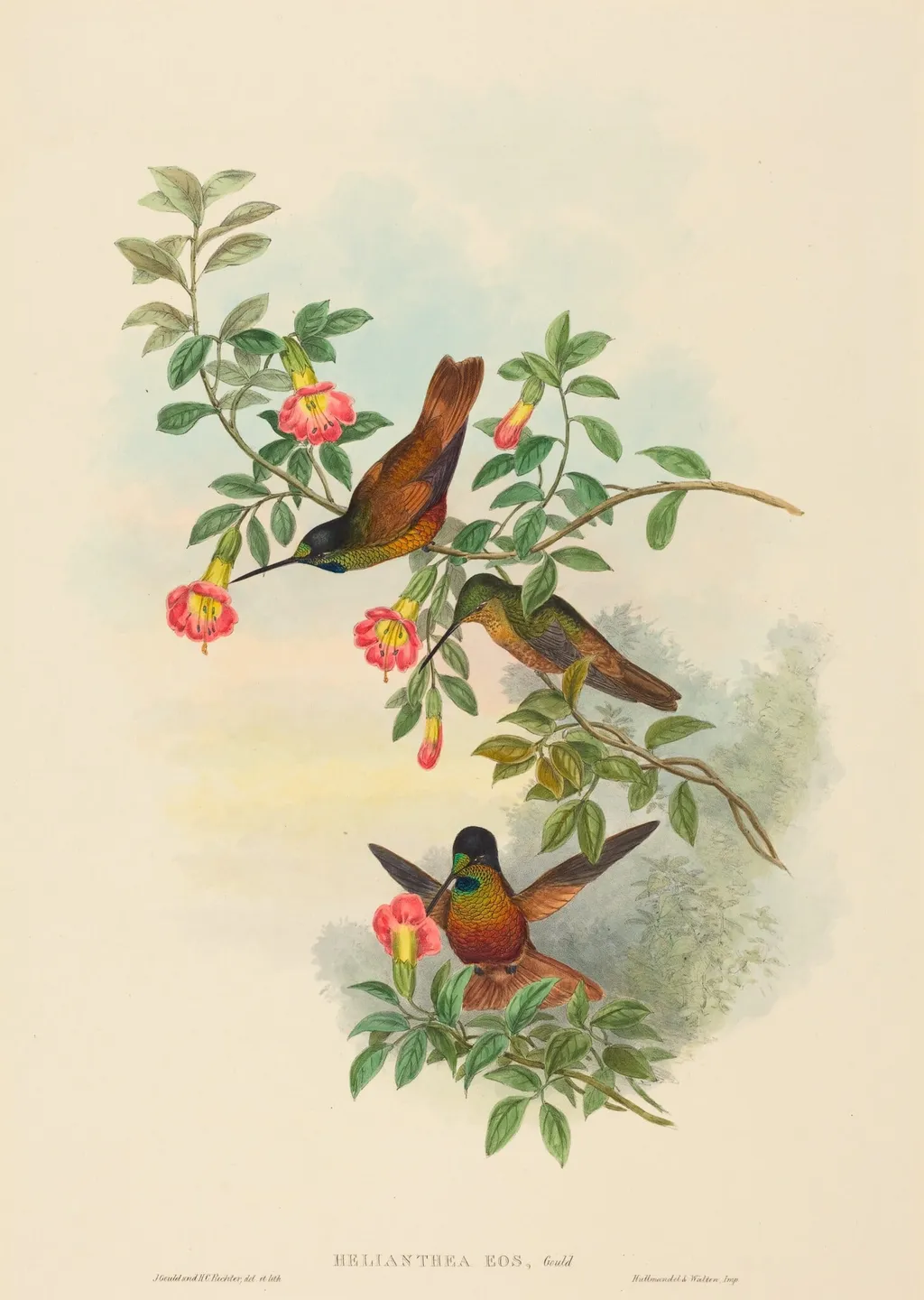
Helianthea eos (Golden Star-frontlet) is an ink print by the Romanticist artist H.C. Richter. It dates from 1842 and is held in the collection of the National Gallery of Art.
About this work
Overview
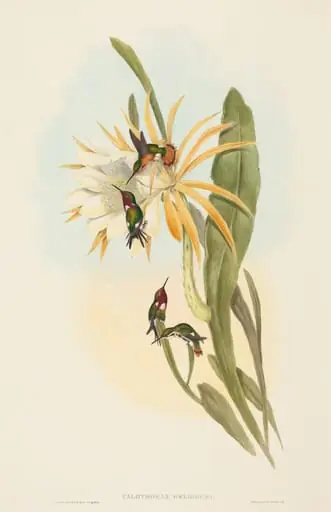
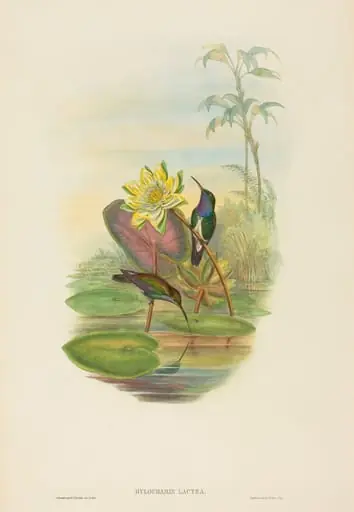
Helianthea eos (Golden Star-frontlet) is a hand-colored lithograph created by H.C. Richter in 1842, depicting a naturalistic scene of hummingbirds and flowers.
Subject & Meaning
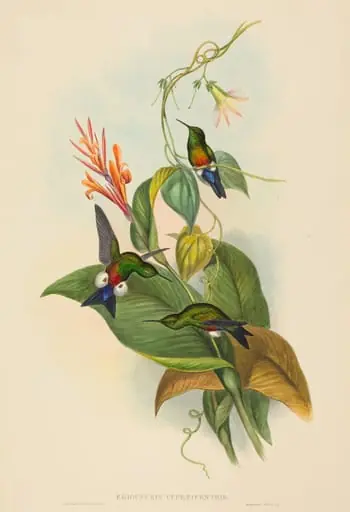
The print showcases three hummingbirds with iridescent red, green, and gold feathers, and long curved beaks, hovering around delicate pink flowers with yellow centers and pale green leaves on a green branch. The composition emphasizes the dynamic interaction between the birds and flowers, capturing the birds in mid-air as if almost touching the petals.
Technique & Style
The artwork exemplifies the detailed, naturalistic style popular in 19th-century art, where artists emphasized capturing nature’s beauty. The hand-coloring enhances the lithograph’s vividness, particularly in the shimmering feathers and floral details.
History & Provenance
Created in 1842 by H.C. Richter, specific provenance details are not provided in the available information.
Context
The piece reflects the 19th-century artistic focus on natural beauty, with lithography being a key medium for such detailed, colorful works. For insight into the printmaking process, see the explanation of lithography.
Legacy
The legacy of Helianthea eos (Golden Star-frontlet) is not explicitly detailed in the provided information, though it contributes to the broader appreciation of 19th-century naturalist art and lithographic techniques.
Artist & collection