Artwork
Fasnachtshelge "Allons enfants de la patrie"
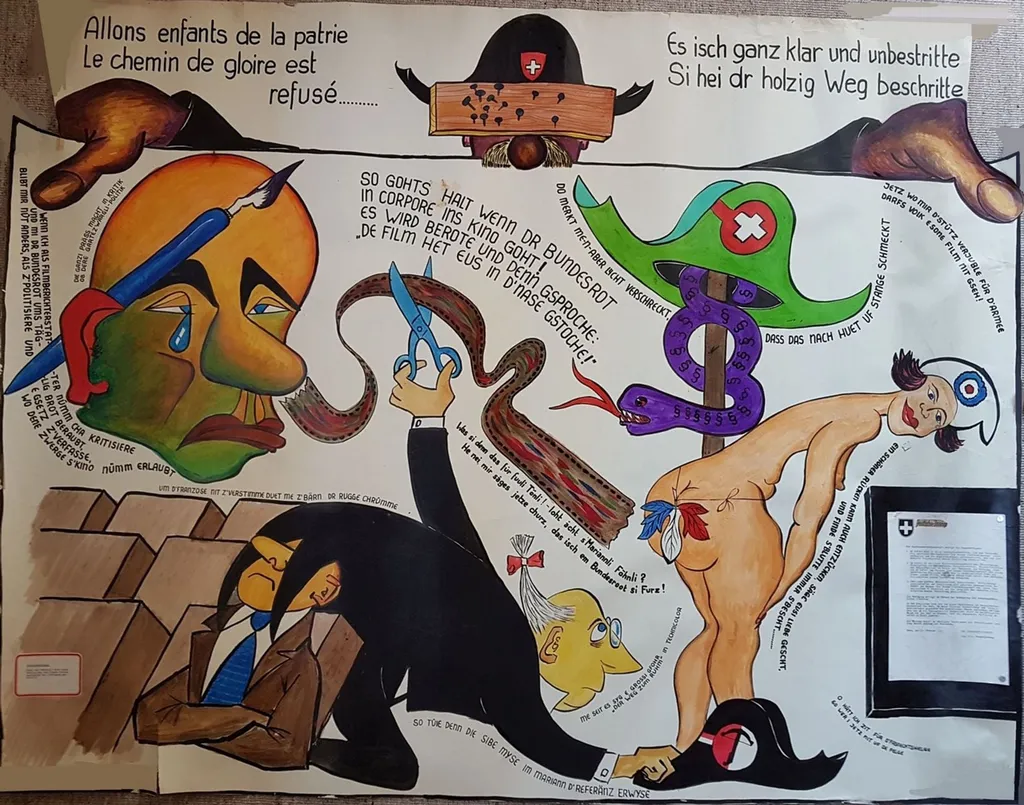
Fasnachtshelge "Allons enfants de la patrie" is an unspecified painting by Max Rickenbacher-Hufschmid. It dates from 1959 and is held in the collection of the Archaeology and Museum Baselland.
About this work
Overview
It merges visual chaos with linguistic fragmentation, combining Swiss carnival motifs with political references.
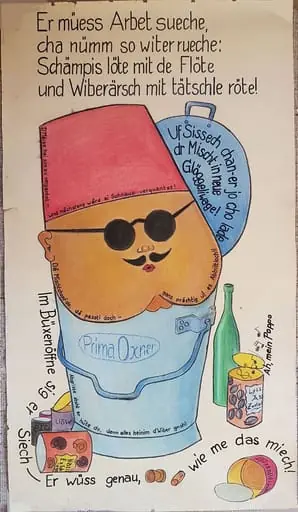
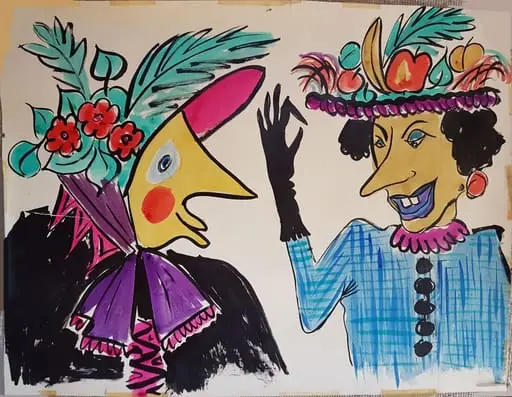
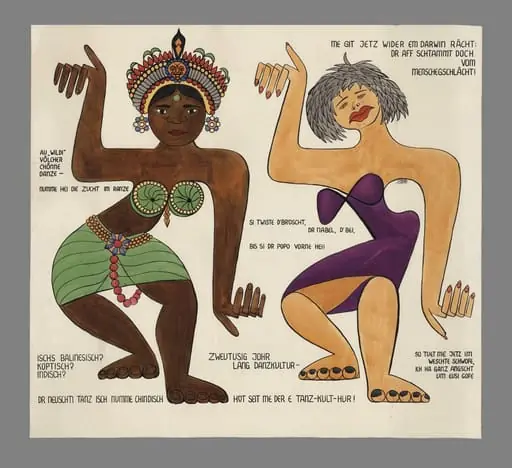
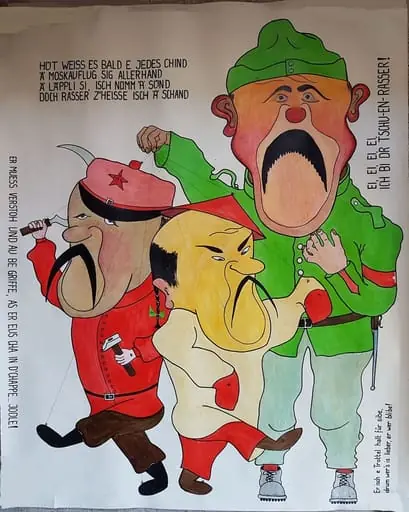
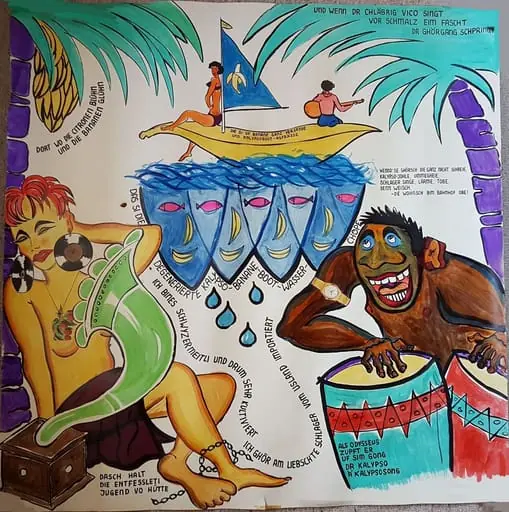
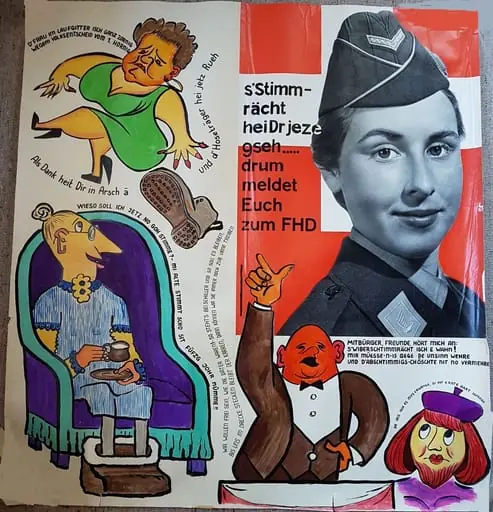
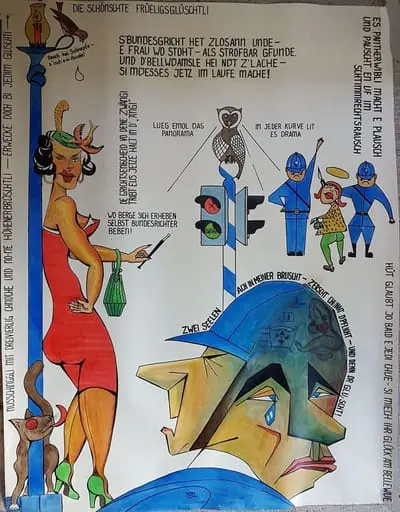
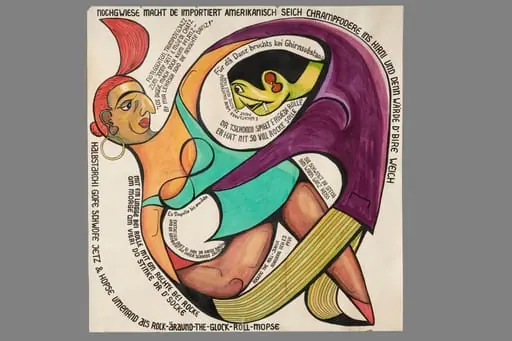
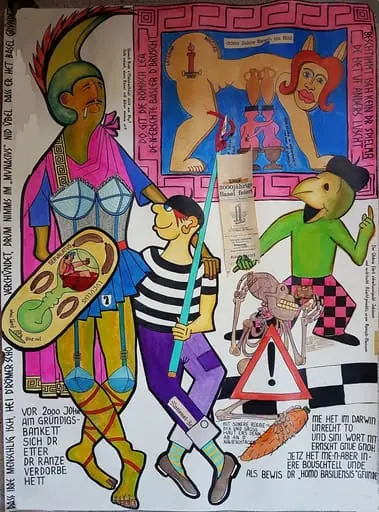
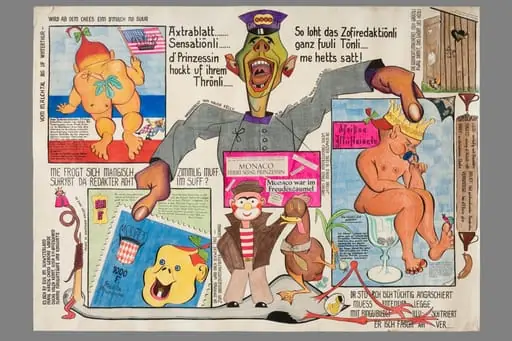
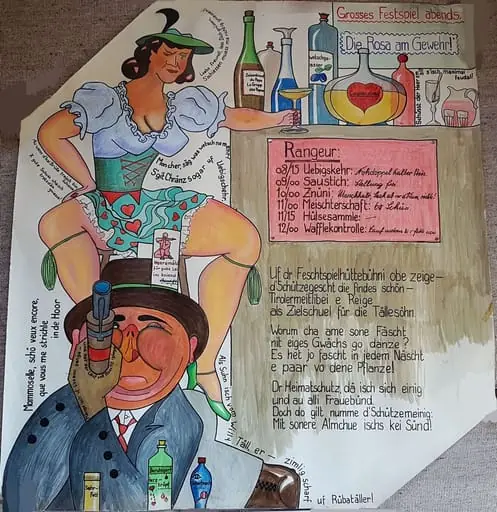
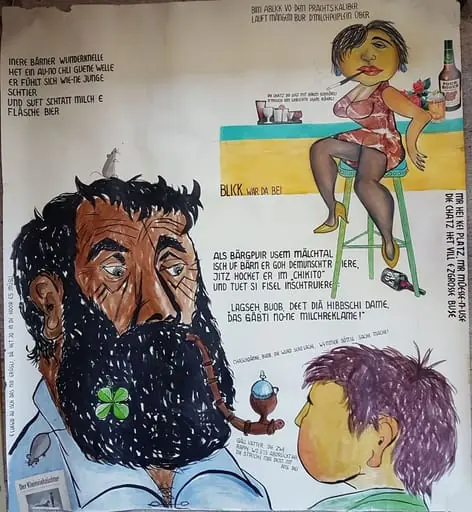
Created in 1959 by Max Rickenbacher-Hufschmid, this painted work titled Fasnachtshelge 'Allons enfants de la patrie' is part of the Museum of Ethnography’s collection. It merges visual chaos with linguistic fragmentation, combining Swiss carnival motifs with political references. The composition resists clear narrative, instead presenting a dissonant collage of figures, symbols, and multilingual text that challenges conventional artistic order.
Subject & Meaning
The painting juxtaposes folkloric and political imagery: a figure in a Swiss flag hat wielding a scythe evokes traditional harvest or death motifs, while the French revolutionary anthem’s title introduces a layer of national irony. A slumped man in a suit and a dancing woman with a chicken suggest absurdity and social dislocation. The work critiques cultural identity through surreal, almost satirical contrasts, blending local customs with imported political rhetoric.
Technique & Style
Rickenbacher-Hufschmid employs unrefined brushwork and jarring color contrasts—vivid greens, reds, and yellows—against a cluttered background. Forms are distorted and scale is deliberately inconsistent, creating visual tension. The inclusion of handwritten and printed text in French, German, and Swiss German adds layers of meaning while undermining legibility. The style leans toward expressionist caricature, prioritizing emotional disruption over realism.
History & Provenance
The work entered the Museum of Ethnography’s holdings after its creation in 1959, likely acquired as part of a broader interest in Swiss vernacular art and postwar cultural commentary. Its unusual fusion of folk motifs and political satire positioned it as an outlier in institutional collections, which typically favored more traditional ethnographic objects. Its preservation reflects a growing recognition of avant-garde Swiss artists in the mid-20th century.
Context
Made during a period of Swiss cultural self-examination after World War II, the painting responds to tensions between neutrality, nationalism, and external influences. The use of French revolutionary language alongside Swiss symbols reflects anxieties about cultural erosion and identity. The chaotic text and absurd figures mirror broader societal unease, where traditional values clashed with modern political realities and media saturation.
Legacy
Though not widely exhibited outside specialized contexts, the work remains a significant example of Swiss postwar visual satire. It influenced later artists exploring the intersection of folk tradition and political critique through collage and distortion. Its persistence in the Museum of Ethnography underscores its value as a non-traditional artifact—one that documents cultural dissonance through artistic rebellion rather than documentation.
Artist & collection
Artist
Max Rickenbacher-Hufschmid spent years drawing the same carnival clowns in Basel’s back alleys.