Artwork
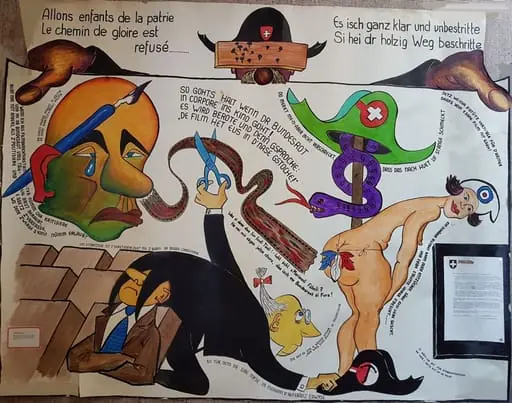
Fasnachtshelge "Fraueschtimmrächt"
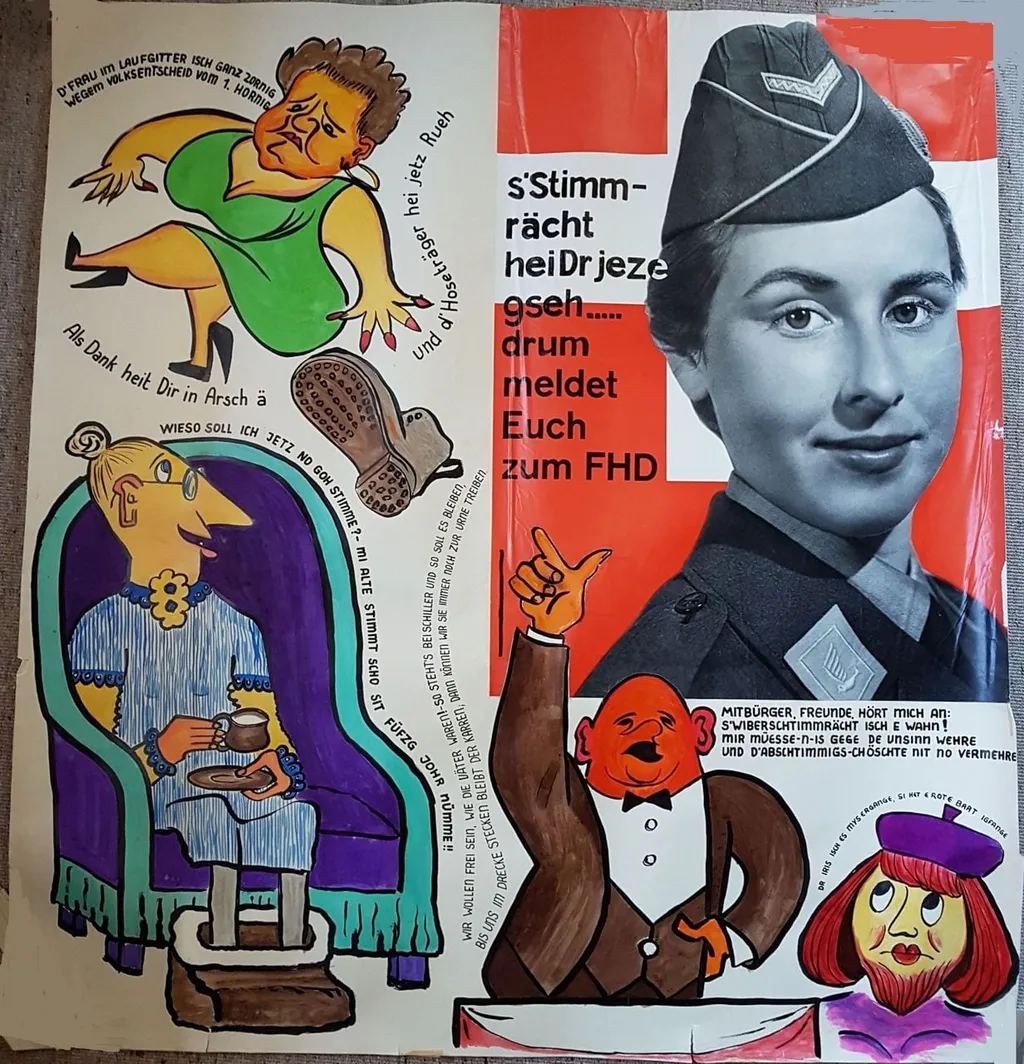
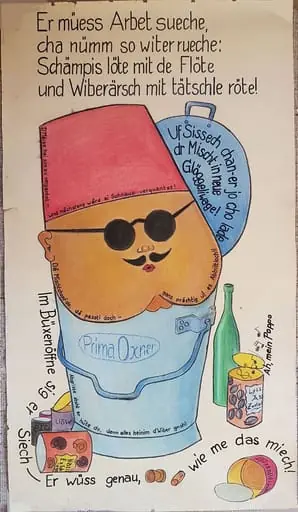
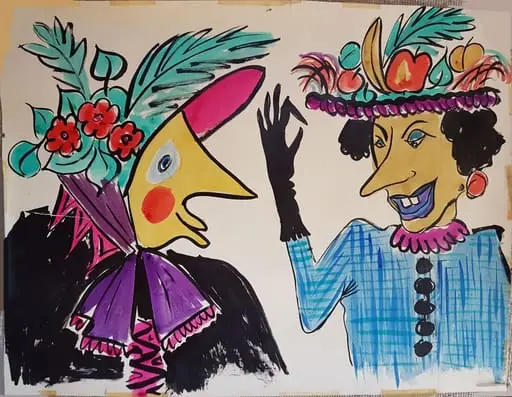
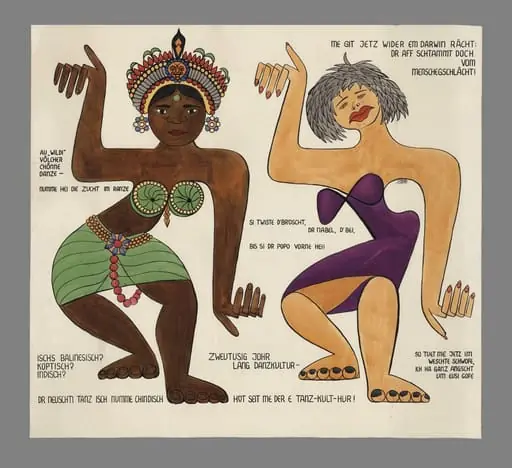
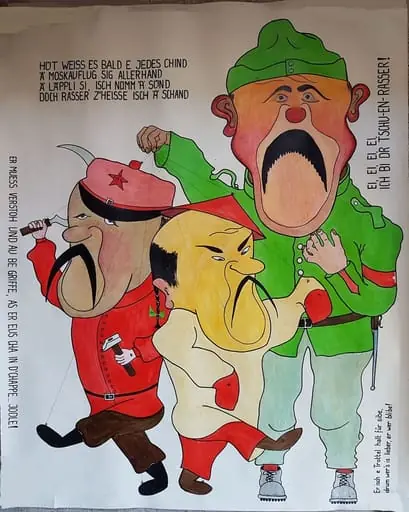
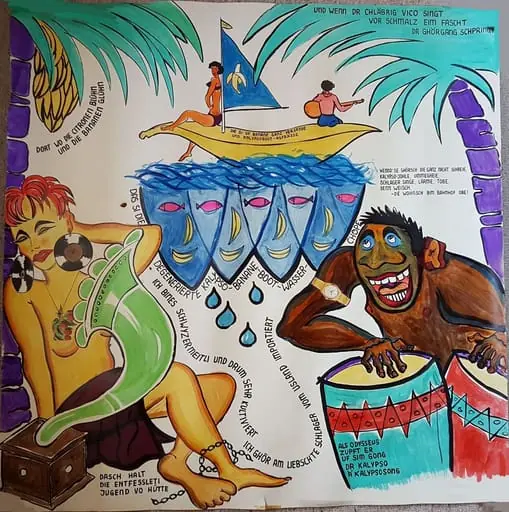
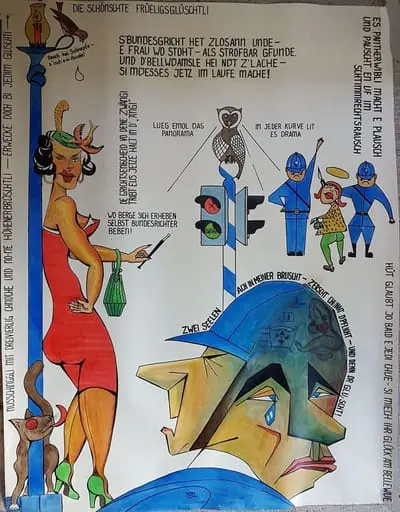
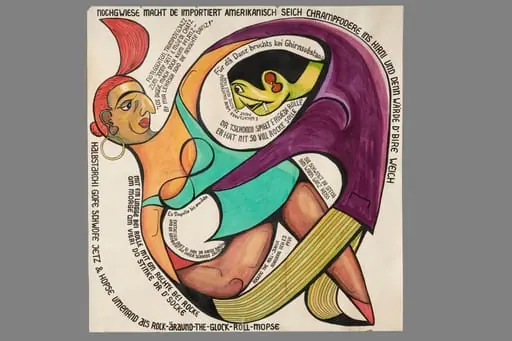
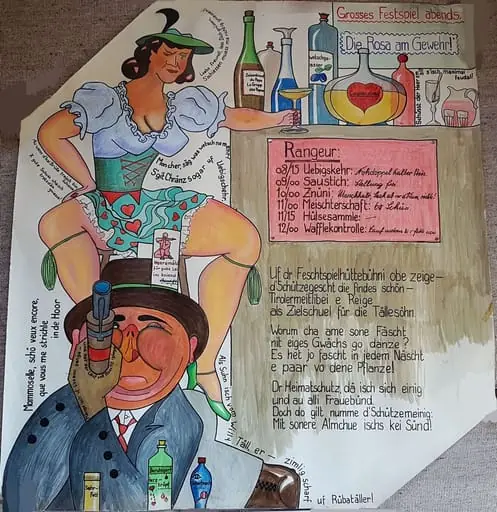
Fasnachtshelge "Fraueschtimmrächt" is an unspecified painting by Max Rickenbacher-Hufschmid. It dates from 1959 and is held in the collection of the Archaeology and Museum Baselland.
About this work
Overview
The work blends folk motifs with political commentary, characteristic of the artist’s engagement with regional festivals and social critique.
Created in 1959 by Swiss artist Max Rickenbacher-Hufschmid, this painting is part of the Fasnachtshelge series, a tradition of satirical carnival imagery from Basel. It is held in the collection of the Museum of Ethnography, where it reflects local customs through exaggerated visual storytelling. The work blends folk motifs with political commentary, characteristic of the artist’s engagement with regional festivals and social critique.
Subject & Meaning
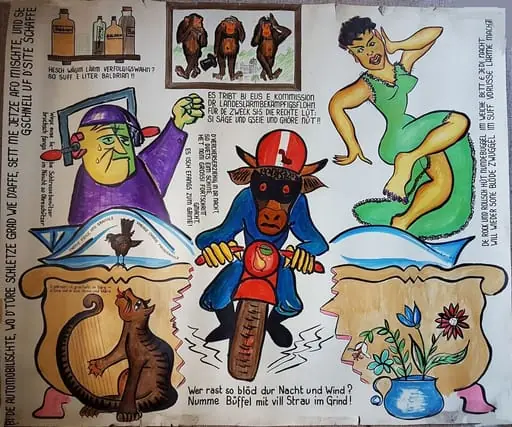
The scene depicts a chaotic carnival gathering with figures representing social roles: a woman in green holding a startled man, a bald figure with a cup, and a stern official in uniform. The uniformed man, marked by badge and hat, appears to be directing attention, possibly mocking authority. The inclusion of a tiny suited figure and a woman with an oversized hat amplifies the absurdity. German text suggests satire of civic rituals, likely targeting electoral or bureaucratic behavior during Fasnacht.
Technique & Style
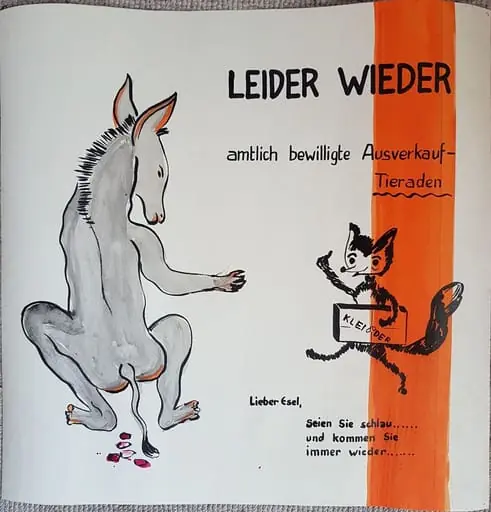
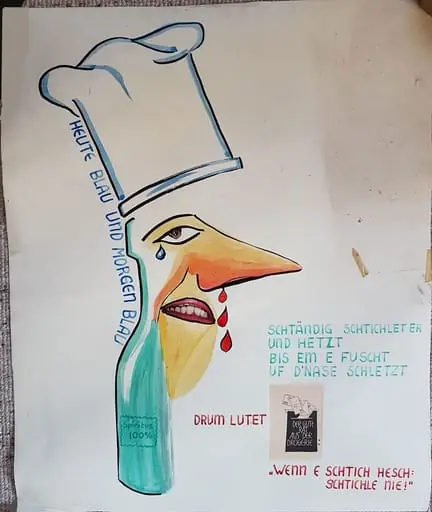
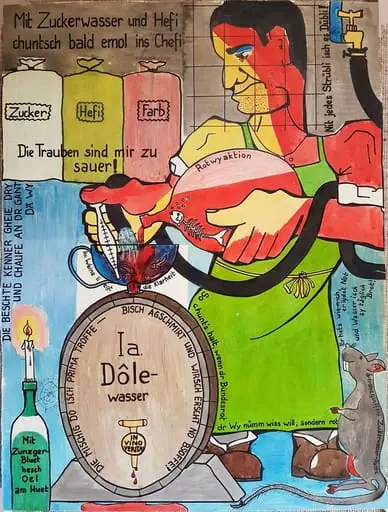
Rickenbacher-Hufschmid employs bold, unmodulated colors and flattened forms to heighten the theatricality of the scene. Figures are rendered with cartoonish exaggeration—distorted proportions, sharp outlines, and expressive faces—emphasizing caricature over realism. The composition is densely packed, with no clear perspective, creating visual overload that mirrors the sensory intensity of carnival festivities. Brushwork is direct and unrefined, reinforcing the work’s folk-art roots.
History & Provenance
The painting was produced during a period of renewed interest in Basel’s Fasnacht traditions, which had been suppressed in earlier decades. Rickenbacher-Hufschmid, a local artist and cultural observer, contributed to a revival of carnival-themed art. The work entered the Museum of Ethnography’s collection shortly after its creation, where it has remained as part of a broader archive documenting Swiss popular culture and regional identity.
Context
Fasnacht, Basel’s pre-Lenten carnival, has long served as a sanctioned space for social critique through masks, costumes, and satire. This painting aligns with a tradition in which public figures and institutions are lampooned under the cover of festivity. Rickenbacher-Hufschmid’s work reflects the tension between authority and popular expression, using carnival’s licensed chaos to question power structures in postwar Swiss society.
Legacy
The painting remains a key example of 20th-century Swiss folk-inspired satire. It continues to inform exhibitions on regional identity and carnival culture, particularly in institutions focused on ethnographic art. While not widely known outside Switzerland, it contributes to a niche but enduring artistic lineage that uses humor to interrogate civic life, preserving the spirit of Fasnacht as both celebration and critique.
Artist & collection
Artist
Max Rickenbacher-Hufschmid spent years drawing the same carnival clowns in Basel’s back alleys.