Artwork
Fasnachtshelge "Kalypso"
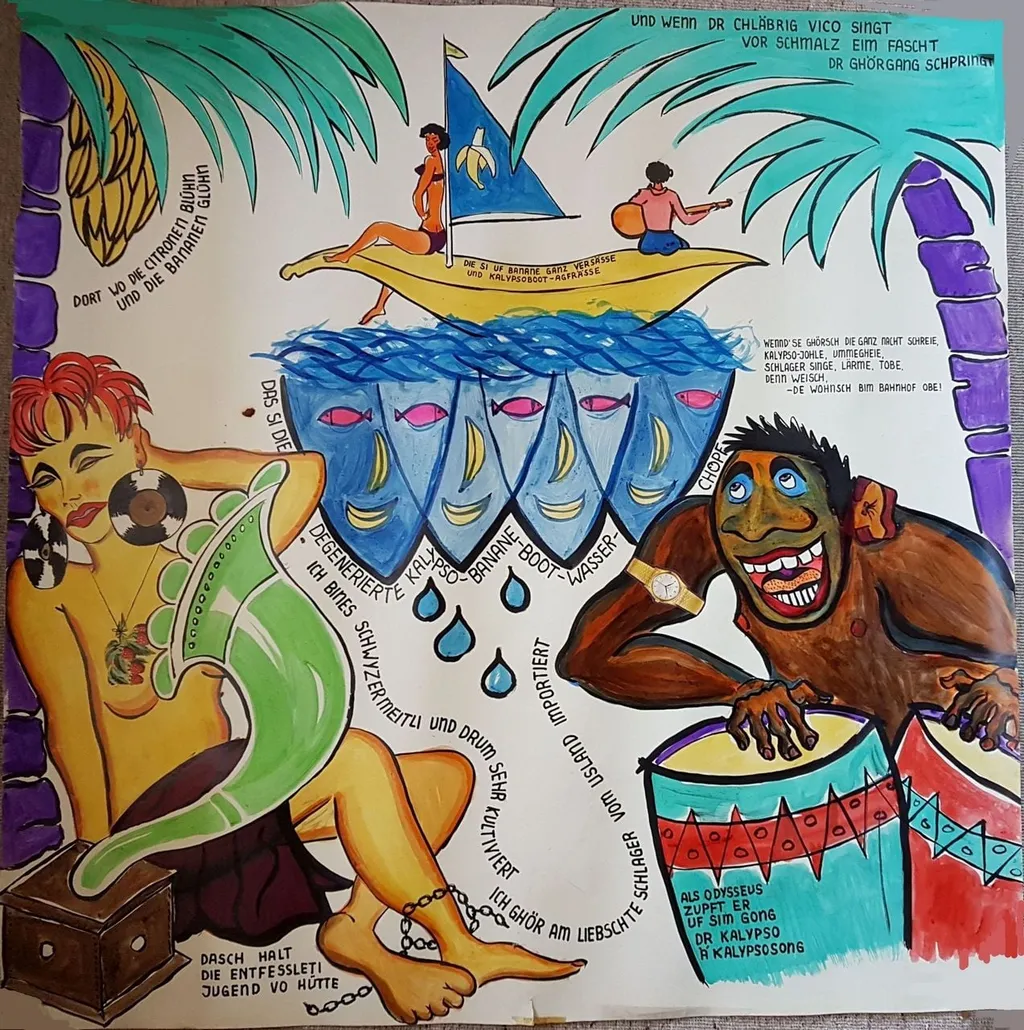
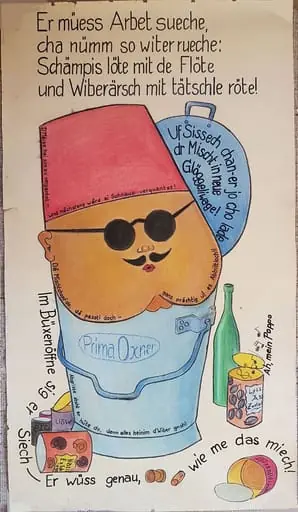
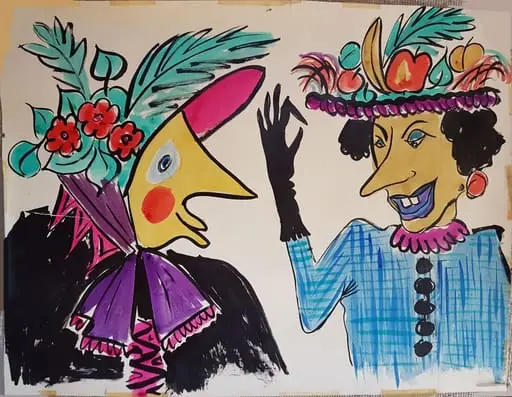
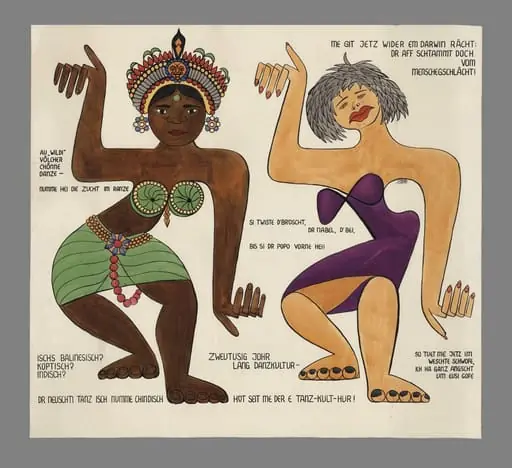
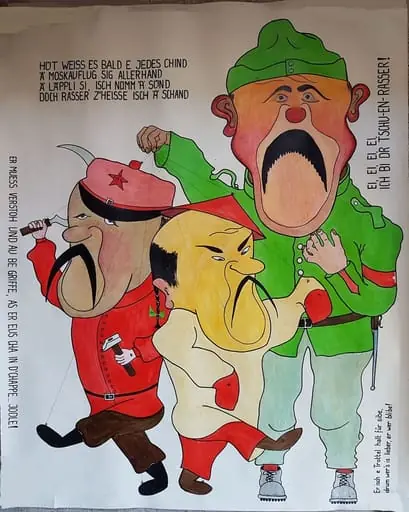
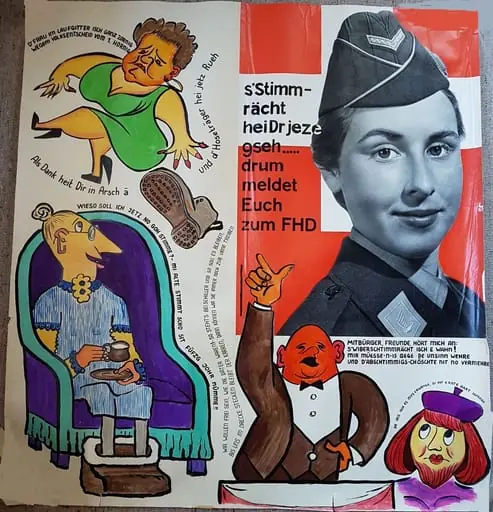
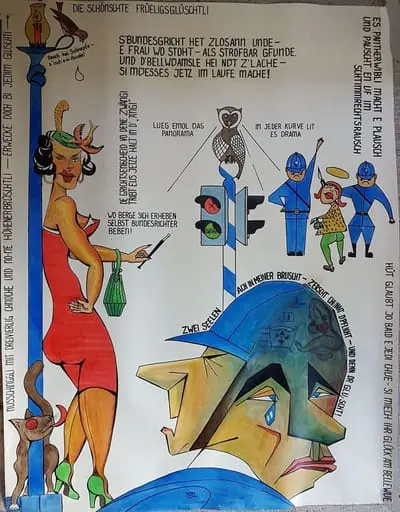
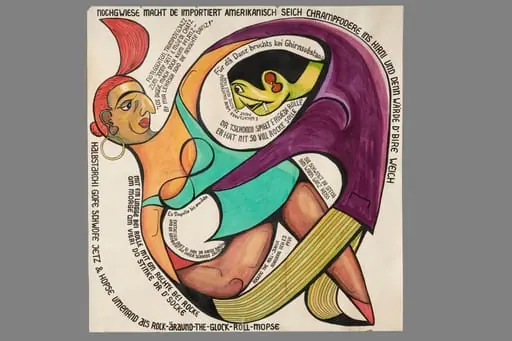
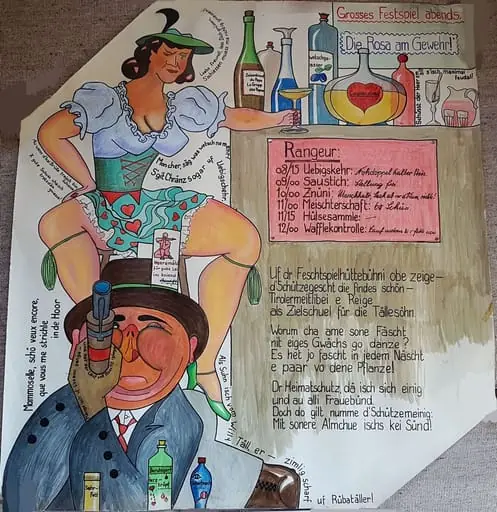
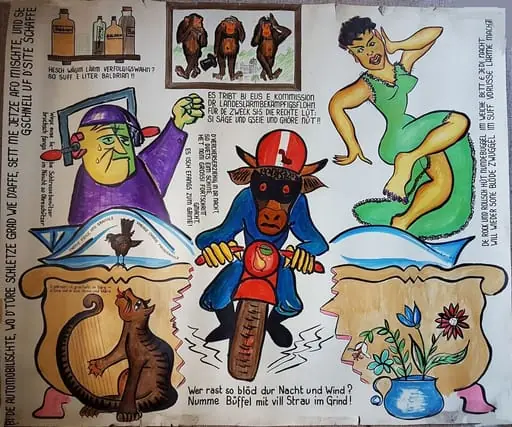
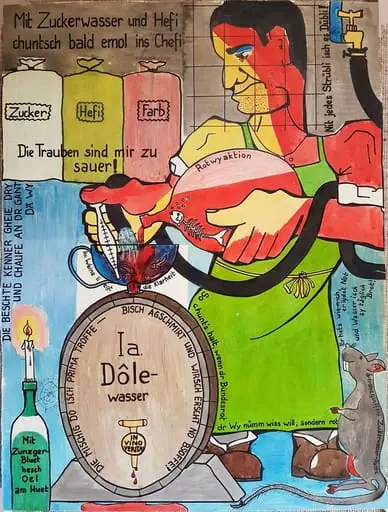
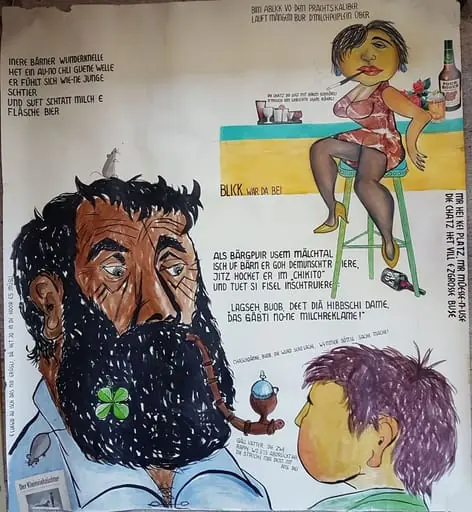
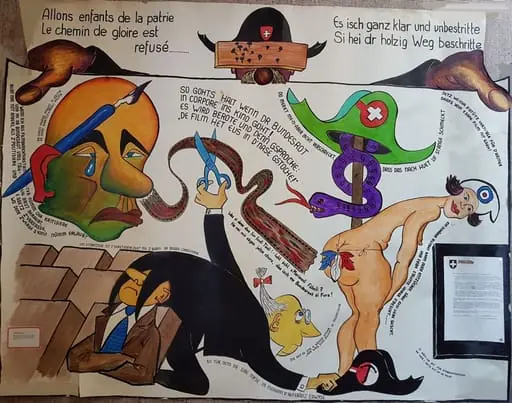
Fasnachtshelge "Kalypso" is an unspecified painting by Max Rickenbacher-Hufschmid. It dates from 1957 and is held in the collection of the Archaeology and Museum Baselland.
About this work
Overview
Fasnachtshelge “Kalypso,” executed around 1957 by Swiss artist Max Rickenbacher‑Hufschmid, is part of the collection of the Museum of Ethnography. The work presents a densely populated tableau of fantastical figures rendered in vivid, saturated hues, accompanied by a caption in German that adds a layer of whimsical narrative.
Subject & Meaning
The composition juxtaposes a red‑haired woman reclined on a green sofa, a suited monkey striking a drum, and a banana‑shaped boat carrying two passengers beneath swaying palms. Below the surface, fish bearing human faces swim, suggesting a playful conflation of human and animal realms and a lighthearted commentary on festivity and folklore.
Technique & Style
Rickenbacher‑Hufschmid employs flat, bold color fields and simplified outlines, creating a graphic quality reminiscent of carnival posters. The lack of chiaroscuro and the emphasis on pattern over realism underscore the work’s decorative intent and its alignment with mid‑century popular visual culture.
History & Provenance
Created in the late 1950s, the piece entered the Museum of Ethnography’s holdings shortly after its completion, reflecting the institution’s interest in contemporary works that echo traditional celebratory customs. Its accession record indicates continuous display within the museum’s ethnographic context.
Context
The title references the Fasnacht, a pre‑Lenten carnival celebrated in German‑speaking regions, while “Kalypso” evokes Caribbean musical traditions. This blend of European carnival motifs with exotic allusions mirrors post‑war Swiss curiosity about global cultures and the era’s fascination with hybrid visual narratives.
Artist & collection
Artist
Max Rickenbacher-Hufschmid spent years drawing the same carnival clowns in Basel’s back alleys.