Artwork
Fasnachtshelge "Die Rosa am Gewehr"
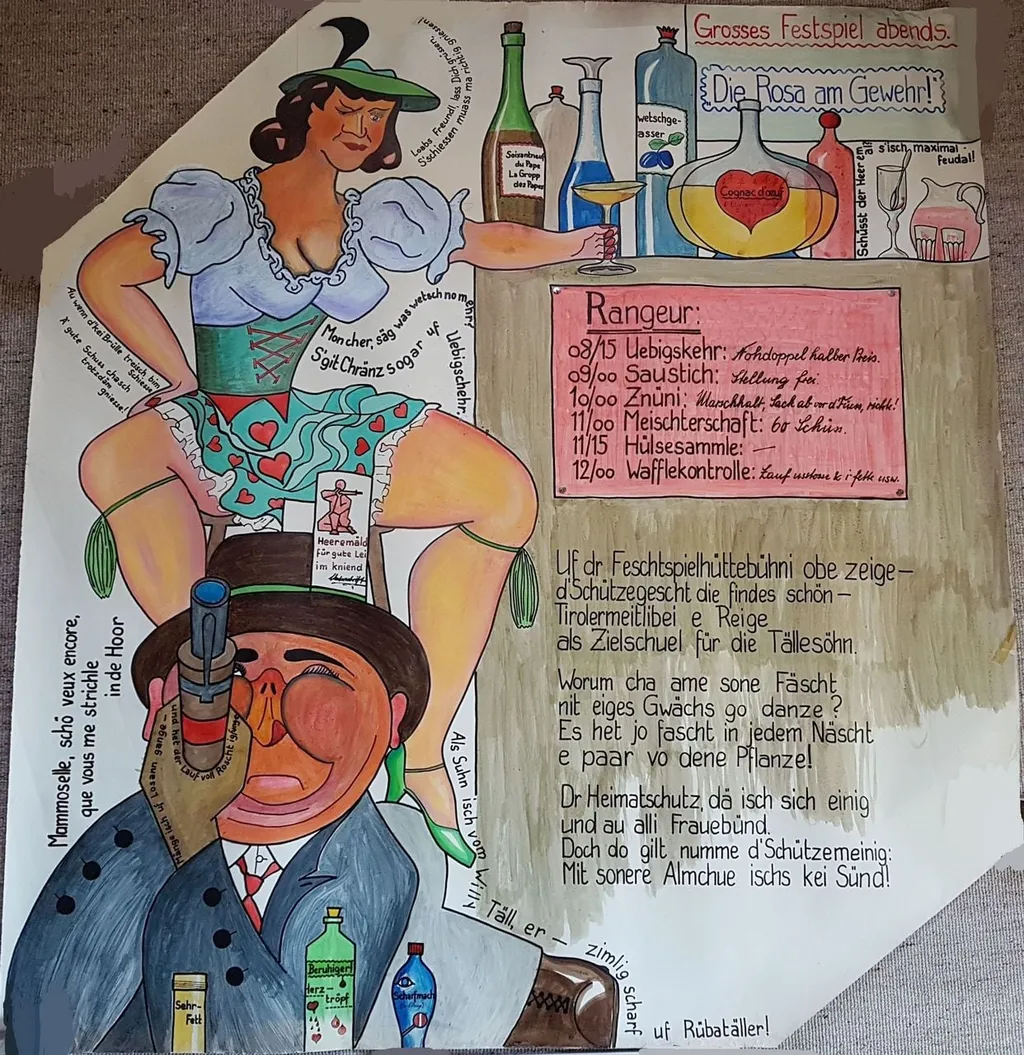
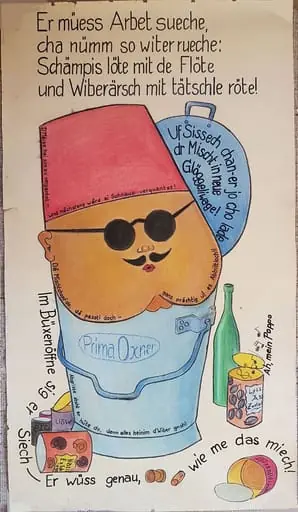
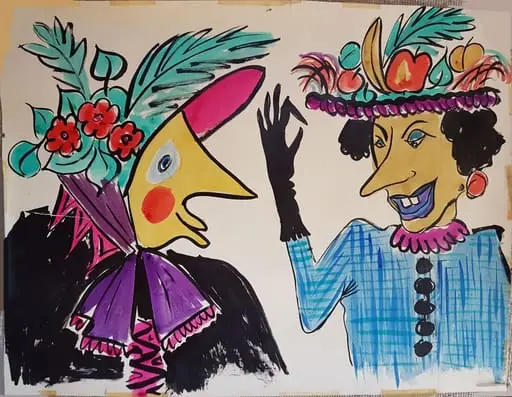
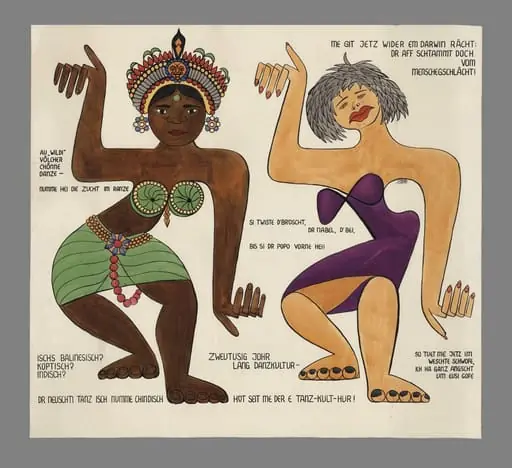
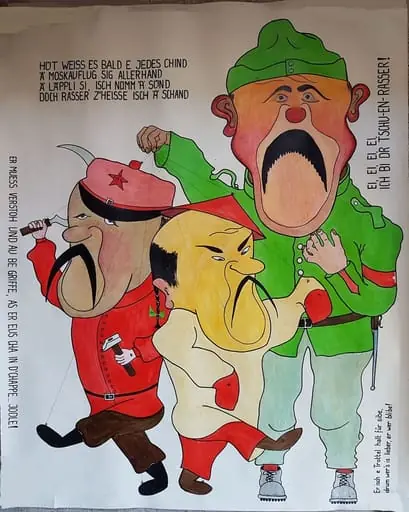
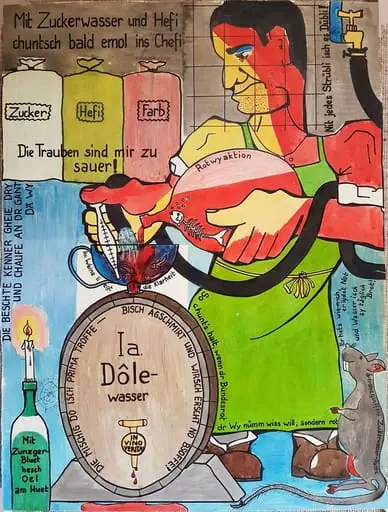
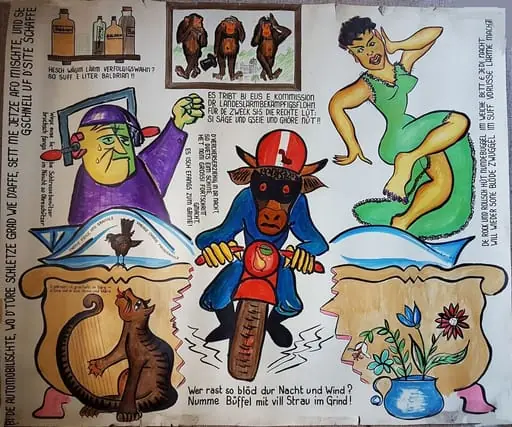
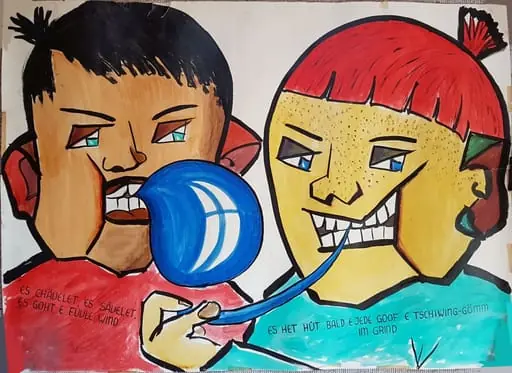
Fasnachtshelge "Die Rosa am Gewehr" is an unspecified painting by Max Rickenbacher-Hufschmid. It dates from 1957 and is held in the collection of the Archaeology and Museum Baselland. Fasnachtshelge “Die Rosa am Gewehr” is a mid‑20th‑century image by Swiss artist Max Rickenbacher‑Hufschmid, dated around 1957.
About this work
Overview
Fasnachtshelge “Die Rosa am Gewehr” is a mid‑20th‑century image by Swiss artist Max Rickenbacher‑Hufschmid, dated around 1957. The work is part of the collection of the Museum of Ethnography, where it is presented as an example of visual folklore tied to carnival celebrations.
Subject & Meaning
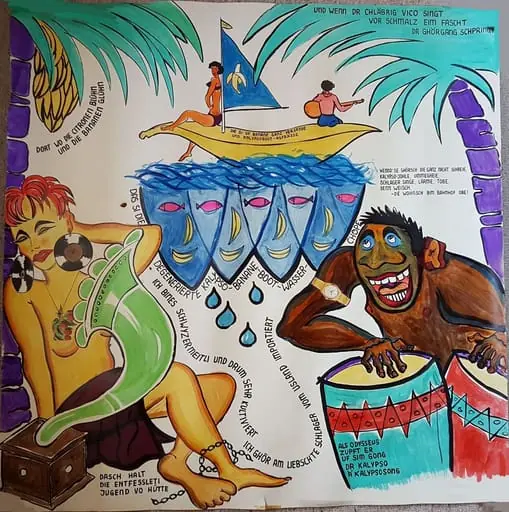
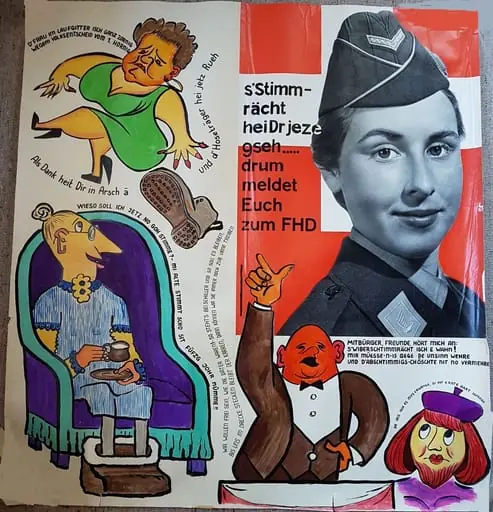
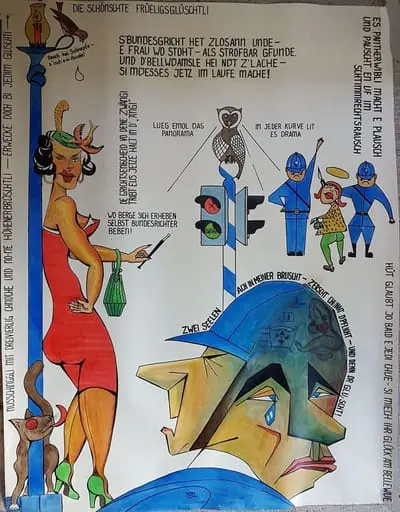
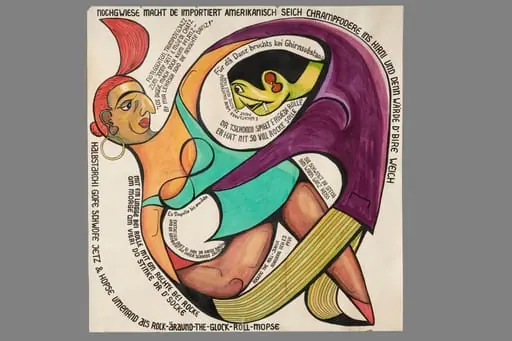
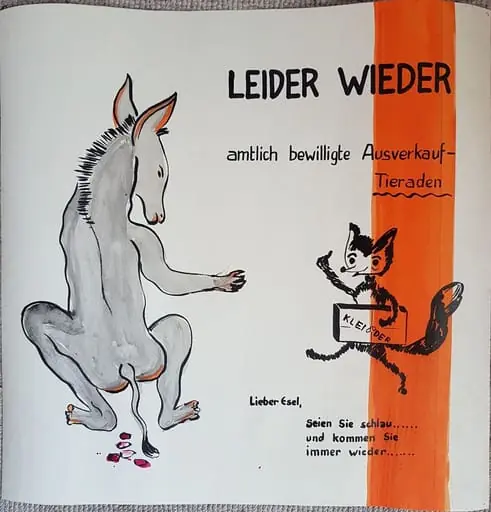
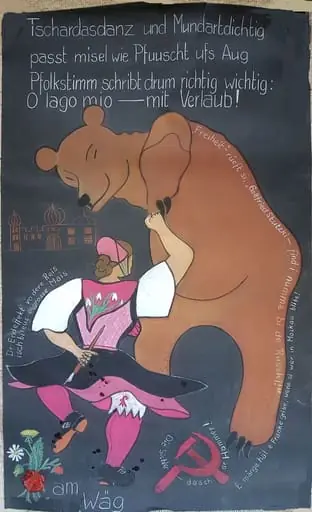
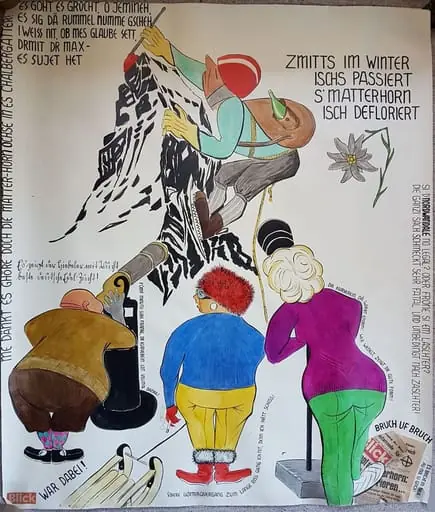
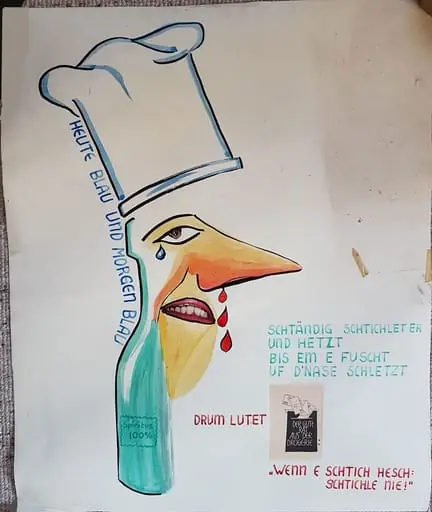
The picture depicts a lively, exaggerated scene in which a woman in a bright, heart‑adorned costume and a green hat balances a wine bottle and glass above a suited man holding a schnapps bottle. Speech bubbles, drink labels, and a calendar filled with whimsical entries create a humorous commentary on festive consumption and the chaotic scheduling of carnival events.
Technique & Style
Rendered in a cartoon‑like manner, the image relies on flat color areas, bold outlines, and a playful composition that emphasizes caricature over realism. The mixture of German and Swiss‑German text, along with the dense visual clutter, reinforces the work’s satirical tone and its roots in folk visual culture.
History & Provenance
Created circa 1957, the piece entered the Museum of Ethnography’s holdings sometime after its completion, joining a broader assemblage of objects that document Swiss carnival traditions. Its acquisition reflects the museum’s interest in preserving visual records of popular customs alongside material artifacts.
Context
The work belongs to the Fasnacht (carnival) tradition, a period of masquerade and revelry in German‑speaking Switzerland. By embedding everyday items—drink labels, calendars, and performance notices—Rickenbacher‑Hufschmid captures the intersection of ordinary life and festive excess that characterises the holiday.
Legacy
While not widely reproduced, the image serves as a visual reference for scholars studying mid‑century Swiss popular culture, illustrating how humor and ritual were visually encoded in folk art. Its presence in an ethnographic collection underscores the value of graphic media as cultural documentation.
Artist & collection
Artist
Max Rickenbacher-Hufschmid spent years drawing the same carnival clowns in Basel’s back alleys.