Artwork
Fasnachtshelge "HD Läppli"
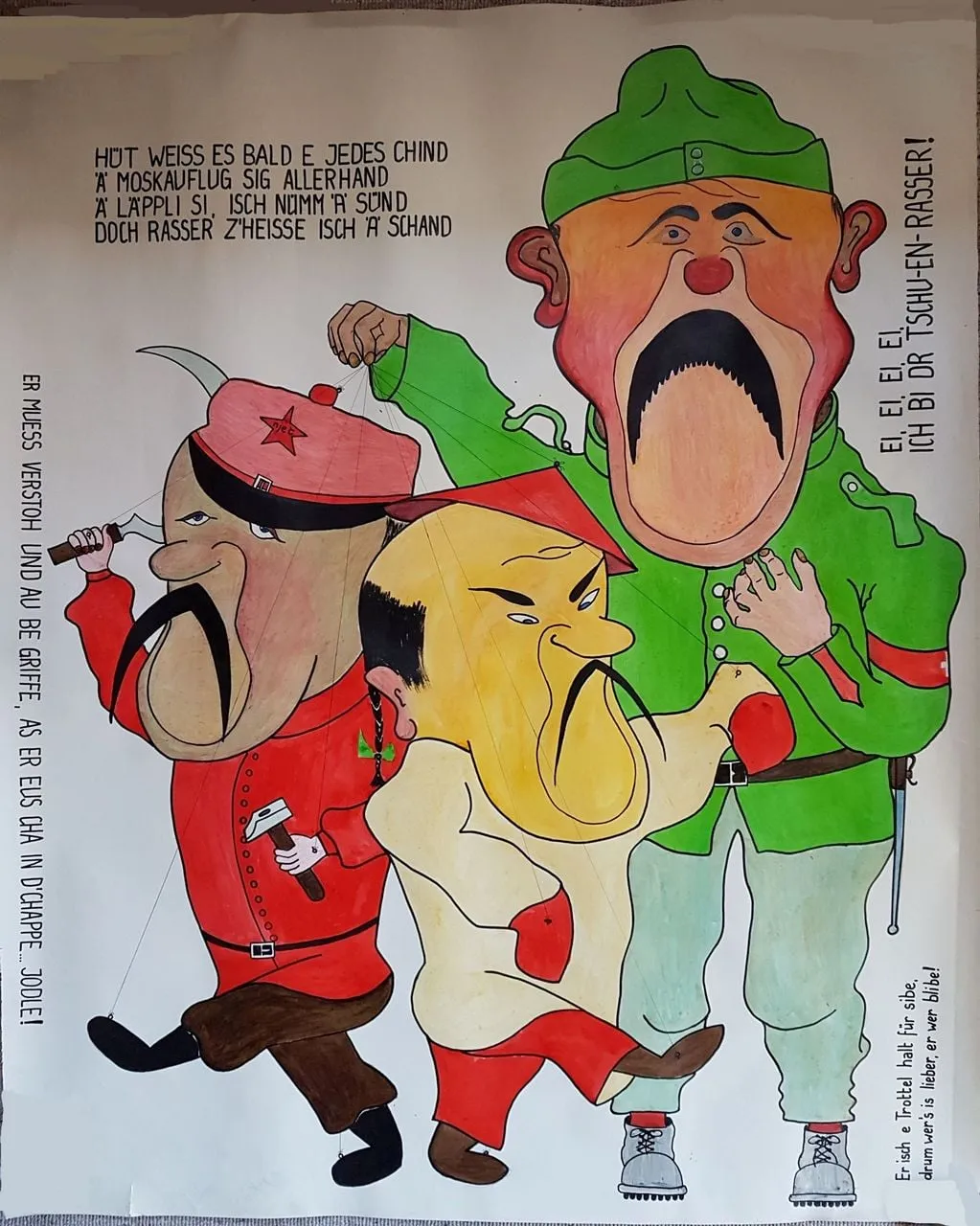
Fasnachtshelge "HD Läppli" is an unspecified painting by Max Rickenbacher-Hufschmid. It dates from 1957 and is held in the collection of the Archaeology and Museum Baselland.
About this work
Overview
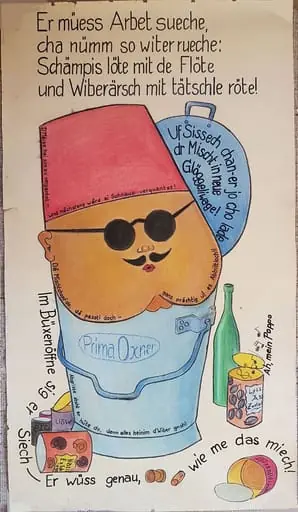
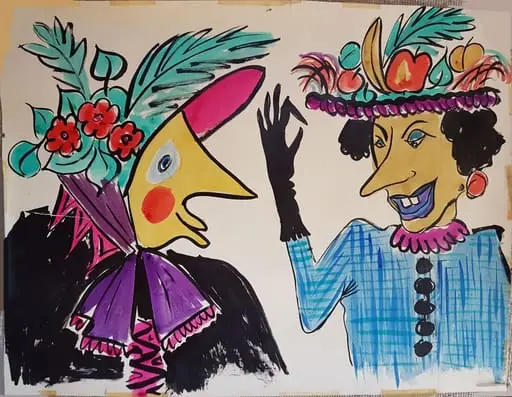
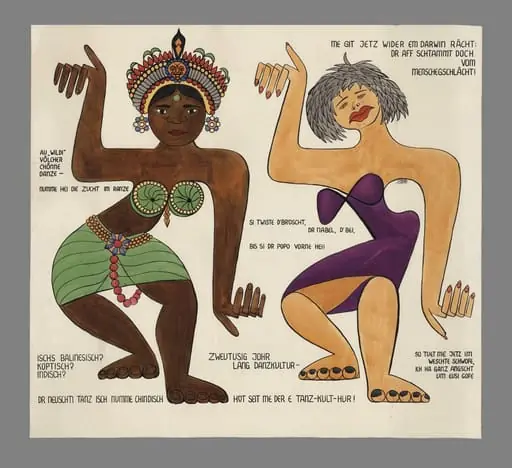
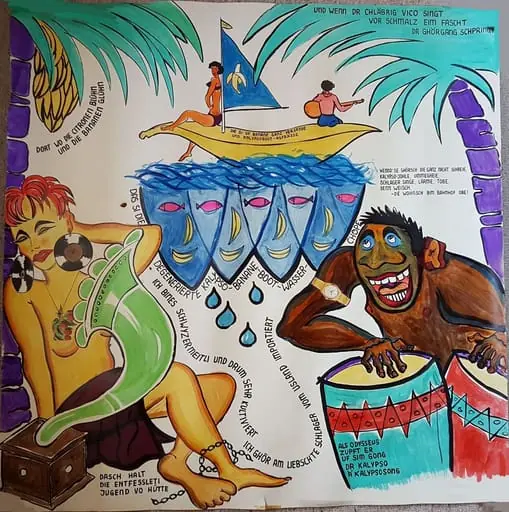
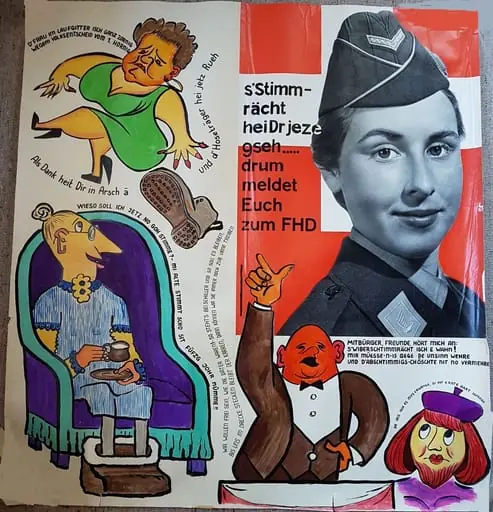
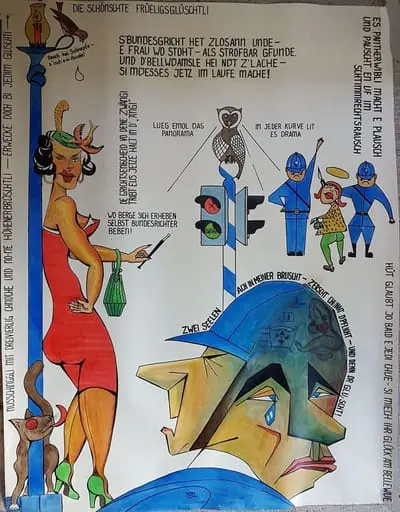
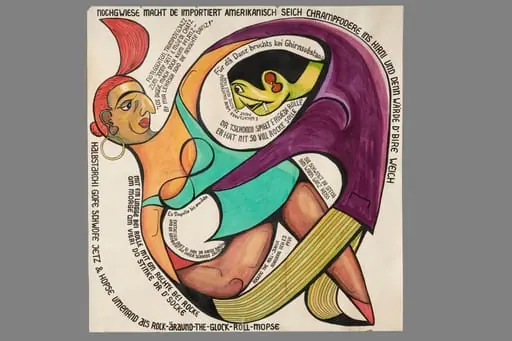
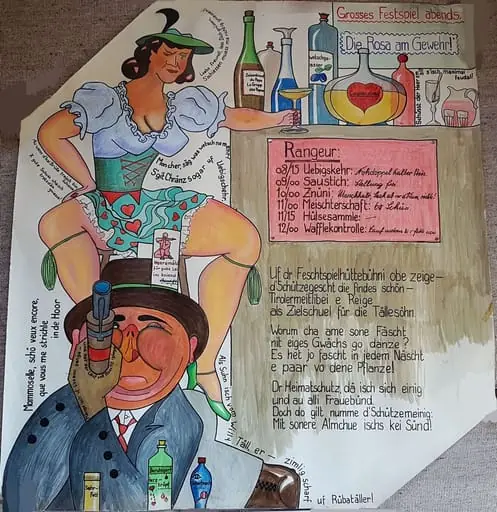
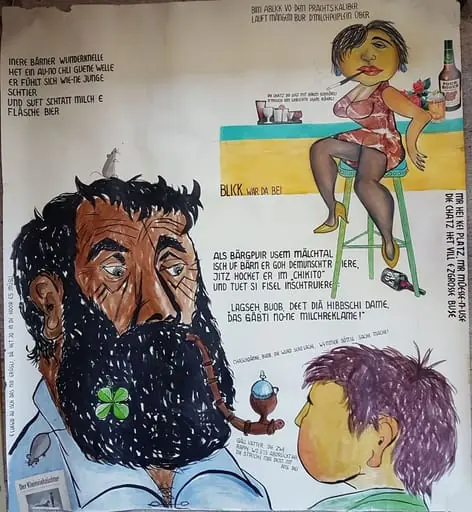
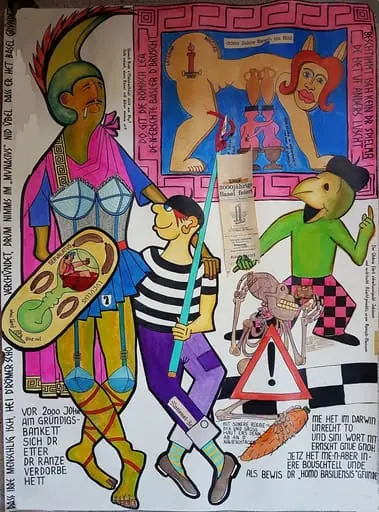
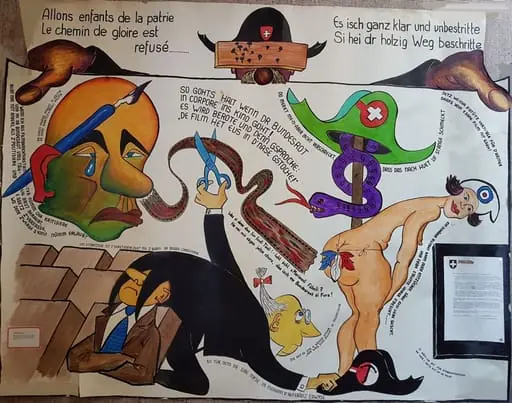
Fasnachtshelge “HD Läppli,” executed around 1957 by Swiss artist Max Rickenbacher‑Hufschmid, is part of the collection of the Museum of Ethnography. The work is a graphic image that presents three stylised, cartoon‑like figures rendered in vivid primary colours and arranged in a dynamic, confrontational pose.
Subject & Meaning
The three characters—clad in red, yellow and green—are exaggerated caricatures with oversized heads, simple facial features and gestural bodies.
The three characters—clad in red, yellow and green—are exaggerated caricatures with oversized heads, simple facial features and gestural bodies. One holds a hammer, another displays a worried expression, and the third shows an angry grimace. Accompanying text in an old‑fashioned German script suggests a humorous or satirical verse, hinting that the image lampoons recognizable social roles or festive customs, though the precise target remains ambiguous.
Technique & Style
Rickenbacher‑Hufschmid employs flat areas of saturated colour and bold outlines, echoing mid‑century illustration and poster design. The figures are rendered with minimal shading, emphasizing graphic clarity over realism. The use of a playful, hand‑drawn script for the caption reinforces the work’s informal, folk‑art aesthetic while maintaining a clear visual hierarchy.
History & Provenance
Created in the late 1950s, the image entered the Museum of Ethnography’s holdings as part of its collection of visual material documenting regional festivals and popular culture. The museum acquired the piece through a donation from a private collector interested in preserving examples of Swiss carnival imagery.
Context
The title references “Fasnacht,” the traditional Swiss carnival celebrated before Lent, a period marked by masks, parades and satirical performances. By portraying exaggerated participants in bright costumes, the work reflects the carnival’s spirit of inversion and critique, situating the image within broader European folk‑festival traditions studied by ethnologists.
Artist & collection
Artist
Max Rickenbacher-Hufschmid spent years drawing the same carnival clowns in Basel’s back alleys.