Artwork
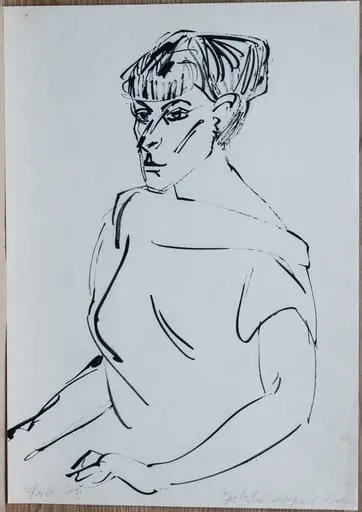
Fasnachtshelge "Fröhlichi Gritte"
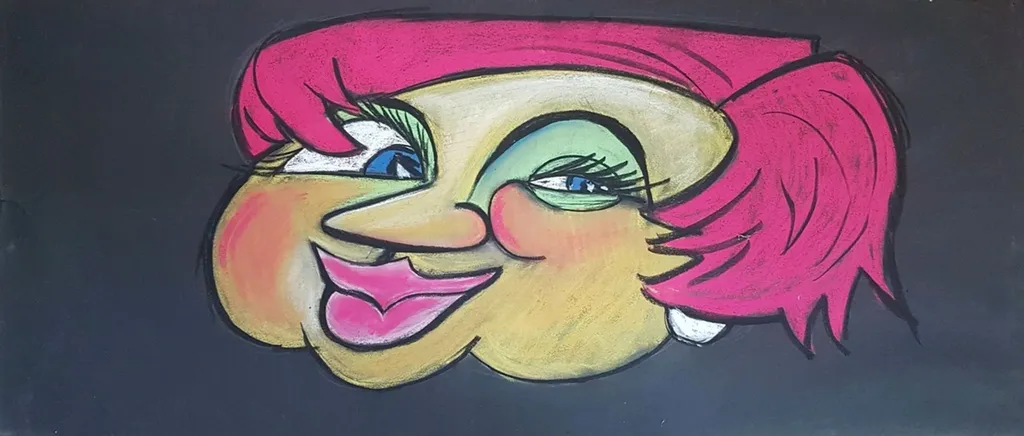
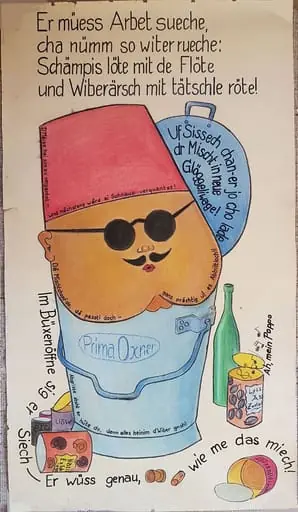
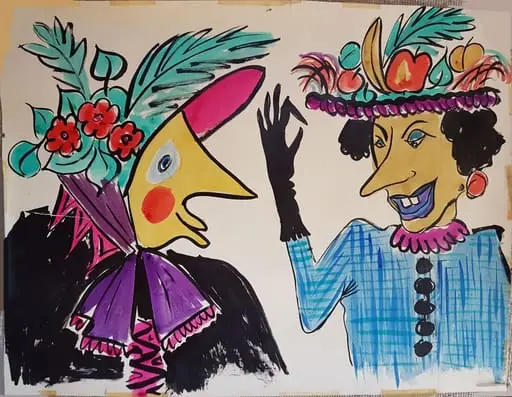
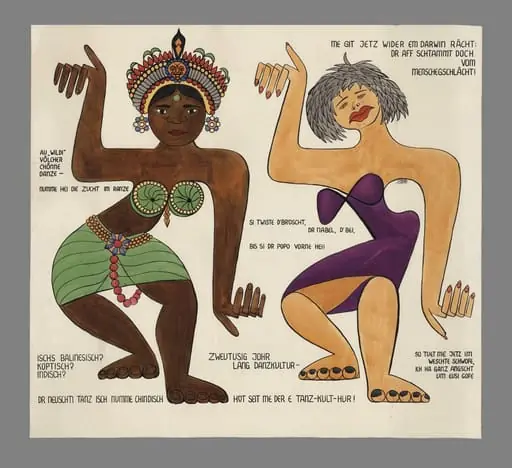
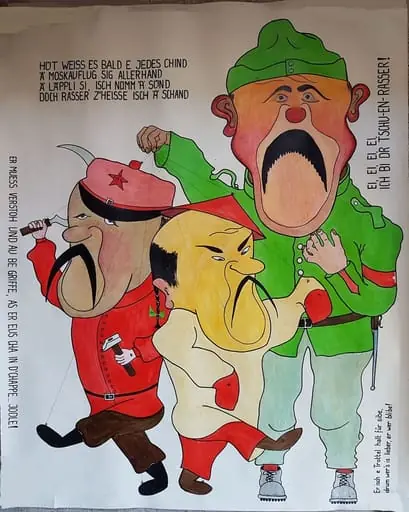
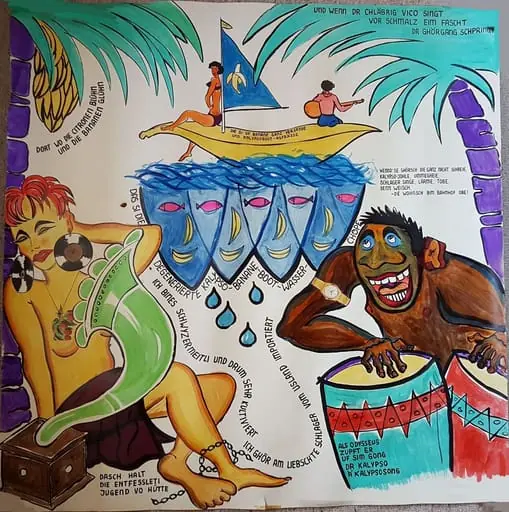
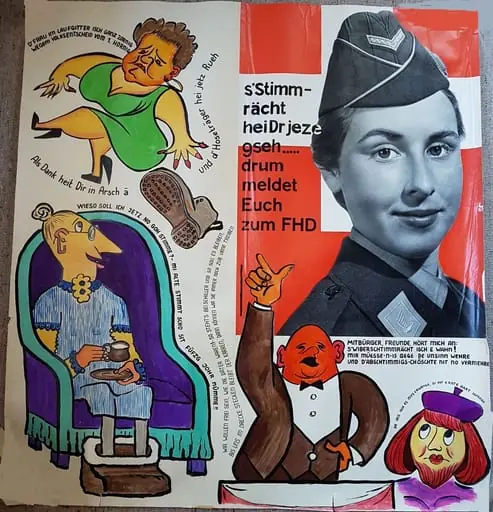
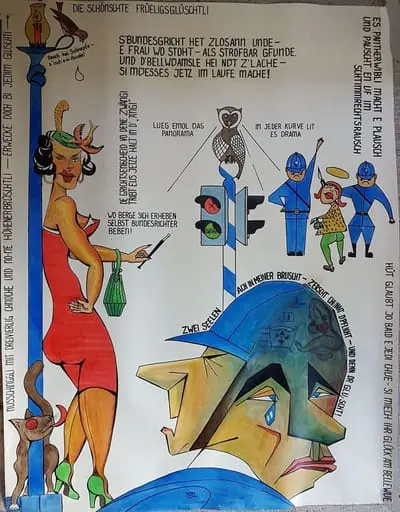
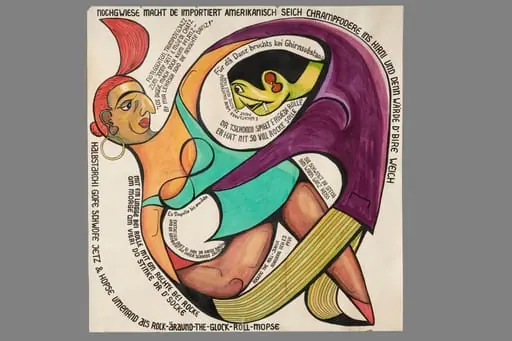
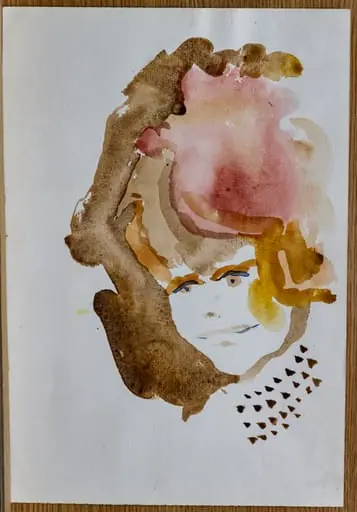
Fasnachtshelge "Fröhlichi Gritte" is a drawing by Max Rickenbacher-Hufschmid. It dates from 1957 and is held in the collection of the Archaeology and Museum Baselland.
About this work
Overview
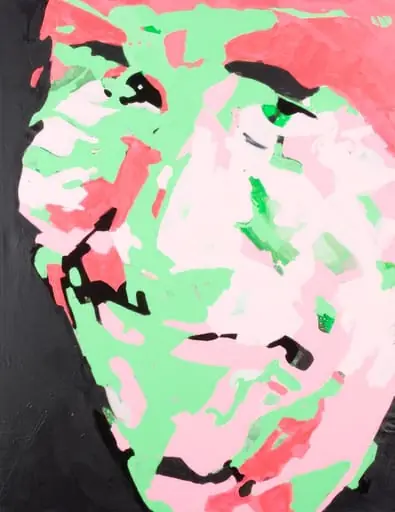
Created around 1957 by Swiss artist Max Rickenbacher-Hufschmid, this painted face is part of a series tied to Basel’s Fasnacht carnival traditions.
Created around 1957 by Swiss artist Max Rickenbacher-Hufschmid, this painted face is part of a series tied to Basel’s Fasnacht carnival traditions. It is held in the collection of the Museum of Ethnography, where it functions as a cultural artifact reflecting regional festive imagery. The work blends folk motifs with modernist expression, capturing the spirit of masked celebration through stylized form and vivid color.
Subject & Meaning
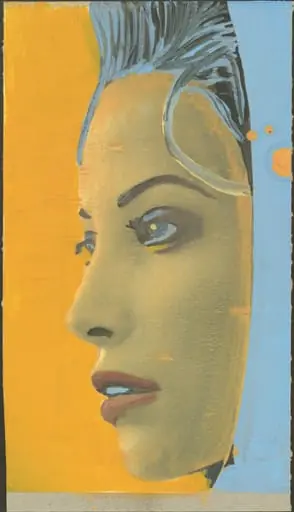
The figure represents a Fasnachtshelge, a traditional carnival mask character known for its exaggerated, playful demeanor. The wide smile and bold features evoke the revelry and inversion of norms central to the carnival. The pink hair and bright eyes suggest a fantastical, non-human identity, distancing the wearer from everyday life and embodying the temporary liberation of the festival season.
Technique & Style
The face is rendered with thick, unblended brushstrokes in saturated hues—yellow, orange, pink, and green—creating a flat yet dynamic surface. Outlines are emphatic, defining features without modeling, while color contrasts suggest volume rather than shadow. The style leans toward folk-art abstraction, prioritizing emotional intensity over naturalism, echoing both regional traditions and mid-century expressive painting.
History & Provenance
The work emerged during a period of renewed interest in Basel’s carnival customs, when artists began documenting and reinterpreting traditional masks. Rickenbacher-Hufschmid, active in Swiss folk art circles, produced this piece as part of a broader effort to preserve and reimagine local iconography. It entered the Museum of Ethnography’s collection shortly after its creation, recognized for its cultural specificity.
Context
This piece belongs to a wave of postwar Swiss art that engaged with regional identity amid rapid modernization. Fasnacht masks, once purely functional, became subjects of artistic reflection. The work reflects a tension between preserving tradition and embracing modern visual language, positioning carnival as both ritual and aesthetic practice within Swiss cultural discourse.
Legacy
Though not widely exhibited beyond ethnographic contexts, the work remains a reference point in studies of Swiss carnival art. It illustrates how folk motifs were adapted by mid-century artists to explore identity and performance. Its presence in a museum collection signals an institutional acknowledgment of carnival as a legitimate cultural form worthy of preservation.
Artist & collection
Artist
Max Rickenbacher-Hufschmid spent years drawing the same carnival clowns in Basel’s back alleys.