Artwork
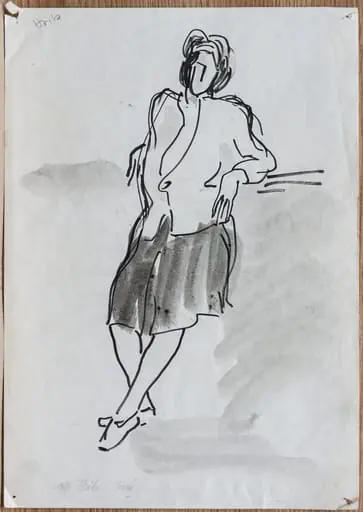
Schiță după C. Baba
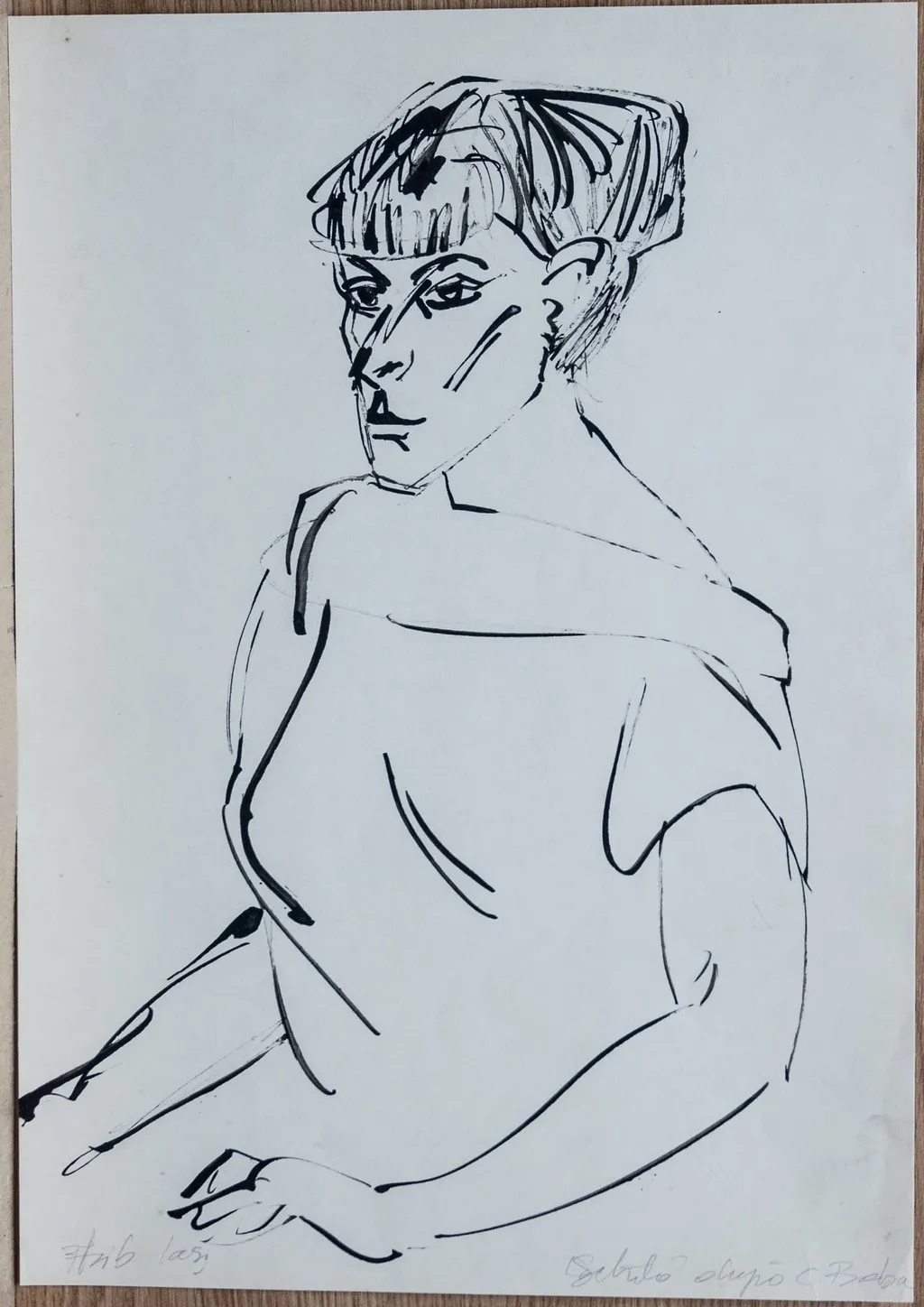
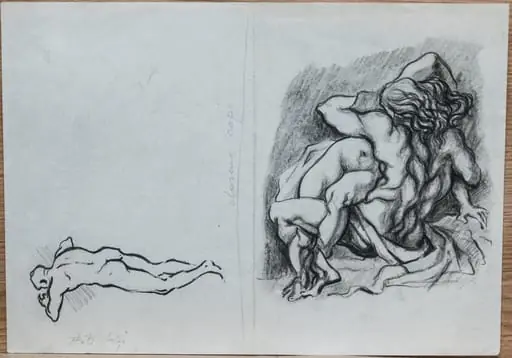
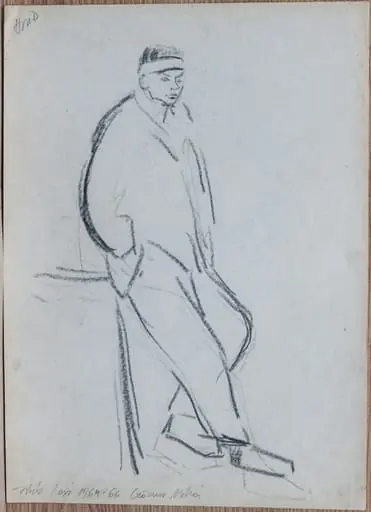
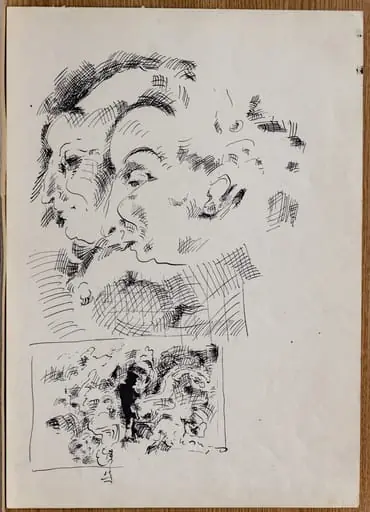
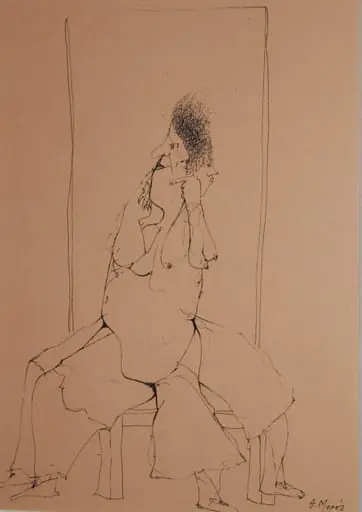
Schiță după C. Baba is a drawing by Teodor Hrib. It dates from 1950 and is held in the collection of the Gavrila Simion Eco-Museum Research Institute Tulcea.
About this work
Overview
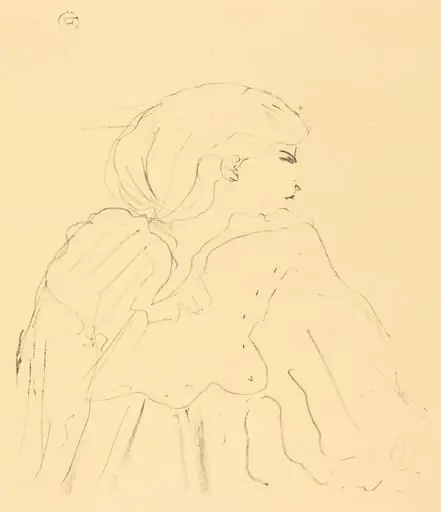
Executed in rapid, assured strokes, it captures a seated figure with minimal detail, emphasizing posture and form over refinement.
Created around 1950 by Romanian artist Teodor Hrib, this ink sketch is part of the Museum of Ethnography’s collection. Executed in rapid, assured strokes, it captures a seated figure with minimal detail, emphasizing posture and form over refinement. The work reflects a practice of observational drawing, likely made in real time as the model sat. Its simplicity and immediacy suggest it was intended as a study rather than a finished piece.
Subject & Meaning
The subject is a seated individual, likely a woman, wearing a headscarf and a loose-fitting garment. The pose—legs crossed, arms resting naturally—conveys quiet stillness. No narrative context is given, but the focus on everyday attire and posture hints at an interest in ordinary life. The drawing avoids idealization, presenting the figure with unembellished realism, characteristic of ethnographic documentation.
Technique & Style
Hrib employed black ink on white paper, using swift, confident lines to define contours without shading or correction. The strokes are economical, capturing the curve of the shoulder, the angle of the arm, and the shape of the face with few marks. The absence of background or detail directs attention to the figure’s form. This approach aligns with sketching traditions used to record movement and posture quickly and accurately.
History & Provenance
The sketch is attributed to Teodor Hrib and bears his signature in the lower corner. It entered the collection of the Museum of Ethnography in Romania, likely as part of a broader effort to document folk life and artistic practices in the mid-20th century. Its origin as a preparatory study suggests it was made during fieldwork or in a studio setting focused on ethnographic observation.
Context
In postwar Romania, artists often turned to ethnographic subjects to explore national identity through everyday life. Hrib’s sketch fits within this trend, reflecting a broader interest in recording traditional dress and posture. Such drawings served both artistic and anthropological purposes, preserving visual records of customs that were changing rapidly under modernization.
Legacy
This sketch exemplifies the role of rapid drawing in ethnographic research, where accuracy and immediacy mattered more than polish. While Hrib is not widely known outside Romania, works like this contribute to understanding how artists engaged with cultural documentation during a period of social transformation. It remains a quiet testament to the value of observational practice in art and anthropology.
Artist & collection
Artist
Teodor Hrib shaped small plaster figures and ink drawings in the 1800s academic tradition.
Museum
Gavrila Simion Eco-Museum Research Institute Tulcea
Continue through works from the same source collection.