Artwork
Felix Imbert
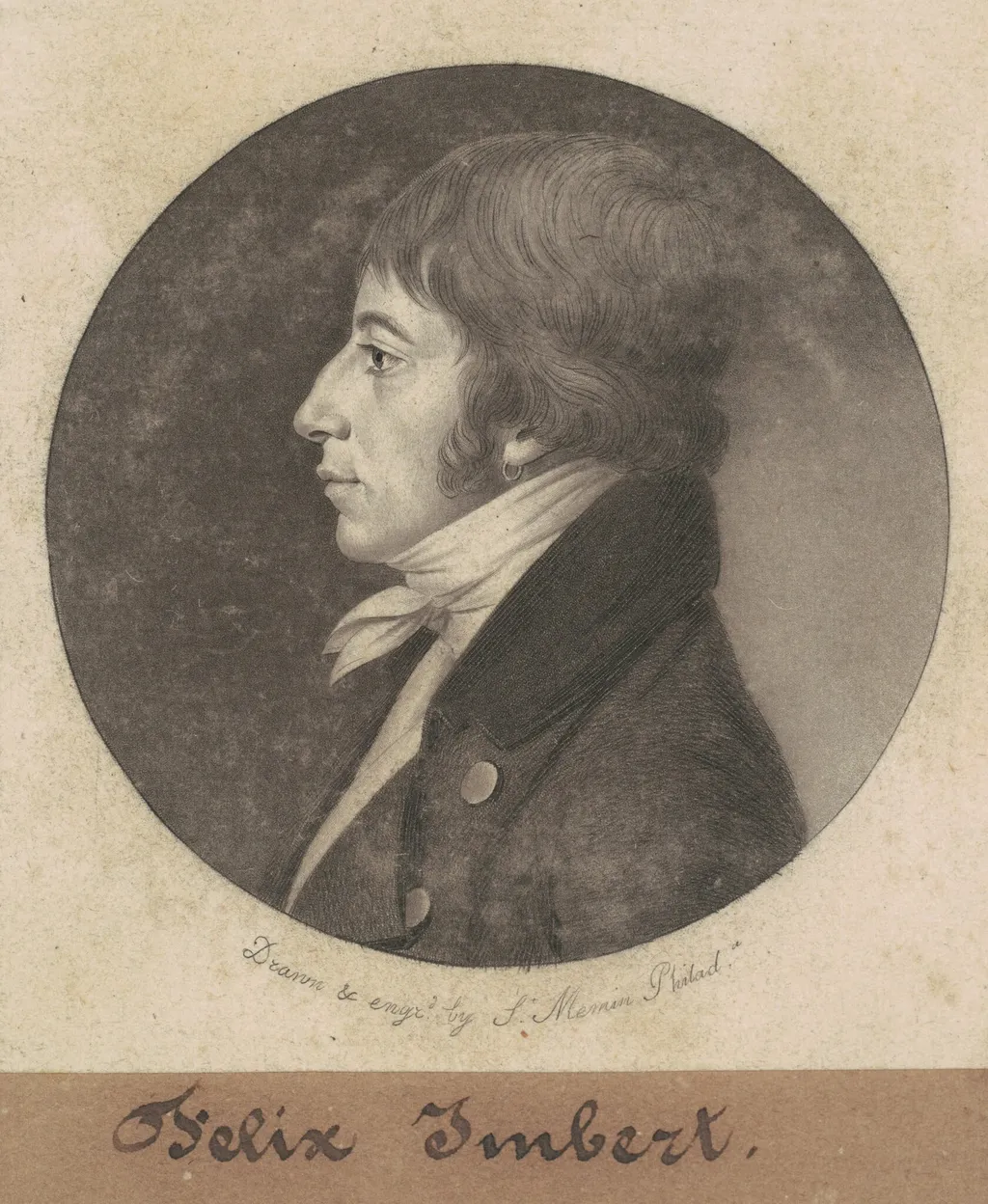
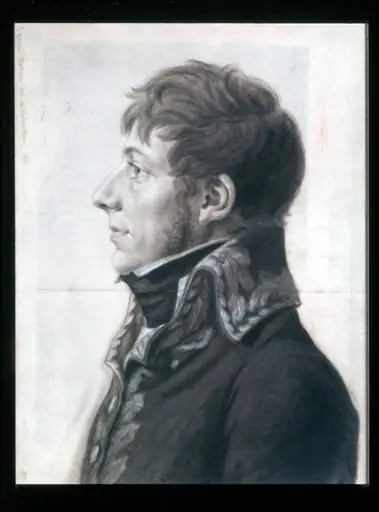
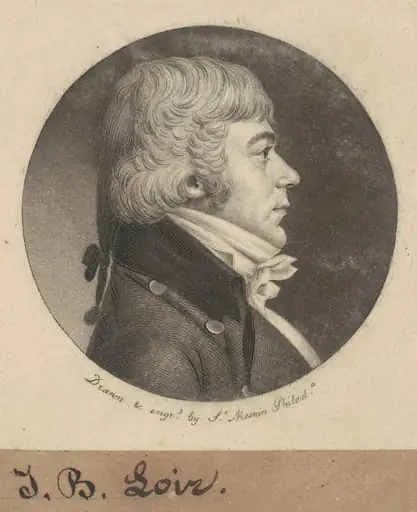
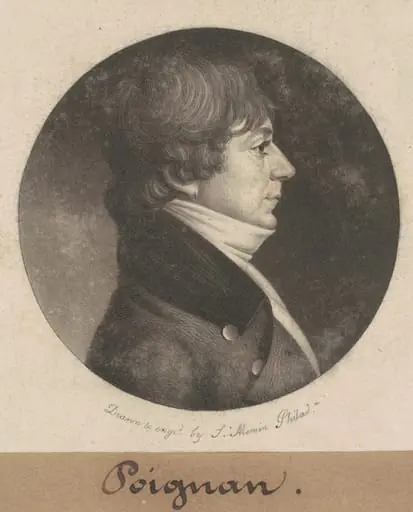
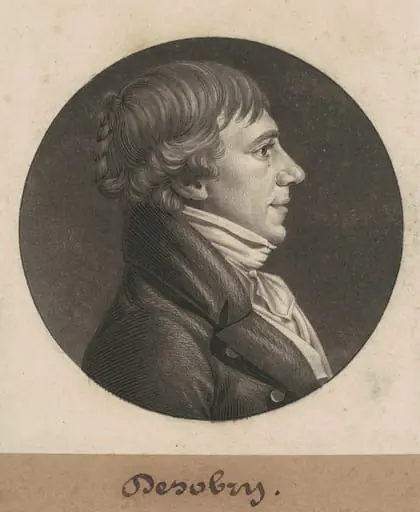
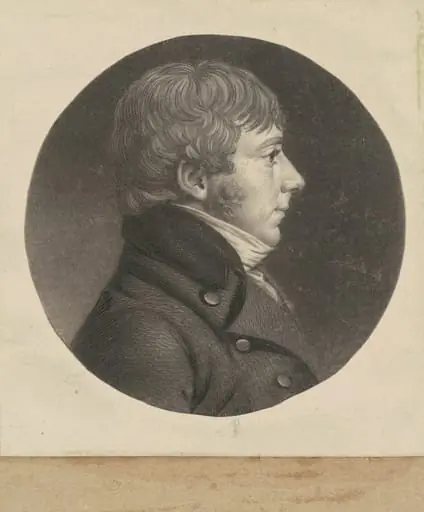
Felix Imbert is an ink print by the Romanticist artist Charles Balthazar Julien Févret de Saint-Mémin. It dates from 1801 and is held in the collection of the National Gallery of Art.
About this work
Overview
This small black-and-white print, created between 1798 and 1803, portrays Felix Imbert using mezzotint and engraving techniques on wove paper.
This small black-and-white print, created between 1798 and 1803, portrays Felix Imbert using mezzotint and engraving techniques on wove paper. Mounted on a brown wove support, the portrait measures just over five and a half centimeters square. It belongs to a series of profile portraits produced by Charles B. J. Févret de Saint-Mémin during his time in the United States, reflecting a deliberate engagement with classical portraiture conventions.
Subject & Meaning
Felix Imbert, a French immigrant and early American resident, is depicted in a restrained, dignified manner. His wavy hair and pronounced nasal profile are rendered with precision, emphasizing individual identity within a formalized visual language. The high-collared coat suggests modest formality, aligning the sitter with Enlightenment ideals of rationality and composure rather than aristocratic display.
Technique & Style
Saint-Mémin employed mezzotint and engraving to achieve subtle tonal gradations within a compact format. The technique allowed for fine detail in the hair and facial contours while maintaining a clean, linear clarity typical of Neoclassical portraiture. The profile view, minimal background, and uniform lighting reflect a deliberate adherence to ancient Roman and Greek medallion aesthetics, prioritizing clarity over ornamentation.
History & Provenance
Created during Saint-Mémin’s residence in the United States, this portrait was part of a broader project to document prominent American figures through profile prints. The work was likely produced for private patrons or as part of a commissioned series. Its small scale and precise execution suggest it was intended for personal collections rather than public display.
Context
In late 18th-century America, profile portraits were favored for their association with classical virtue and democratic simplicity. Saint-Mémin, trained in France, adapted this tradition to suit American tastes, producing hundreds of such portraits. His work contributed to a visual culture that valued civic identity and restrained elegance over flamboyant representation.
Legacy
Saint-Mémin’s profile portraits, including this one of Felix Imbert, remain significant as early examples of American printmaking that fused European technique with local subject matter. They offer insight into how identity was visually constructed during the nation’s formative years, influencing later generations of portraitists who sought to balance individuality with civic ideals.
Artist & collection

Artist
Charles Balthazar Julien Févret de Saint-Mémin
Charles Balthazar Julien Févret de Saint-Mémin (French pronunciation: ; 1770–1852) was a French portrait painter and museum director.