Artwork
Vue Prise de la grande avenue entre les deux Ecuries
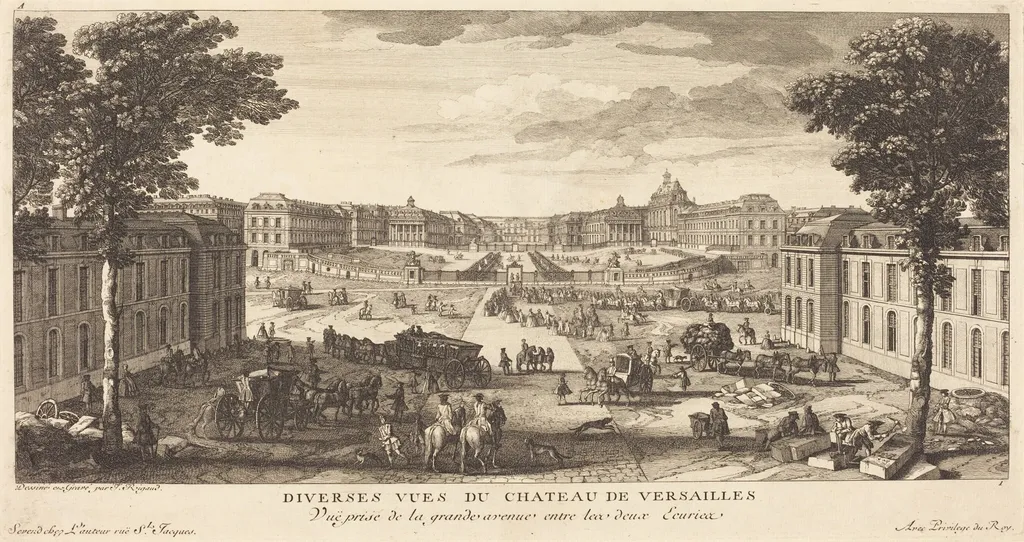
Vue Prise de la grande avenue entre les deux Ecuries is an ink print by the Baroque artist Jean-Baptiste Rigaud. It dates from 1746 and is held in the collection of the National Gallery of Art.
About this work
Overview
The work’s precision and scale reflect its function as a topographical record rather than a purely decorative image.
Created in 1746 by Jean-Baptiste Rigaud, this print combines etching and engraving to depict a formal perspective of the Grand Avenue at the Palace of Versailles. The composition centers on a broad, linear thoroughfare flanked by symmetrical architecture and landscaped grounds. Figures in period dress move along the road, suggesting daily court life. The work’s precision and scale reflect its function as a topographical record rather than a purely decorative image.
Subject & Meaning
The scene captures the Grand Avenue between the two stables at Versailles, a key axis of the palace’s axial design. The orderly arrangement of buildings, trees, and pathways underscores the absolutist ideals of control and hierarchy embedded in Louis XIV’s urban planning. The presence of pedestrians and carriages implies the avenue’s role as both ceremonial route and public space, bridging royal authority with the movement of courtiers and servants.
Technique & Style
Rigaud employed fine, controlled lines typical of engraved copper plates, with etching used to achieve softer tonal gradations. Details such as carriage wheels, fabric folds, and individual tree branches are rendered with meticulous clarity. The light, even sky and balanced composition avoid dramatic contrasts, favoring a calm, observational tone that aligns with 18th-century topographical print traditions.
History & Provenance
Produced in 1746, the print likely served as a document for royal patrons or foreign dignitaries interested in Versailles’s grandeur. Rigaud, known for architectural views, may have created it for circulation among European elites. While specific early ownership records are sparse, its survival in institutional collections suggests it was valued as a reliable visual record of the palace’s layout during the mid-18th century.
Context
At the time of its creation, Versailles remained the political and cultural heart of France, even as royal attention began to shift. Rigaud’s print reflects the enduring symbolic power of its architecture, capturing the palace not as a lived-in residence but as an enduring monument. Similar prints by contemporaries circulated across Europe, reinforcing France’s image as a center of refined order and artistic discipline.
Legacy
The print endures as a precise visual archive of Versailles’s layout before later modifications. It contributes to scholarly understanding of how royal spaces were represented in print culture. While not widely known outside specialist circles, it remains a reference point for historians studying the intersection of urban design, printmaking, and political symbolism in early modern Europe.
Artist & collection


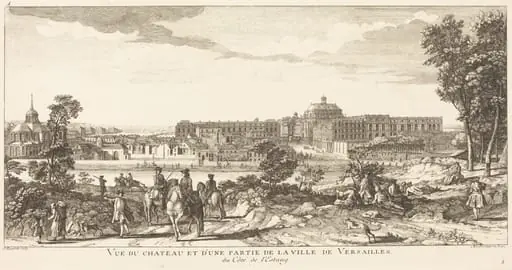 Vue du Chateau et d'une Partie de la Ville deVersailles
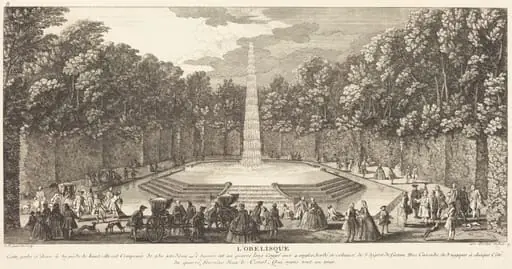 L'Obelisque
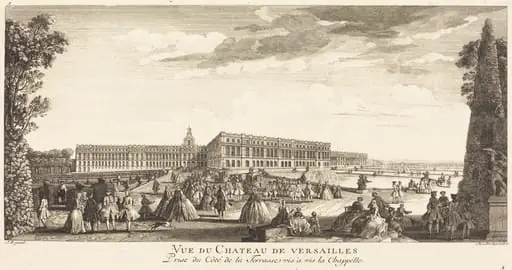 Vue du Chateau de Versailles Prise du Cote dela Terrasse vis a vis la Chapelle
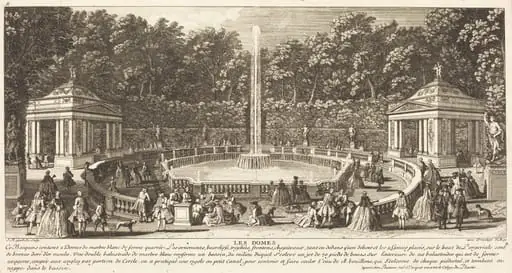 Les Domes
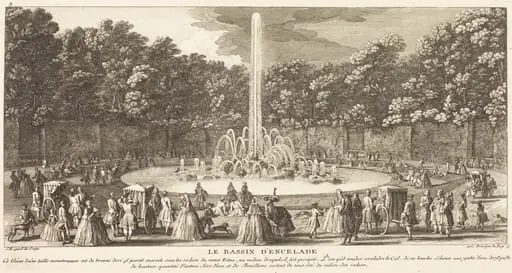 Le Bassin d'Encelade
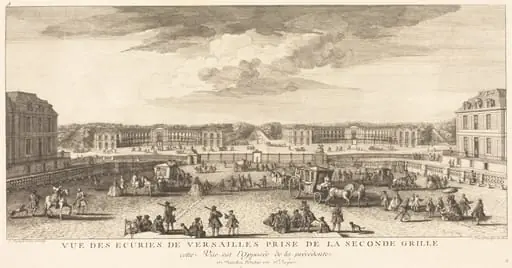 Vue des Ecuries de Versailles Prise de la Seconde Grille
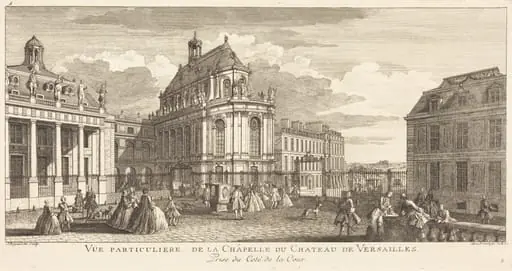 Vue Particuliere de la Chapelle du Chateau deVersailles
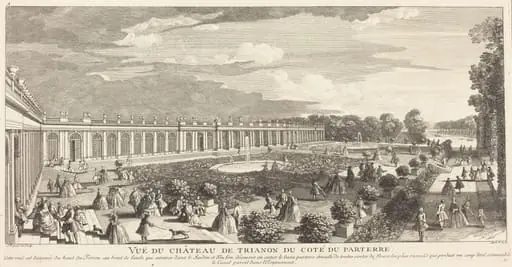 Vue du Chateau de Trianon du Cote du Parterre
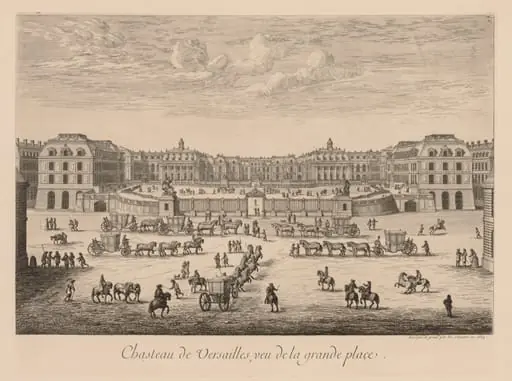 Vue du Château de Versailles, vu de la Grande Place
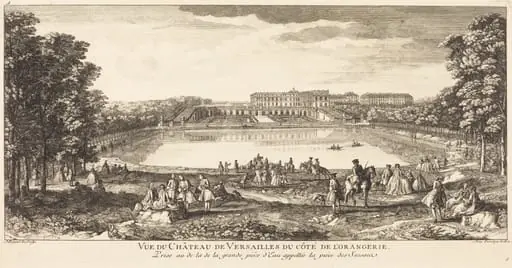 Vue du Chateau de Versailles du Cote de l'Orangerie
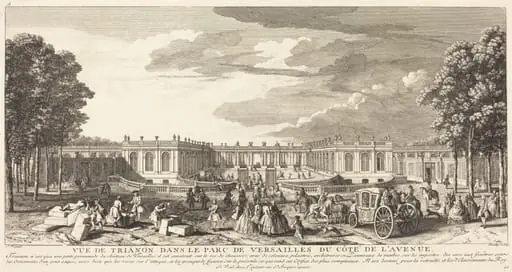 Vue de Trianon dans le Parc de Versailles du Cote de l'Avenue
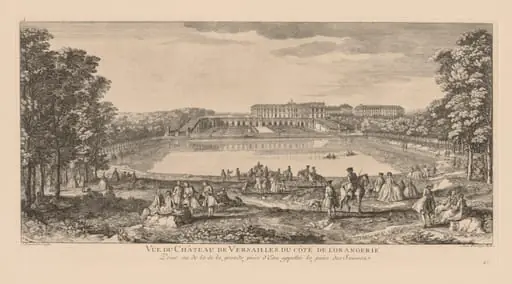 Vue du Château du Versailles, du côté de l'Orangerie, prise au delà de la pièce d'eau des Suisses
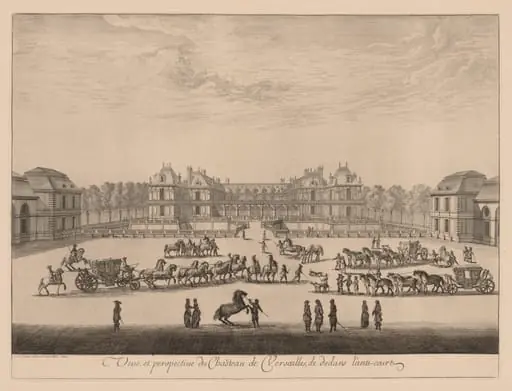 Vue et perspective du Château de Versailles, de dedans l'anti-cour
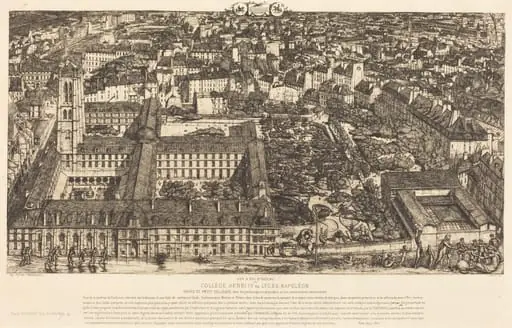 Collège Henri IV, Paris, ou Lycée Napoléon (Henry IV College or Napoleon School, Paris)
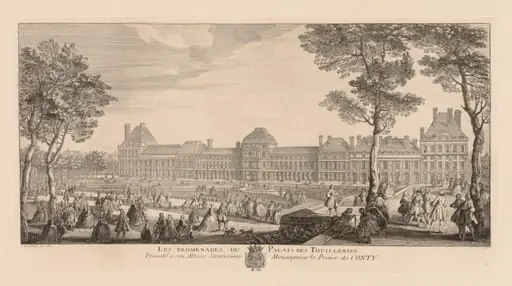 Promenades of the Palais des Tuileries
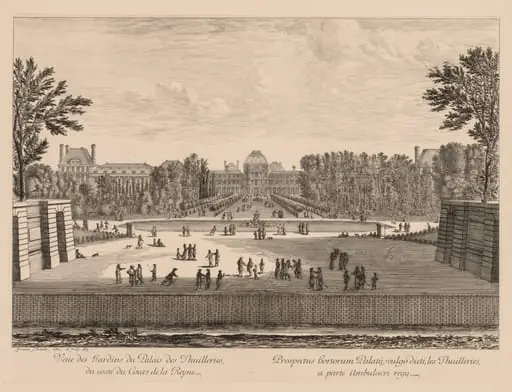 Vue du palais et des jardins des Tuileries, du côté du cours la Reine