Artwork
Vue des Ecuries de Versailles Prise de la Seconde Grille
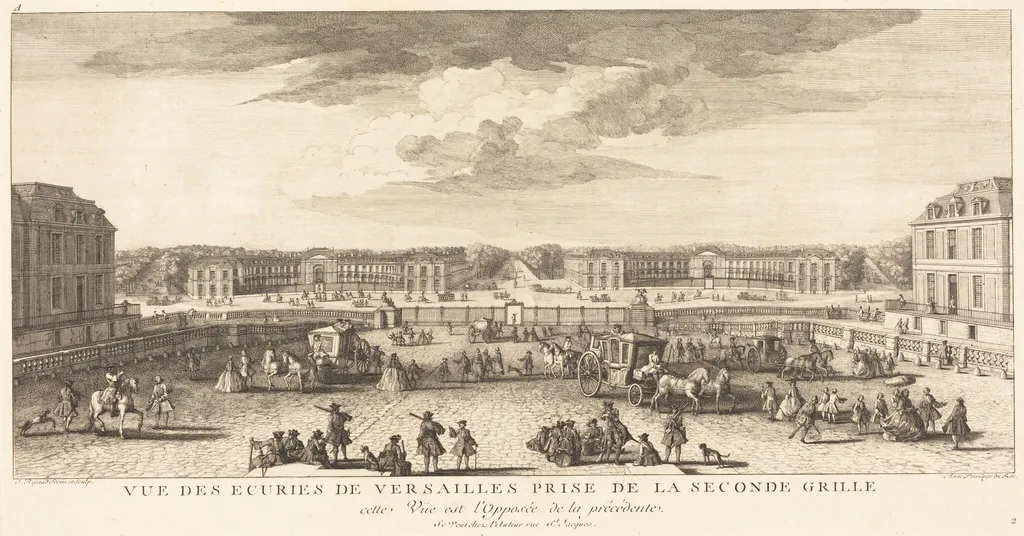
Vue des Ecuries de Versailles Prise de la Seconde Grille is an ink print by the Baroque artist Jean-Baptiste Rigaud. It dates from 1746 and is held in the collection of the National Gallery of Art.
About this work
Overview
Created in 1746 by Jean-Baptiste Rigaud, this print captures a view of the stables at the Palace of Versailles as seen from the second gate.
Created in 1746 by Jean-Baptiste Rigaud, this print captures a view of the stables at the Palace of Versailles as seen from the second gate. Executed in etching, engraving, and aquatint, it presents a detailed architectural scene filled with movement and activity. The composition emphasizes the scale of the royal stables and the bustling life surrounding them, offering a precise record of the site’s function and atmosphere during the mid-18th century.
Subject & Meaning
The scene depicts the courtyard of the Grand Écuries, a functional space central to the court’s operations. Figures in period dress, carriages, and horses populate the area, suggesting daily activity tied to royal logistics. The presence of spectators implies the site was not only utilitarian but also a public spectacle. The view from the second gate frames the stables as both a working facility and a symbol of royal order and grandeur.
Technique & Style
Rigaud employed etching and engraving to render fine architectural lines and textures, while aquatint added tonal depth to the sky and shadows. The combination allowed for precise detail in the buildings and dynamic contrast in the clouds above. The composition is orderly yet alive, with careful attention to perspective and spatial depth, reflecting the topographical precision typical of French architectural prints of the period.
History & Provenance
The print was produced during the reign of Louis XV, when Versailles remained the center of French political and social life. Rigaud, known for his architectural views, likely created this work for collectors or court officials interested in documenting the palace’s infrastructure. Its survival in museum collections suggests it was valued as both artistic record and historical documentation of royal estates.
Context
The Grand Écuries, completed in the late 17th century, housed hundreds of horses and staff essential to the court’s mobility and ceremonial life. This print reflects the integration of function and spectacle at Versailles, where even utilitarian spaces were designed to impress. The crowd depicted aligns with contemporary accounts of visitors touring the palace grounds, underscoring the site’s role as both workplace and public attraction.
Legacy
Rigaud’s print contributes to a broader tradition of French architectural documentation, influencing later topographical artists. It remains a key visual source for understanding the daily rhythms of Versailles beyond its ceremonial façades. The work’s technical precision and observational clarity ensure its continued relevance in studies of 18th-century court life and print culture.
Artist & collection


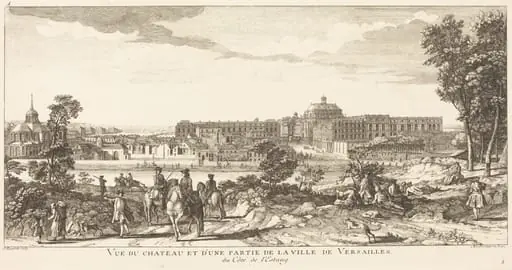 Vue du Chateau et d'une Partie de la Ville deVersailles
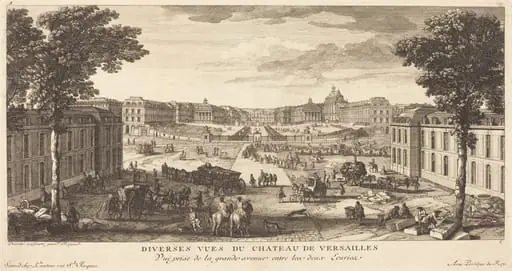 Vue Prise de la grande avenue entre les deux Ecuries
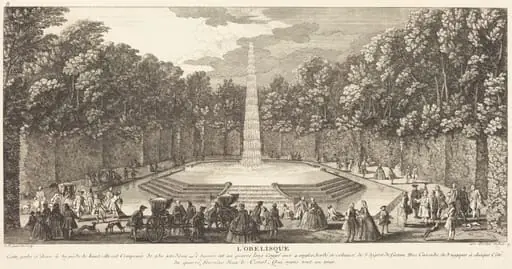 L'Obelisque
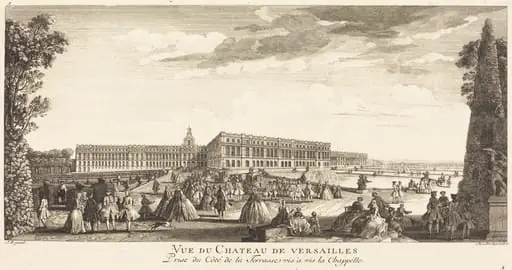 Vue du Chateau de Versailles Prise du Cote dela Terrasse vis a vis la Chapelle
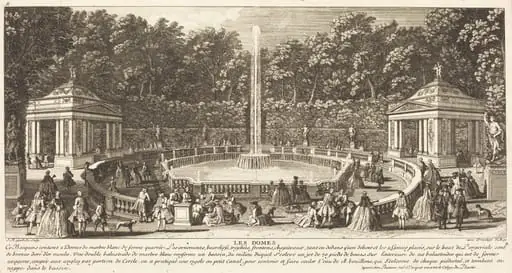 Les Domes
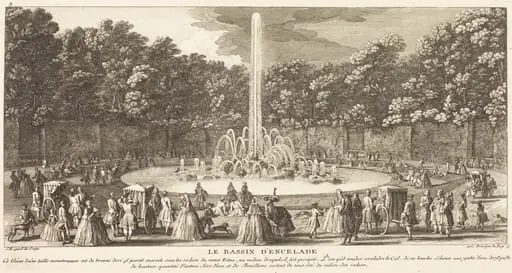 Le Bassin d'Encelade
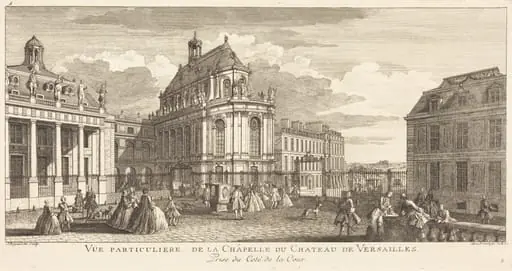 Vue Particuliere de la Chapelle du Chateau deVersailles
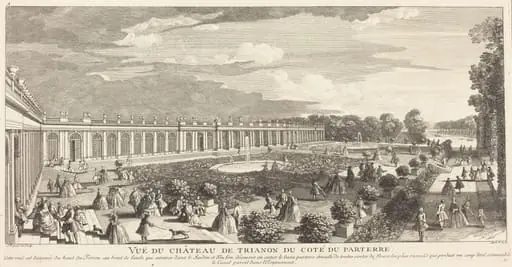 Vue du Chateau de Trianon du Cote du Parterre
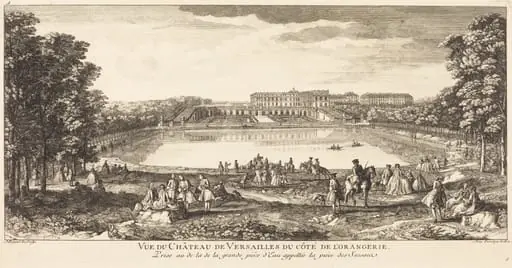 Vue du Chateau de Versailles du Cote de l'Orangerie
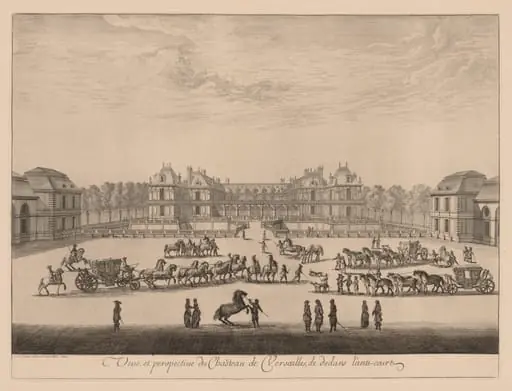 Vue et perspective du Château de Versailles, de dedans l'anti-cour
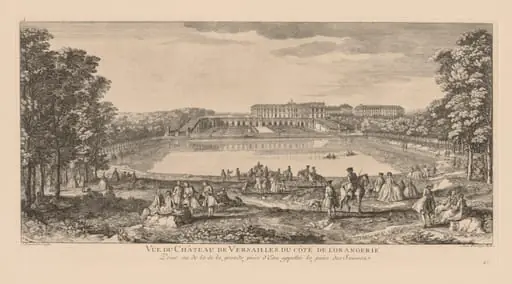 Vue du Château du Versailles, du côté de l'Orangerie, prise au delà de la pièce d'eau des Suisses
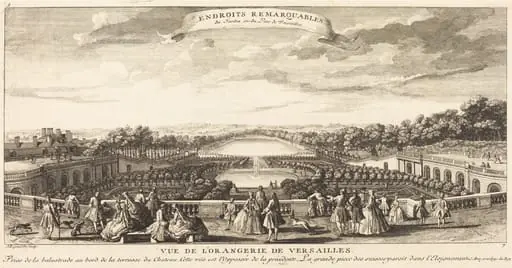 Vue de l'Orangerie de Versailles
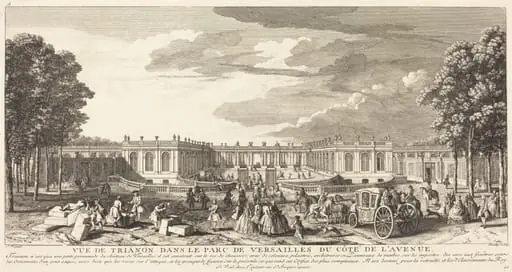 Vue de Trianon dans le Parc de Versailles du Cote de l'Avenue
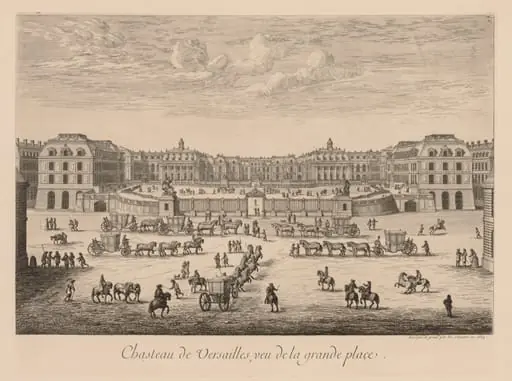 Vue du Château de Versailles, vu de la Grande Place
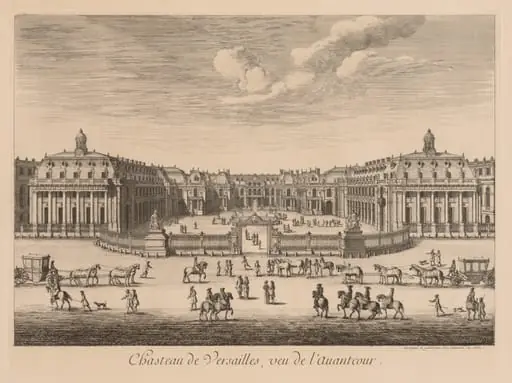 Vue du Château de Versailles, vu de l'avant-cour
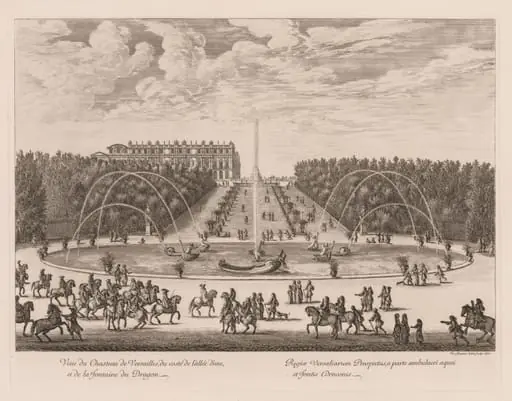 Vue du Château de Versailles, du côté de l'allée et de la fontaine du Dragon
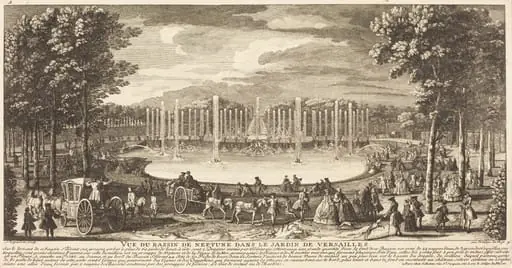 Vue du Bassin de Neptune dans le Jardin de Versailles