Artwork
Vue du Chateau de Trianon du Cote du Parterre
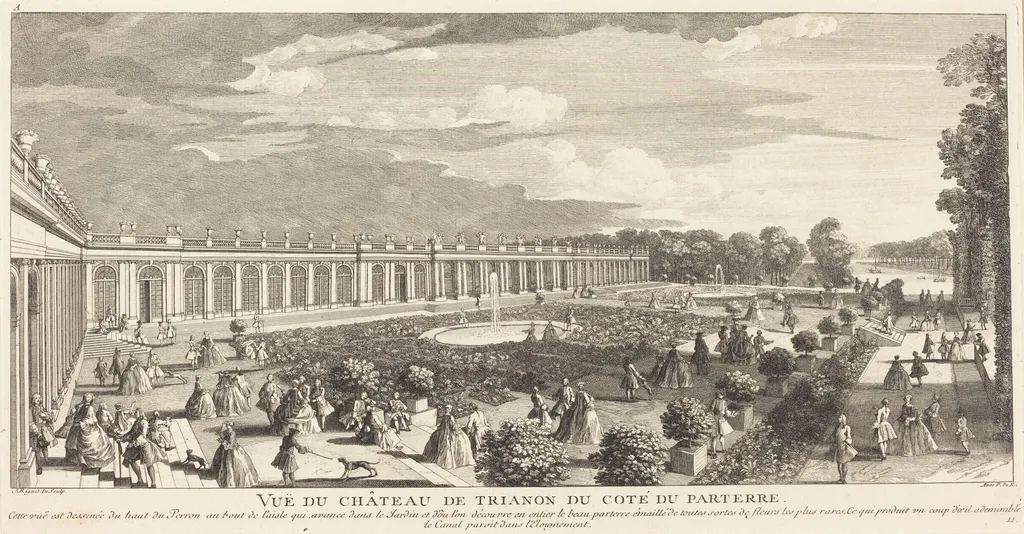
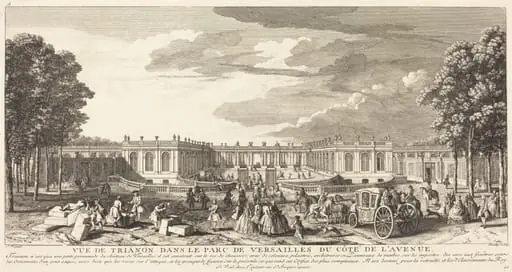
Vue du Chateau de Trianon du Cote du Parterre is an ink print by the Baroque artist Jean-Baptiste Rigaud. It dates from 1746 and is held in the collection of the National Gallery of Art. Jean‑Baptiste Rigaud’s 1746 print presents a cultivated garden vista set before the modest Chateau de Trianon.
About this work
Overview
Figures in contemporary dress populate the pathways, pausing on benches and strolling, lending a sense of genteel activity to the orderly landscape.
Jean‑Baptiste Rigaud’s 1746 print presents a cultivated garden vista set before the modest Chateau de Trianon. The composition is organized along a central lawn flanked by formal flower beds of circular and square forms, while a colonnaded pavilion stretches along one side. Figures in contemporary dress populate the pathways, pausing on benches and strolling, lending a sense of genteel activity to the orderly landscape.
Subject & Meaning
The image illustrates the eighteenth‑century French ideal of a controlled, ornamental garden that serves both aesthetic pleasure and social display. By arranging people within the geometric planting schemes, the work underscores the harmony between nature, architecture, and aristocratic leisure, reflecting the period’s emphasis on rational design and cultivated refinement.
Technique & Style
Executed as an etching and engraving, Rigaud employs fine, incised lines to render the texture of foliage, fabric folds, and architectural detail, achieving a sketch‑like immediacy. The delicate hatching conveys atmospheric clouds and subtle tonal variation, while the crisp outlines define the structured garden geometry, demonstrating the printmaker’s command of line to suggest depth and surface.
History & Provenance
Created in 1746, the print was likely produced for a market interested in topographical views of royal estates. It has survived in several collections of French prints, documenting the appearance of the Trianon gardens before later alterations. Its attribution to Rigaud is confirmed by signatures and stylistic parallels with his other mid‑century etchings.
Artist & collection


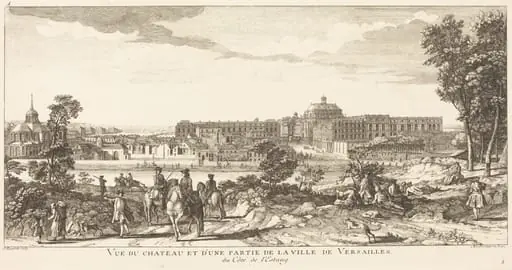 Vue du Chateau et d'une Partie de la Ville deVersailles
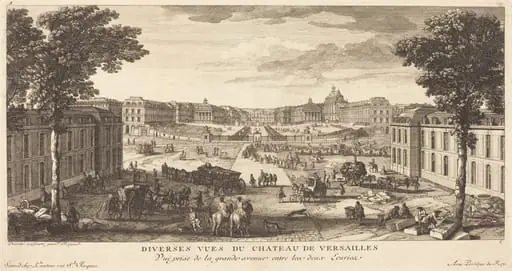 Vue Prise de la grande avenue entre les deux Ecuries
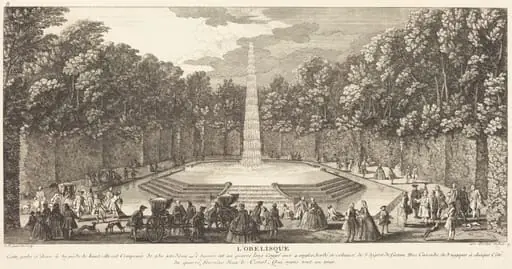 L'Obelisque
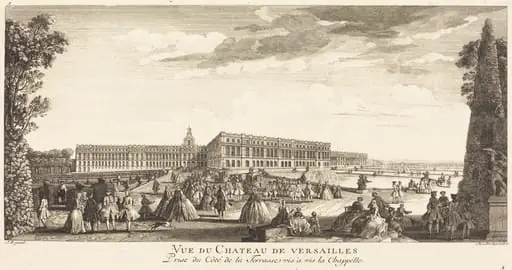 Vue du Chateau de Versailles Prise du Cote dela Terrasse vis a vis la Chapelle
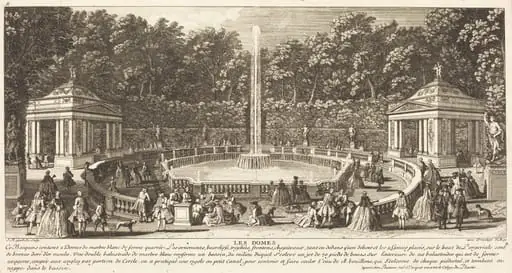 Les Domes
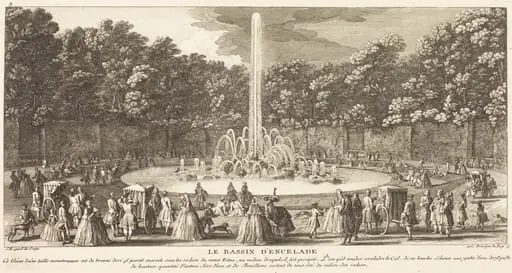 Le Bassin d'Encelade
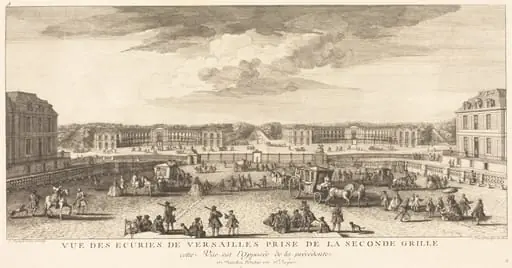 Vue des Ecuries de Versailles Prise de la Seconde Grille
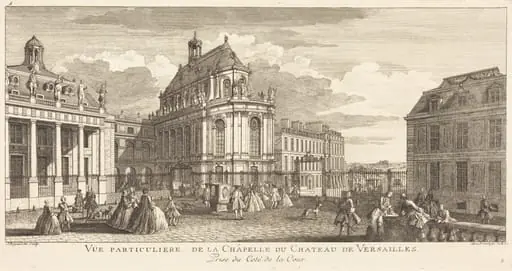 Vue Particuliere de la Chapelle du Chateau deVersailles