Artwork
Christ Enthroned
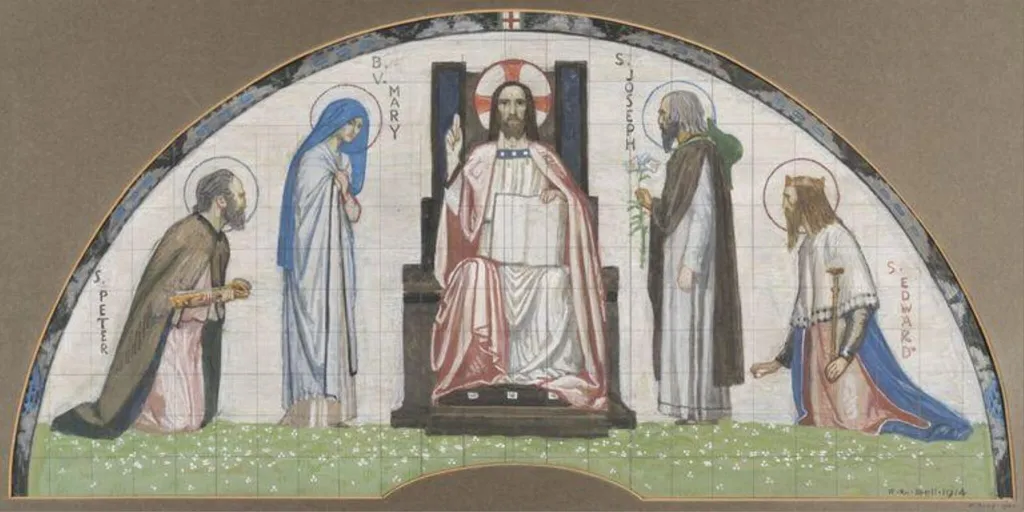
Christ Enthroned is a watercolor work on paper by Robert Anning Bell. It dates from 1914 and is held in the collection of the Victoria and Albert Museum. This watercolour study was prepared as a design for a mosaic at the main entrance of Westminster Cathedral.
About this work
Overview
This watercolour study was prepared as a design for a mosaic at the main entrance of Westminster Cathedral. It presents Christ seated in majesty, surrounded by four saints, arranged symmetrically in a shallow arc. The composition emphasizes stillness and hierarchy, with figures outlined in gold and blue against a plain background, suggesting a liturgical rather than naturalistic space.
Subject & Meaning
The central figure of Christ, identified by his halo and gesture of blessing, is flanked by the Virgin Mary and Saint Peter on his right, and Saint Joseph and Saint Edward the Confessor on his left. The inclusion of Edward, an Anglo-Saxon king canonized for his piety, links the sacred imagery to English ecclesiastical tradition, reinforcing the cathedral’s national and religious identity.
Technique & Style
Executed in watercolour, the work employs soft, translucent layers and precise linear outlines to define form. The figures appear flattened, with minimal shading, echoing Byzantine and medieval iconography. Gold and blue halos and borders enhance the otherworldly tone, while the restrained palette supports a sense of solemnity and timelessness.
History & Provenance
Created around 1915, the watercolour served as a full-scale model for a mosaic installed in Westminster Cathedral between 1915 and 1916. The mosaic was fabricated by the firm Messrs. Powell, known for ecclesiastical glass and mosaic work. The original study remained in the artist’s possession and later entered the Victoria and Albert Museum’s collection as part of its holdings on religious art.
Context
This watercolour aligns with broader movements seeking to reconnect modern worship spaces with historical visual traditions.
The commission reflected early 20th-century efforts to revive liturgical art in British Catholic churches, drawing inspiration from early Christian and medieval precedents. Westminster Cathedral’s design, in Byzantine style, called for imagery that emphasized spiritual authority over naturalism. This watercolour aligns with broader movements seeking to reconnect modern worship spaces with historical visual traditions.
Legacy
The watercolour survives as a key document of the mosaic’s development, illustrating the transition from preparatory design to permanent ecclesiastical decoration. It remains a representative example of how early 20th-century British artists engaged with sacred iconography, blending traditional symbolism with modern materials and methods to serve a renewed liturgical vision.
Artist & collection

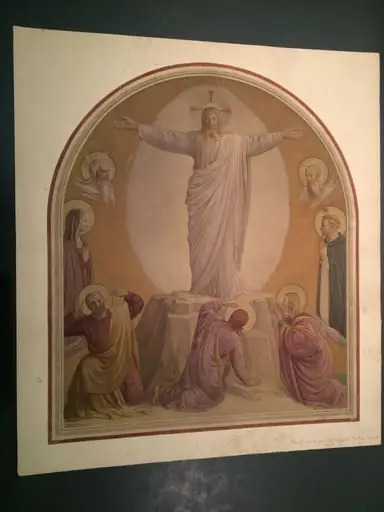 Copy after The Transfiguration, Fra Angelico in the Museo di San Marco (Florence)
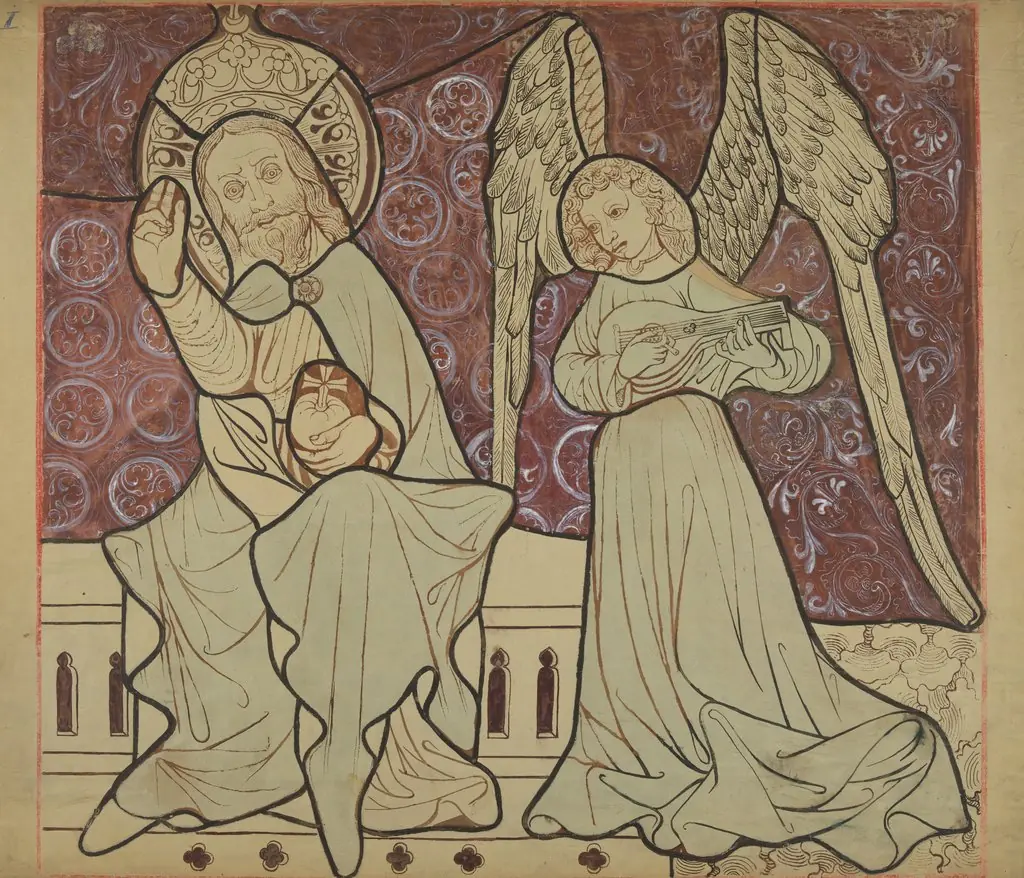 Enthroned Christ with an angel from the scene "Coronation of the Blessed Virgin Mary" (right part). Artistic reconstruction of a stained-glass panel from the Dominican church in Kraków
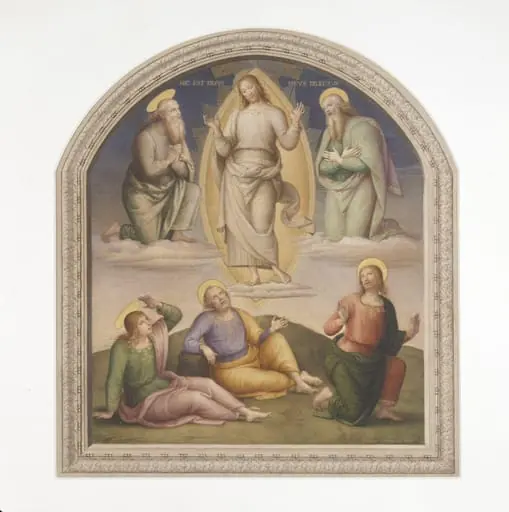 Copy after the painting The Transfiguration by Perugino in the Collegio del Cambio, Perugia.
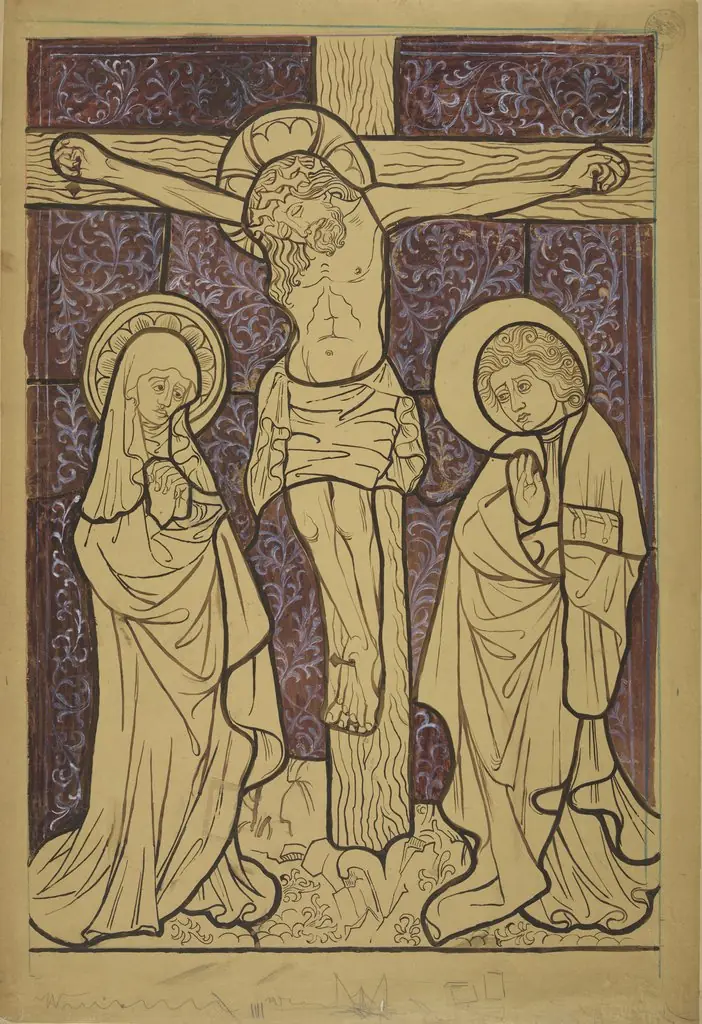 Crucifixion. Artistic reconstruction of a stained-glass panel from the Dominican church in Kraków
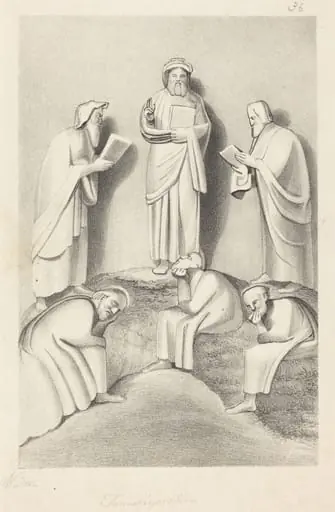 The Transfiguration
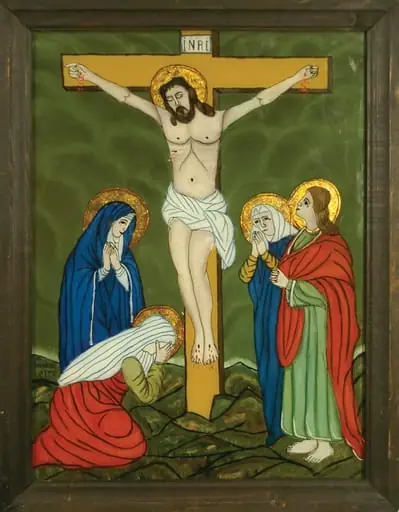 Răstignirea lui Iisus
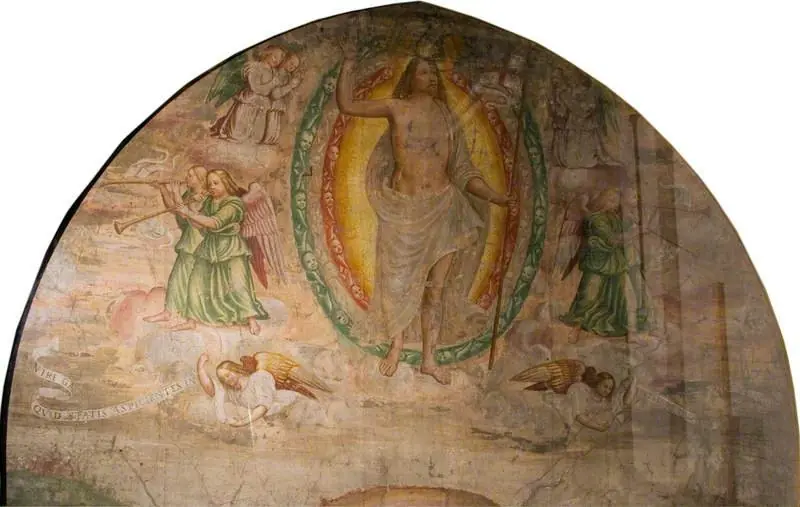 Christ Ascending
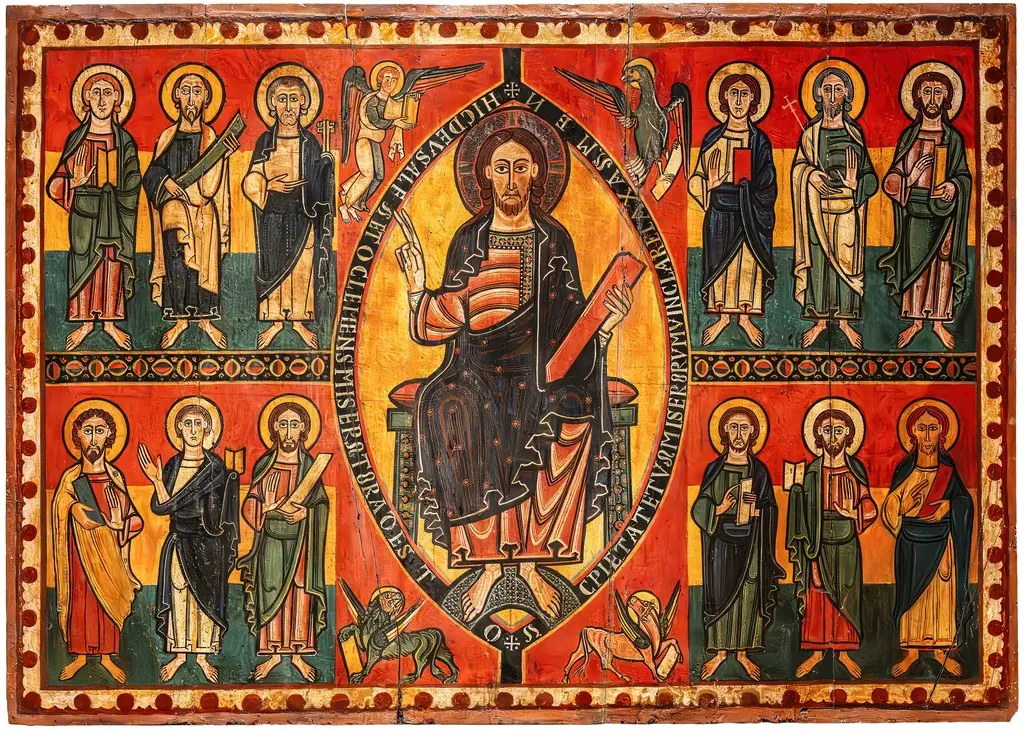 Altar frontal from Esquius
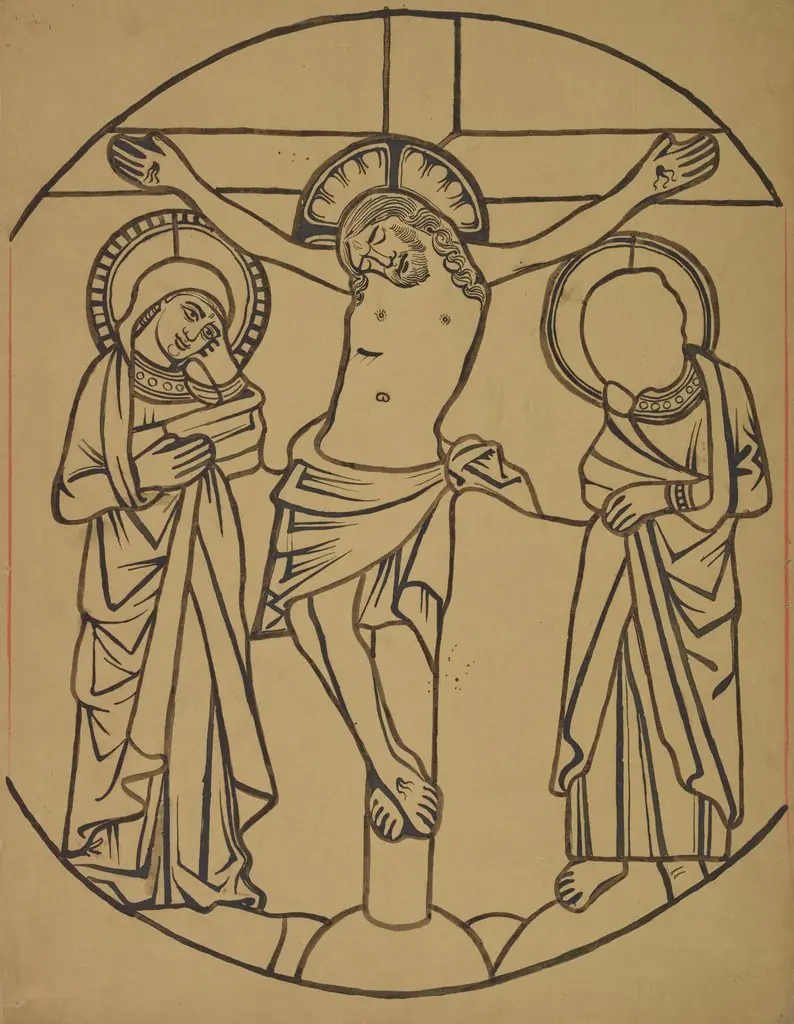 Crucifixion. Artistic reconstruction of a stained-glass panel from the Dominican church in Kraków
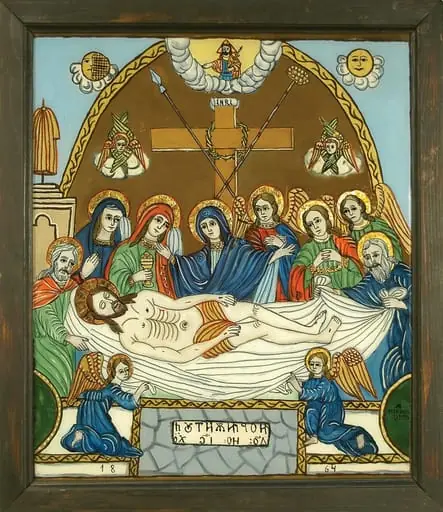 Prohodul lui Iisus
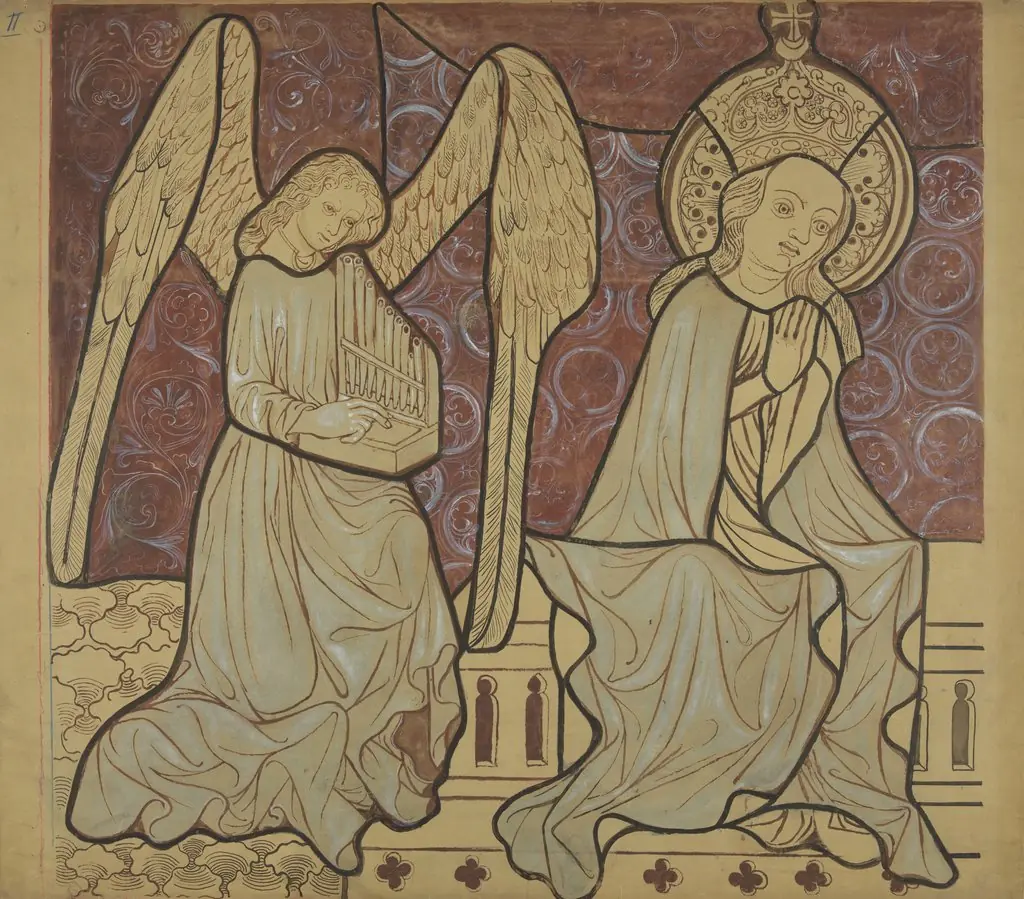 Enthroned Mary with an angel from the scene "Coronation of the Blessed Virgin Mary" (left part). Artistic reconstruction of a stained-glass panel from the Dominican church in Kraków
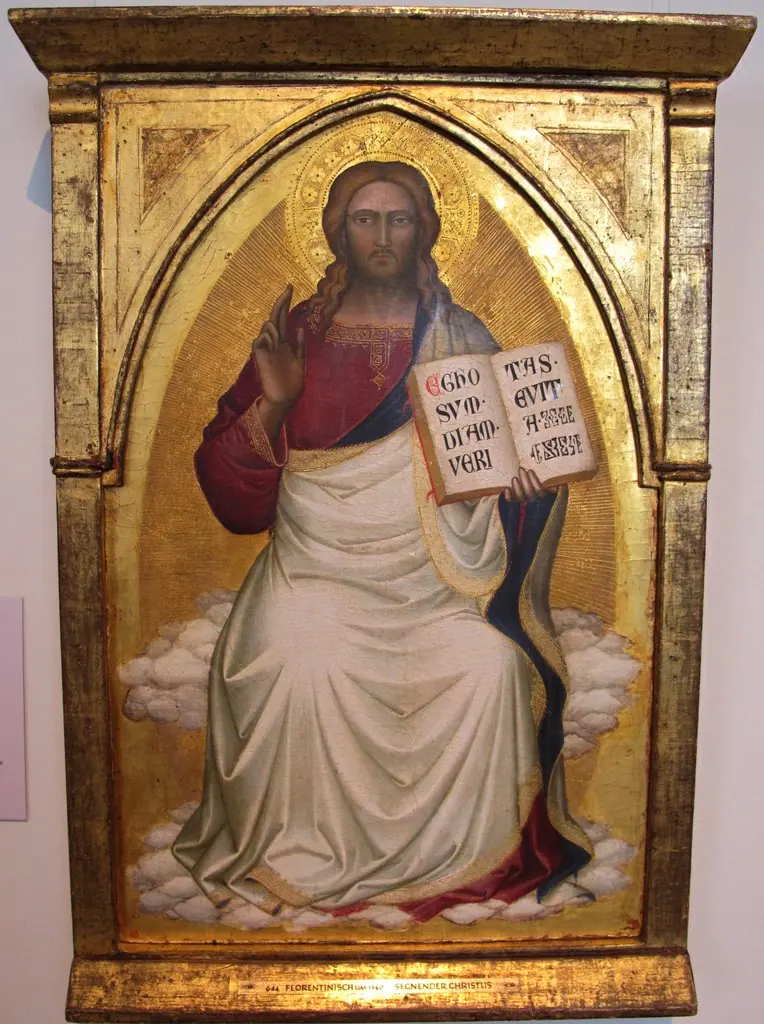 Christ enthroned