Artwork
The Transfiguration
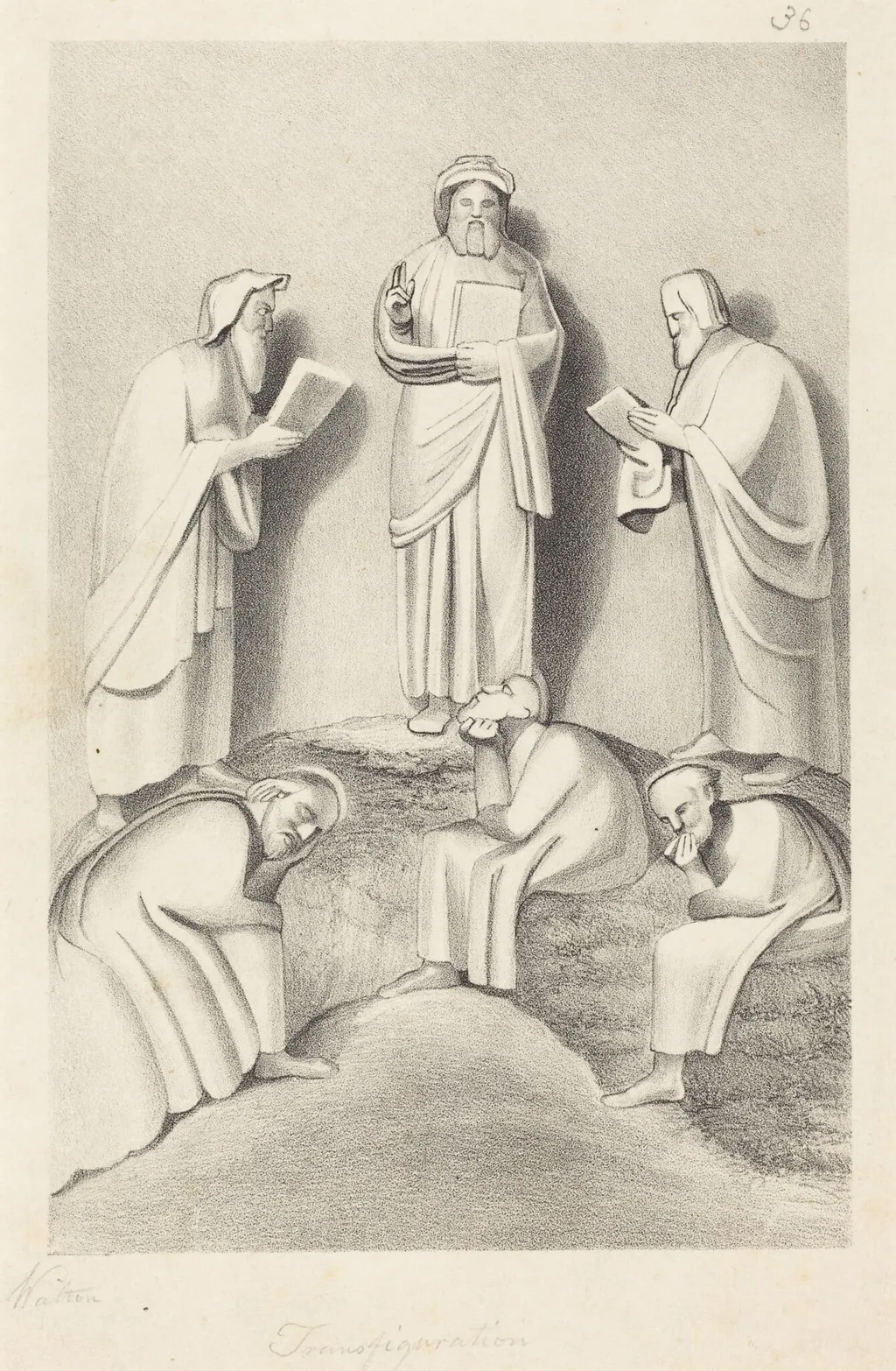
The Transfiguration is an ink print by the Romanticist artist W. Walton. It dates from 1829 and is held in the collection of the National Gallery of Art. This 1829 lithograph by W.
About this work
Overview
This 1829 lithograph by W. Walton depicts a biblical transfiguration scene. Executed in gray tones, the print presents six figures arranged in a vertical composition. A central robed figure stands elevated on rocky terrain, flanked by two standing men, while three others kneel or sit below. The work predates the addition of lettering, preserving its original graphic clarity.
Subject & Meaning
The scene portrays Christ’s transfiguration, a moment of divine revelation recounted in Christian scripture. The central figure, illuminated against a lighter backdrop, embodies spiritual transformation, while the surrounding figures—likely apostles—react with reverence. Their downward gazes and bowed postures suggest awe, reinforcing the sacred narrative’s emotional weight.
Technique & Style
Walton employs lithographic techniques to achieve tonal variation and textural detail, particularly in the rocky terrain and drapery. The composition’s verticality and dramatic contrasts reflect Romanticism’s emphasis on emotion and transcendence. Subtle gradations of gray enhance depth, while the absence of lettering focuses attention on the image’s symbolic core.
History & Provenance
Created in 1829, this proof state of *The Transfiguration* precedes the final printed edition. Lithography, then a relatively new medium, allowed Walton to explore tonal effects and intricate line work. The print’s early production phase suggests it may have been intended for religious or instructional use, though its exact circulation remains undocumented.
Context
The work emerges from early 19th-century Romanticism, a movement that prioritized individual spirituality and sublime experience. Lithography’s rise during this period enabled artists to disseminate religious imagery with greater accessibility. Walton’s interpretation aligns with contemporary interest in dramatic biblical episodes, blending devotion with artistic innovation.
Artist & collection


 Altar Panel - Southwold Church
 Juno Lucina
 Untitled
 Diogenes Casting Away his Bowl
 Christ Full-Length
 Fifth Series
 Christ Preaching and Healing (Fragment from the Hundred Guilder Print)
 Choristers, 1st plate (Le lutrin)
 Holy Family and Four Saints
 The Adoration of the Shepherds
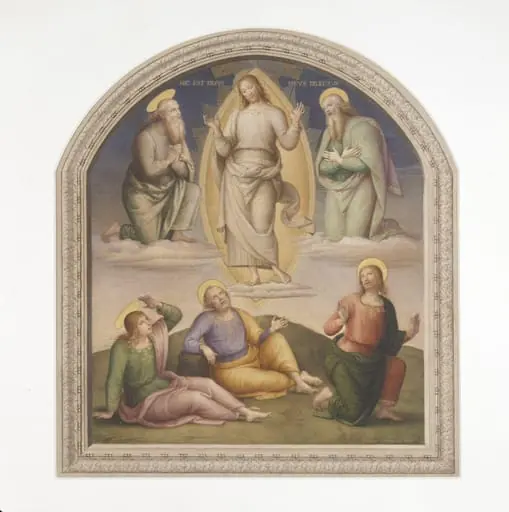 Copy after the painting The Transfiguration by Perugino in the Collegio del Cambio, Perugia.