Artwork
Răstignirea lui Iisus
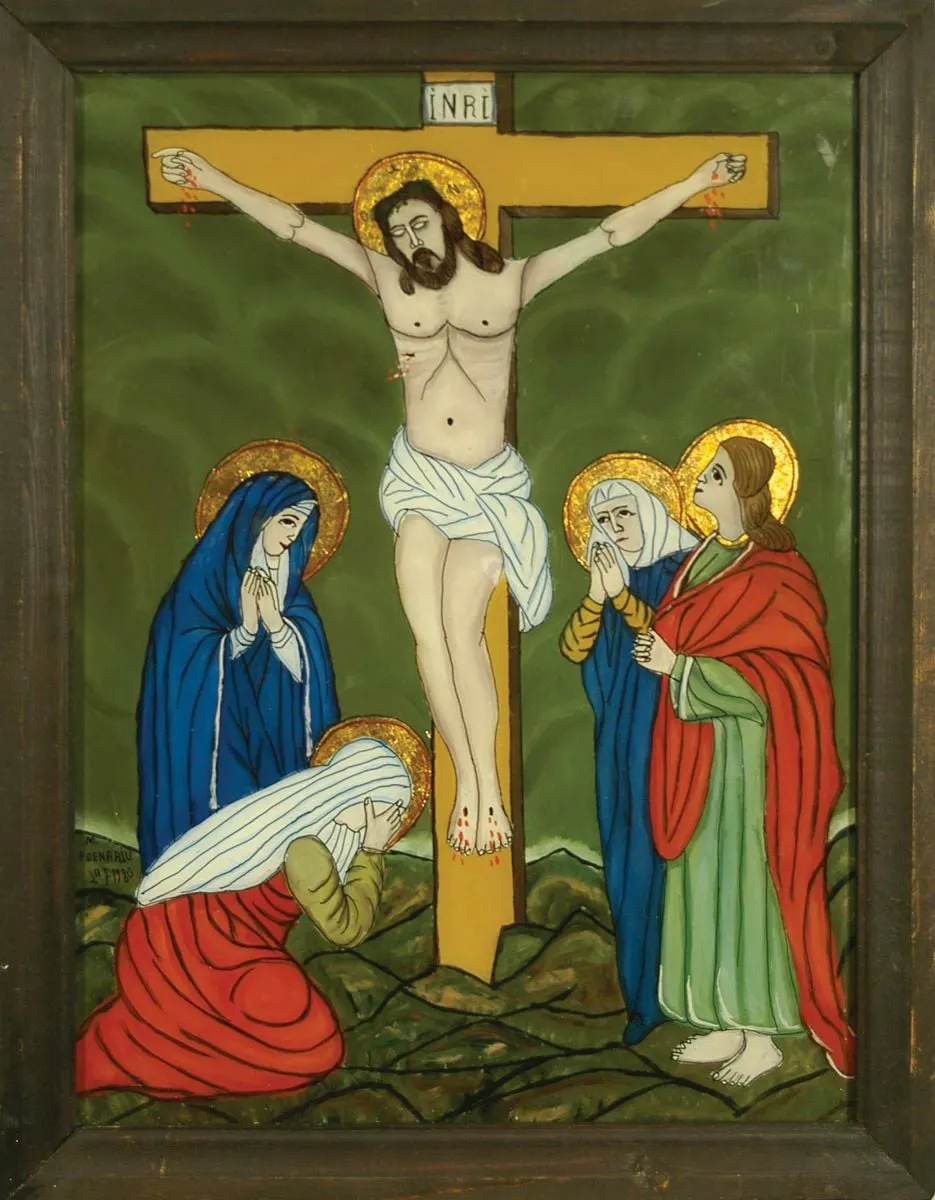
Răstignirea lui Iisus is a drawing by Maria Deac Poenariu. It dates from 1980 and is held in the collection of the Alba Iulia Unification National Museum.
About this work
Overview
Răstignirea lui Iisus, painted by Maria Deac Poenariu in 1980, is a devotional image depicting the crucifixion of Jesus.
Răstignirea lui Iisus, painted by Maria Deac Poenariu in 1980, is a devotional image depicting the crucifixion of Jesus. Executed in a stylized, folk-influenced manner, the work is part of the collection at the Museum of Ethnography. Its composition centers on Christ on the cross, surrounded by four figures in prayer, all rendered with symbolic halos. The painting reflects a fusion of religious iconography and regional artistic traditions.
Subject & Meaning
The scene portrays Christ’s crucifixion with four kneeling or standing figures, each bearing a halo, suggesting they are saints or devout witnesses. Their clasped hands and upward gaze convey reverence, emphasizing contemplation over suffering. The INRI inscription on the cross, an abbreviation of the Latin phrase meaning 'Jesus of Nazareth, King of the Jews,' anchors the scene in biblical tradition. The work functions as an object of private or communal devotion rather than narrative drama.
Technique & Style
The painting employs flat, decorative forms and bold outlines typical of Romanian folk art. Colors are vivid but restrained, with rich robes contrasting against a simplified green background. The yellow cross behind Christ serves as a symbolic backdrop rather than a realistic element. Halos are rendered as simple golden rings, and the wooden frame enhances the object-like quality of the piece, aligning it with liturgical artifacts rather than fine art conventions.
History & Provenance
Created in 1980, the painting entered the collection of the Museum of Ethnography shortly after its completion. Its acquisition reflects institutional interest in contemporary religious expressions rooted in local traditions. Maria Deac Poenariu, a Romanian artist known for her engagement with spiritual themes, produced this work during a period when religious imagery was subtly preserved despite state secularization policies. The painting’s survival and display underscore its cultural resonance.
Context
In late 20th-century Romania, public religious expression was limited under communist rule, yet private and folk-based piety persisted. This painting emerged within that tension, drawing on Orthodox iconographic conventions while adapting them through a personal, non-elite aesthetic. Its inclusion in an ethnographic museum signals recognition of religious art as part of everyday cultural life, not merely institutional theology.
Legacy
Răstignirea lui Iisus remains a quiet example of how religious imagery continued to be produced and valued in Romania during a period of political constraint. It contributes to a broader understanding of how folk traditions sustained spiritual expression beyond official channels. The work is not widely reproduced, but its presence in the museum collection ensures its role as a reference for studies on vernacular religious art in Eastern Europe.
Artist & collection
Artist
Romanian sacred-art drawings and paintings, 1970s–1990s, show biblical figures and local saints in clear line and flat color.
Museum
Alba Iulia Unification National Museum
Continue through works from the same source collection.
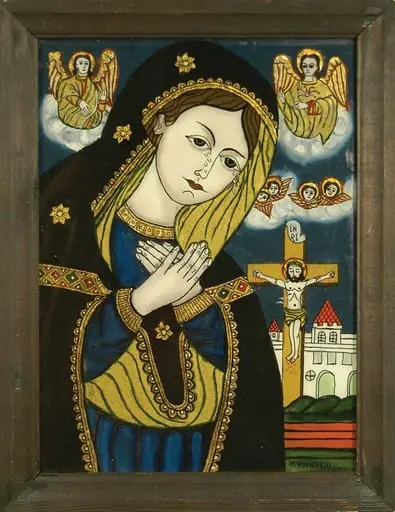
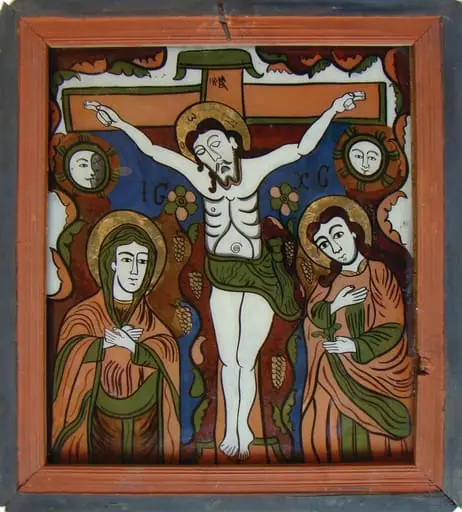
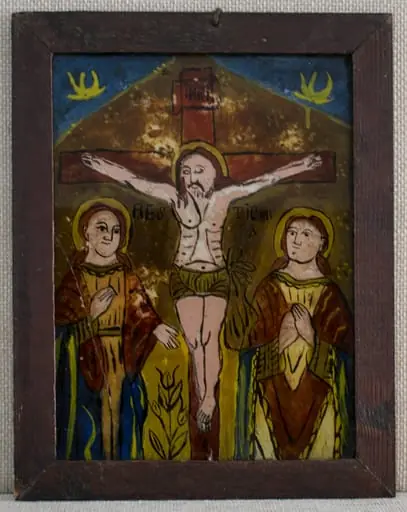 Icoana este pictată "în oglindă", pe un suport de sticlă de formă dreptunghiulară în ax vertical. Scena Răstignirii este redată într-o manieră specifică zonei Nicula - Gherla,(faza târzie, de decadență a acestei arte),după stil(în special desenul ochilor) putând fi atribuită lui Gheorghe Feur sau fiice sale Mariana. Crucea simplă, dreaptă, este axul de simetrie al compoziței, Isus răstignit are corpul destul de bine proporționat, anatomia studiată, ochii închiși, capul ușor aplecat pe umărul stâng, părul lung,castaniu roșcat, redat ca o meșă stângace, înconjurat de nimbul simplu, trasat cu mai mare atenție decât în icoanele vechi. În jurul mijlocului are un veșmânt bogat. De o parte și de alta a crucii, în prim plan, Fecioara Maria și Ioan Evanghelistul, 3/4, din ușor semiprofil, amândoi cu expresii nedefinite, fețele rotunde, diforme, bărbiile exagerat de mari. Vestimentația aproape identică, predomină roșul stins accentuat de alb și verdele amestecat cu albastru. Inscripția cu majuscule negre, dezordonat, sub brațele crucii se pierde pe fond. Câmpul în nuanțe de brun roșcat, voit sau din neglijență în degrade, se completează cu pământul galben violent(1/3 inferior) cu un contur de floare la baza crucii. Brațele crucii sunt delimitate într-un triunghi de culoare, făcând loc în colțurile superioare la două zone de albastru decorate cu o floare stilizată galbenă. Desenul nesigur este ușor estompat de cromatica ce încearcă o imitație(studiată sau nu) a realizărilor vechilor iconari de la Nicula. Rama, realizată din patru șipci de brad, culoare brun, îmbinate oblic la colțuri. Pe spate are bătut un dos din placaj. Colțul stâng este crăpat. Izvodul este identic cu cel utilizat la nr 27199.
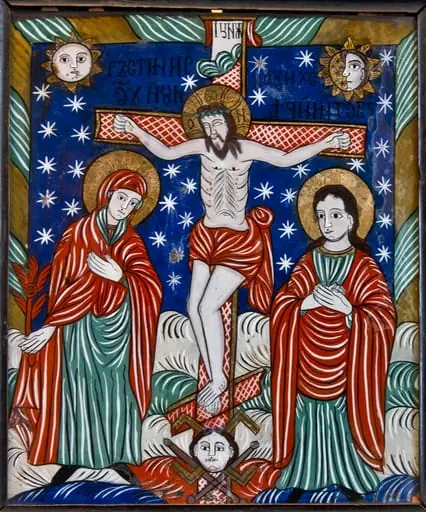 Răstignirea lui Iisus Hristos
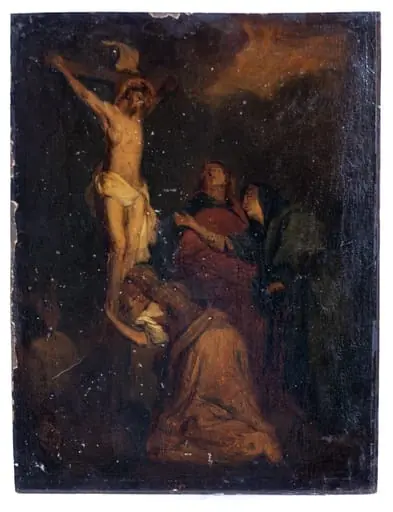 Răstignirea - schiță după van Dyck
 Răstignirea lui Iisus
 Crucifixion
 Christ on the Cross
 Crucifixion. Artistic reconstruction of a stained-glass panel from the Dominican church in Kraków
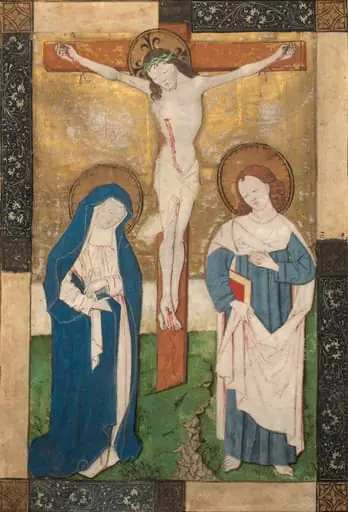 The Crucifixion
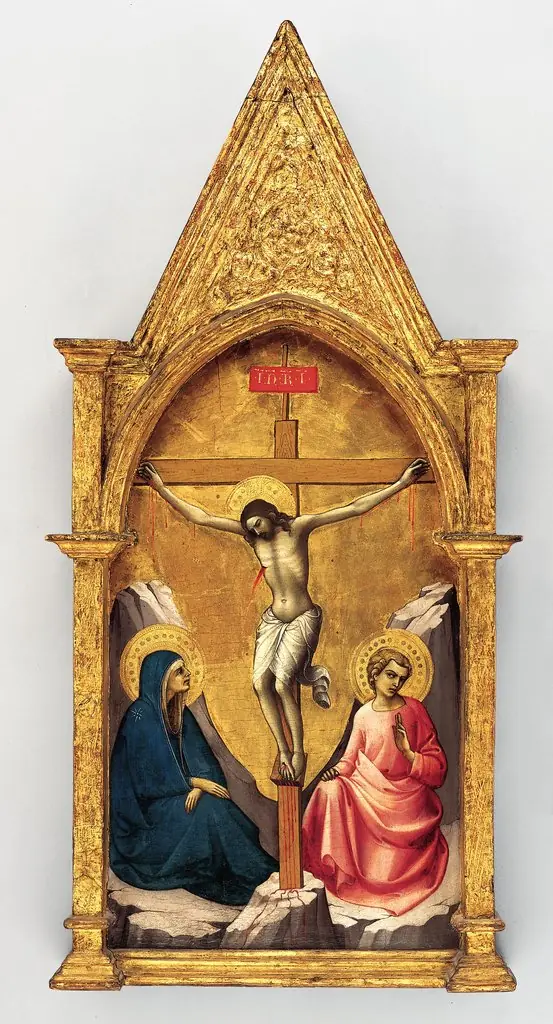 Tabernacle frame