Artwork
Saint James and Saint Clare
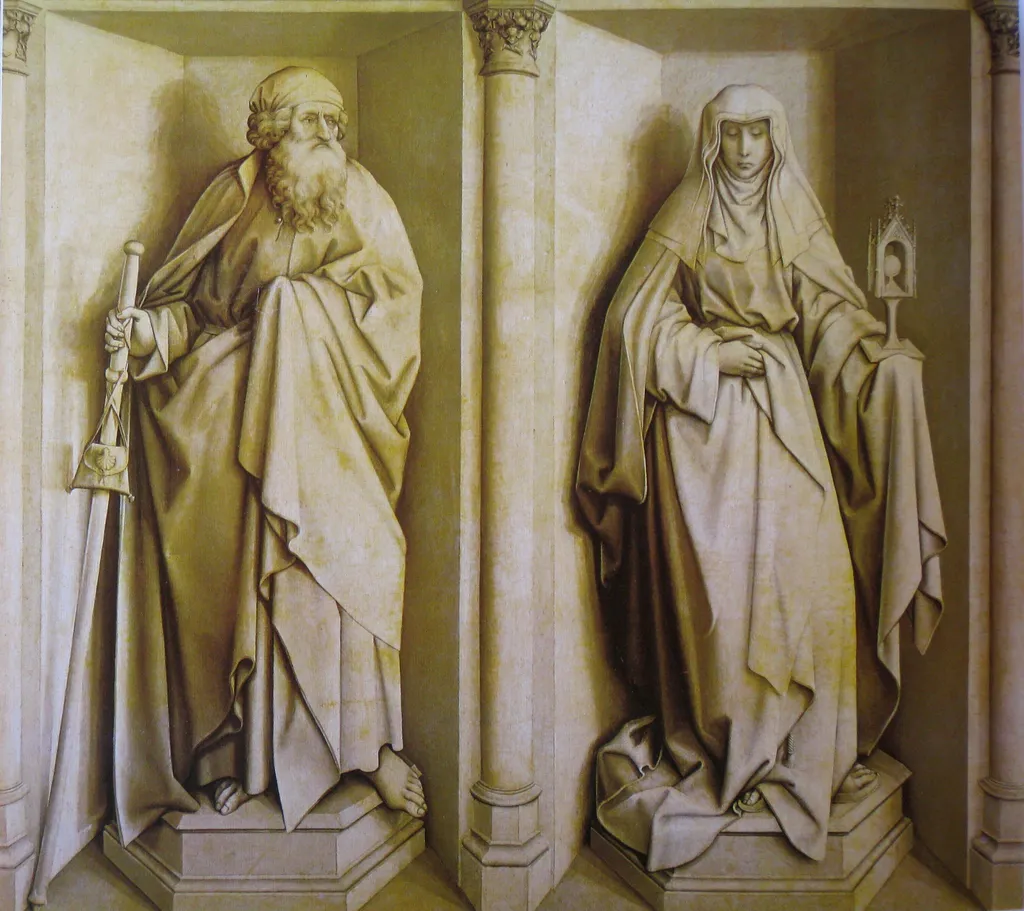
Saint James and Saint Clare is an oil painting by the Northern Renaissance artist Robert Campin. It dates from 1420 and is held in the collection of the Museo del Prado. Created around 1420, this oil painting presents two saints standing side by side within a modest interior.
About this work
Overview
The composition is framed by a simple wall and columnar backdrop, giving the scene a restrained, contemplative atmosphere.
Created around 1420, this oil painting presents two saints standing side by side within a modest interior. The older male figure, identified as Saint James the Elder, holds a staff crowned with a cross, while the female figure, Saint Clare of Assisi, folds her hands in prayer. The composition is framed by a simple wall and columnar backdrop, giving the scene a restrained, contemplative atmosphere.
Subject & Meaning
The work pairs the pilgrim‑saint James, traditionally associated with travel and protection, with Clare, founder of the Poor Clares and a model of monastic devotion. Their juxtaposition underscores themes of spiritual journey and contemplative piety, inviting viewers to contemplate both active missionary work and cloistered prayer as complementary paths within Christian life.
Technique & Style
Executed in early oil on panel, the painting demonstrates Campin’s pioneering use of layered glazes to achieve subtle modeling of flesh and fabric. The figures are rendered with meticulous attention to texture—the roughness of James’s robe, the smooth drape of Clare’s hooded cloak—while the muted palette and restrained lighting reflect the Northern Renaissance’s focus on realism and interiority.
History & Provenance
Attributed to Robert Campin, often identified with the enigmatic Master of Flémalle, the piece entered the Museo del Prado’s collection in the 20th century, where it remains on display. Its attribution rests on stylistic parallels with other works linked to Campin, confirming his role in shaping early Netherlandish painting.
Context
Campin worked contemporaneously with Jan van Eyck, and together they laid the groundwork for the Northern Renaissance’s oil technique and naturalistic detail. This painting exemplifies the period’s shift from medieval iconography toward individualized, humanized saints, reflecting broader cultural movements toward personal devotion and the visual exploration of interior space.
Artist & collection
Artist
Robert Campin (Valenciennes (France) c. 1375 - Tournai (Belgium) 26 April 1444) now usually identified with the Master of Flémalle (earlier the Master of the Merode Triptych, before the discovery of three other similar…

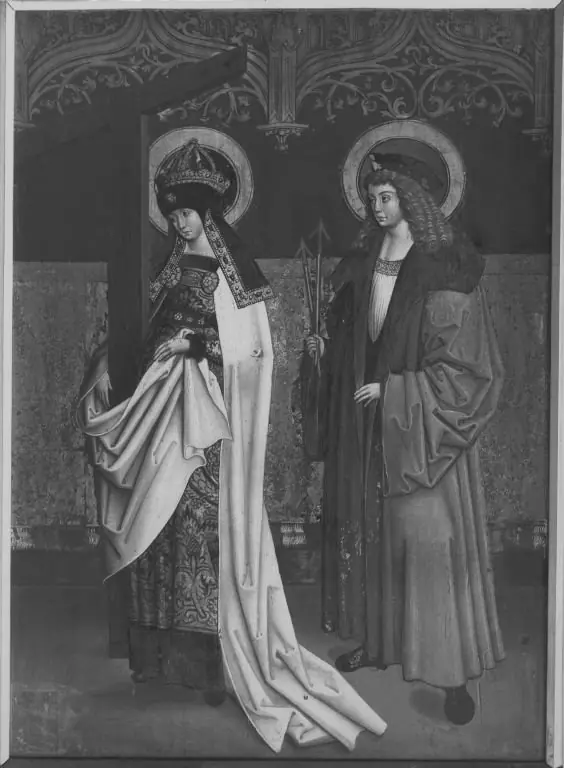 Flügel eines Kreuzaltares, Außenseite: Die hll. Helena und Sebastian
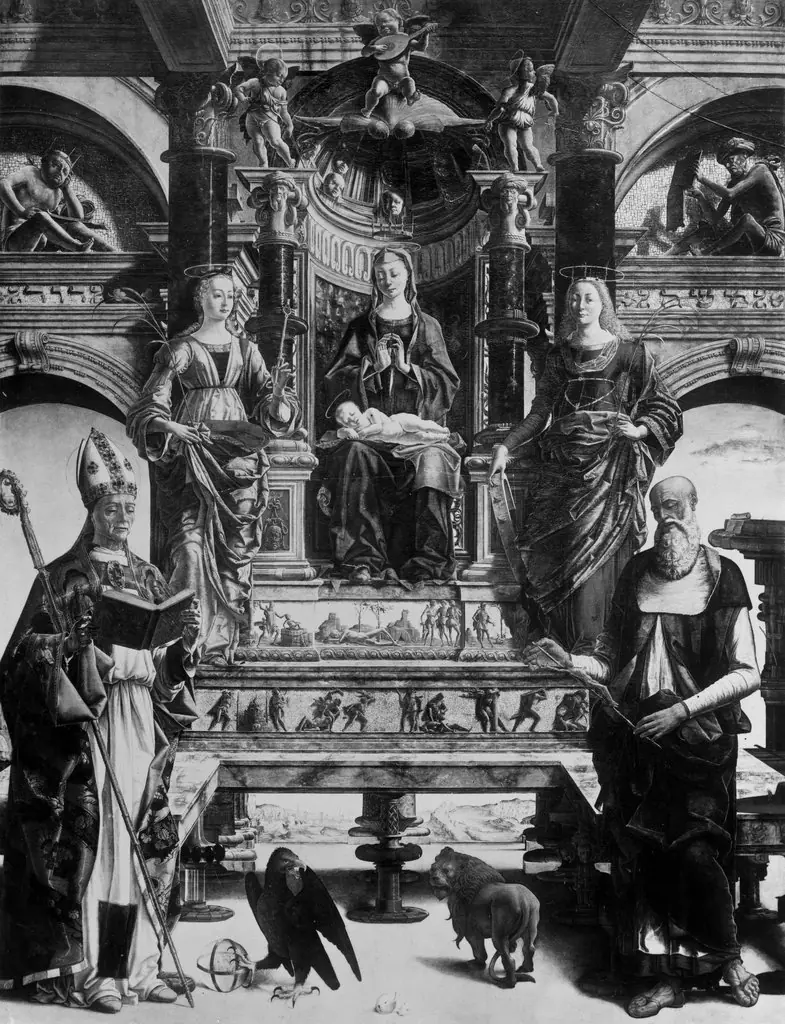 Madonna enthroned with the sleeping child and four saints
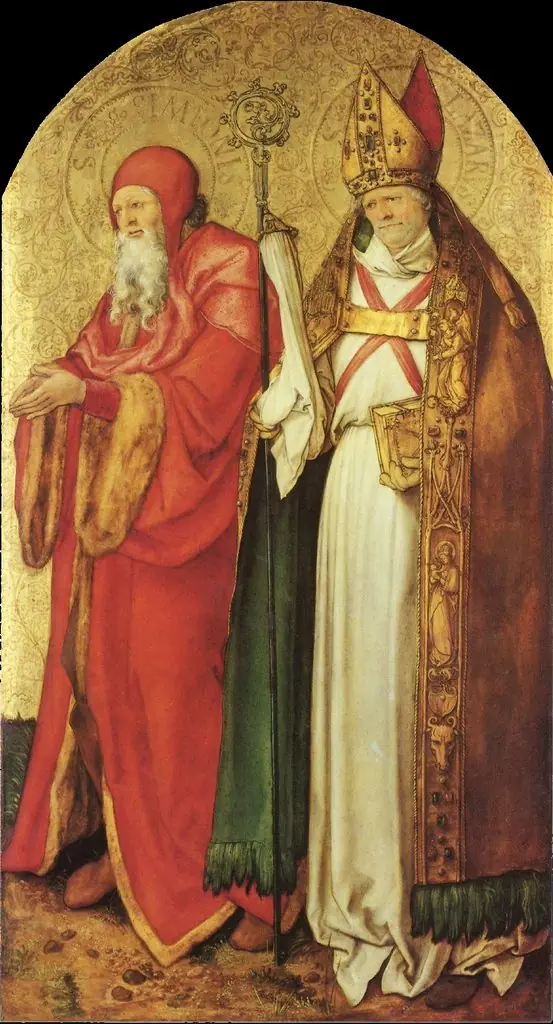 Jabach Altar: Saints Simeon and Lazarus
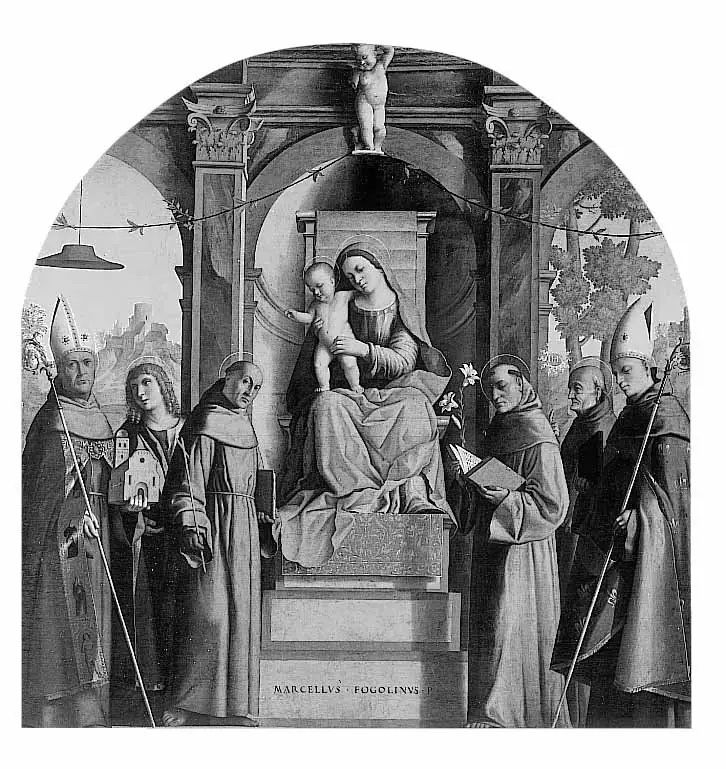 Enthroned virgin Mary with blessing child an saints
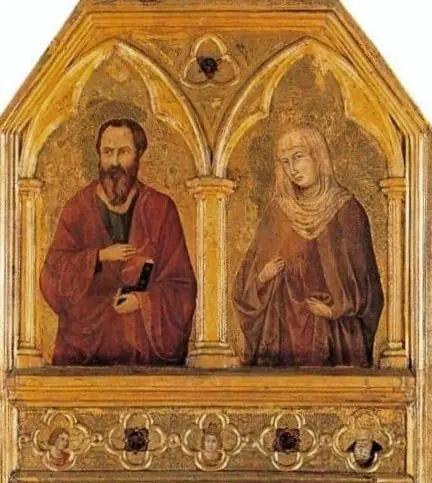 Saints Matthias and Elizabeth of Hungary (?)
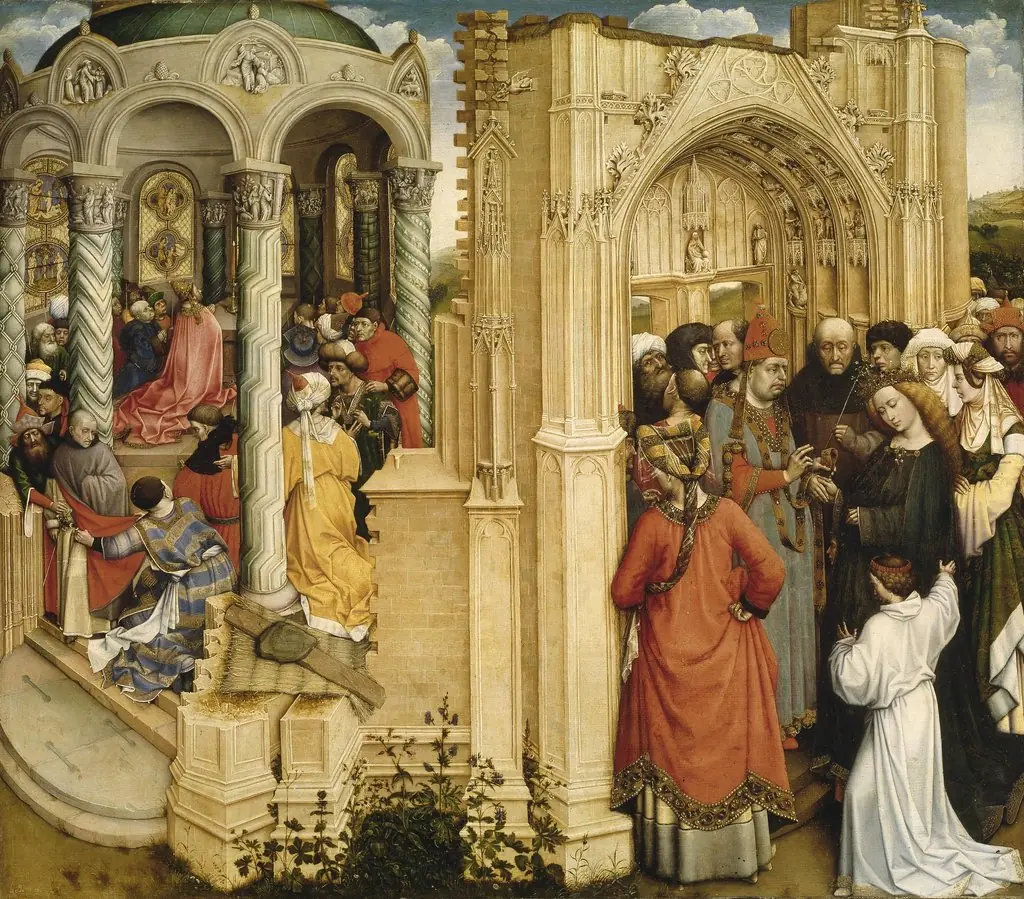
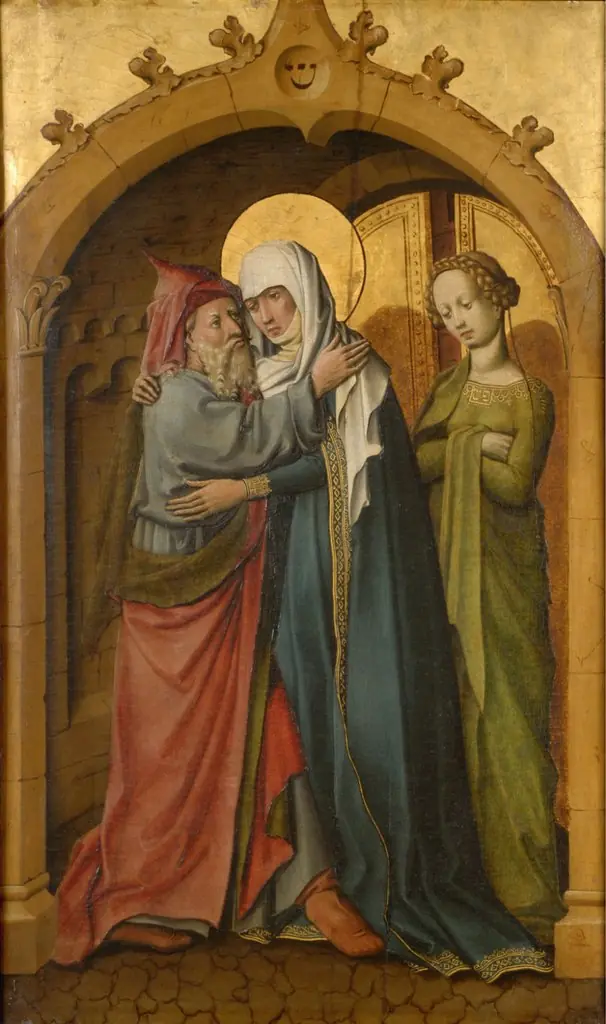 The Meeting at the Golden Gate
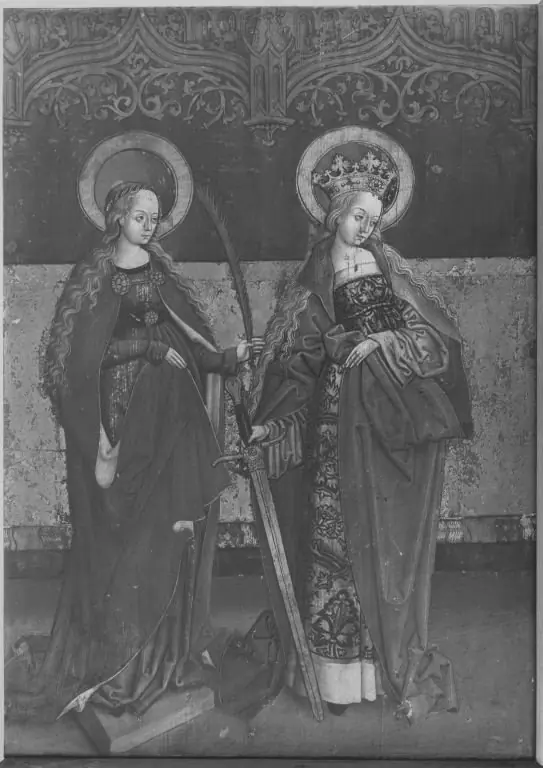 Flügel eines Kreuzaltares, Außenseite: Die hll. Katharina und Barbara
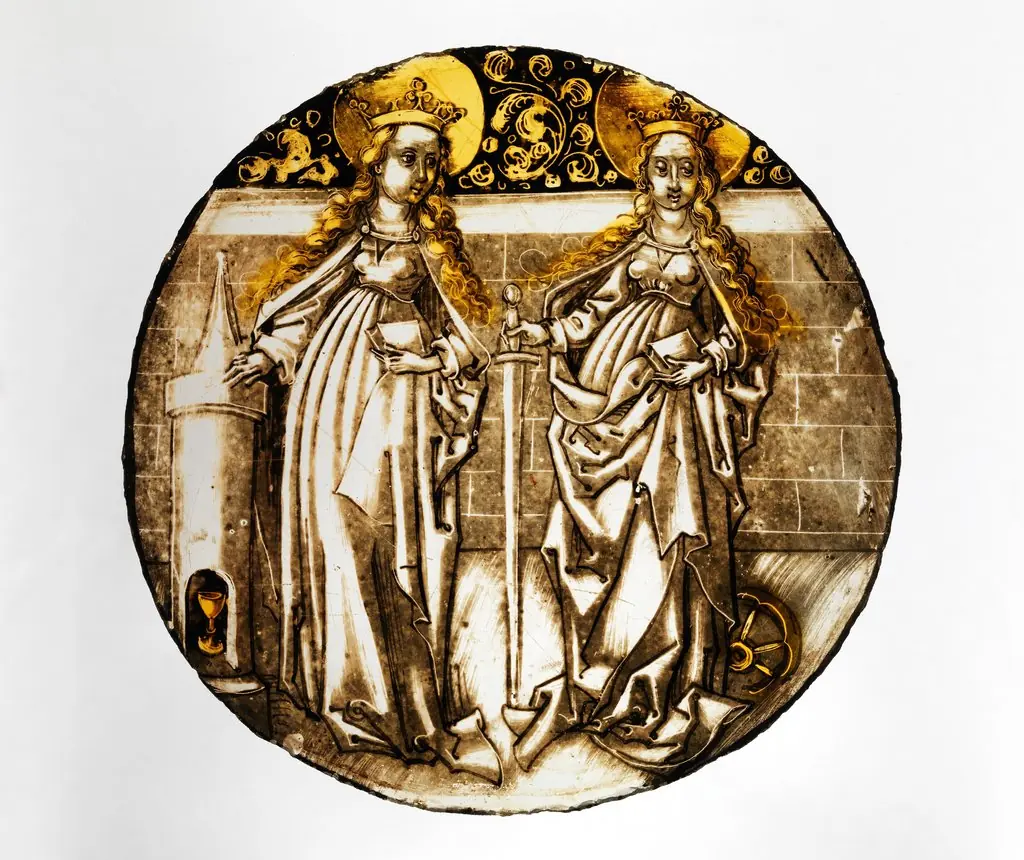 Roundel with Saints Barbara and Catherine
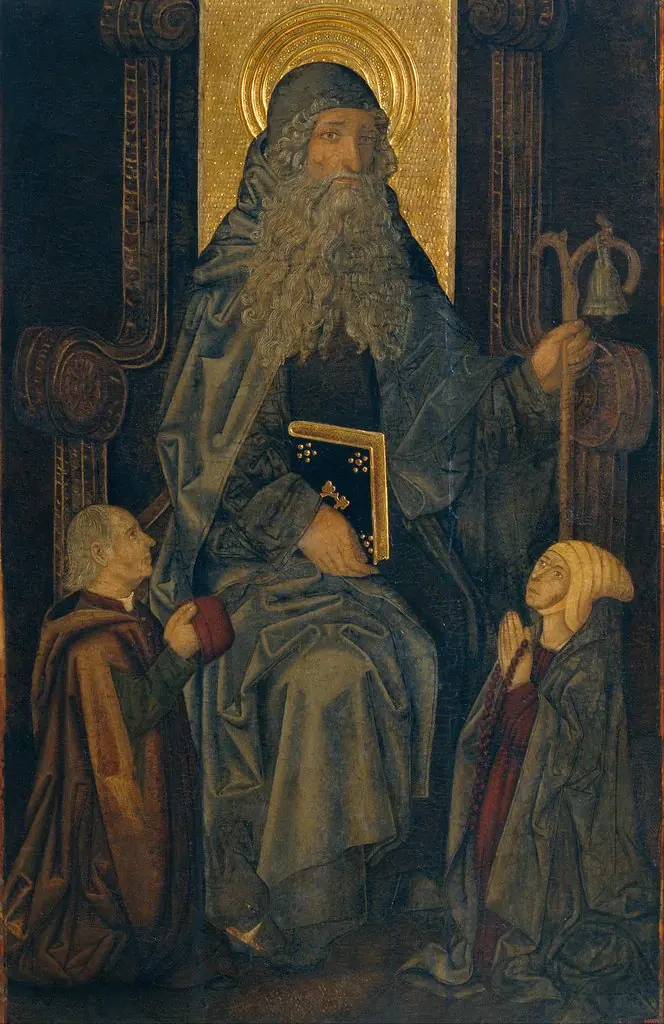 Saint Anthony the Abbot and Donors
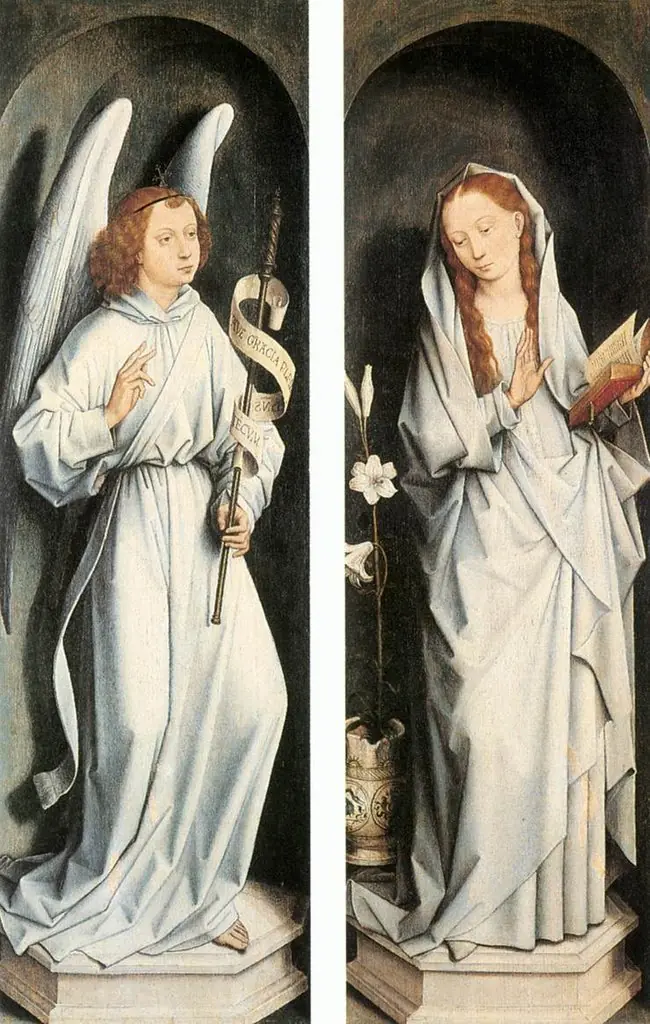 Annunciation
 Madonna and Child with Saint Anne (Back: Remnant of a halo)
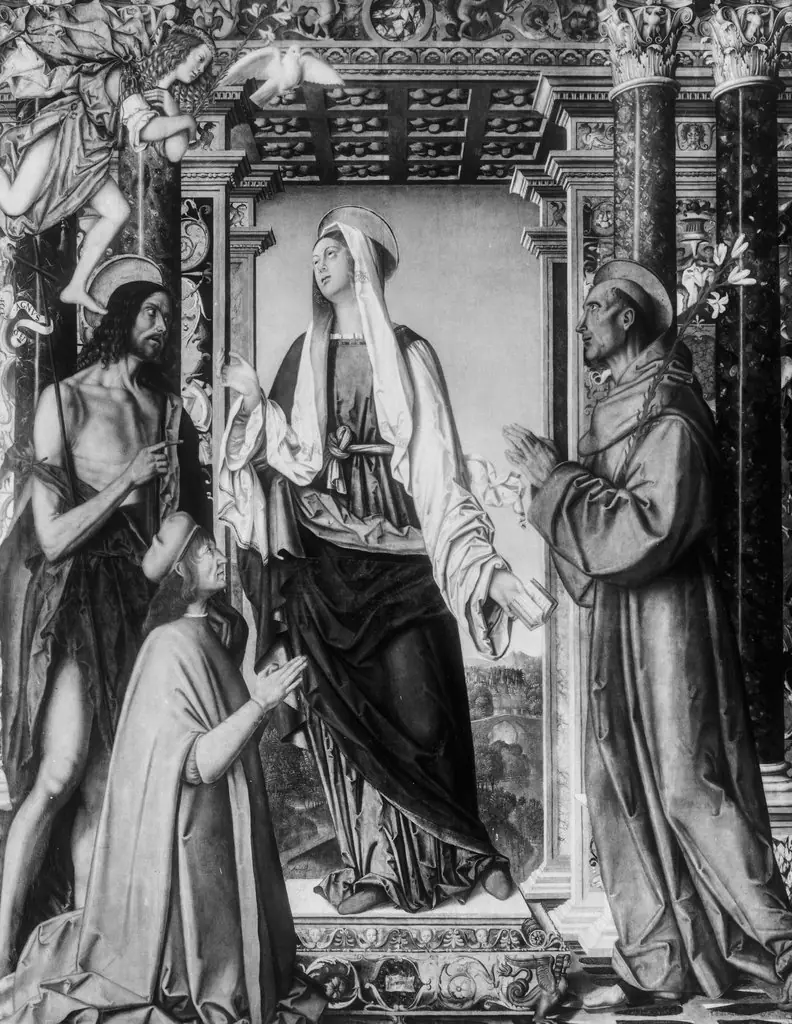 Annunciation to Mary with John the Baptist, Anthony of Padua and a donor