Artwork
Trinity
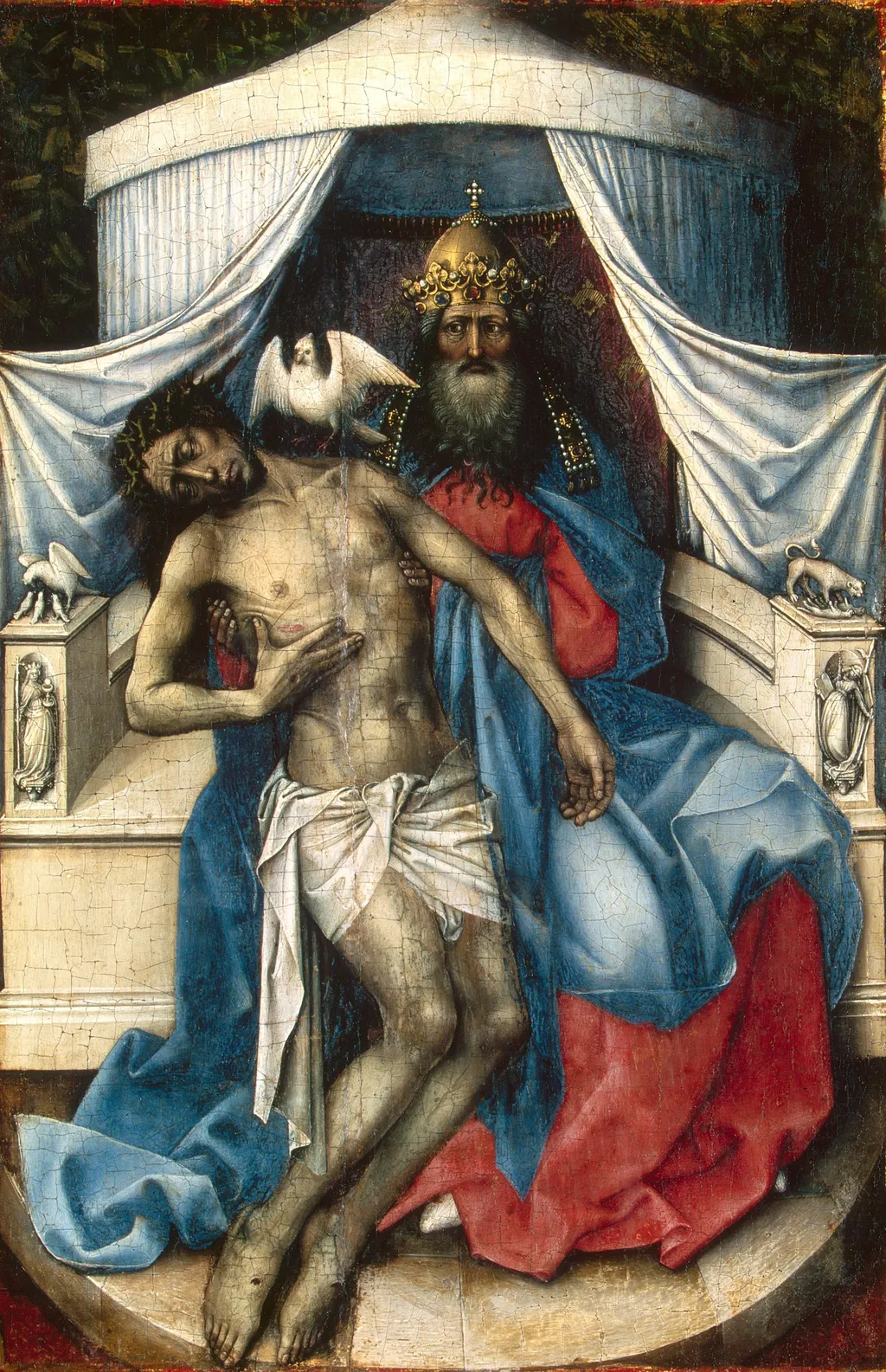
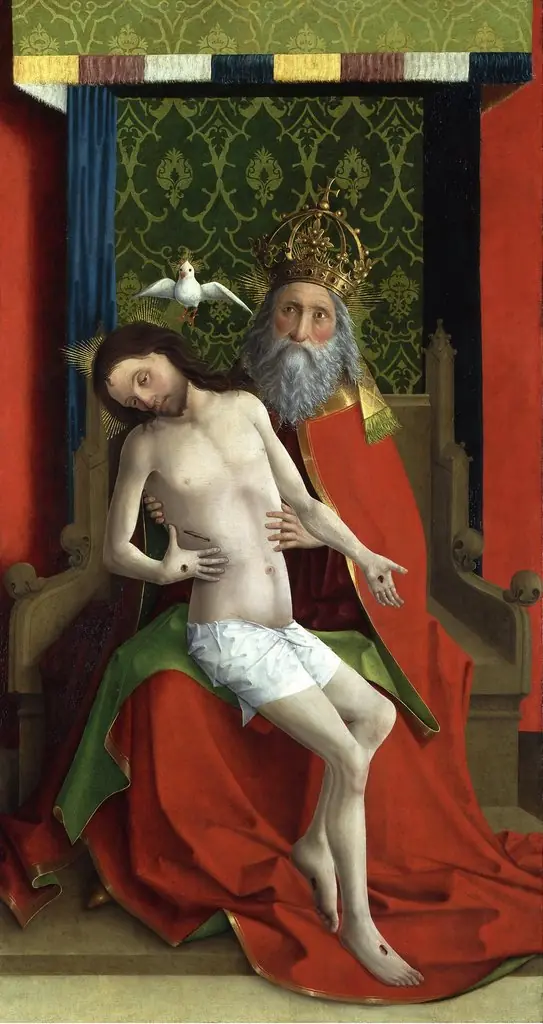
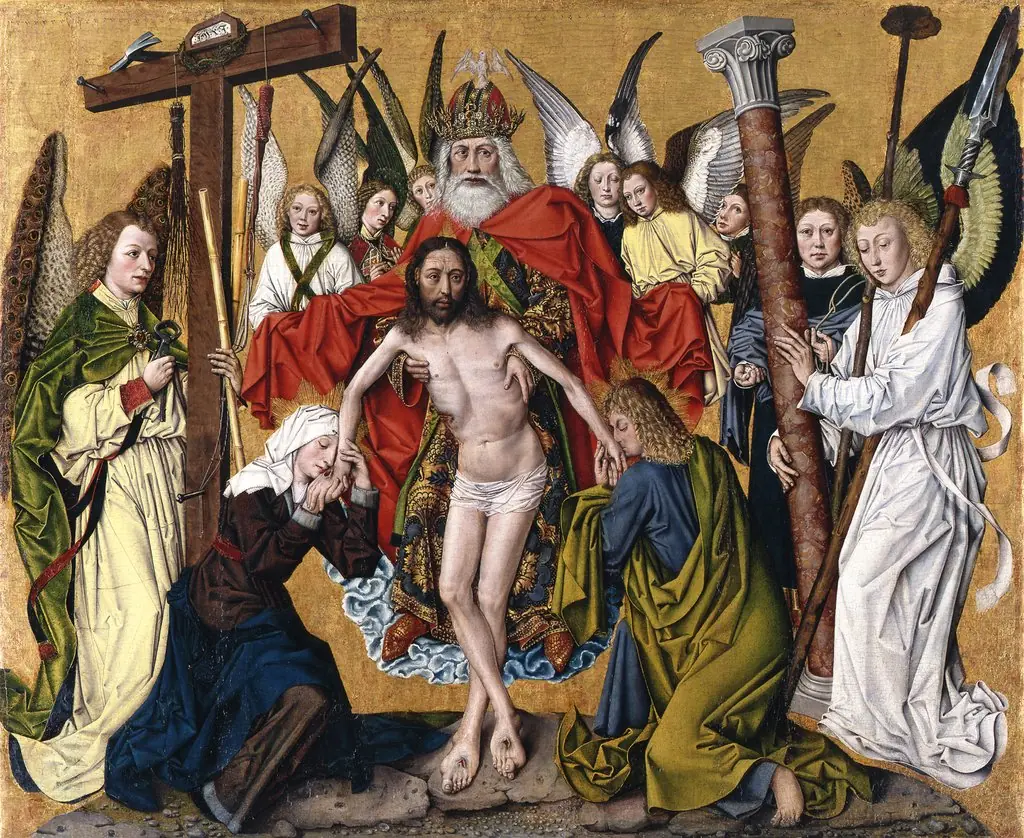
Trinity is an oil painting by the Northern Renaissance artist Robert Campin. It dates from 1433 and is held in the collection of the Hermitage Museum.
About this work
Overview
Trinity is a panel painting created in 1433 by Robert Campin, a prominent figure in early Netherlandish art during the Northern Renaissance. The work is housed in the State Hermitage Museum.
Subject & Meaning
The painting depicts the Holy Trinity, with a bearded figure (interpreted as God the Father) in regal attire holding a naked, crowned figure (Christ) amidst symbols of crucifixion, accompanied by a floating angel. The composition conveys a somber, reflective tone through the subjects' expressions and the prominent display of Christ's wounds.
Technique & Style
Characterized by bold, contrasting colors (notably red, blue, and gold) against a dark, textured background, the painting showcases Campin's contribution to the development of early oil painting techniques, distinct within the Northern Renaissance.
History & Provenance
Attributed to Robert Campin, sometimes associated with the Master of Flémalle, the painting's creation in 1433 marks it as a product of Campin's activity in Tournai. Its current location is the State Hermitage Museum.
Context
Trinity reflects the religious themes prevalent in Northern Renaissance art, while its stylistic and technical aspects place it alongside the works of contemporaries like Jan van Eyck, highlighting the era's artistic innovations.
Legacy
As a work by Robert Campin, Trinity influences subsequent artists, demonstrating the impact of early Netherlandish painting on later European art movements, with Campin's techniques and style leaving a lasting mark.
Own this work as a print
Artist & collection
Artist
Robert Campin (Valenciennes (France) c. 1375 - Tournai (Belgium) 26 April 1444) now usually identified with the Master of Flémalle (earlier the Master of the Merode Triptych, before the discovery of three other similar…