Artwork
Saint Barbara Reading
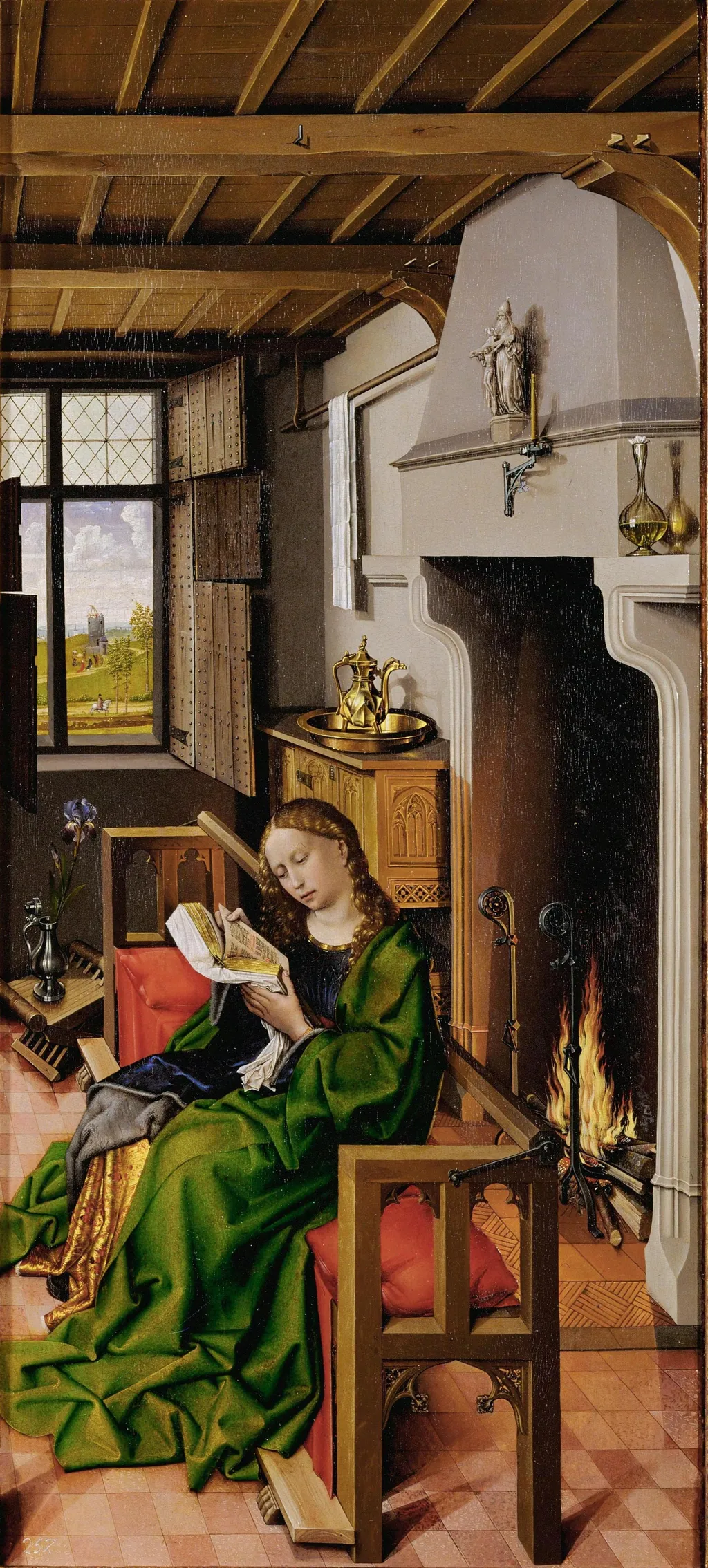
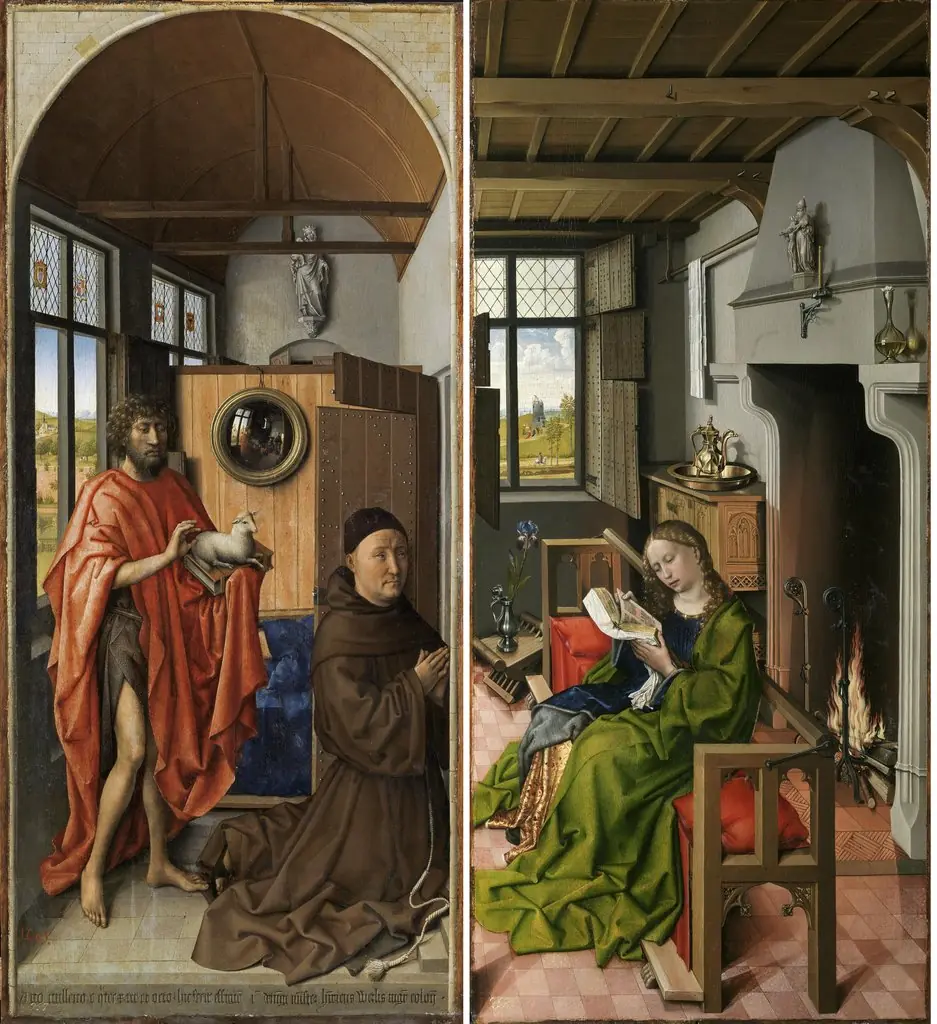
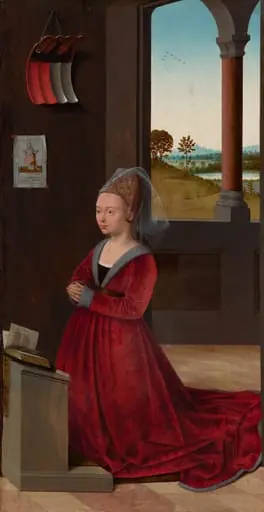
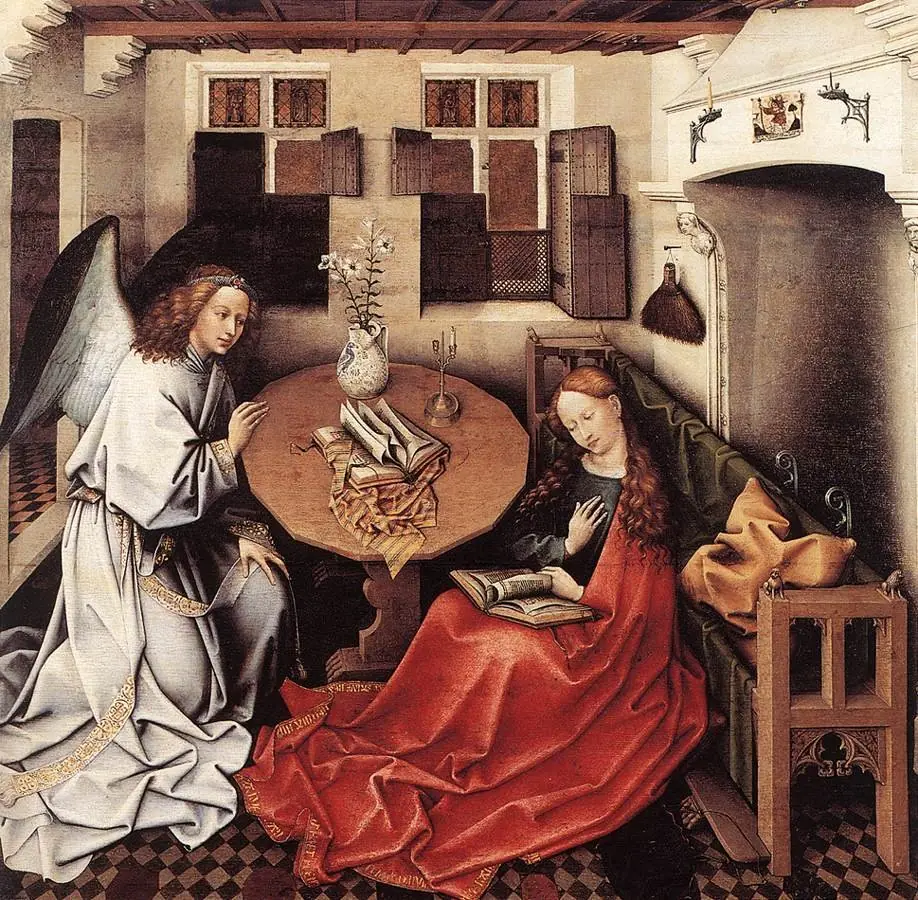
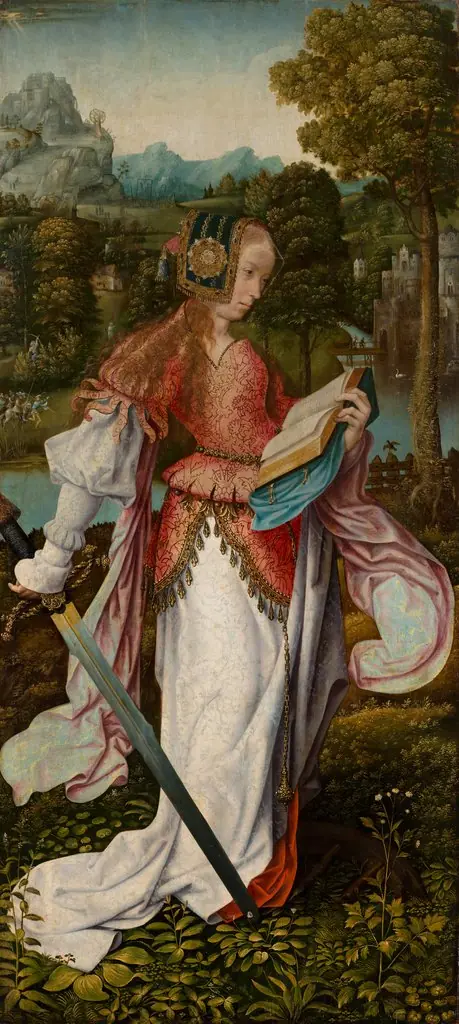
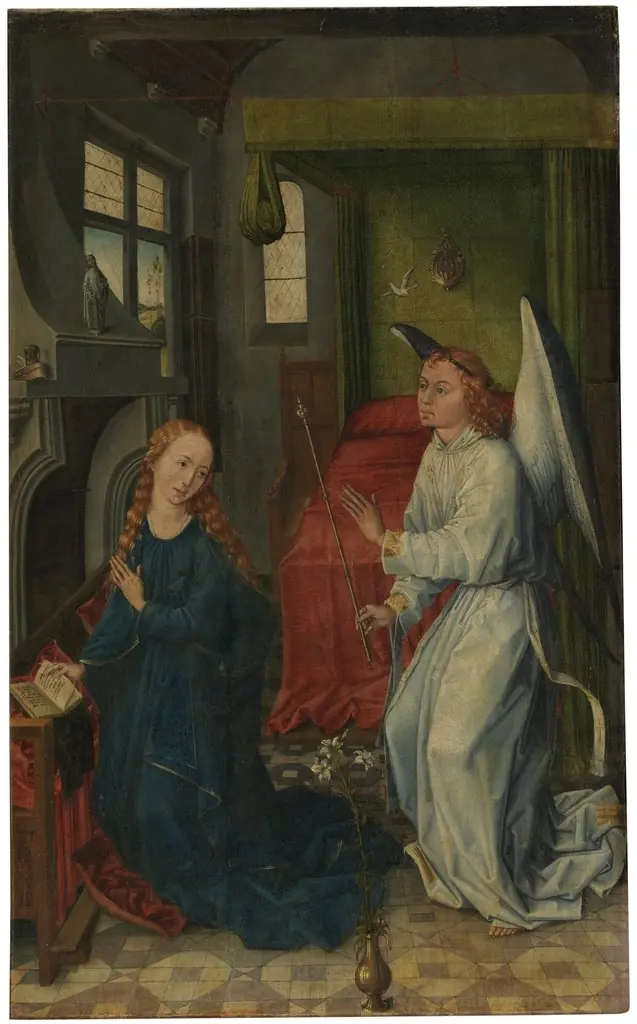
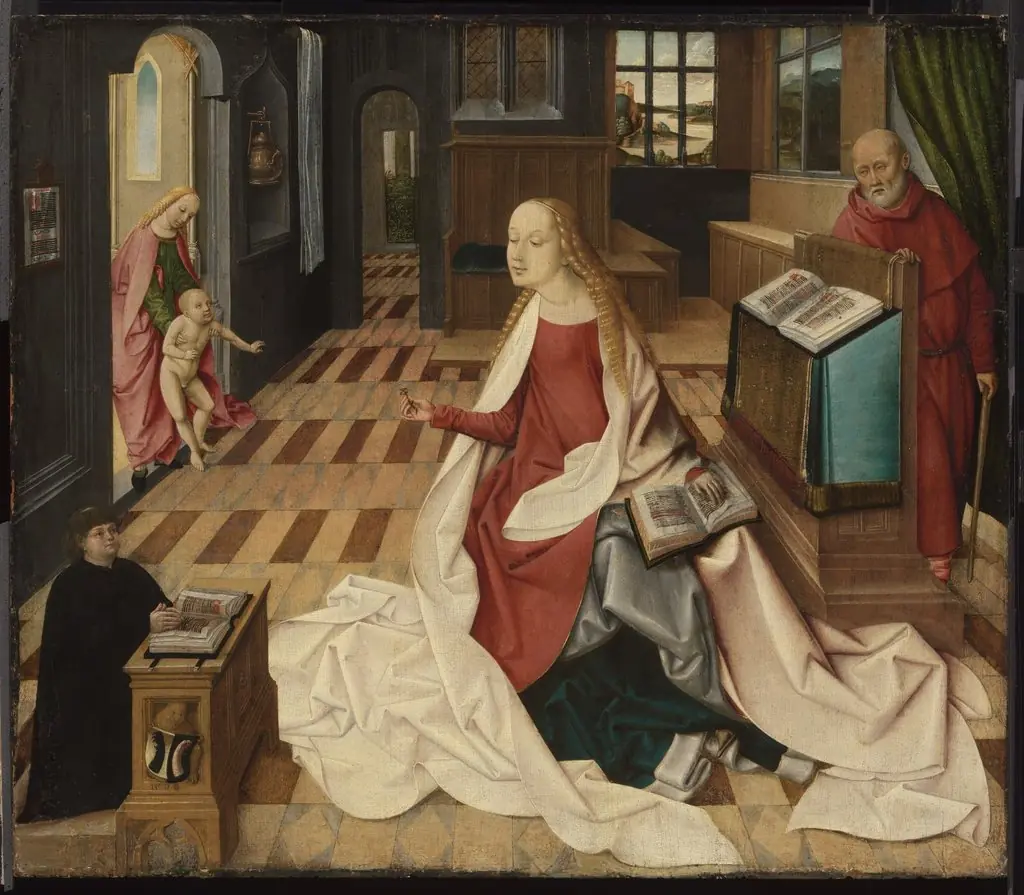
Saint Barbara Reading is an oil painting by the Northern Renaissance artist Robert Campin. It dates from 1438 and is held in the collection of the Museo del Prado. Executed in 1438, this oil painting portrays a solitary female figure absorbed in a book within a modest interior.
About this work
Overview
The composition centers on the woman, whose attire combines a green outer robe with a blue underdress, and whose hair is neatly gathered.
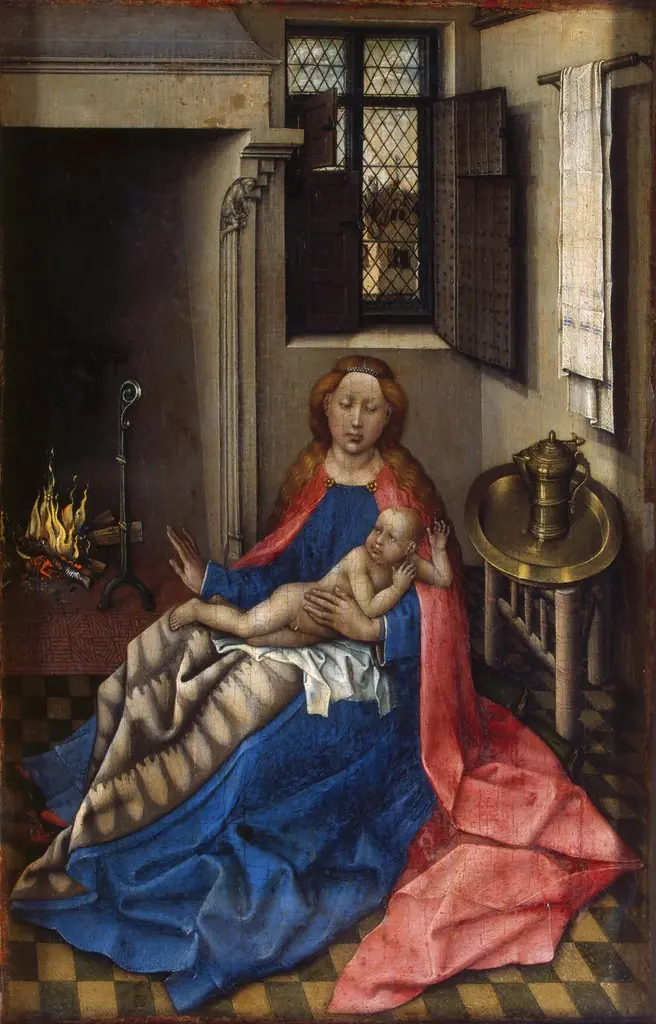
Executed in 1438, this oil painting portrays a solitary female figure absorbed in a book within a modest interior. The composition centers on the woman, whose attire combines a green outer robe with a blue underdress, and whose hair is neatly gathered. Light filters from a window, illuminating the surrounding objects—a vase of flowers, a jug, and a small statuette—while a fireplace and wooden-beamed ceiling frame the scene.
Subject & Meaning
The figure is identified as Saint Barbara, a Christian martyr traditionally associated with learning and protection. Her contemplative pose and the open book underscore themes of piety and devotion to scripture, reflecting the devotional practices of the early fifteenth century that emphasized personal meditation on holy texts.
Technique & Style
The work demonstrates the early Netherlandish mastery of oil paint, allowing for subtle gradations of light and texture. Campin’s handling of surface detail—such as the sheen on the glazed vase, the grain of the wooden beams, and the soft folds of fabric—creates a tangible sense of space and materiality that was innovative for its time.
History & Provenance
Attributed to Robert Campin, often referred to as the Master of Flémalle, the painting entered the collection of the Museo del Prado in Madrid, where it remains on display. Its provenance traces back to the artist’s workshop, linking it to the broader corpus of Campin’s religious commissions.
Context
Created during the Northern Renaissance, the piece reflects the period’s shift toward naturalistic representation and intimate devotional imagery. Campin’s contemporaries, notably Jan van Eyck, were also exploring oil techniques, and this work exemplifies the collaborative artistic environment that advanced realistic detail and personal religious experience.
Own this work as a print
Artist & collection
Artist
Robert Campin (Valenciennes (France) c. 1375 - Tournai (Belgium) 26 April 1444) now usually identified with the Master of Flémalle (earlier the Master of the Merode Triptych, before the discovery of three other similar…