Artwork
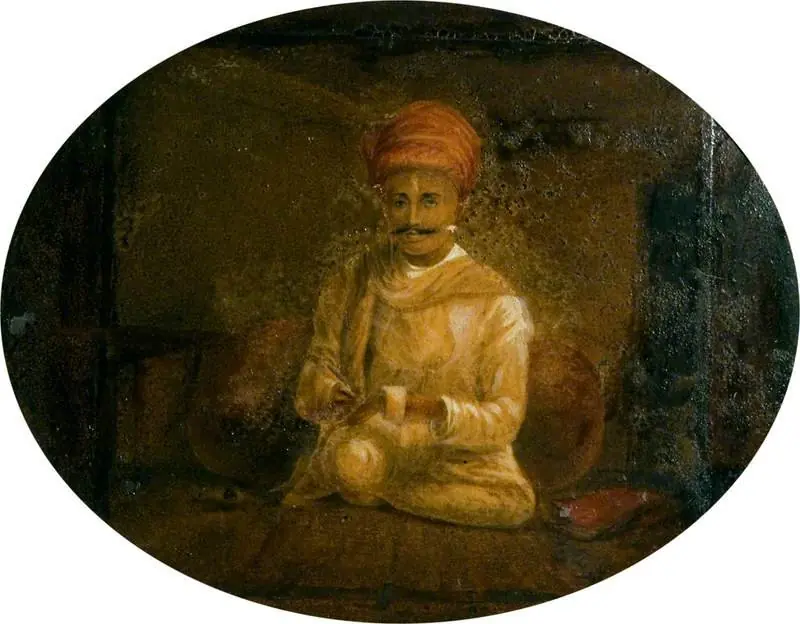
Vendor of Rice and Other Grains in the Bazaar, Baroda, Guzerat
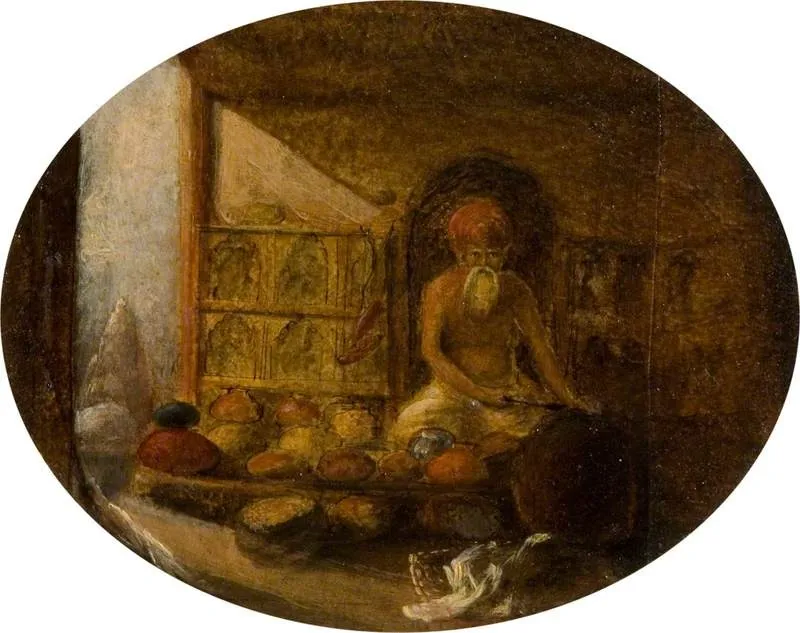
Vendor of Rice and Other Grains in the Bazaar, Baroda, Guzerat is an oil painting by the Orientalist artist Robert Melville Grindlay. It dates from 1804 and is held in the collection of the Victoria and Albert Museum.
About this work
Overview
The painting is part of the Victoria and Albert Museum’s collection, where it serves as a visual record of Indian market life from the early 19th century.
Painted in 1804 by Robert Melville Grindlay, this oil work depicts a grain vendor in Baroda, Gujarat, during the early British colonial period in India. The scene captures a quiet moment of commerce in a local market, rendered with attention to everyday detail. The painting is part of the Victoria and Albert Museum’s collection, where it serves as a visual record of Indian market life from the early 19th century.
Subject & Meaning
The central figure is a vendor seated on the ground, surrounded by earthenware vessels and woven baskets filled with rice and other grains. His attire—a white dhoti and red turban—reflects regional dress of the time. The composition emphasizes the quiet labor of trade, with no overt narrative or drama. The focus lies in the material culture of the marketplace, suggesting an ethnographic interest in local economic practices.
Technique & Style
Grindlay employs warm, earthy tones—browns, ochres, and muted yellows—to convey the texture of grain, clay, and fabric. The background is softly blurred, drawing attention to the vendor and his wares. Brushwork is precise yet unembellished, favoring observation over idealization. The lighting is even and naturalistic, avoiding dramatic contrasts, which reinforces the painting’s documentary tone.
History & Provenance
Created during Grindlay’s time in western India, the painting likely originated as a personal record of his travels. It entered the Victoria and Albert Museum’s collection through its broader acquisition of 19th-century British works depicting colonial India. Its preservation reflects institutional interest in visual sources of colonial-era daily life, rather than grand historical events.
Context
In the early 1800s, British officers and travelers often documented Indian scenes through sketching and painting. Grindlay’s work aligns with this trend, offering a non-romanticized view of local commerce. Unlike later Orientalist paintings, this piece avoids exoticism, presenting the vendor as a figure embedded in his environment rather than a spectacle.
Legacy
The painting contributes to a modest but valuable archive of early colonial-era Indian market life. It is not widely reproduced, but among scholars, it is recognized for its restrained realism and attention to material detail. It remains a quiet reference point for understanding how British artists engaged with everyday Indian commerce during the period.
Artist & collection
Artist
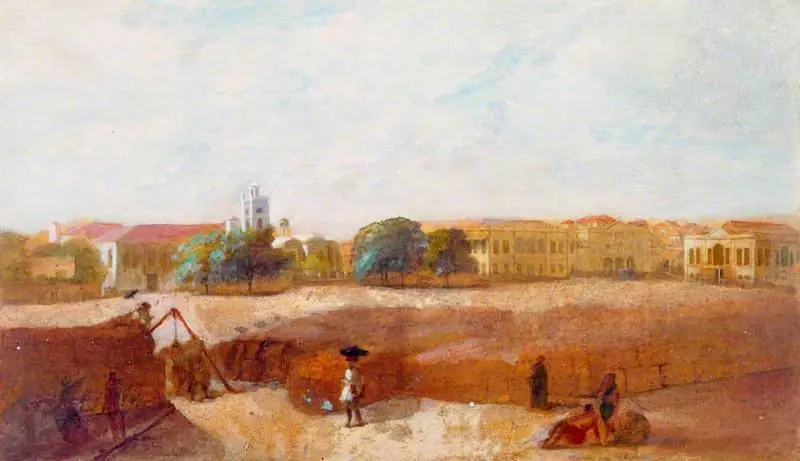
Robert Grindlay never stayed in one place long enough to get bored. The Scotsman bounced between India and England, painting what he saw: bazaars jammed with rice and grains, goldsmiths hunched over tiny cups, and the…

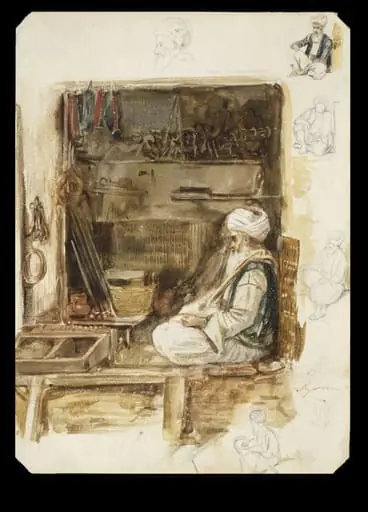 An old merchant in the Souk in Algiers; with figure studies
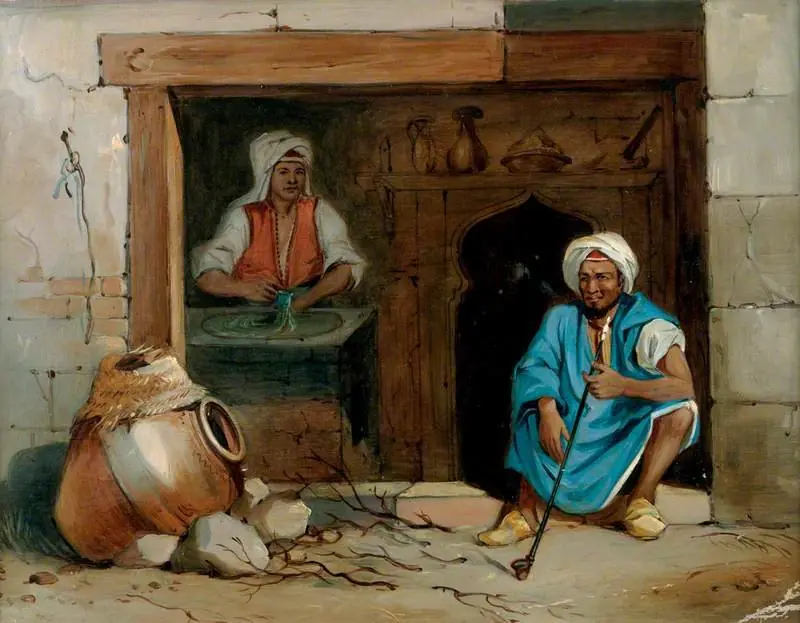 An Egyptian Baker and His Assistant at the Door of a Cake-Shop
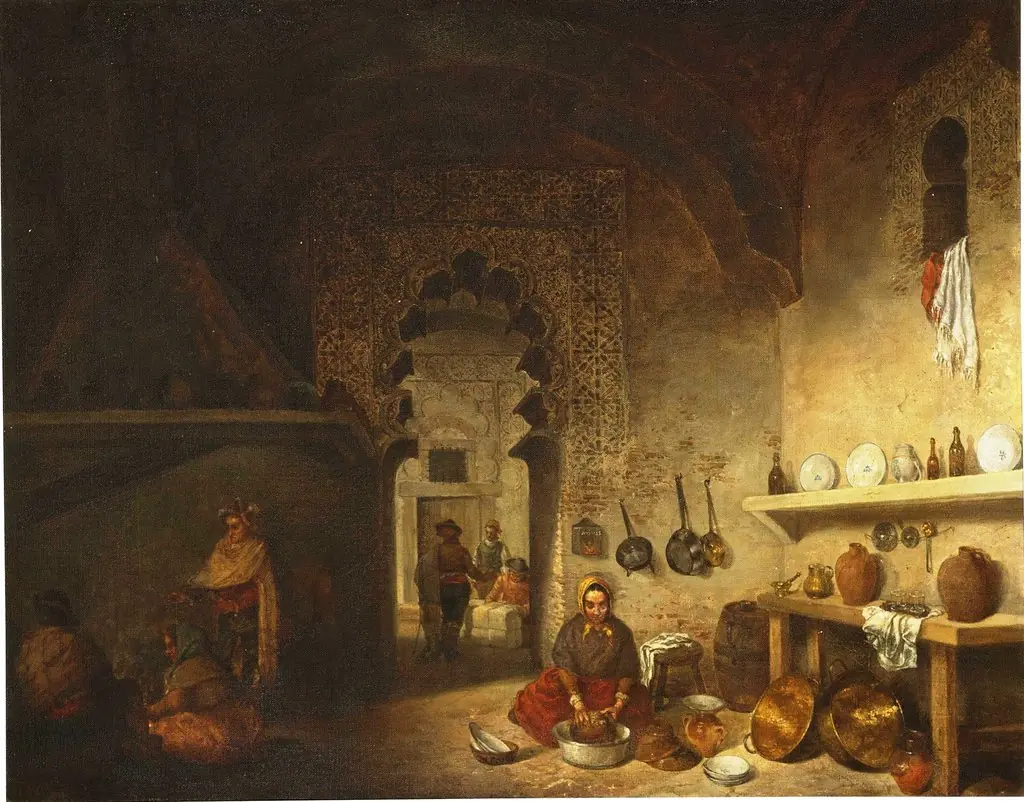 Interior de la cocina de una posada del pueblo de Maqueda
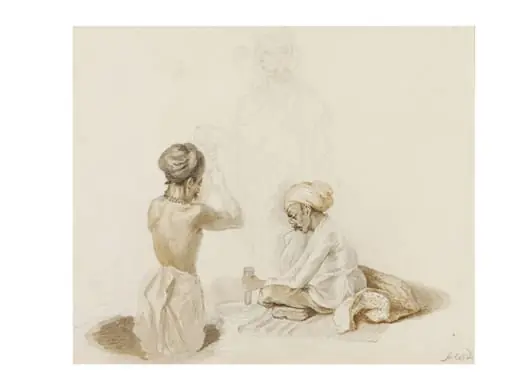 An Indian metal-worker seated cross-legged with his assistant, who raises and hammer, and another figure standing behind
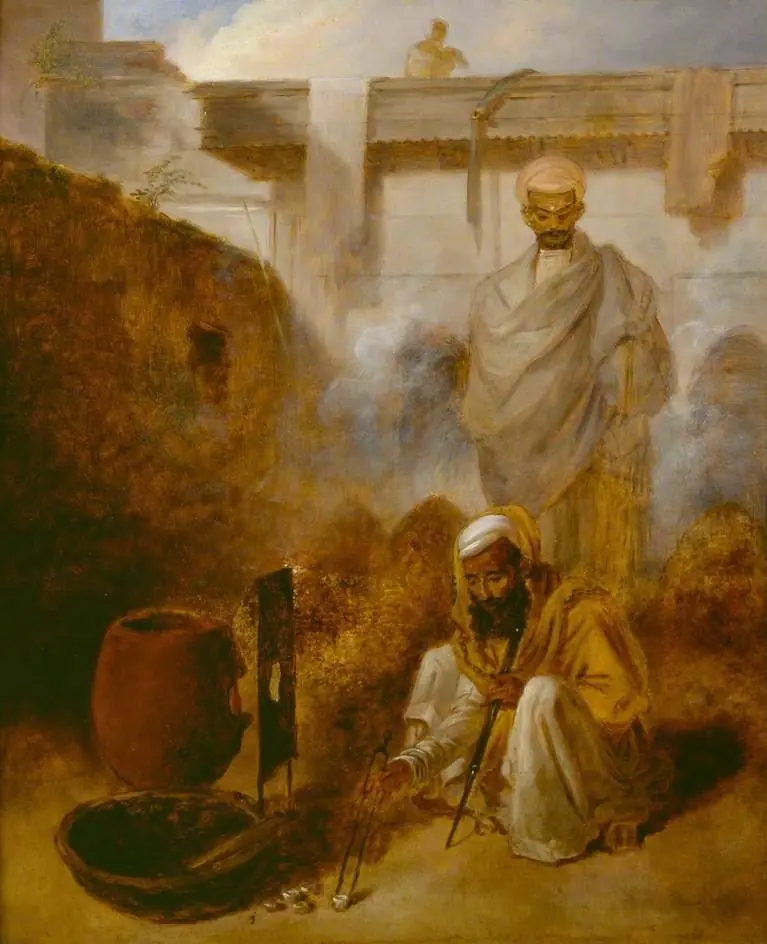 Assayer at Work in the Mint, Calcutta
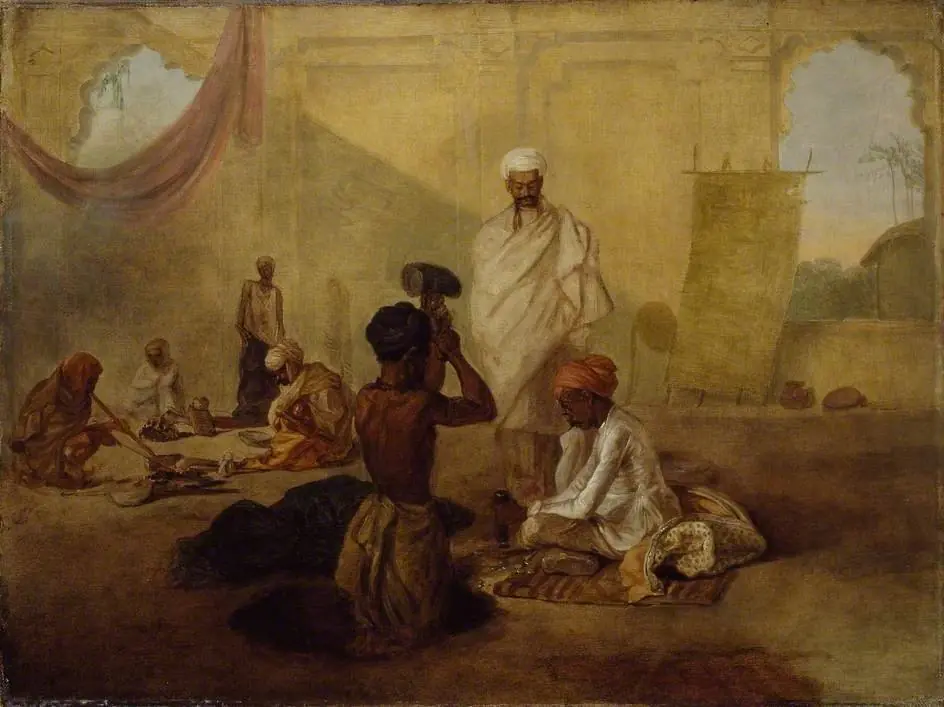 Stamping Coinage in the Mint, Calcutta
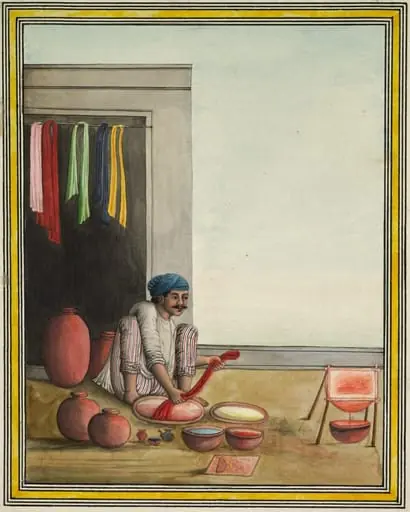 Man Dyeing Cloth
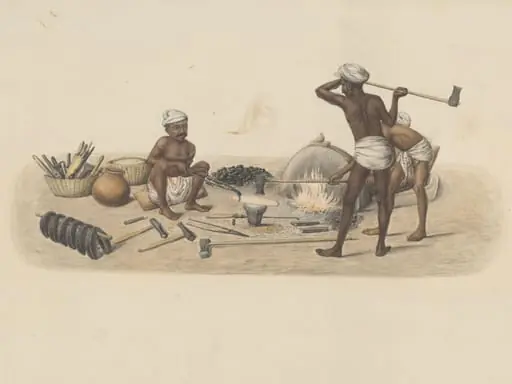 Blacksmith