Artwork
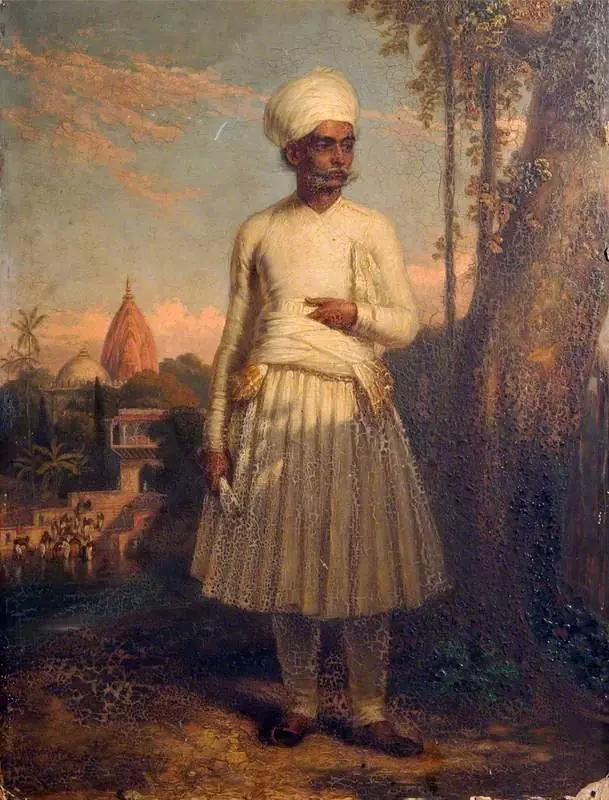
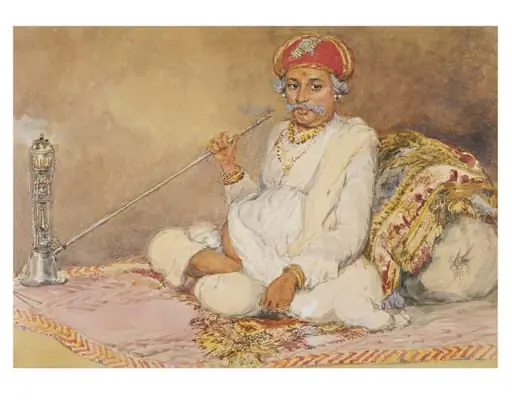
Anoopchund Shroff or Banker of Kurrie, Guzerat
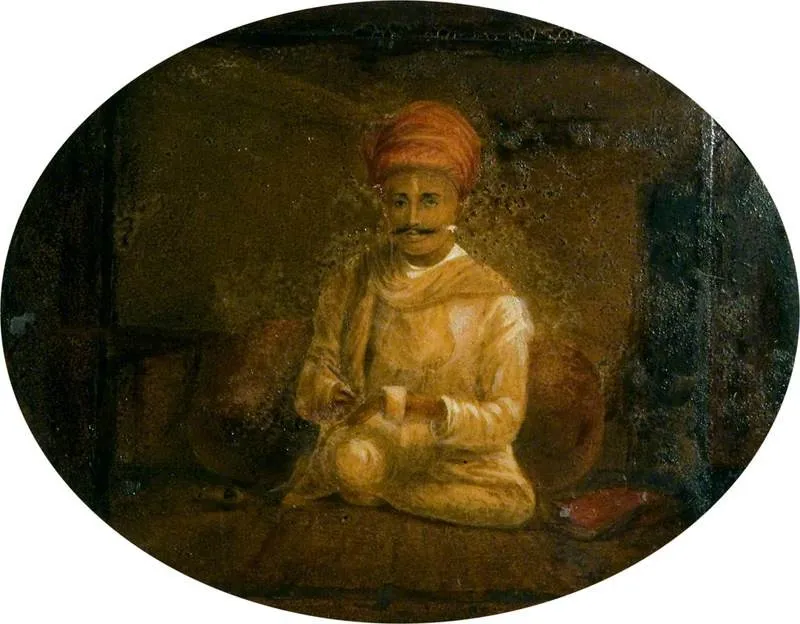
Anoopchund Shroff or Banker of Kurrie, Guzerat is an oil painting by the British Romanticist artist Robert Melville Grindlay. It dates from 1809 and is held in the collection of the Victoria and Albert Museum.
About this work
Overview
The work is part of the Victoria and Albert Museum’s collection and reflects early 19th-century British artistic engagement with South Asian figures.
Painted in 1809 by Robert Melville Grindlay, this oil portrait depicts Anoopchund Shroff, a banker from Kurrie in Gujarat. The work is part of the Victoria and Albert Museum’s collection and reflects early 19th-century British artistic engagement with South Asian figures. Grindlay, known for his travels in India, rendered the subject with attention to personal presence rather than exoticism, situating him in a quiet, intimate setting.
Subject & Meaning
Anoopchund Shroff is portrayed as a man of standing, seated cross-legged on the floor, dressed in a white shirt and turban, his mustache neatly groomed. His direct gaze invites engagement, suggesting dignity and self-possession. The absence of symbolic props or elaborate surroundings emphasizes his identity as an individual rather than a cultural stereotype, aligning with Grindlay’s broader interest in documenting local figures with personal nuance.
Technique & Style
Grindlay employed a restrained palette and controlled chiaroscuro to model the figure against a dark, indistinct background. The texture of the fabric, the sheen on the turban, and the subtle gradations of skin tone reveal careful observation. Brushwork is precise but not overly polished, favoring naturalism over idealization. The composition isolates the subject, focusing attention on his expression and posture without narrative distraction.
History & Provenance
Created during Grindlay’s time in western India, the painting likely originated as a personal commission or study from his travels. It entered the Victoria and Albert Museum’s collection through its historical focus on colonial-era art and material culture. Its survival and preservation reflect early British interest in documenting Indian society, though the painting’s specific provenance prior to museum acquisition remains undocumented.
Context
In the early 1800s, British officials and travelers often commissioned portraits of Indian merchants, officials, and elites as part of broader ethnographic and commercial interests. Grindlay’s work stands apart by avoiding overt exoticism, instead presenting Shroff with quiet individuality. This approach mirrors a small but significant trend among some British artists seeking authenticity over caricature in their depictions of South Asian subjects.
Legacy
The portrait contributes to a modest but important body of early colonial-era Indian portraiture that resists stereotypical representation. While not widely exhibited, it remains a reference point for scholars studying cross-cultural visual exchange in the British Empire. Its preservation underscores the value placed on individual identity within a period often dominated by generalized depictions of 'the Orient.'
Artist & collection
Artist
Robert Grindlay never stayed in one place long enough to get bored. The Scotsman bounced between India and England, painting what he saw: bazaars jammed with rice and grains, goldsmiths hunched over tiny cups, and the…

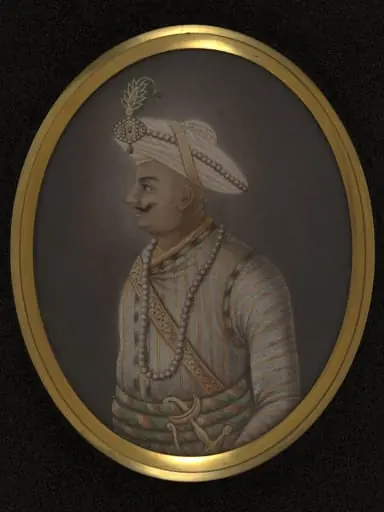 Half-length portrait of Tipu Sultan of Mysore (r.1782-99)
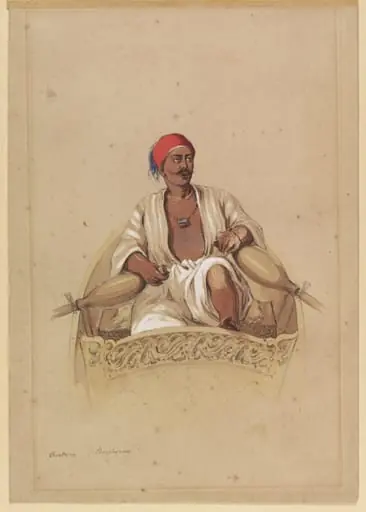 Boatman/ Bosphorus
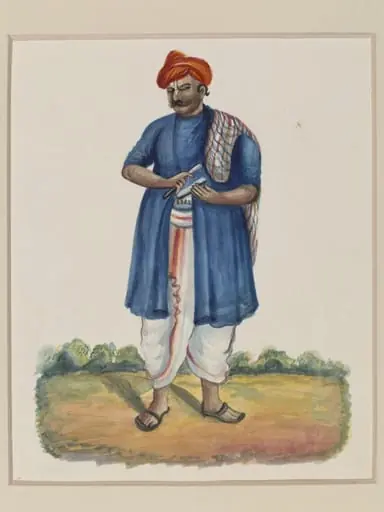 A Barber
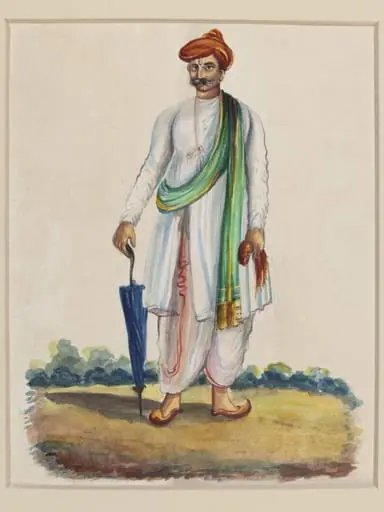 A servant holding an umbrella
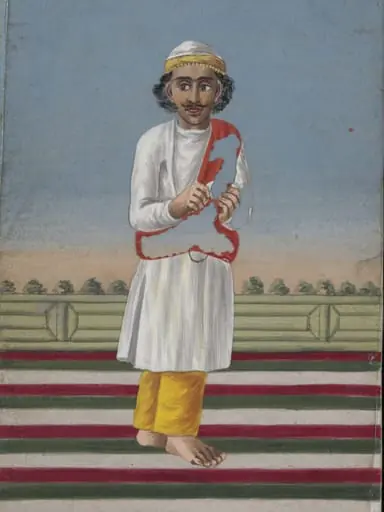 A Box covered and lined with brocade containing a card painted with a face, and with a verandah covered with a striped rug; also twelve mica overlays depicting dancers and musicians.
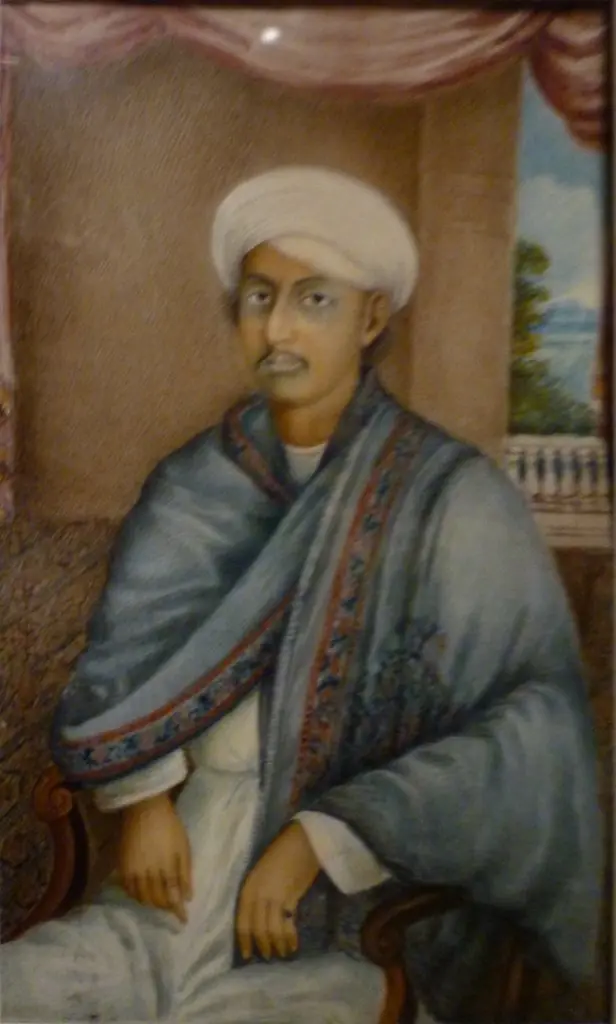 Portrait of Rajinder Dutt
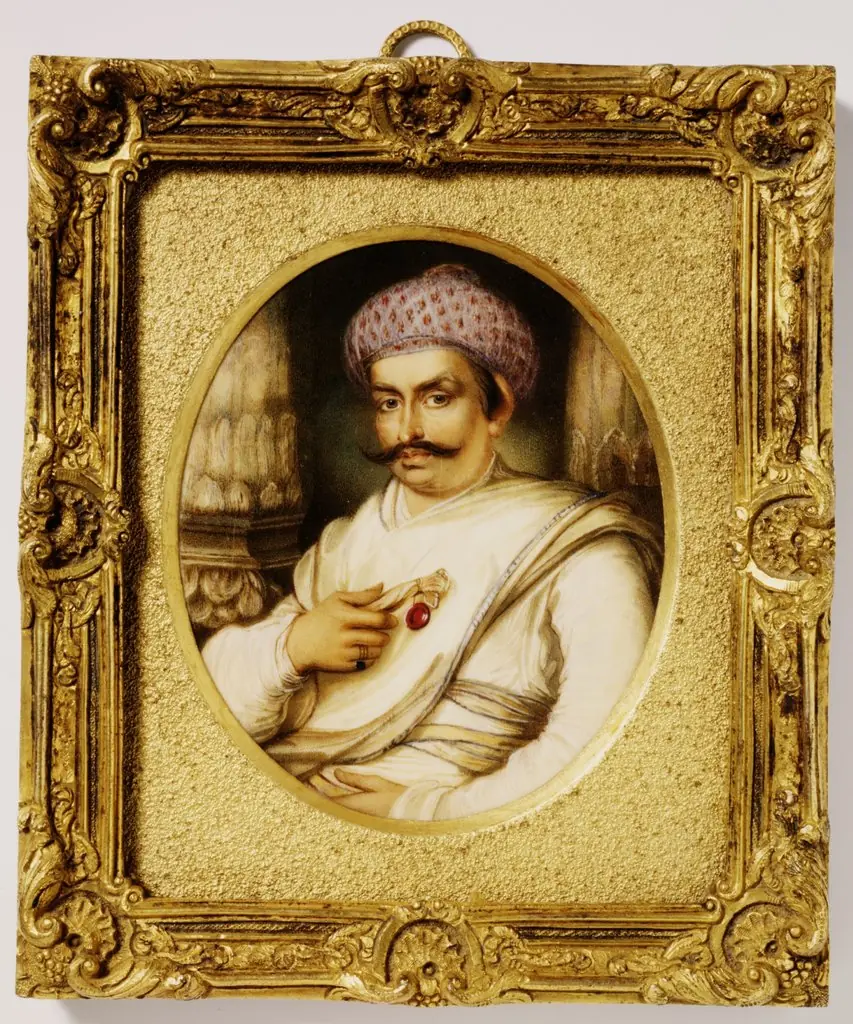 Portrait of Hyder Beg Khan
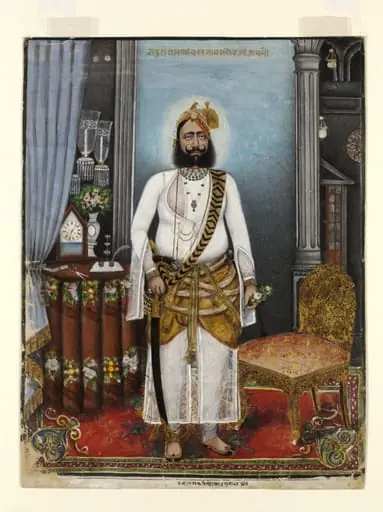 Portrait of Thakur Raja Bakhtawar Singh, standing in a European-style interior.
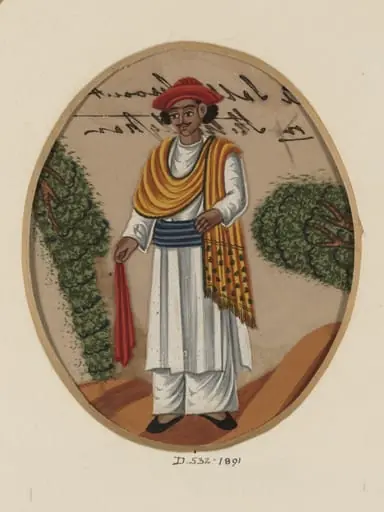 One of Fifteen drawings depicting household servants
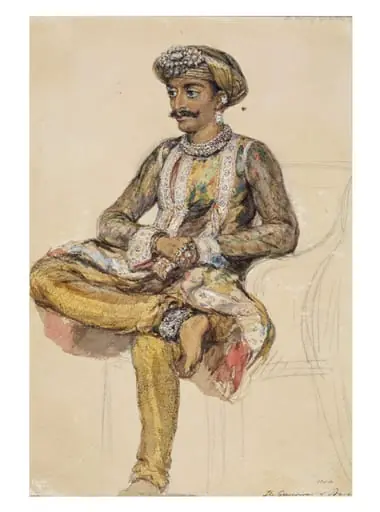 Ganpat Rao, Gaekwar of Baroda (r.1847-1856)
 Daulat Rao of Mandhata