Artwork
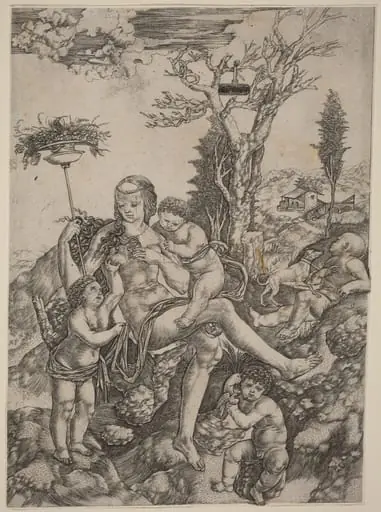
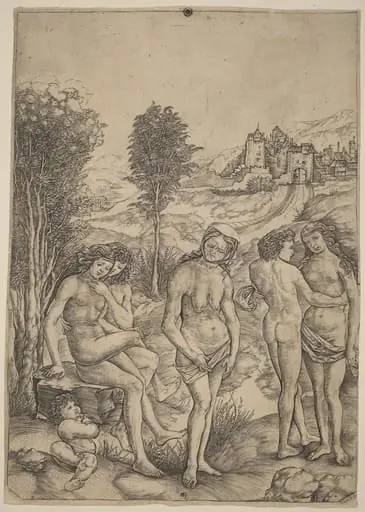
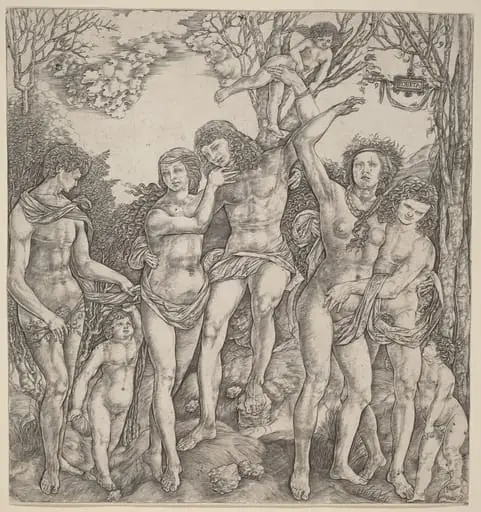
Allegory of Carnal Love
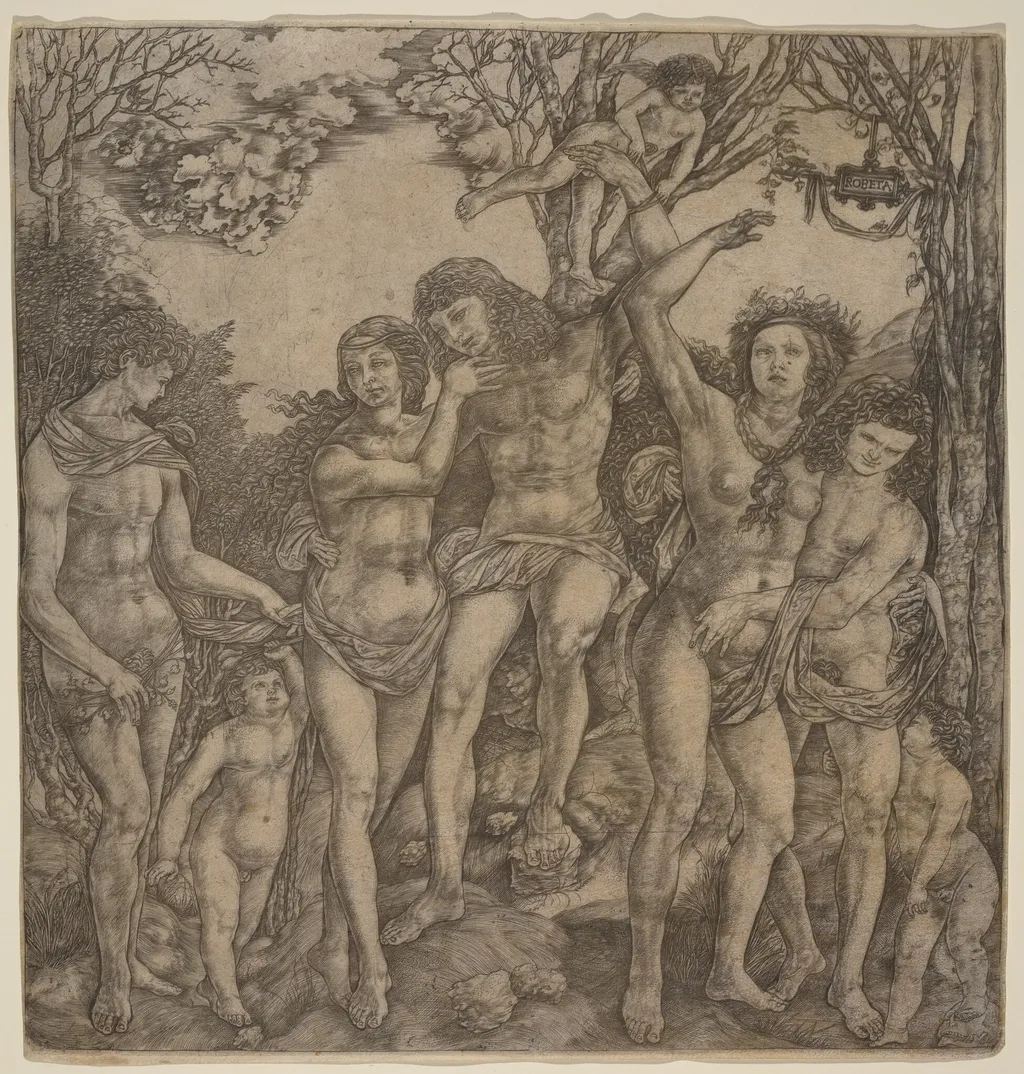
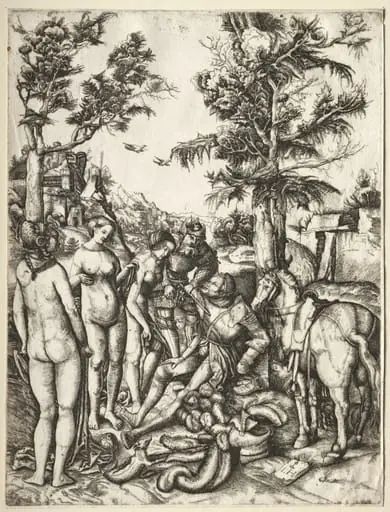
Allegory of Carnal Love is an ink print by the Renaissance artist Cristofano Robetta. It dates from 1498 and is held in the collection of the National Gallery of Art.
About this work
Overview
The work belongs to the allegorical tradition, employing a complex arrangement of nude figures within a wooded setting to explore themes of desire and conflict.
Created in 1498 by Florentine goldsmith and engraver Cristofano Robetta, this print is an engraving executed on vellum. The work belongs to the allegorical tradition, employing a complex arrangement of nude figures within a wooded setting to explore themes of desire and conflict. Its intricate line work and compositional density exemplify Robetta’s reputation for finely detailed reproductive prints.
Subject & Meaning
The central male figure, arms outstretched, appears caught in a struggle while surrounding women intertwine with him and each other amid a tangle of trees and vines. The composition suggests a visual metaphor for carnal love as a chaotic, entangling force, with the forest serving as a natural curtain that both conceals and reveals the figures’ intimate interactions.
Technique & Style
Robetta employed a meticulous engraving technique, incising delicate lines into a vellum surface and filling them with ink. The fine hatching renders musculature, drapery, and foliage with remarkable clarity, creating a sense of movement despite the static medium. The precision of the line work reflects the artist’s background as a goldsmith, where exacting detail was paramount.
History & Provenance
The print was produced during Robetta’s active period in the late 15th and early 16th centuries, a time when he frequently reproduced paintings that have since disappeared. Surviving examples are held in major institutions, including the Cleveland Museum of Art and the Metropolitan Museum of Art, confirming its circulation among collectors of the period and its preservation in public collections.
Context
Robetta’s practice of translating painted compositions into engravings served both documentary and commercial purposes, allowing wider dissemination of visual ideas. The allegorical genre was popular in Renaissance Italy, where moral and erotic themes were often encoded in symbolic imagery. This work thus reflects contemporary interests in moralizing narratives rendered through sophisticated printmaking.
Artist & collection

Artist
Cristofano Robetta (1462 – 1535) was an Italian artist, goldsmith, and engraver. Robetta was a Florentine "who made some rich, intricate engravings in the fine manner". He often made engravings which replicated…