Artwork
Salisbury Cathedral from West Harnham
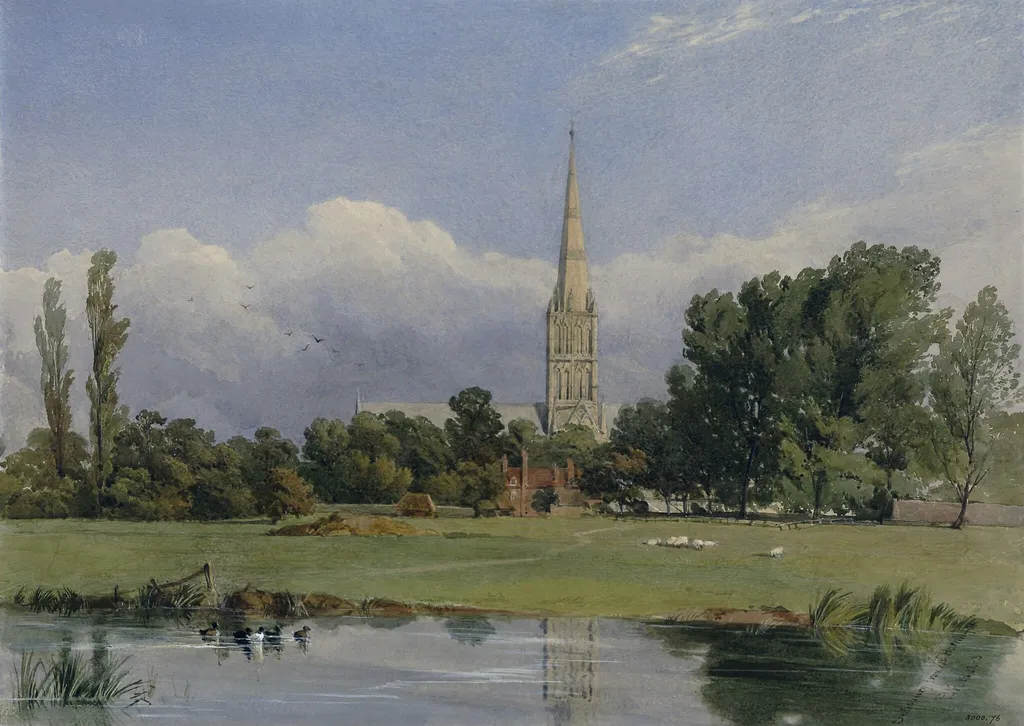
Salisbury Cathedral from West Harnham is a watercolor work on paper by the British Romanticist artist Edward W. Robinson. It dates from 1862 and is held in the collection of the Victoria and Albert Museum. Edward W.
About this work
Overview
Robinson created this watercolour in 1862, capturing Salisbury Cathedral from the west bank of the Avon, near West Harnham.
Edward W. Robinson created this watercolour in 1862, capturing Salisbury Cathedral from the west bank of the Avon, near West Harnham. The work is signed and dated, affirming its place within the artist’s documented output. Executed in transparent pigments, it reflects the 19th-century British tradition of landscape watercolour, valuing direct observation and atmospheric nuance over idealized composition.
Subject & Meaning
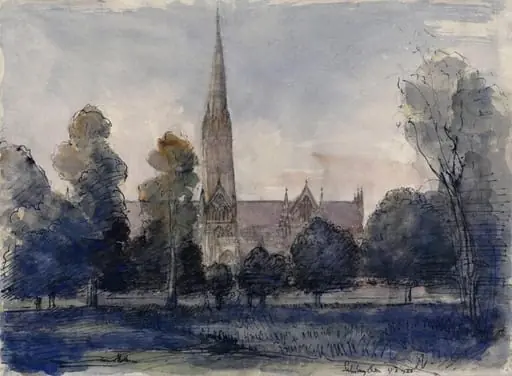
The cathedral rises above a quiet pastoral scene, its spire anchoring the composition against open fields and scattered sheep. The inclusion of grazing animals and a reflective pond suggests a harmonious relationship between architecture and rural life. The subdued tones and soft light evoke a moment of stillness, emphasizing continuity rather than grandeur, aligning with contemporary ideals of modest, everyday beauty.
Technique & Style
Robinson employed loose, fluid brushwork to suggest movement in the sky and water, allowing the paper’s white surface to enhance luminosity. Muted greens and blues dominate, with minimal detail in the foreground to preserve a sense of atmospheric depth. The technique reflects the influence of the Norwich School and the broader watercolour revival, prioritizing tonal harmony and spontaneous observation over precise rendering.
History & Provenance
The painting’s documented date and signature indicate it was produced during Robinson’s active period in southern England. While its early ownership is unrecorded, its preservation suggests it remained within private collections. It has not been widely exhibited, and its current location is not publicly listed, though it remains a representative example of mid-Victorian topographical watercolour.
Context
In the 1860s, watercolour was widely used for landscape studies, often as preparatory work or personal records. Artists like Robinson responded to a growing public interest in regional scenery and the picturesque. Salisbury Cathedral, a symbol of ecclesiastical heritage, was a frequent subject, but Robinson’s focus on the surrounding landscape reflects a shift toward everyday rural life over monumental architecture.
Legacy
Robinson’s work contributes to a broader archive of 19th-century British watercolours that documented the English countryside with quiet precision. Though not widely known today, his approach aligns with contemporaries who valued sincerity and observation over dramatic effect. The painting endures as a quiet record of a specific place and moment, valued for its restraint and atmospheric clarity.
Own this work as a print
Artist & collection
Artist
Edward W. Robinson once painted the same old cathedral so many times he started noticing the way shadows creep across its stone like a slow-moving cat. His watercolor of Salisbury Cathedral from West Harnham isn’t just…

 Salisbury cathedral
 Salisbury Cathedral from the Bishop's Grounds
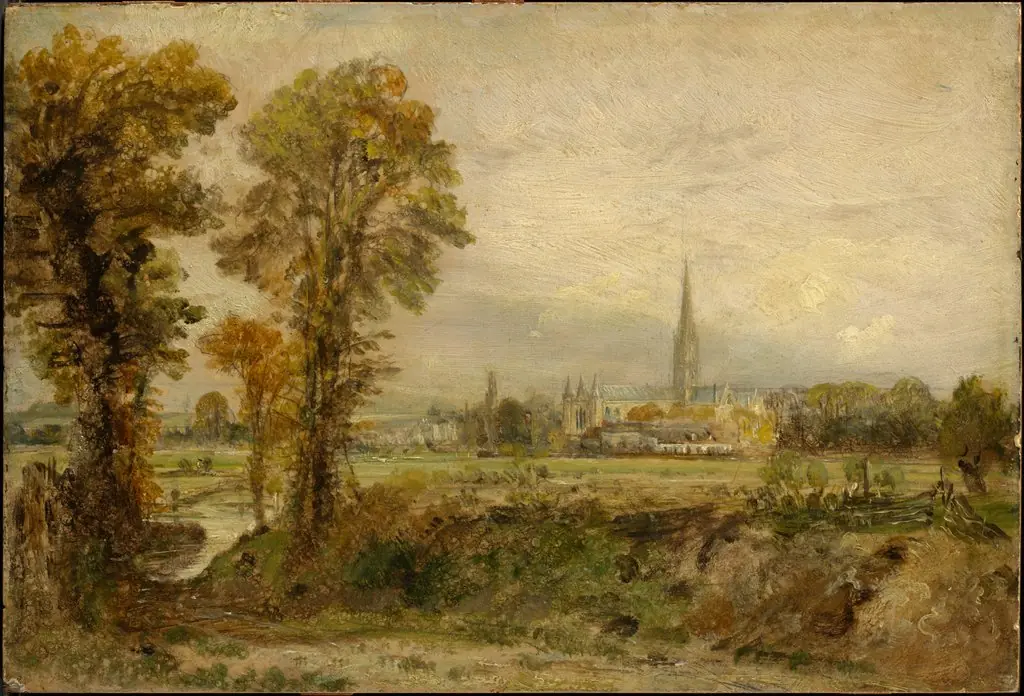 Distant View of Salisbury Cathedral
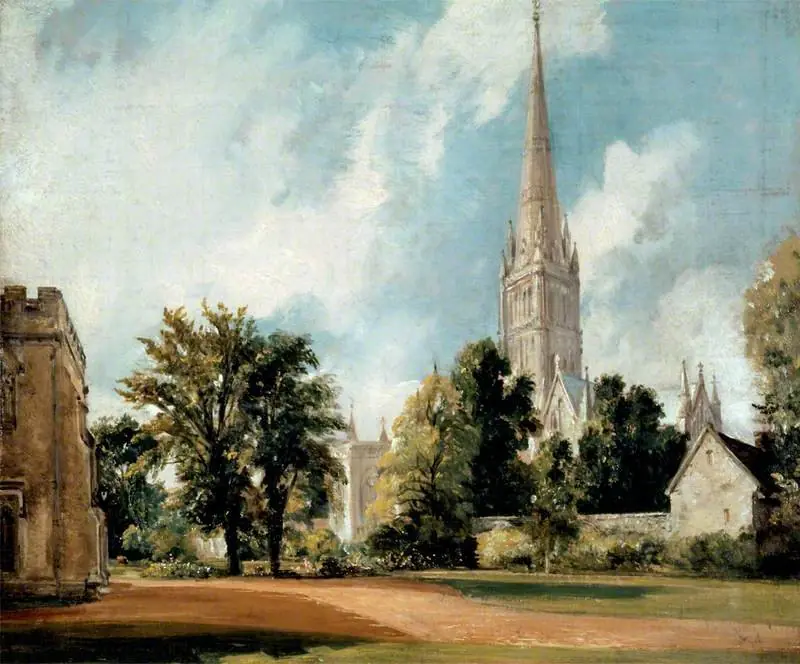 Salisbury Cathedral from the Close
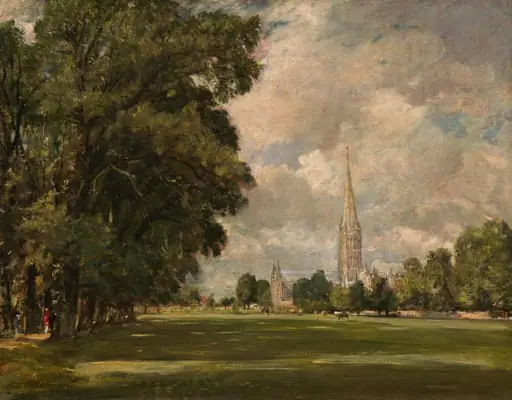 Salisbury Cathedral from Lower Marsh Close
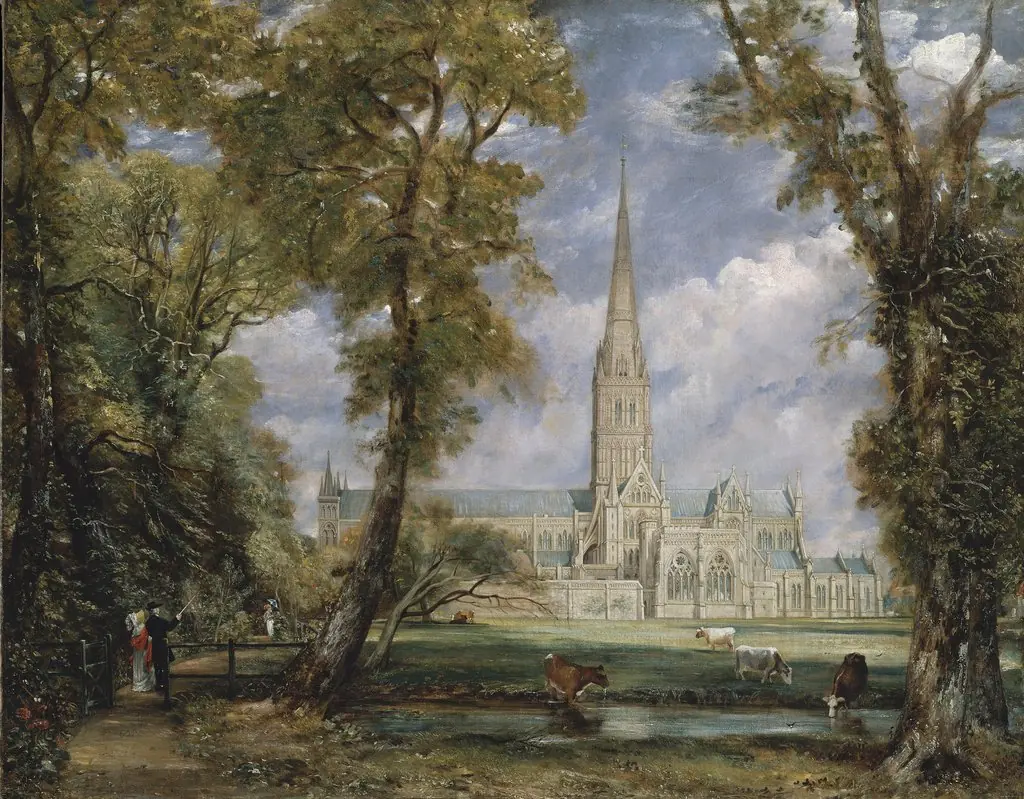 Salisbury Cathedral from the Bishop's Garden
 Salisbury Cathedral from the River Nadder
 Salisbury Cathedral with trees
 Salisbury Cathedral from the Meadows
 Salisbury Cathedral
 View of Stratford-upon-Avon Cathedral
 Salisbury Close