Artwork
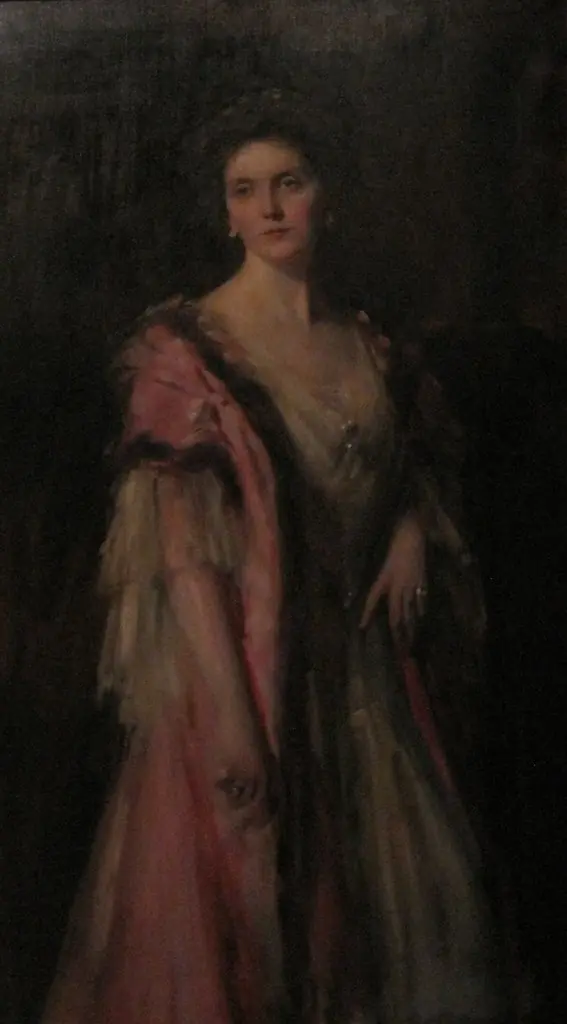
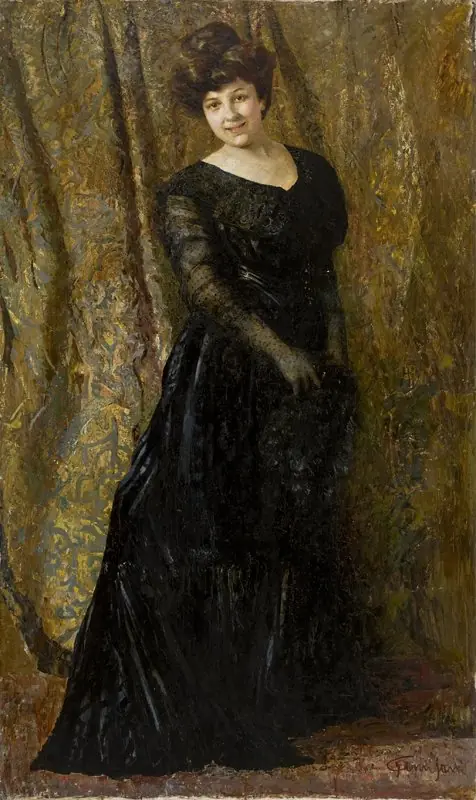
Woman in Evening Gown
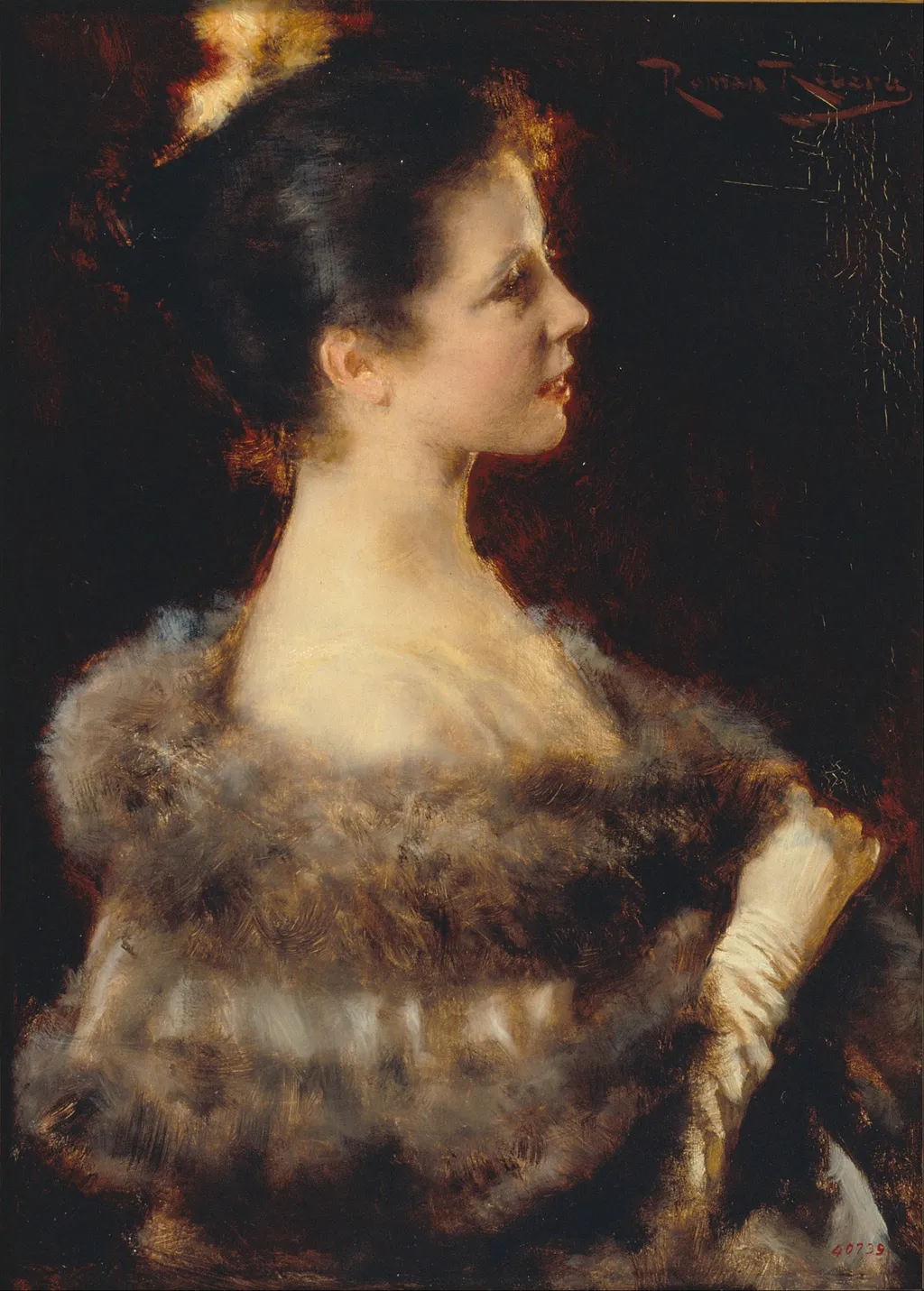
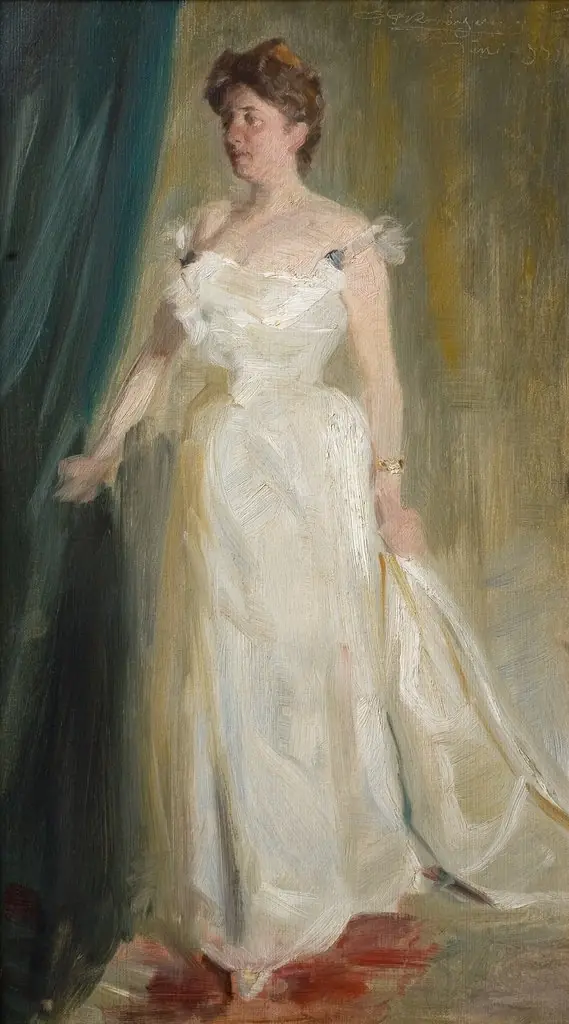
Woman in Evening Gown is an oil painting by Romà Ribera i Cirera. It dates from 1897 and is held in the collection of the Museu Nacional d'Art de Catalunya.
About this work
Overview
The work belongs to the collection of the Museu Nacional d'Art de Catalunya and reflects Ribera’s focus on contemporary upper-class life.
Painted in 1897 by Catalan artist Romà Ribera i Cirera, this oil portrait captures a woman in formal attire against a muted background. The work belongs to the collection of the Museu Nacional d'Art de Catalunya and reflects Ribera’s focus on contemporary upper-class life. His approach emphasizes precision in dress and demeanor, aligning with late 19th-century conventions of portraiture that valued social nuance over dramatic expression.
Subject & Meaning
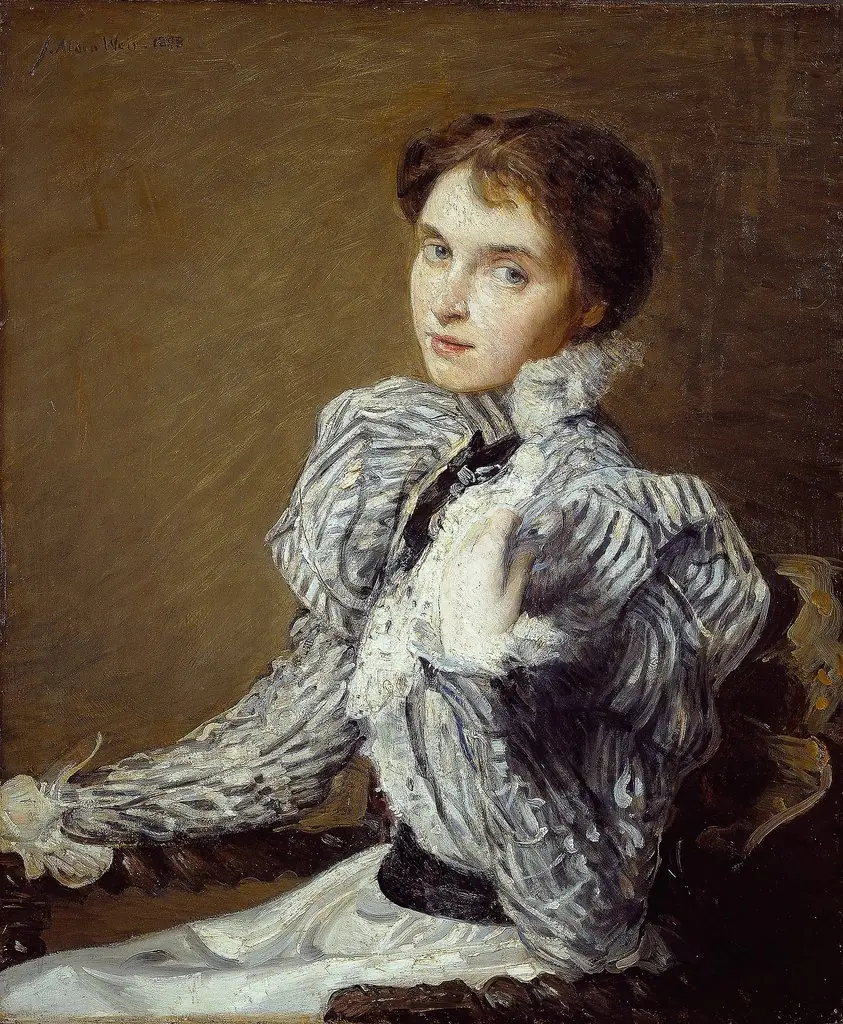
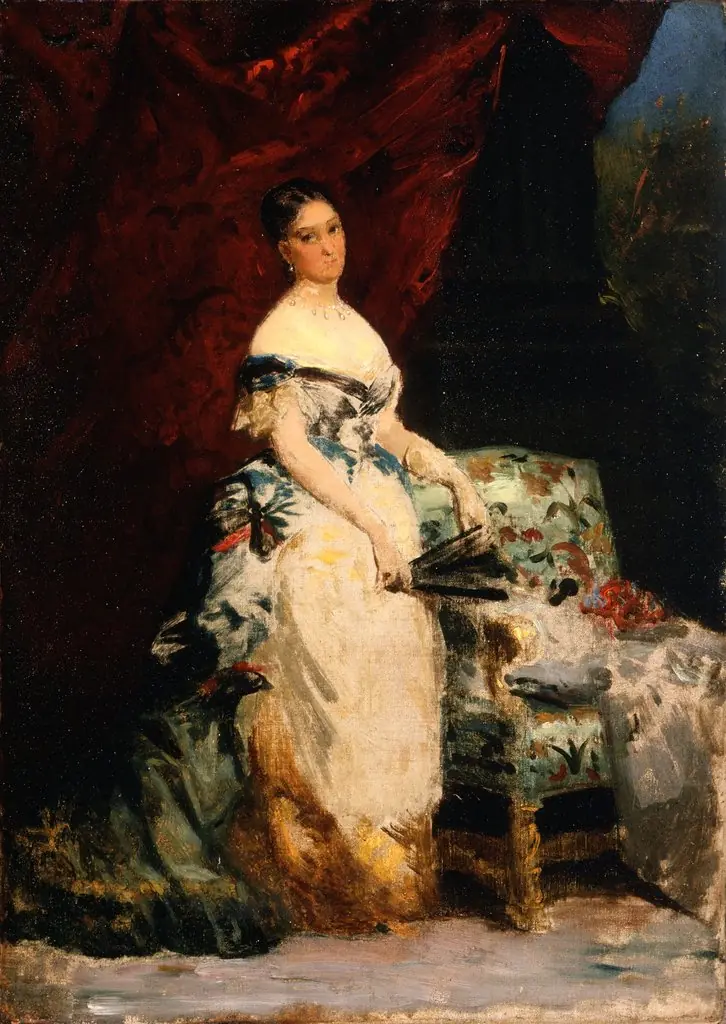
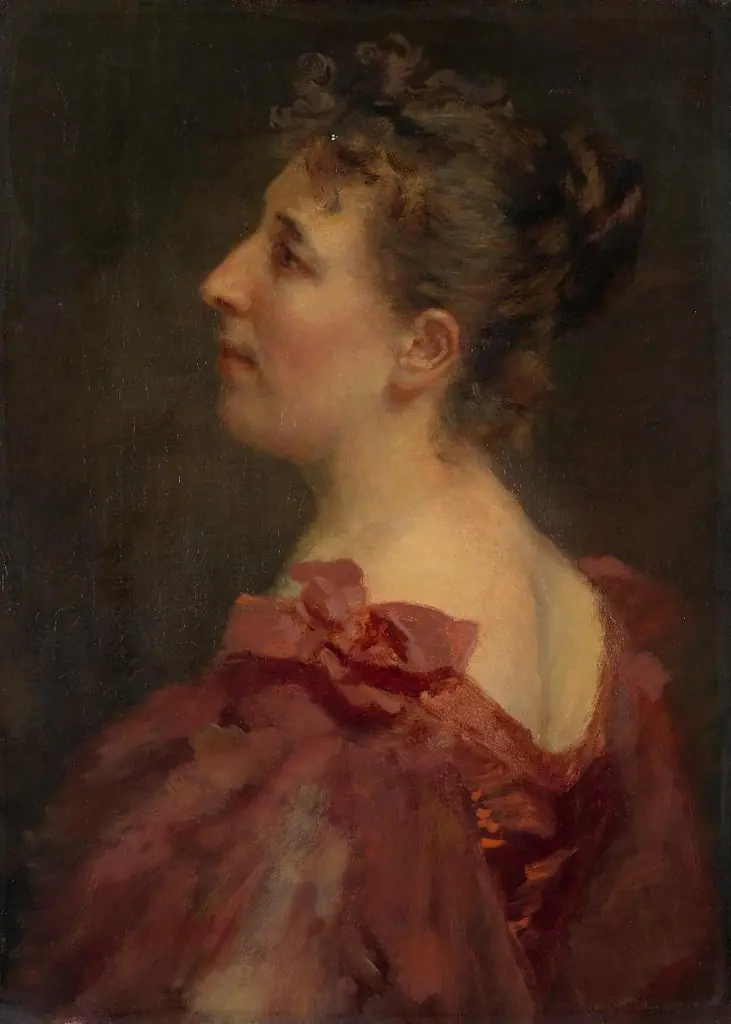
The subject is a woman dressed for an evening event, her posture and attire suggesting aristocratic refinement. She faces right, her gaze averted from the viewer, conveying quiet detachment. The absence of narrative context or emotional intensity shifts focus to her presence as a symbol of social composure. The painting does not seek to tell a story but to document a moment of refined visibility within elite circles.
Technique & Style
Ribera rendered the gown and fur shawl with careful attention to texture and light, using layered brushwork to suggest the sheen of silk and the softness of fur. The dark background recedes with loose, visible strokes, contrasting with the detailed rendering of the figure. The composition is restrained, avoiding theatricality; the woman’s neutral expression and composed stance reflect a preference for understated realism over idealization.
History & Provenance
The painting entered the collection of the Museu Nacional d'Art de Catalunya as part of its broader effort to preserve Catalan artistic production from the late 19th century. Ribera’s works, often depicting social rituals and domestic scenes, were collected for their documentation of contemporary life. This portrait remains a representative example of his output during a period when Catalan artists were increasingly engaged with urban elite culture.
Context
In late 19th-century Catalonia, genre painting flourished as a means of recording social change. Ribera’s focus on evening attire and private moments aligned with broader European trends in portraiture that emphasized personal identity within class structures. Unlike historical reconstructions he also produced, this work reflects immediate, observable reality—offering insight into the visual codes of Barcelona’s upper class at the turn of the century.
Legacy
While not widely exhibited beyond regional collections, the painting contributes to the understanding of Catalan portraiture during a time of cultural consolidation. Ribera’s attention to material detail and social nuance influenced later artists interested in everyday elegance. The work endures as a quiet record of how identity was expressed through dress and demeanor in a society increasingly defined by its public rituals.
Own this work as a print
Artist & collection
Artist
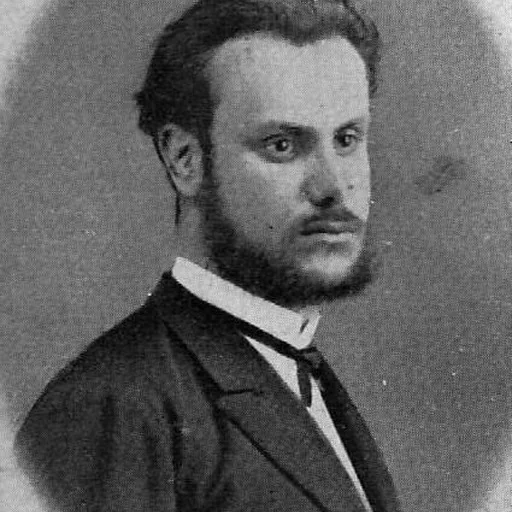
Romà Ribera i Cirera (13 December 1848, Barcelona - 29 May 1935, Barcelona) was a Catalan genre painter.