Artwork
Rest on the Flight into Egypt
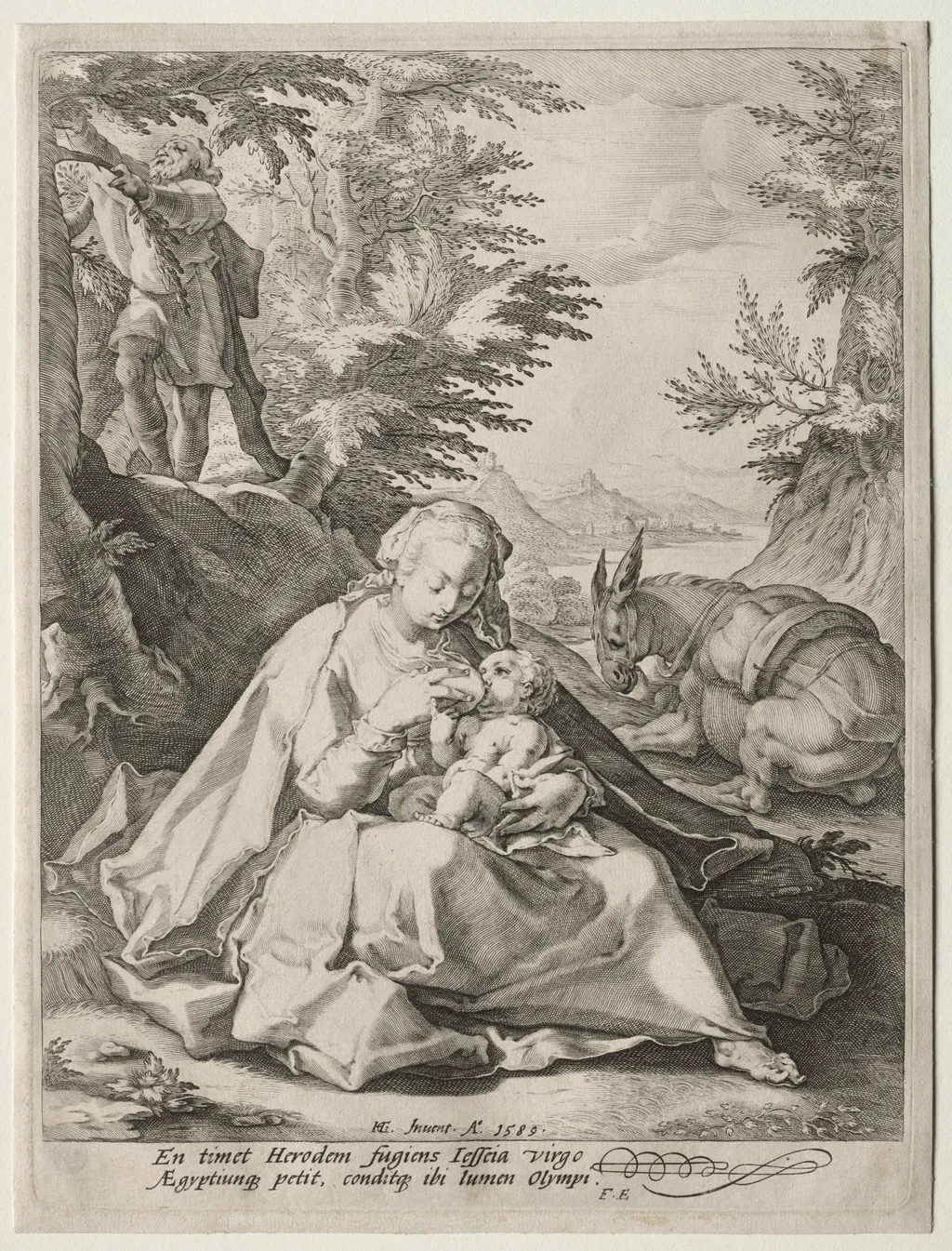
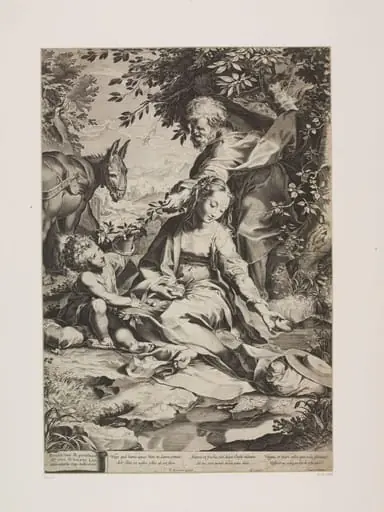
Rest on the Flight into Egypt is a print by the Renaissance artist Jacob Matham. It dates from 1589 and is held in the collection of the Cleveland Museum of Art.
About this work
Overview
Created in 1589 by Jacob Matham, this print depicts a quiet moment from the biblical narrative of the Holy Family’s journey to Egypt.
Created in 1589 by Jacob Matham, this print depicts a quiet moment from the biblical narrative of the Holy Family’s journey to Egypt. Executed in engraving, it captures the family at rest during their flight from Herod’s persecution. The work resides in The Cleveland Museum of Art, where it is preserved as an example of Northern Renaissance printmaking, reflecting the period’s interest in intimate religious scenes rendered with precision.
Subject & Meaning
The scene illustrates the Virgin Mary resting with the infant Jesus, while Joseph tends to a nearby tree. The donkey, a symbol of humility and endurance, lies peacefully beside them. The tranquil atmosphere conveys divine protection amid hardship, emphasizing tenderness over drama. This moment of respite underscores the humanity of the sacred figures, aligning with devotional practices of the time that encouraged personal connection with biblical narratives.
Technique & Style
Matham employed fine-line engraving to render delicate textures: the folds of Mary’s garment, the fur of the donkey, and the foliage of the trees. The composition is carefully balanced, with soft tonal gradations achieved through controlled hatching. The background, featuring water and distant trees, recedes with subtle perspective, enhancing the scene’s calm intimacy. This technique reflects the influence of Albrecht Dürer and the Northern tradition of detailed, narrative-driven prints.
History & Provenance
The print was made during Matham’s early career, shortly after he began working in Haarlem under his stepfather, Hendrick Goltzius. It was likely produced for private devotion or scholarly collectors, common audiences for engraved religious subjects. The work entered The Cleveland Museum of Art’s collection in the 20th century, where it remains part of a broader holding of Northern Renaissance prints.
Context
In late 16th-century Northern Europe, religious imagery persisted despite Reformation pressures, often adapted for domestic use. Prints like this one allowed wider access to sacred stories beyond church walls. Matham’s focus on quiet domesticity reflects a trend among artists to humanize biblical figures, aligning with broader devotional shifts that valued emotional resonance over grandeur.
Legacy
Matham’s engraving exemplifies the enduring role of printmaking in disseminating religious themes during the Renaissance. While not widely known today, his work contributed to a visual language that emphasized serenity and familial bonds in sacred contexts. This print remains a quiet testament to the skill of Northern engravers and their ability to convey spiritual depth through meticulous detail.
Artist & collection


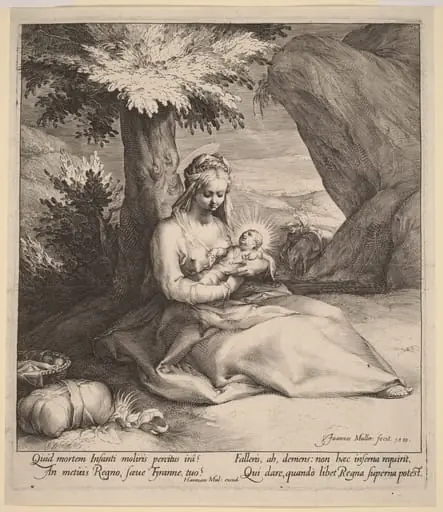 Rest on the Flight into Egypt
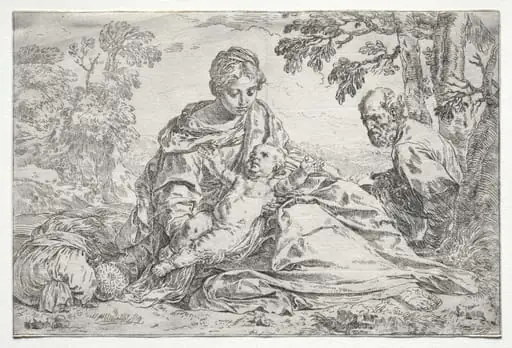 Rest on the Flight into Egypt
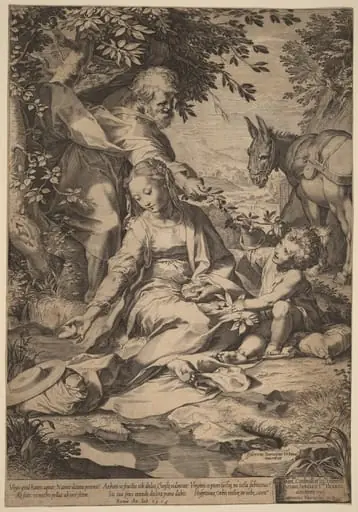 The Rest on the Return from Egypt
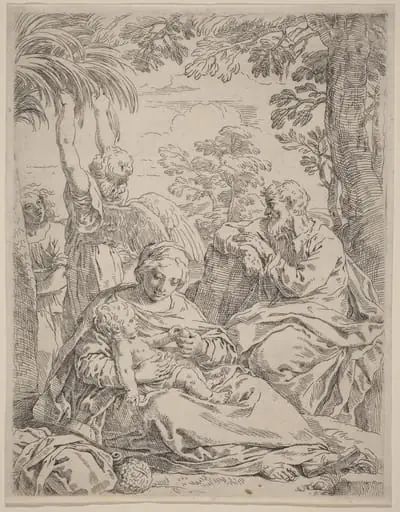 The Rest on the Flight into Egypt
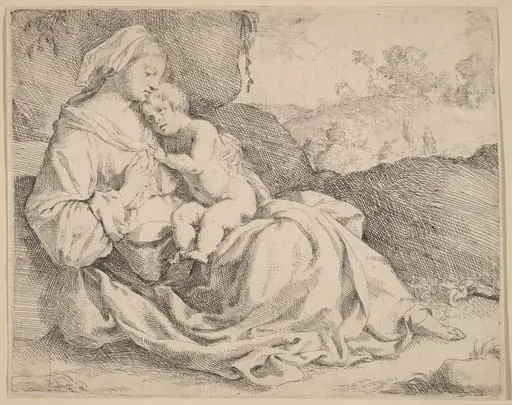 The Virgin and Child on a Grassy Bank
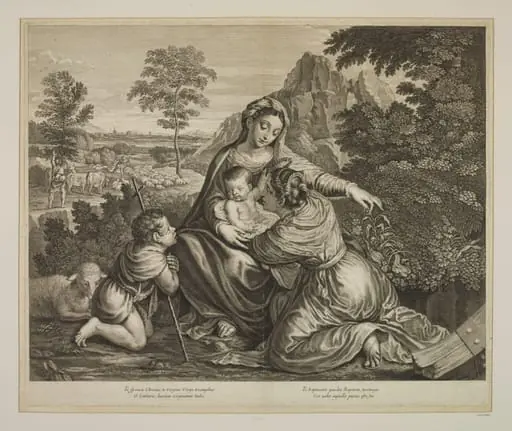 The Marriage of St. Catherine
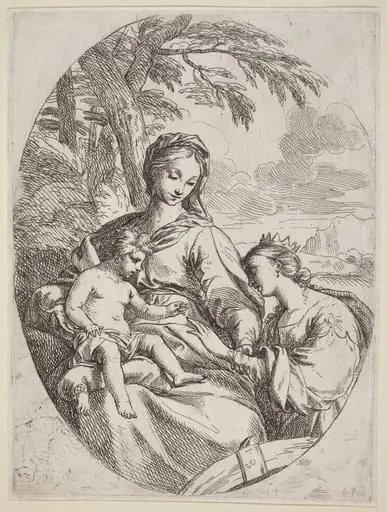 The Mystic Marriage of Saint Catherine
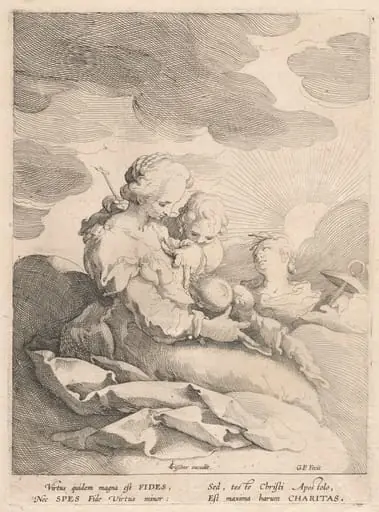 Charity with Faith and Hope
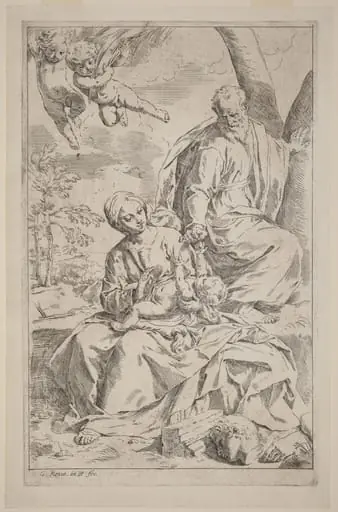 The Rest on the Flight into Egypt
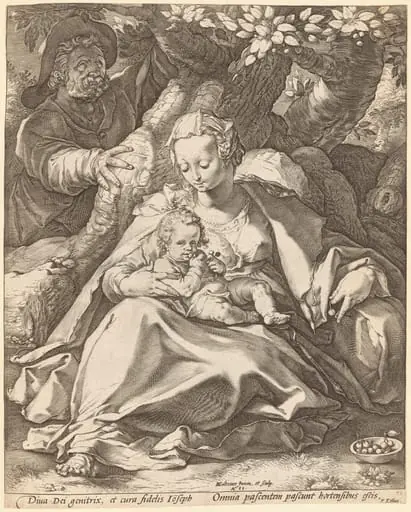 The Holy Family under a Cherry Tree
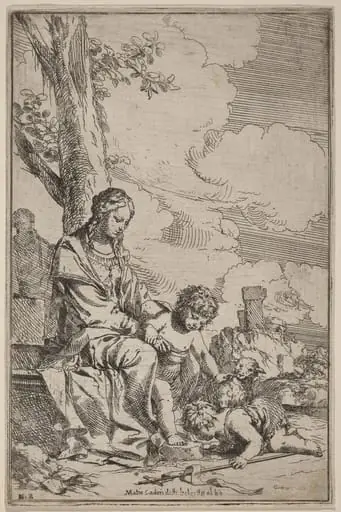 The Virgin and Child with Saint John the Baptist
 Repose in Egypt