Artwork
Farfurie de formă tronconică, marginea lată ușor înclinată în sus. Decor: pe fond de roșeală pe fundul plat, un cerc de puncte albe și negre în formă de coroniță; pe perete cercuri concentrice cu motive de linii verticale, pe margine trei cercuri concentrice albe. Smalț incolor. Cromatică: fond: maro; motive: alb-gălbui; negru.
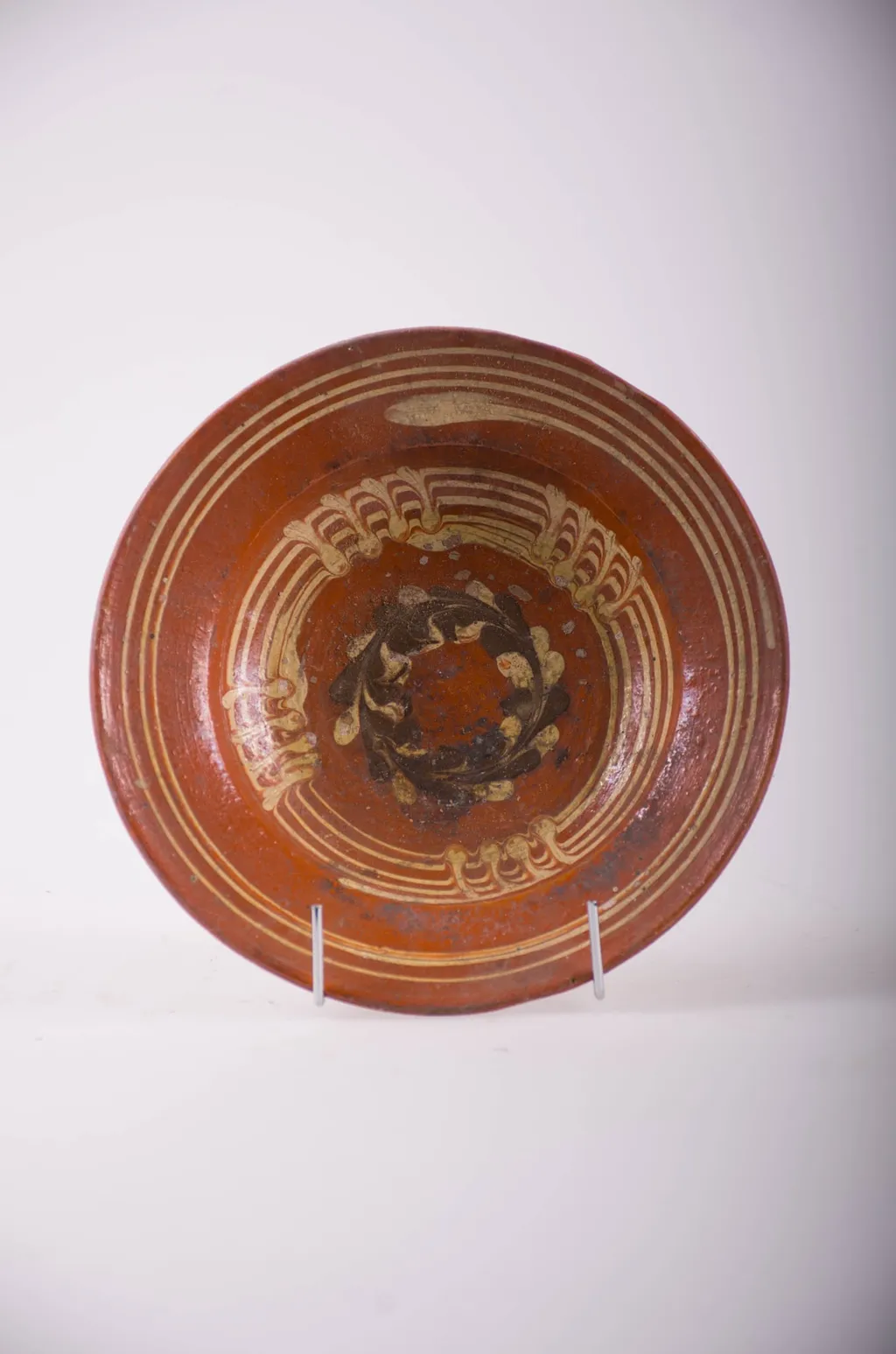
Farfurie de formă tronconică, marginea lată ușor înclinată în sus. Decor: pe fond de roșeală pe fundul plat, un cerc de puncte albe și negre în formă de coroniță; pe perete cercuri concentrice cu motive de linii verticale, pe margine trei cercuri concentrice albe. Smalț incolor. Cromatică: fond: maro; motive: alb-gălbui; negru. is a print by Rovența Vasile. It is held in the collection of the ASTRA National Museum Complex. This is a circular ceramic vessel with a broad, gently upturned rim and a flat interior base.
About this work
Overview
This is a circular ceramic vessel with a broad, gently upturned rim and a flat interior base. Crafted from fired clay and coated in clear glaze, its surface displays a restrained palette of reddish-brown, white, and black. Decorative elements are arranged in concentric bands, emphasizing symmetry and repetition, suggesting functional use paired with intentional aesthetic care.
Subject & Meaning
The central motif of alternating black and white dots forms a circlet resembling a crown, possibly signaling status, ritual use, or symbolic protection.
The central motif of alternating black and white dots forms a circlet resembling a crown, possibly signaling status, ritual use, or symbolic protection. Concentric rings along the walls, interspersed with vertical lines and small geometric shapes, may reflect natural patterns or cosmological ideas. The design lacks figurative elements, pointing toward abstract or non-representational cultural expression.
Technique & Style
The vessel was hand-formed and painted with mineral pigments before a clear glaze was applied. The white and yellowish-white motifs were applied with precision against a dark red-brown ground, enhancing contrast. The use of dots, lines, and rings suggests a standardized decorative vocabulary, likely passed through generations of potters in the region.
History & Provenance
This piece belongs to a tradition of Neolithic or Chalcolithic pottery from the Carpathian Basin, dated roughly between 5000–3000 BCE. Similar vessels have been recovered from settlement sites in modern-day Romania and Moldova. Its preservation indicates it was not used for daily cooking but possibly for storage or ceremonial purposes.
Context
Contemporary ceramics from this period often feature geometric patterns, suggesting shared symbolic systems across communities. The absence of figurative art aligns with broader regional trends where abstraction dominated domestic and ritual objects. This bowl reflects a culture that valued order, repetition, and visual clarity in material culture.
Legacy
The design principles seen here—concentric bands, high-contrast pigments, and non-figurative motifs—recur in later Balkan and Eastern European pottery traditions. While no direct lineage can be traced, the persistence of such forms underscores a long-standing regional aesthetic preference rooted in prehistoric craft practices.
Artist & collection
Artist
This potter kept his hands dusted red from firing clay in his backyard shed outside Cluj.

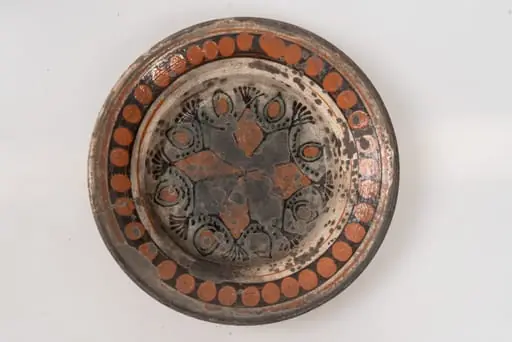 Farfurie semi-adâncă, cu buză evazată; este angobată pe fața interioară cu humă albă, peste care este pictat cu pensula și cu cornul decorul format dintr-un motiv floral geometrizat, realizat cu contur maro din romburi, linii în formă de V, cercuri și puncte pe fond alb; buza este decorată cu un șir de puncte groase de culoare roșu-cărămiziu pe o dungă de culoare maro. Farfuria este acoperită pe suprafața ornamentată cu un strat de smalț transparent. Cromatica: alb, maro, roșu-cărămiziu, urme de verde.
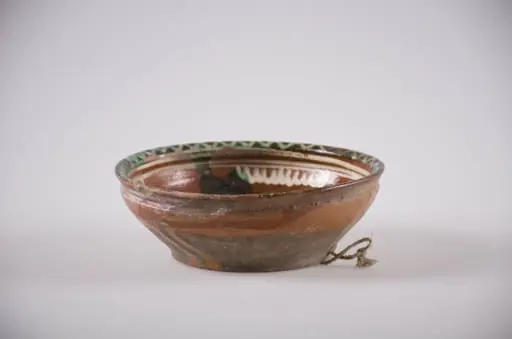 Blid de formă tronconică, adânc cu pereți ușor evazați și buza dreaptă, Decor cu motive geometrice: linie ondulată pe buză; cercuri concentrice pe trei câmpuri pe fundul blidului. În centru avem o floare stilizată; pete stropite pe vas. Smălțuit maro. Cromatică: fond: maro; motive: verde; alb. Prezintă două găuri pe fundul vasului pentru atârnare.
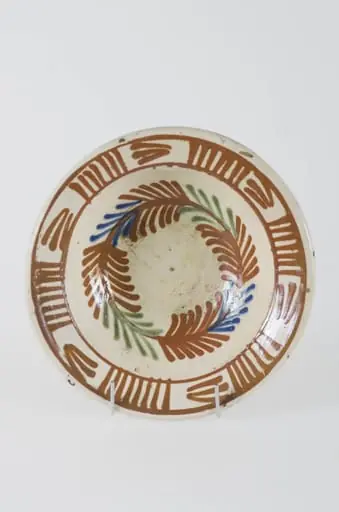 Blid de formă tronconică, lucrat la roată fiind smălțuit la interior cu smalț alb. Prezintă la exterior scurgeri de smalț și de vopsea. Buza este puternic profilată, îngroșată. Motivele decorative sunt vegetale, motivul brăduțului, pe fundul vasului, dispuse într-un registru circular, iar pe buza interioară se identifică un alt registru circular în interiorul căruia sunt pictate linii verticale paralele. Cromatică: fond: alb-gălbui; motive: cărămiziu; albastru; verde.
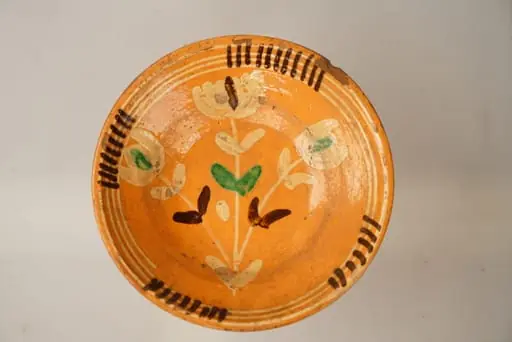 Farfurie adâncă, acoperită pe suprafața interioară cu un strat de angobă de culoare galben-ocru, peste care este pictat cu cornul și cu pensula decorul format din motive florale stilizate și geometrice: centrul farfuriei conține trei tulpini înalte cu flori de lalea de culoare albă, cu mijlocul verde și maro și frunze de culoare maro, alb și verde. Buza farfuriei este decorată cu o linie circulară spiralată de culoare albă, perpendicular pe care sunt pictate patru grupuri de linii drepte de culoare maro, așezate diametral opus în formă de cruce. Suprafața ornamentată a farfuriei este acoperită cu un strat de smalț transparent. Cromatica: alb, galben ocru, maro, verde.
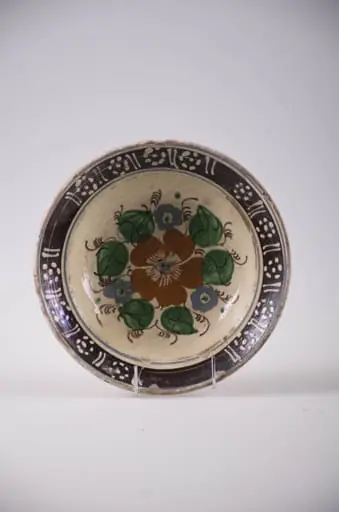 Blid de formă tronconică cu partea superioara usor rasfrântă, Decorul este pictat cu pensula cu un motiv central de tip floral; pe margini linii paralele și flori stilizate din puncte. Smălțuit. Cromatică: roșu; verde și maro în centru; motive laterale: alb pe fond brun inchis; fond general: alb-galbui.
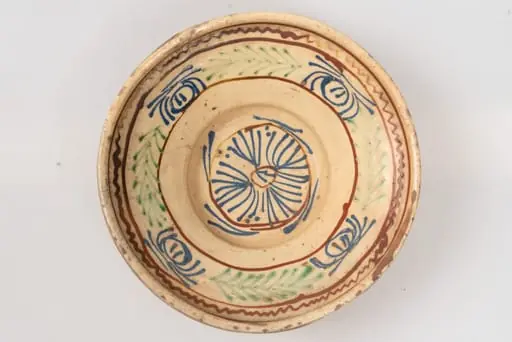 Farfurie adâncă, de tip castron, cu fund îngust, corp tronconic și buză dreaptă, verticală; este angobată pe fața interioară și pe suprafața exterioară a buzei cu un strat de humă albă. Este decorată prin pictare cu cornul cu motive florale și fitomorfe geometrizate: pe fundul farfuriei este pictată o floare cu petalele din linii subțiri albastre și centrul marcat cu un cerc mic maro, încadrată într-un cerc de asemenea de culoare maro. Peretele farfuriei este decorat cu patru grupuri de motive formate din linii verzi, sugerând o ramură cu frunze, intercalate de patru flori geometrizate, realizate din linii albastre. Decorul este completat cu trei linii circulare simple și o linie circulară ondulată. Suprafața ornamentată a farfuriei este acoperită cu un strat de smalț transparent. Cromatica: alb, verde, albastru, maro.
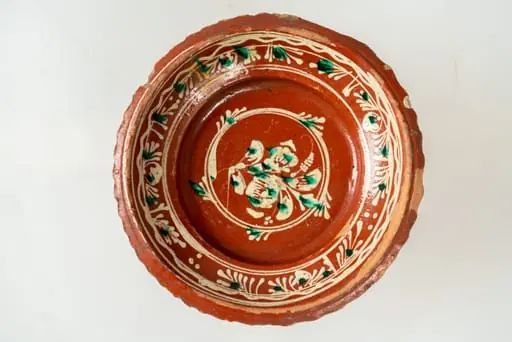 Farfurie adâncă, cu buza răsfrântă și muchie ondulată. Piesa este modelată la roata olarului, cu suprafața interioară acoperită cu un strat de angobă maro. Decorul este pictat cu cornul și cu pensula, cu humă albă, și constă în motive decorative florale și vegetale stilizate, amplasate pe fundul farfuriei (un buchet de flori cu frunze, încadrat într-un cerc format din două linii paralele și decorat pe exterior cu patru grupuri de linii sugerând frunze) și pe buza farfuriei, într-un registru decorativ continuu, completat cu motive decorative geometrice (linii paralele sub formă de cerc, linie vălurită, puncte). Peste acest decor sunt aplicate câteva pete de smalț verde. Pe fața interioară a farfuriei este aplicat un strat de smalț transparent. Cromatica decorului: alb, maro, verde.
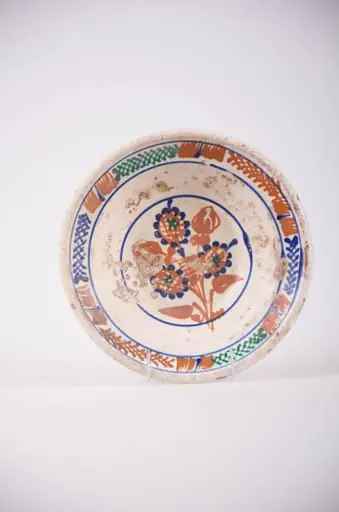 Farfurie de formă tronconică cu deschidere mare. Smălțuit în interior și ornamentat cu motive geometrice: cercuri; motive florale, pete de culoare și motiv vegetal: brăduț. Motivul floral se află pe fundul vasului și este înscris într-un cerc. Motivele vegetale și petele de culoare sunt amplasate pe marginea farfuriei și sunt încadrate de două cercuri. Cromatică: fond: alb; motive: maro; verde; albastru.
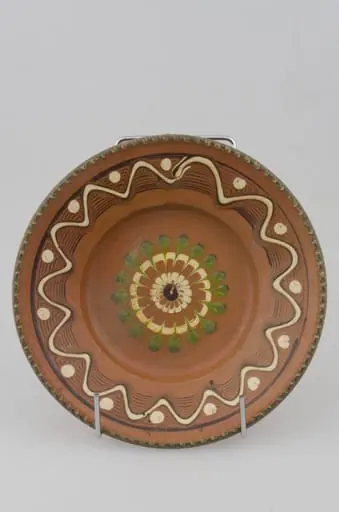 Farfurie cu pereții rotunjiți, marginea oblică lată și buza crestată. Prezintă decor geometric pe margine: linii frânte și curbe; pete de culoare; central avem o floare stilizată. Cromatică: fond: maro; motive: verde; alb.
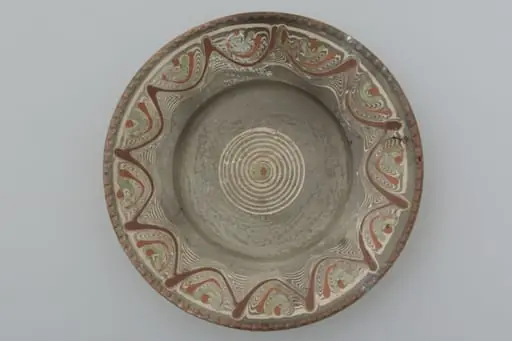 Farfurie cu pereții rotunjiti, marginea oblică lată cu buza crestată. Decor geometric pe margine: linii frânte și curbe, sugerând imaginea unui soare sau flori; pete de culoare; jirăvire. Pe fundul vasului dispusă o spirală cu o bulină verde și un punct maro în mijloc. Baza inelară perforată pentru introducerea unei sfori în vederea atârnării. La posterior, pe fund ștanțat ”Răducanu Ion Oboga jud. Olt''. Cromatică: fond: brun; motive: verde; alb; maro.
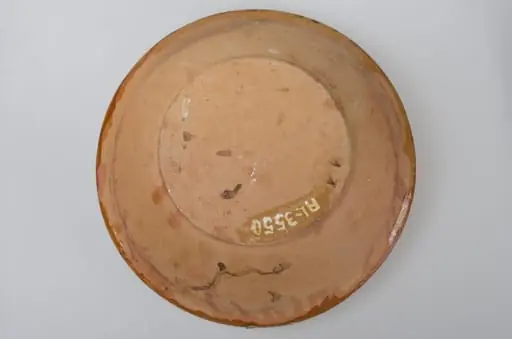 Vas de formă tronconică cu buza dreapta. Decorul este amplasat pe toată suprafața interioară și parțial în exterior, pe buză. Acesta este compus din motive geometrice (val); motive fitomorfe, plasate pe fund (frunza) și motive florale, tot pe fund (pansea). Blidul este smălțuit la interior și pe zona exterioară a buzei. Cromatică: fond: maron; motive: alb, verde.
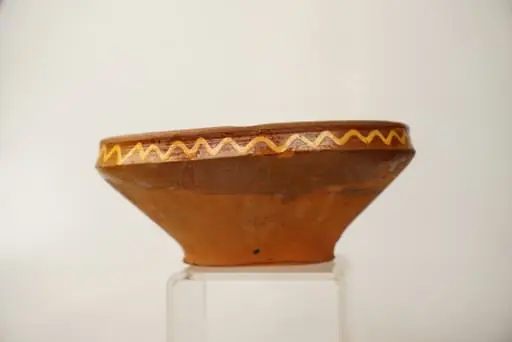 Farfurie adâncă de tip castron, cu fund îngust, corp tronconic și buză verticală, îngustă și ușor profilată. Decorul este pictat cu cornul, cu humă albă, direct pe suprafața neangobată a vasului și se compune din motive geometrice și floral-geometrizate: centrul farfuriei este decorat cu două cercuri concentrice de culoare albă, ce conțin între ele o linie circulară ondulată, iar în mijloc un element decorativ neregulat, de formă palmată, cu puncte albe în interior. Cinci motive aproximativ identice, formate din linii ovale cu puncte în interior și linii mici arcuite pe exterior, sunt pictate pe peretele vasului, pe exteriorul cercului ce marchează fundul acestuia, sugerând niște petale de floare. Patru pete de culoare verde-închis realizate completează decorul din această zonă. Buza farfuriei este decorată pe interior și pe exterior cu o linie circulară ondulată, de culoare albă. Suprafața ornamentată a farfuriei este acoperită cu un strat de smalț transparent. Cromatica: alb, verde-închis, pe fondul roșu al lutului ars.