Artwork
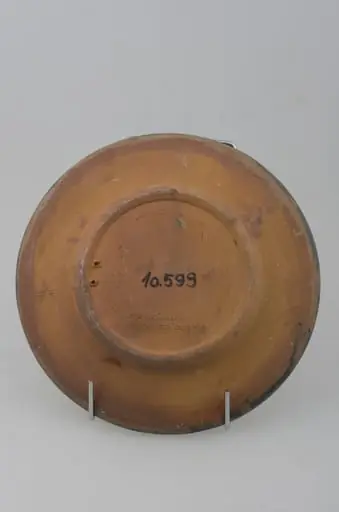
Farfurie cu pereții rotunjiti, marginea oblică lată cu buza crestată. Decor geometric pe margine: linii frânte și curbe, sugerând imaginea unui soare sau flori; pete de culoare; jirăvire. Pe fundul vasului dispusă o spirală cu o bulină verde și un punct maro în mijloc. Baza inelară perforată pentru introducerea unei sfori în vederea atârnării. La posterior, pe fund ștanțat ”Răducanu Ion Oboga jud. Olt''. Cromatică: fond: brun; motive: verde; alb; maro.
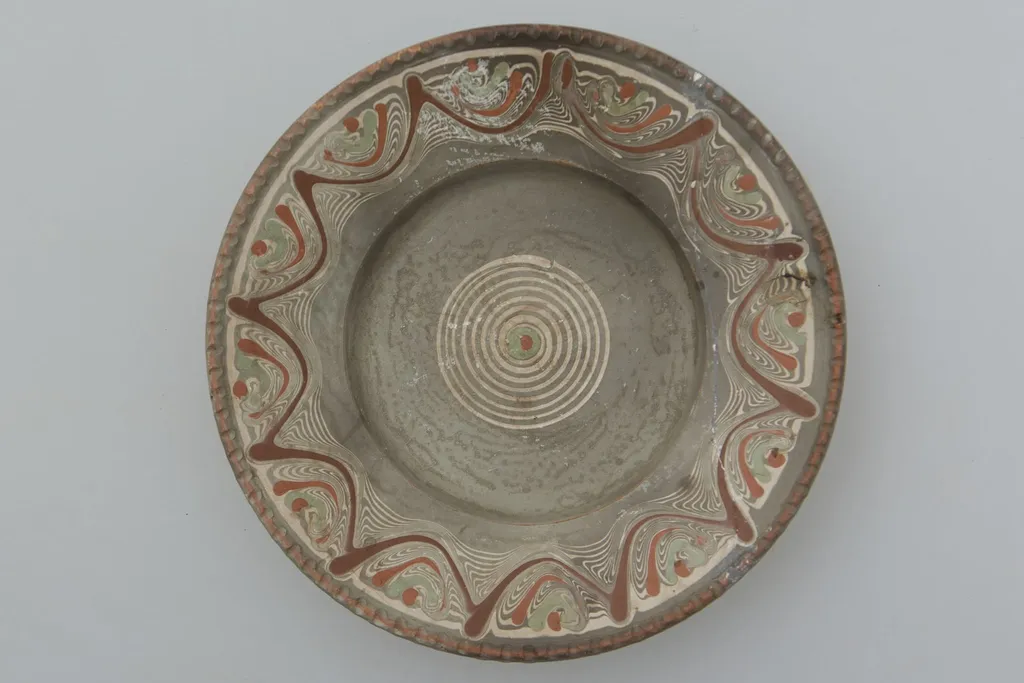
Farfurie cu pereții rotunjiti, marginea oblică lată cu buza crestată. Decor geometric pe margine: linii frânte și curbe, sugerând imaginea unui soare sau flori; pete de culoare; jirăvire. Pe fundul vasului dispusă o spirală cu o bulină verde și un punct maro în mijloc. Baza inelară perforată pentru introducerea unei sfori în vederea atârnării. La posterior, pe fund ștanțat ”Răducanu Ion Oboga jud. Olt''. Cromatică: fond: brun; motive: verde; alb; maro. is a poster by Răducanu Ion. It is held in the collection of the ASTRA National Museum Complex. A circular ceramic plate with a broad, sloping rim and a perforated ring base, likely designed to be suspended.
About this work
Overview
The surface is minimally decorated in the center, while the rim is densely patterned with geometric lines in white, green, and brown.
A circular ceramic plate with a broad, sloping rim and a perforated ring base, likely designed to be suspended. The surface is minimally decorated in the center, while the rim is densely patterned with geometric lines in white, green, and brown. A small central spiral, marked by a green dot and a brown center, draws subtle attention. The piece bears a stamped inscription identifying its maker and origin, suggesting local production in early 20th-century Romania.
Subject & Meaning
The decorative motifs on the rim—interwoven zigzags and curves—may evoke natural forms such as sun rays or stylized flora, though no explicit narrative is present. The central spiral, with its contrasting dots, could symbolize growth, continuity, or a cosmic element, common in folk traditions. The absence of figural imagery points to an emphasis on abstract, repetitive patterns typical of utilitarian ceramics in rural communities.
Technique & Style
Hand-painted with uneven brushwork and muted pigments, the decoration shows signs of wear, indicating daily use. Colors—brown background, green and white lines, brown accents—were applied over a fired clay body. The thick, crested rim and perforated base suggest functional design: the plate may have been hung for storage or display. The geometric precision contrasts with the irregularity of the brushstrokes, reflecting artisanal rather than industrial production.
History & Provenance
Stamped on the reverse is the name 'Răducanu Ion Oboga jud. Olt,' identifying the maker and his locality in Olt County, Romania. This inscription, typical of regional potters in the early 1900s, confirms local craftsmanship. The plate’s construction and decoration align with folk ceramic traditions of southern Romania, where utilitarian wares often carried symbolic motifs passed through generations of makers.
Context
Produced in a rural setting, this plate reflects the intersection of utility and symbolic decoration in Romanian folk pottery. Similar vessels were used in domestic settings for serving or storage, with hanging bases allowing space-saving storage. The geometric patterns echo broader Balkan and Danubian ceramic traditions, where abstract designs conveyed cultural identity without reliance on figural representation.
Legacy
This object stands as an example of early 20th-century Romanian vernacular ceramics, preserving the handcrafted aesthetic of a time before industrial mass production. Its survival offers insight into the daily lives and visual language of rural artisans. Though not signed as fine art, its design and inscription contribute to the documented heritage of regional pottery practices in Romania.
Artist & collection
Artist
Ion Răducanu made earth-toned ceramics marked with tight geometric patterns. His green-glazed jar features stacked rings around the body and a white zig-zag on the neck, while the back shows his name and “Oboga jud.…

 Farfurie de formă tronconică cu pereții rotunjiți, marginea oblică, lată și buza crestată. Decor cu motive geometrice pe margine: linii frânte și curbe; pete de culoare; central prezintă o floare stilizată. Cromatică: fond: verde; motive: brun; verde deschis; alb.
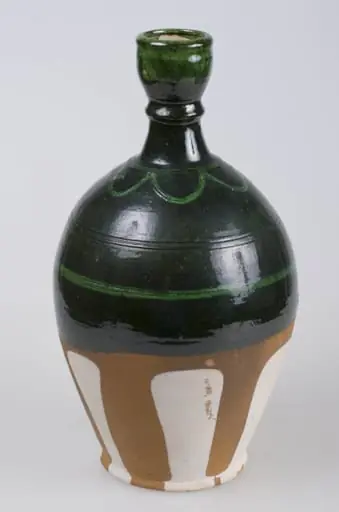 Vasul este zvelt și înalt, cu baza îngustă ce se lărgește spre pântecul vasului înălțat, gâtul subțire și lung, buza mai groasă și lată. De jumătatea gâtului se prinde toarta cu țâț printr-un guler. Jumătatea de jos este nesmălțuită și prezintă dungi verticale, de vopsea albă. Jumătatea de sus este smălțuită în verde închis. Decorul este format dintr-un brâu de semicercuri în jurul gâtului - două dungi paralele pe pântec realizat prin incizie de culoare verde închis. Cromatică: alb; maro; verde.
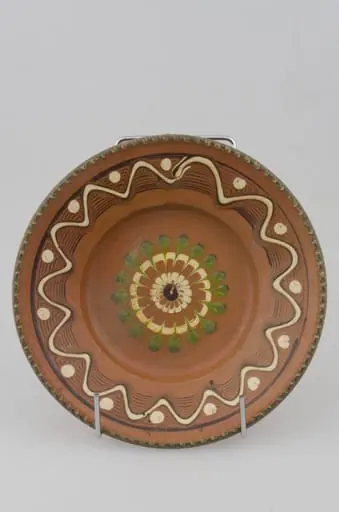 Farfurie cu pereții rotunjiți, marginea oblică lată și buza crestată. Prezintă decor geometric pe margine: linii frânte și curbe; pete de culoare; central avem o floare stilizată. Cromatică: fond: maro; motive: verde; alb.
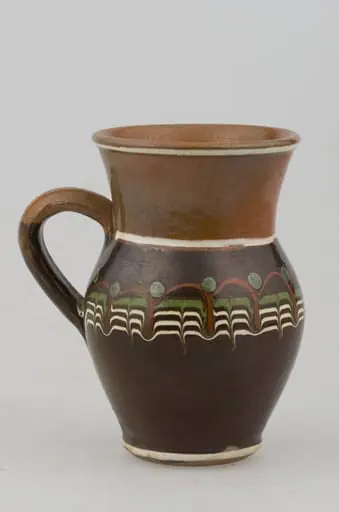 Cană ce are corpul bitronconic și baza îngustată. Prezintă toartăde formă semicirculară. Decorul este dominat de motive geometrice și este compus dintr-o succesiune de linii curbe și puncte. Cromatică: fond: brun; motive: cărămiziu; verde; alb; roșu.
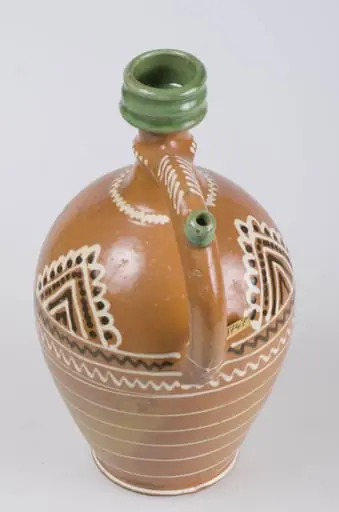 Vasul este zvelt și înalt, cu baza îngustă ce se lărgește spre pântecul vasului situat în partea de sus a lui, gâtul subțire, buza vasului largă, în trei trepte suprapuse, smălțuită verde. Până spre pântecul vasului, de la bază, opt linii circulare, paralele (în ultimele două a fost pictat motivul valului). Pe pântecul vasului decor geometric în alb și maro închis. Gâtul vasului marcat de un zig-zag alb. Toarta este decorată cu puncte și linii albe. Cromatică: maro; verde; alb.
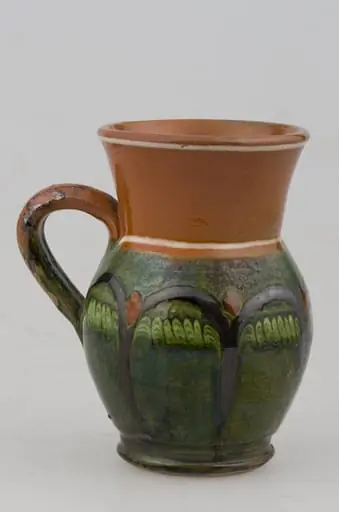 Vas bitonconic ce are corpul ușor bombat, buza lată și evazată. Prezintă o toartă decorată cu linii curbe și puncte; aceleași motive se găsesc și pe corpul ulcelei. Smălțuită la interior și la exterior. Cromatică: verde; negru; brun; alb.
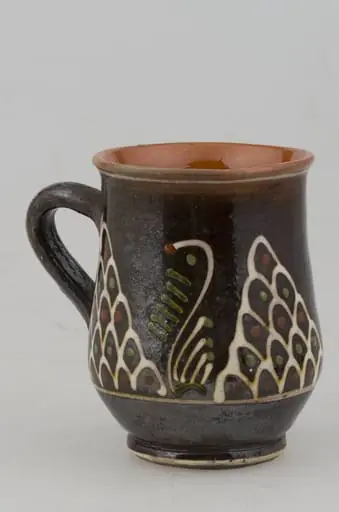 Cană cu corpul ușor bombat și buza evazată. Prezintă o toartă ce pleacă de la aproximativ doi centimetri sub buză până în jumătatea inferioară, pe maximul diametrului corpului. Decorat format din linii curbe, puncte și motive vegetale stilizate. Smălțuită la interior și la exterior. Cromatică: fond: brun; motive: verde; roșu; alb.
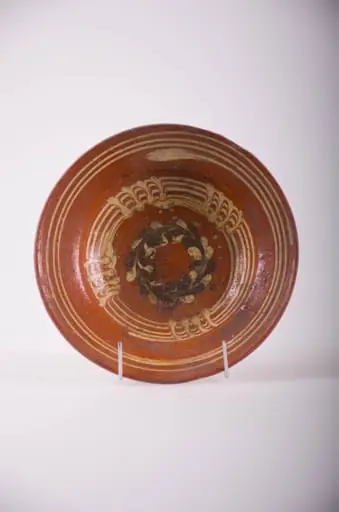 Farfurie de formă tronconică, marginea lată ușor înclinată în sus. Decor: pe fond de roșeală pe fundul plat, un cerc de puncte albe și negre în formă de coroniță; pe perete cercuri concentrice cu motive de linii verticale, pe margine trei cercuri concentrice albe. Smalț incolor. Cromatică: fond: maro; motive: alb-gălbui; negru.
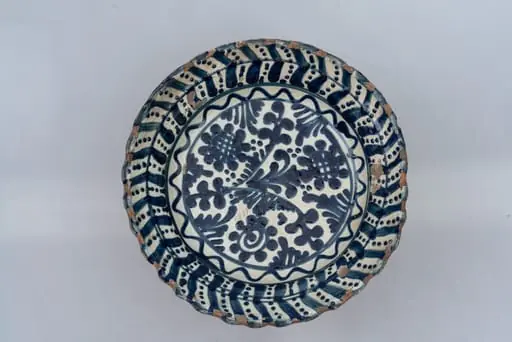 Farfurie semi-adâncă, cu fund larg, buză evazată și muchia buzei ondulată. Este acoperită pe suprafața interioară cu un strat de angobă albă peste care este pictat cu pensula și cu cornul decorul monocromatic format din motive geometrice și florale stilizate: registrul central de pe fundul farfuriei conține un buchet format din trei flori cu petale rotunde și mijlocul umplut cu linii hașurate intersectat, una dintre flori având mijlocul dintr-o linie spiralată, și din frunze; acest registru este încadrat între două linii circulare simple și o linie circulară ondulată și este completat cu șase motive formate din grupuri de linii crescătoare și descrescătoare, dispuse sub formă de triunghi și cu puncte. Registrul decorativ marginal de pe buza farfuriei este decorat cu un șir continuu de frunze duble între care se găsesc motive punctate (linii). Muchia buzei este marcată cu o dungă albastră. Suprafața ornamentată a farfuriei este acoperită cu un strat de smalț transparent. Cromatica: alb, albastru.
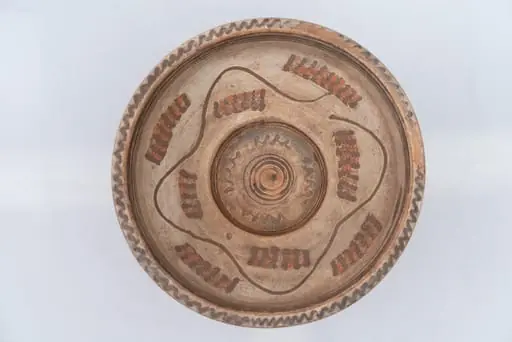 Farfurie adâncă, cu fund îngust și corp tronconic ușor concav. Piesa este angobată pe fața interioară cu un strat de humă albă peste care este pictat cu cornul decorul format din motive geometrice: linie spiralată circulară și patru linii mici ondulate, înscrise într-o linie spiralată mai mare, subțire, ce marchează fundul vasului. Peretele farfuriei este decorat cu opt motive formate din linii paralele de culoare maro și roșu, jirăvite cu cornul și cu gaița, și cu o linie maro cu onduleuri foarte largi. Buza farfuriei este marcată de o linie spiralată subțire, iar muchia buzei de o linie ondulată mărunt, de culoare maro. Cromatica: alb, roșu, maro. Suprafața ornamentată este acoperită cu un strat de smalț transparent.
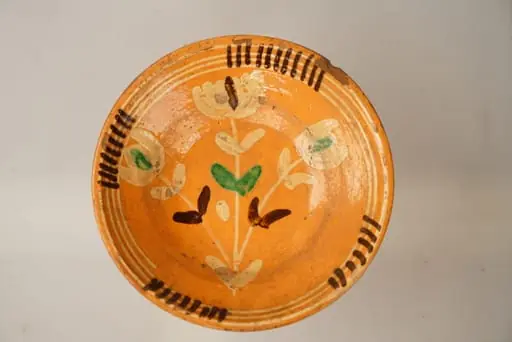 Farfurie adâncă, acoperită pe suprafața interioară cu un strat de angobă de culoare galben-ocru, peste care este pictat cu cornul și cu pensula decorul format din motive florale stilizate și geometrice: centrul farfuriei conține trei tulpini înalte cu flori de lalea de culoare albă, cu mijlocul verde și maro și frunze de culoare maro, alb și verde. Buza farfuriei este decorată cu o linie circulară spiralată de culoare albă, perpendicular pe care sunt pictate patru grupuri de linii drepte de culoare maro, așezate diametral opus în formă de cruce. Suprafața ornamentată a farfuriei este acoperită cu un strat de smalț transparent. Cromatica: alb, galben ocru, maro, verde.
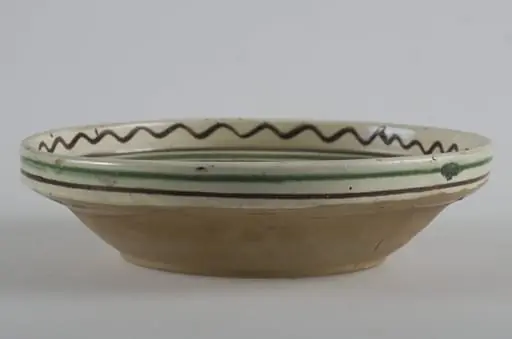 Blid adânc cu margini drepte și buza verticală. Decor în registre concetrice; pe marginea exterioară o linie verde și o linie maron. Pe buză, în interior, avem o linie ondulată și două linii maron cu o bandă verde între ele; brăduț și punct verde. Motiv central: lalea cu două frunze mari și două frunze mici; Cromatică: maron; galben; verde pe fond alb. Prezintă două găuri pentru agățare.
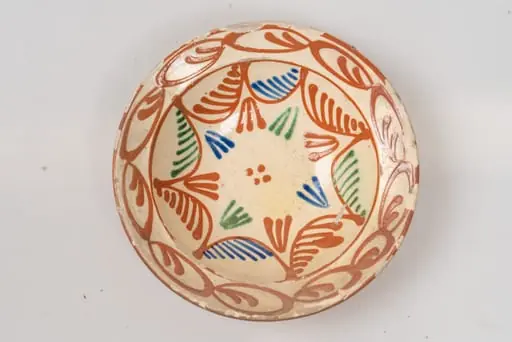 Farfurie adâncă, cu buză relativ îngustă, evazată; este acoperită pe suprafața interioară cu un strat de angobă albă, peste care este pictat cu cornul decorul format din motive geometrice: fundul farfuriei și peretele acesteia este decorat cu motive formate din linii curbe de culoare maro, ce au pe suprafața interioară linii oblice paralele, inegale ca mărime, de culoare verde, albastru, maro; grupuri de câte trei linii colorate, în formă de V și patru puncte centrale, de culoare maro. Buza farfuriei este decorată cu un șir continuu din motive formate din linii ovale, de culoare maro, cu câte două linii sub formă de virgulă în interior. Suprafața ornamentată a farfuriei este acoperită cu un strat de smalț transparent. Cromatica: alb, albastru, verde, maro.