Artwork
Insurable Cattle
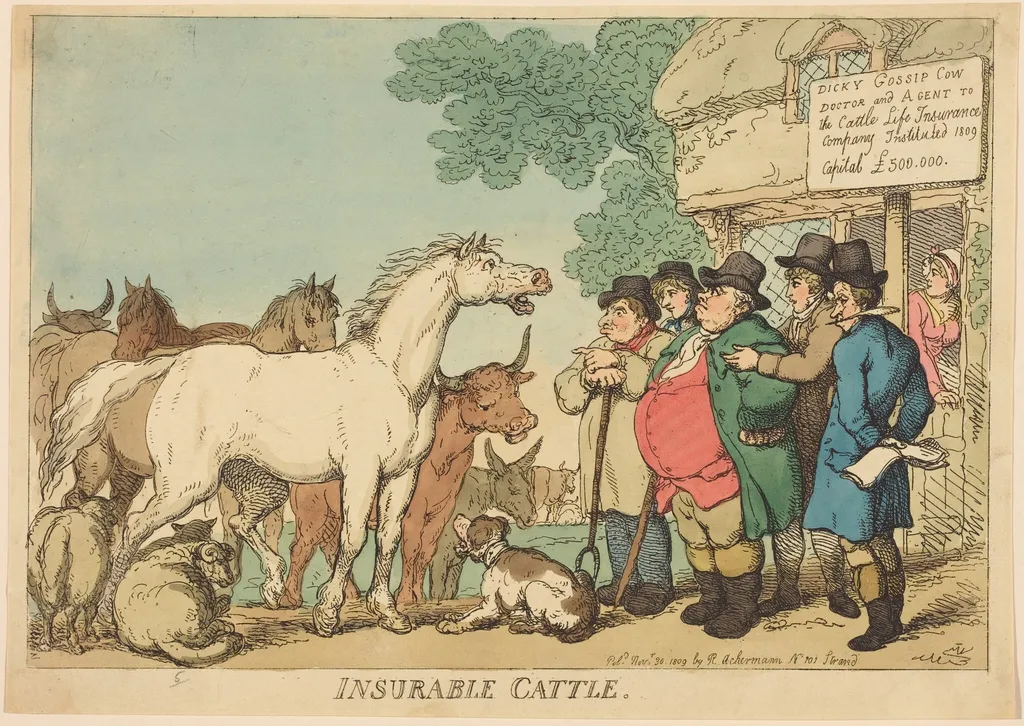
Insurable Cattle is an ink print by the Romanticist artist Thomas Rowlandson. It dates from 1809 and is held in the collection of the National Gallery of Art.
About this work
Overview
Insurable Cattle is a hand-colored etching created by English caricaturist Thomas Rowlandson in 1809. Characteristic of his output during the Georgian Era, the print showcases his satirical approach to contemporary themes.
Subject & Meaning
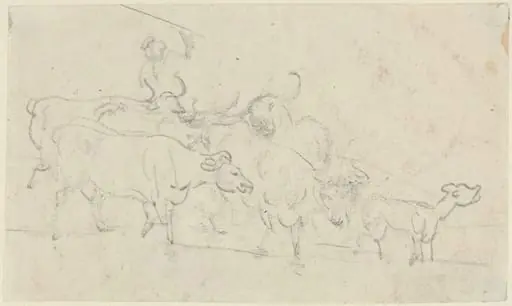
The etching primarily depicts cattle within a simple landscape of trees and a fence. Beneath its straightforward subject lies a satirical commentary, typical of Rowlandson’s work, likely critiquing aspects of Georgian society or economics, as suggested by the title’s emphasis on 'insurability'.
Technique & Style
Rowlandson employed simple yet effective lines to achieve texture and depth in the etching, demonstrating an experimental approach to visual interest. The hand-colored aspect adds vibrancy, contrasting with the understated drawing style.
History & Provenance
Created in 1809, Insurable Cattle aligns with Rowlandson’s period of producing satirical prints, placing it alongside the works of contemporaries like James Gillray. Specific provenance details are not provided.
Context
This work reflects the Georgian Era’s social and political climate, where satire was a popular medium for commentary. Rowlandson’s style and subject matter position Insurable Cattle within the broader tradition of English caricature of the time.
Legacy
Insurable Cattle contributes to Rowlandson’s legacy as a prolific caricaturist and social observer. While not individually renowned, it exemplifies his contribution to the satirical print tradition of late 18th and early 19th-century England.
Artist & collection
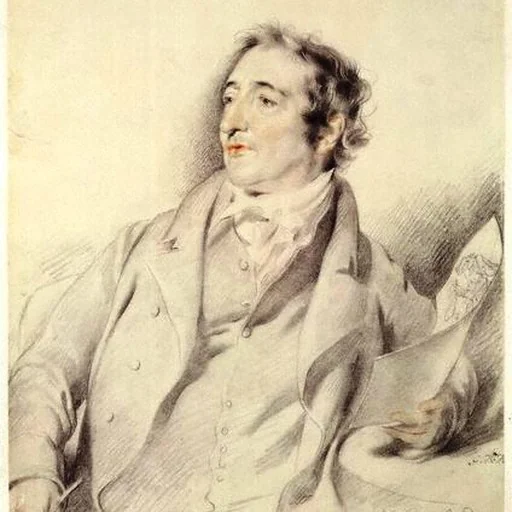
Artist
Thomas Rowlandson (; 13 July 1757 – 21 April 1827) was an English artist and caricaturist of the Georgian Era, noted for his political satire and social observation.