Artwork
Rustic Courtship
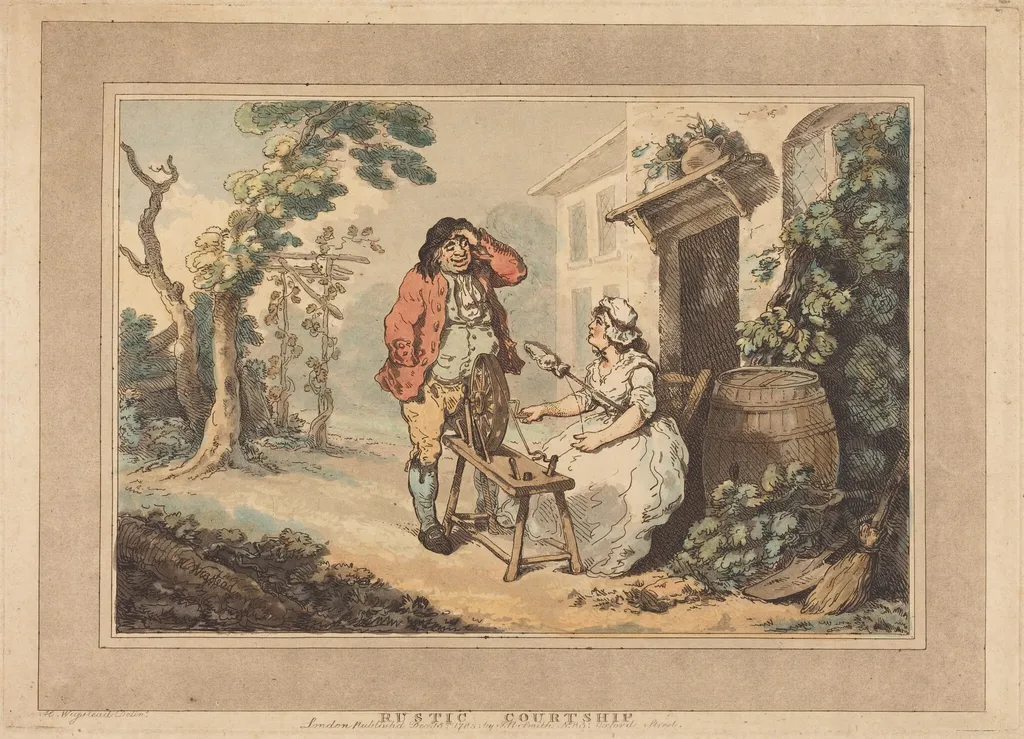
Rustic Courtship is an ink print by the Romanticist artist Thomas Rowlandson. It dates from 1785 and is held in the collection of the National Gallery of Art.
About this work
Overview
Created in 1785, *Rustic Courtship* is a hand‑coloured print that combines etching with aquatint. The composition presents a quiet countryside tableau in which a man in a red coat and a woman in a white dress engage near a spinning wheel, set against a modest rural backdrop of a tree, a house and a barrel.
Subject & Meaning
The scene captures a moment of domestic interaction, suggesting a courtship ritual rooted in agrarian life. By placing the figures beside a functional object—a spinning wheel—the work hints at the intertwining of work and personal relationships, while the calm setting underscores a gentle, perhaps idealised, view of rural society.
Technique & Style
Rowlandson employed a dual printmaking process: a finely etched line drawing provides the structural detail, while aquatint supplies broad tonal areas that are then enhanced with selective hand‑applied colour. The palette is restrained, favouring muted reds, whites and earth tones, which together create a softened visual atmosphere.
Context
The print belongs to the late‑Georgian tradition of socially observant prints, a genre in which Rowlandson excelled. While many of his works satirise political figures, this piece turns its attention to everyday folk, reflecting contemporary interest in the lives of the lower classes and the romanticisation of pastoral simplicity.
History & Provenance
First issued by Rowlandson’s London publisher in the mid‑1780s, the print circulated among the growing market for affordable art. It later entered several private collections before being acquired by a public institution in the early twentieth century, where it remains part of a broader assemblage of British printmaking.
Artist & collection
Artist
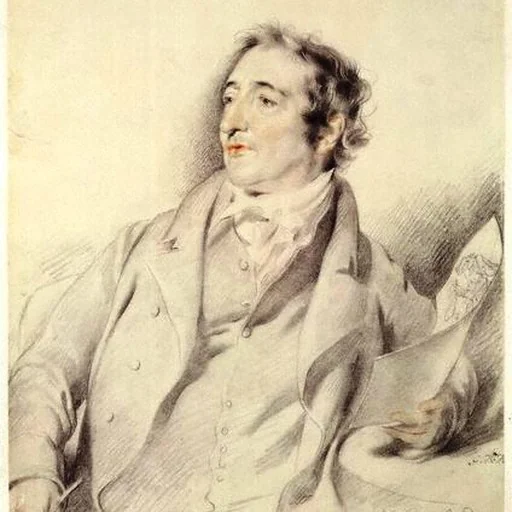
Thomas Rowlandson (; 13 July 1757 – 21 April 1827) was an English artist and caricaturist of the Georgian Era, noted for his political satire and social observation.

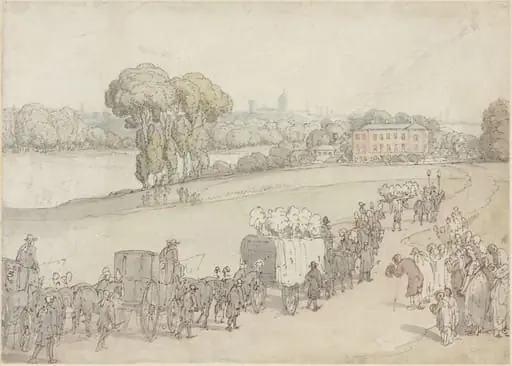
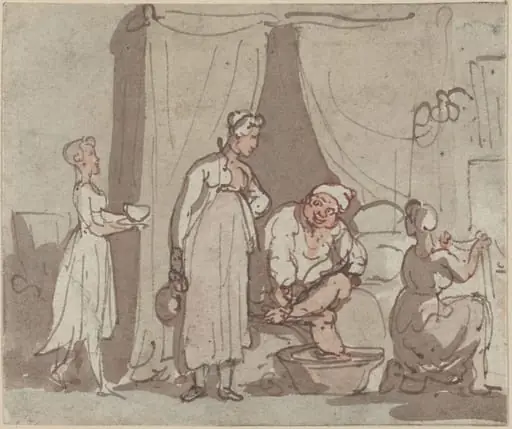
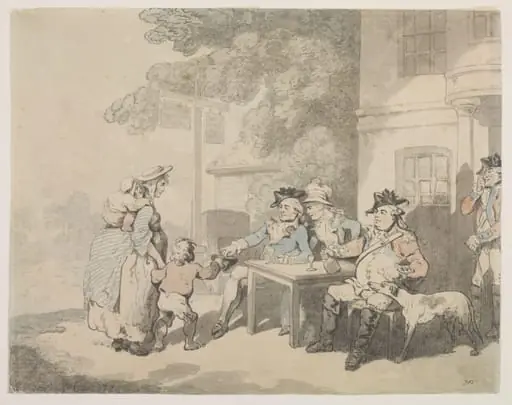 Untitled
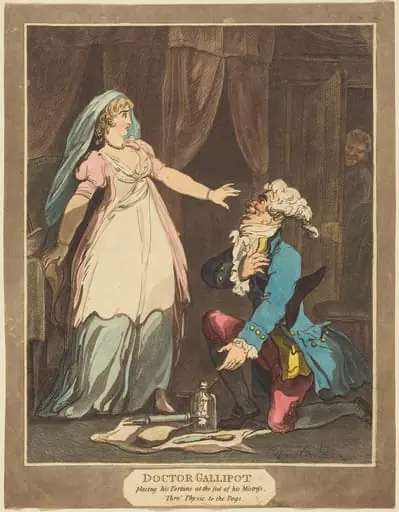 Doctor Gallipot placing his Fortune at the feet of his Mistress
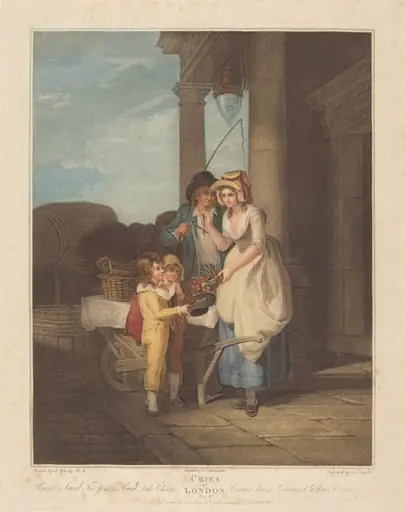 Round and Sound, Five Pence a Pound, Duke Cherries
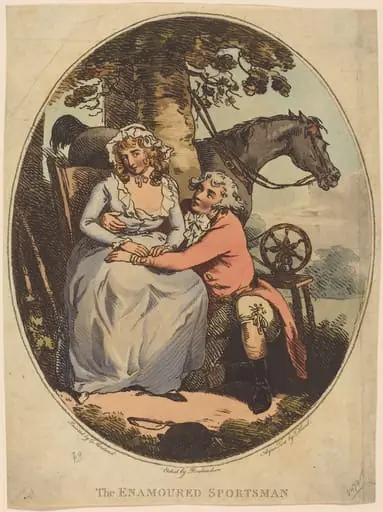 The Enamoured Sportsman
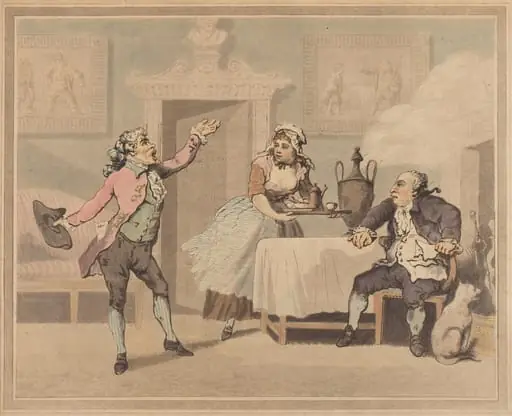 Manager and Spouter
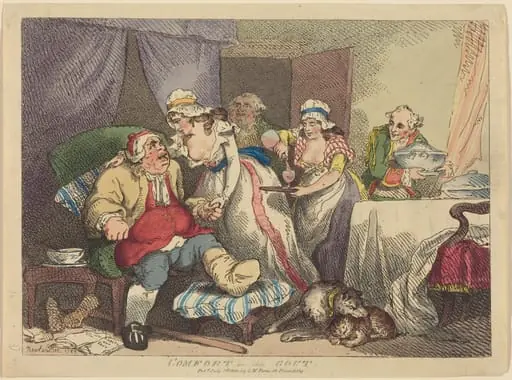 Comfort in the Gout
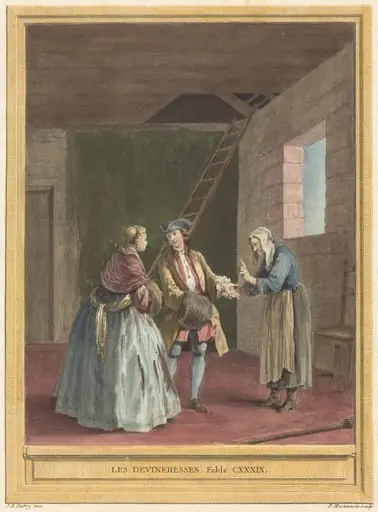 Les devineresses (The Fortune-Tellers)
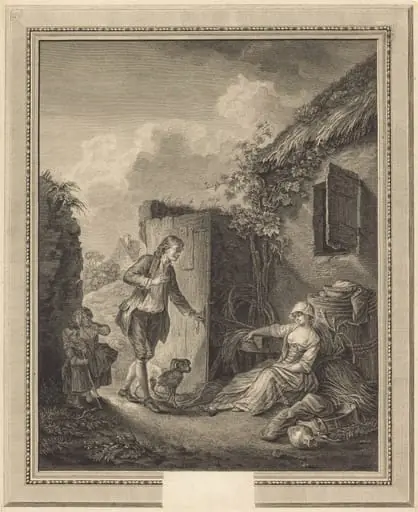 Lison dormait
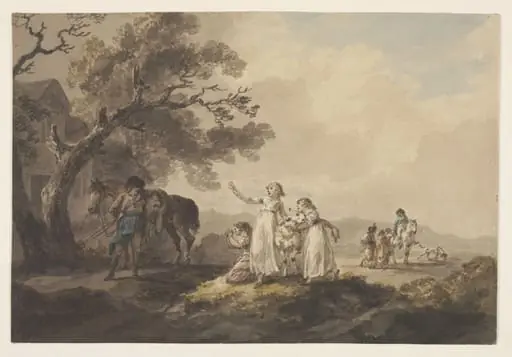 Untitled
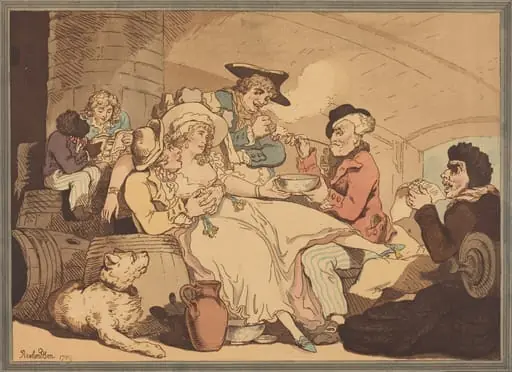 Grog on Board
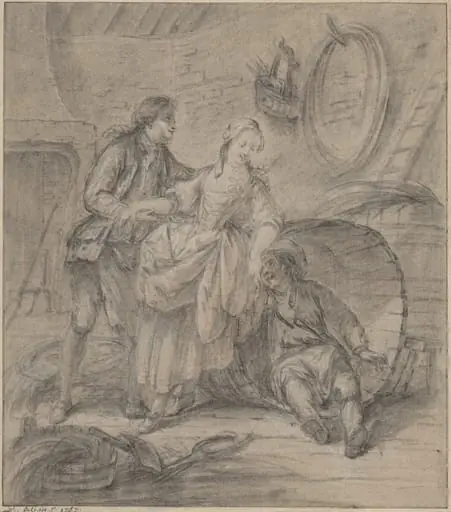 The Tale of the Cooper's Wife
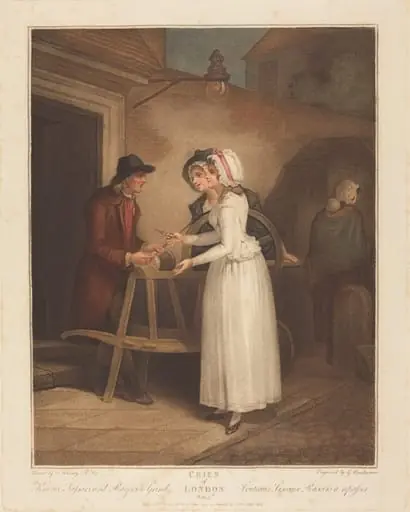 Knives, Scissors and Razors to Grind