Artwork
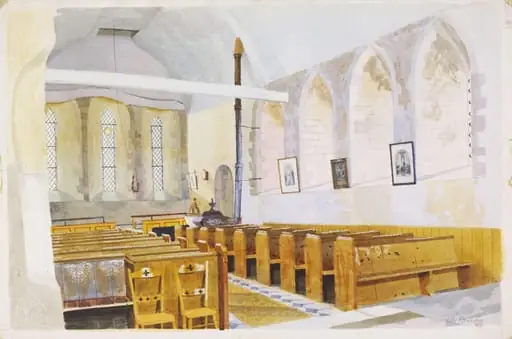
Interior, Black Chapel, North End, near Dunmow, Essex
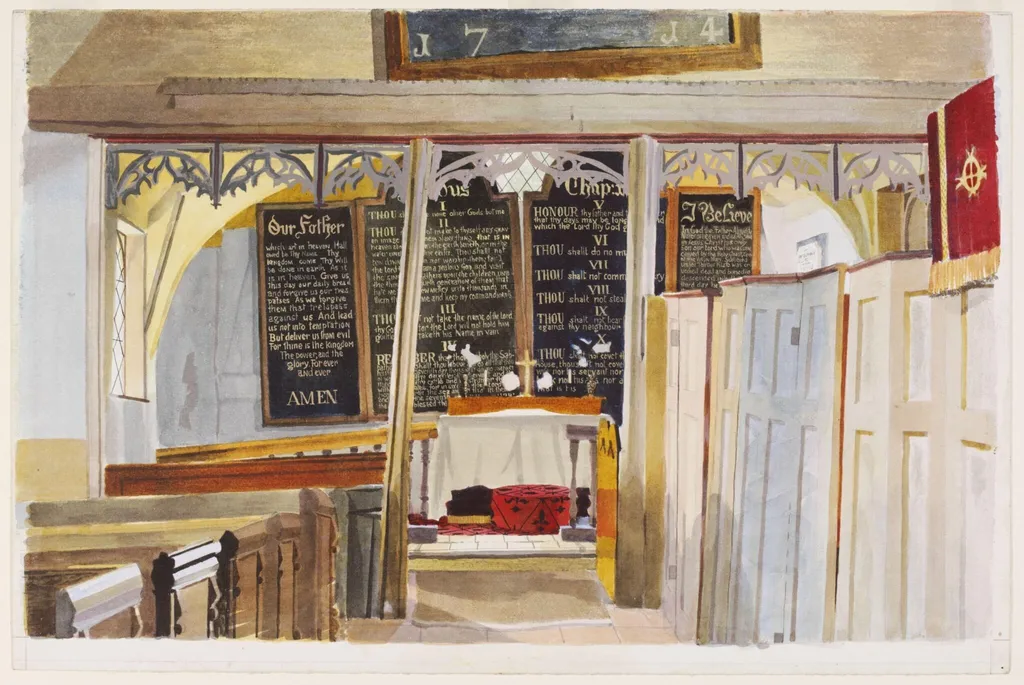
Interior, Black Chapel, North End, near Dunmow, Essex is a watercolor work on paper by Kenneth Rowntree. It dates from 1942 and is held in the collection of the Victoria and Albert Museum.
About this work
The work was part of a project to record Britain’s buildings during a tense time.
Kenneth Rowntree painted the inside of a small chapel in Essex around 1942. He used watercolour for this quiet scene. The work was part of a project to record Britain’s buildings during a tense time.
Rowntree stayed alone in the chapel for days. He said the empty space felt full of unseen company. The building reminded him of the Quaker meeting-houses where he worshipped.
Look up the Victoria and Albert Museum to see more of his watercolours.
Overview
This watercolour painting, titled Interior, Black Chapel, North End, near Dunmow, Essex, was created by Kenneth Rowntree around 1942 as part of the Recording Britain scheme. The work depicts the interior of a small chapel in Essex.
Subject & Meaning
The chapel's interior is rendered as a serene and intimate space, evoking a sense of unseen presence. Rowntree's depiction is influenced by his experience worshipping in Quaker meeting-houses, which the chapel's simplicity resembles.
Technique & Style
Rowntree employed watercolour to capture the quiet atmosphere of the chapel. His use of the medium conveys a sense of stillness and contemplation.
History & Provenance
The painting was created during a period of national tension, as Britain faced the threat of Nazi invasion. Rowntree worked on the Recording Britain project, documenting the country's buildings during this time.
Context
Rowntree's experience in the chapel was characterized by a feeling of being accompanied despite its emptiness, a sentiment echoed in contemporary writings, such as an article by Geoffrey Grigson referencing Thomas Hardy's views on churches as meeting places for the living, dead, and unborn.
Artist & collection
Artist
Kenneth Rowntree painted quiet British places in watercolour around 1940, from barn-stacked Essex fields to the carved oak pews of Caernarvonshire chapels.

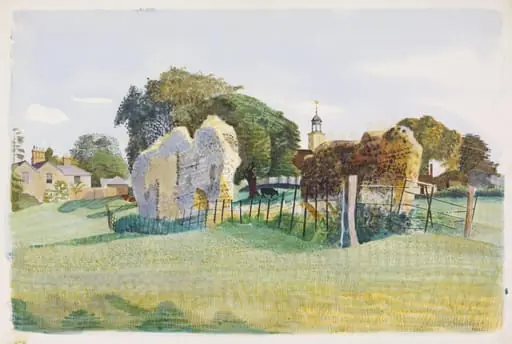 View of the Ruins of the Cloister, the Belfry of St. Mary's Church, and the Vicarage, Tilty
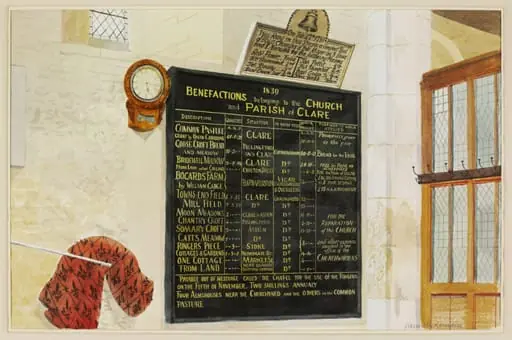 The Bellringer's Chamber, SS. Peter and Paul Church, Clare
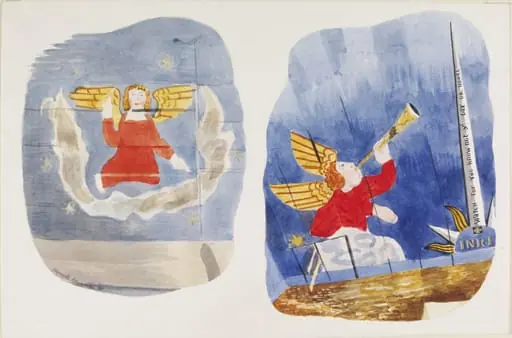 Detail of Ceiling at Gwydir Uchar Chapel, Llanrwst, Caernarvonshire
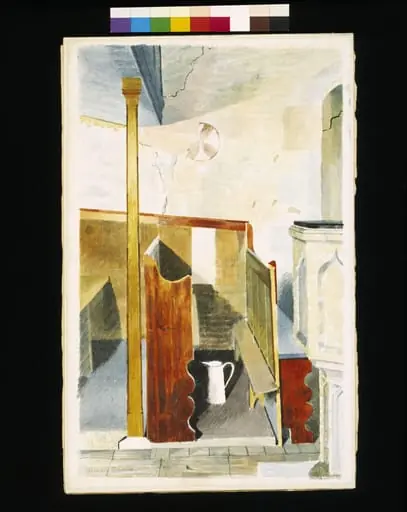 Interior of SS Peter and Paul, Little Saling, Essex
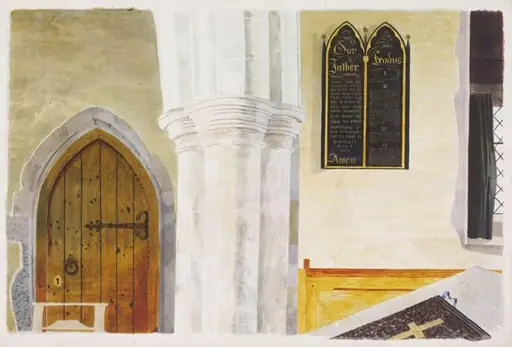 Interior of the Church of St. Mary the Virgin, Lindsell
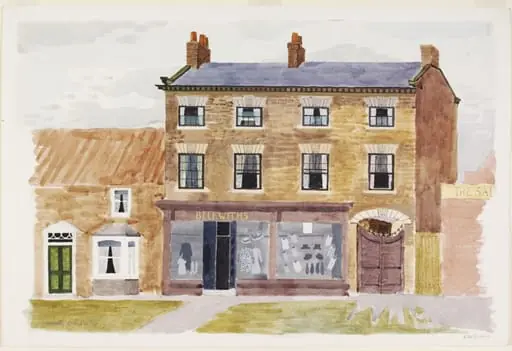 House at Easingwold
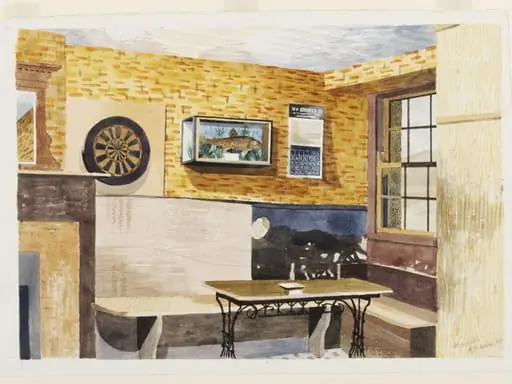 The Smoke Room, Ashopton Inn
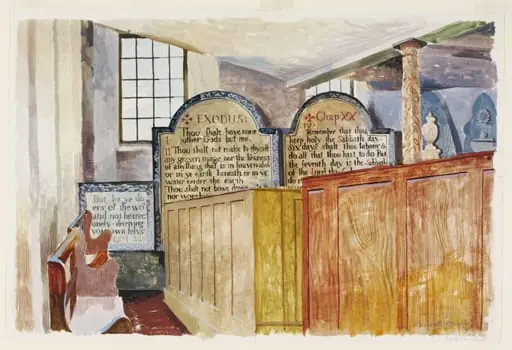 Pews in St Mary's Church, Whitby