Artwork
The Organ Loft, Church of SS. Peter and Paul, Little Saling
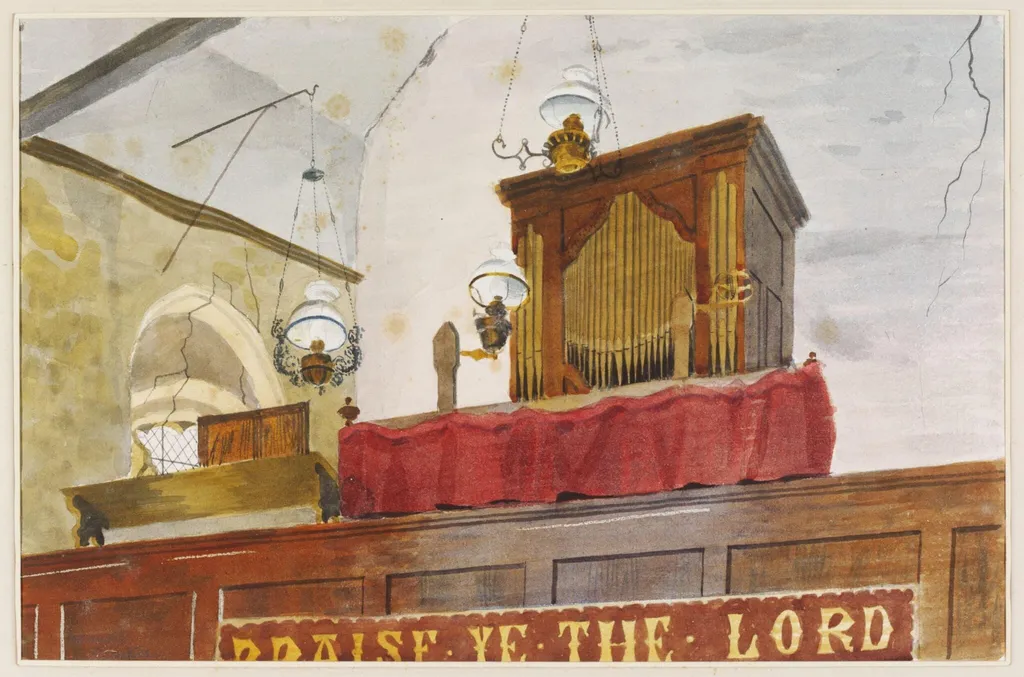
The Organ Loft, Church of SS. Peter and Paul, Little Saling is a watercolor work on paper by Kenneth Rowntree. It dates from 1940 and is held in the collection of the Victoria and Albert Museum.
About this work
Overview
Among them, this depiction of the organ loft stands out as his most sustained engagement with the site.
Kenneth Rowntree created three watercolours of the Church of SS. Peter and Paul in Little Saling, Essex, as part of the Recording Britain project. Among them, this depiction of the organ loft stands out as his most sustained engagement with the site. The work captures a quiet, decaying interior, emphasizing textures of age and neglect, reflecting the project’s mission to document at-risk architectural heritage during wartime.
Subject & Meaning
The painting centers on a gilded inscription reading 'Praise Ye the Lord,' prominently displayed in the organ loft. As a Quaker, Rowntree refrained from verbal testimony, and instead treated such inscriptions as silent, found expressions of faith. By rendering them with care, he transformed religious text into a visual meditation—neither endorsing nor rejecting, but preserving their presence amid physical decay.
Technique & Style
Rowntree employed delicate watercolour washes to convey the dampness and crumbling plaster of the loft. His brushwork is precise yet restrained, capturing the subtle gradations of light on weathered wood and stone. The absence of dramatic contrast or embellishment aligns with his quiet, observational approach, prioritizing texture and atmosphere over theatrical effect.
History & Provenance
The painting was produced in 1940–41 under the Recording Britain scheme, initiated to preserve visual records of Britain’s architectural heritage amid wartime threats. Rowntree’s focus on rural churches was encouraged by Sir Kenneth Clark, who saw them as vulnerable to both neglect and aerial bombardment. This work entered public collections shortly after completion, remaining a key example of the project’s documentary aims.
Context
During the Second World War, many parish churches in England faced dual threats: structural decline from disuse and physical destruction from bombing. The Recording Britain project mobilized artists to record these spaces before they vanished. Rowntree’s choice of Little Saling reflects a broader interest in modest, unadorned ecclesiastical interiors, often overlooked in favour of grander cathedrals.
Legacy
Rowntree’s watercolours of Little Saling remain among the most thoughtful contributions to the Recording Britain archive. His focus on textual fragments and architectural decay invites reflection on memory, silence, and impermanence. The work continues to be studied for its quiet resistance to spectacle, offering a restrained yet profound record of a vanishing rural landscape.
Artist & collection
Artist
Kenneth Rowntree painted quiet British places in watercolour around 1940, from barn-stacked Essex fields to the carved oak pews of Caernarvonshire chapels.

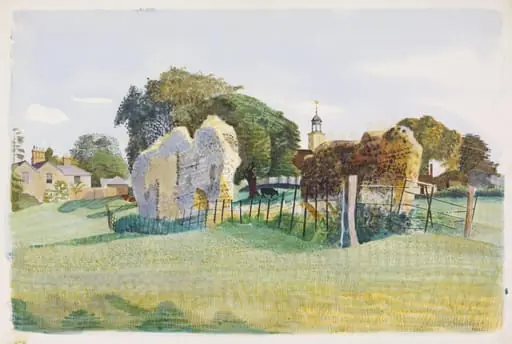 View of the Ruins of the Cloister, the Belfry of St. Mary's Church, and the Vicarage, Tilty
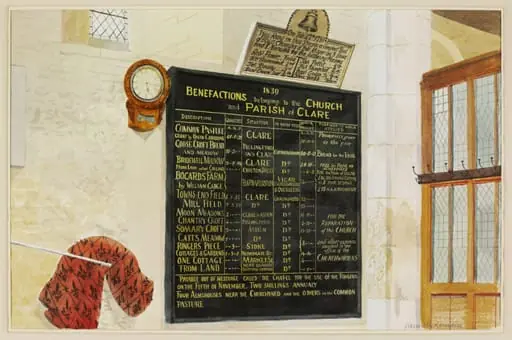 The Bellringer's Chamber, SS. Peter and Paul Church, Clare
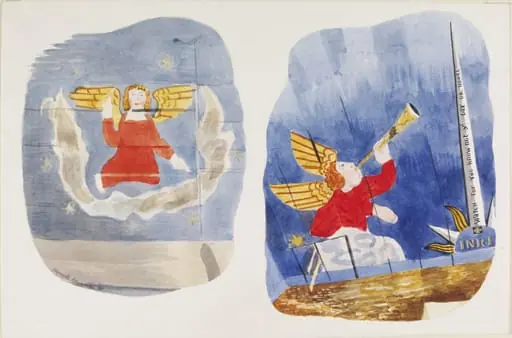 Detail of Ceiling at Gwydir Uchar Chapel, Llanrwst, Caernarvonshire
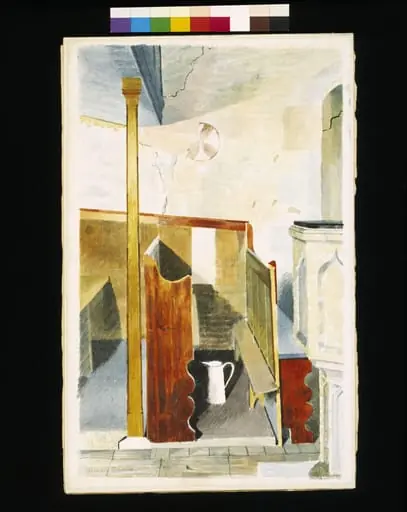 Interior of SS Peter and Paul, Little Saling, Essex
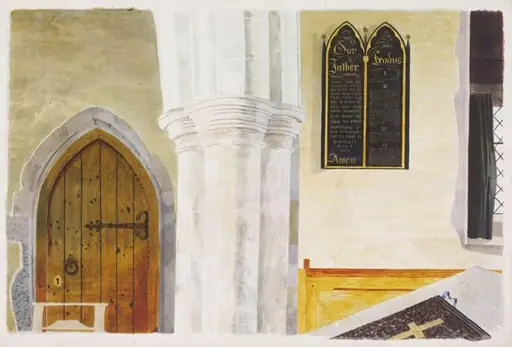 Interior of the Church of St. Mary the Virgin, Lindsell
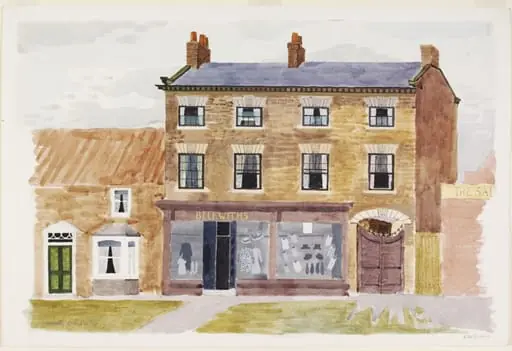 House at Easingwold
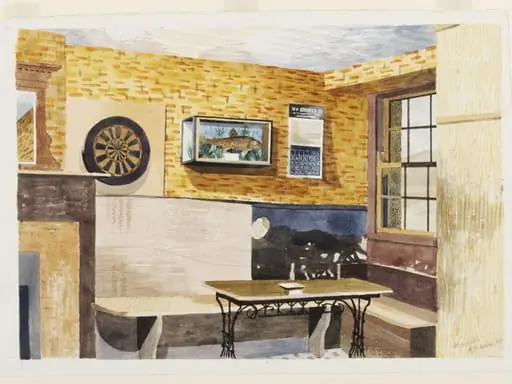 The Smoke Room, Ashopton Inn
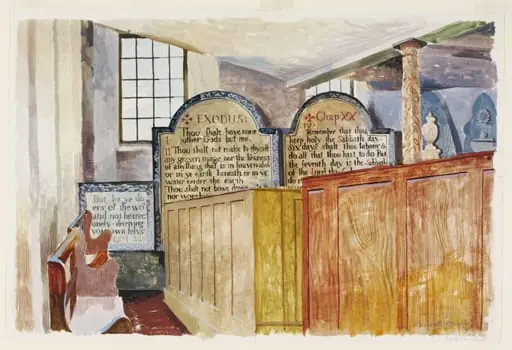 Pews in St Mary's Church, Whitby