Artwork
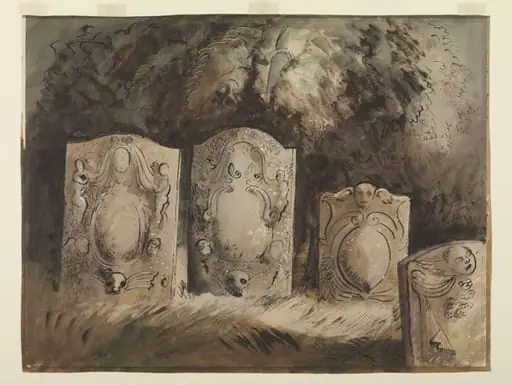
The Livermore Tombs, Barnston, Essex
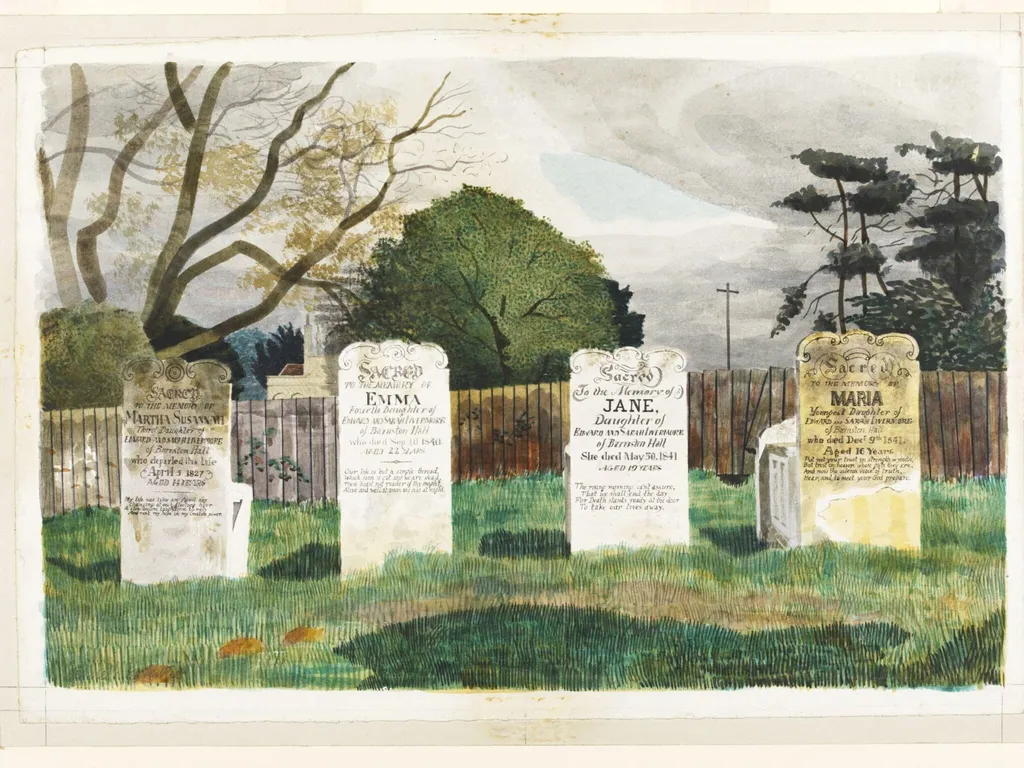
The Livermore Tombs, Barnston, Essex is a watercolor work on paper by Kenneth Rowntree. It dates from 1940 and is held in the collection of the Victoria and Albert Museum.
About this work
The scene feels plain at first glance, but the dates and names on the stones tell a quiet tragedy.
Kenneth Rowntree painted the quiet churchyard in Barnston, Essex around 1940. His watercolour shows the Livermore family tombstones lined up together. The scene feels plain at first glance, but the dates and names on the stones tell a quiet tragedy.
Four daughters died young—one at fourteen, another thrown from a horse at twenty-two. Their deaths came in a sad chain over just thirteen years. Rowntree’s painting keeps the mood simple, yet the story behind the stones lingers.
His work also records how these churchyards looked before big changes in the 1950s and 60s. See more of Kenneth Rowntree’s work at the Victoria and Albert Museum.
Overview
Kenneth Rowntree's watercolour, The Livermore Tombs, captures a serene yet poignant scene in the churchyard of Barnston, Essex, around 1940. The painting focuses on a group of tombstones belonging to the Livermore family, subtly conveying a tragic narrative through the inscriptions.
Subject & Meaning
The work commemorates the premature deaths of four Livermore daughters between 1827 and 1840, highlighting a sequence of tragic events: Martha Susannah's decline at 14, Emma's fatal horse accident at 22, Jane's heart attack at 19, and Maria's death from smallpox at 16. The painting quietly underscores the sorrow embedded in the family's history.
Technique & Style
Rowntree employs a deliberately understated and detailed approach, characteristic of his observational style. The prosaic depiction of the churchyard and tombstones in watercolour maintains a simple, reflective mood, allowing the inherent tragedy of the subject to emerge from the meticulous rendering of the gravestones' inscriptions.
History & Provenance
Created circa 1940, The Livermore Tombs is now part of the collection at the Victoria and Albert Museum. The exact commission or inspiration behind the work is not detailed in available information, though its creation coincides with a period of documentation of rural landscapes before significant post-war changes.
Context
The painting serves as a historical record of a typical English country churchyard prior to the widespread clearances of the 1950s and 60s, which saw the loss of many grave markers and local historical artifacts. Rowntree's work inadvertently preserves the appearance of these spaces and the craftsmanship of the tombstones.
Legacy
Beyond its somber subject matter, The Livermore Tombs contributes to the historical and artistic record of English rural life on the cusp of significant change. It remains part of Rowntree's body of work documenting everyday landscapes, now housed at the Victoria and Albert Museum.
Artist & collection
Artist
Kenneth Rowntree painted quiet British places in watercolour around 1940, from barn-stacked Essex fields to the carved oak pews of Caernarvonshire chapels.

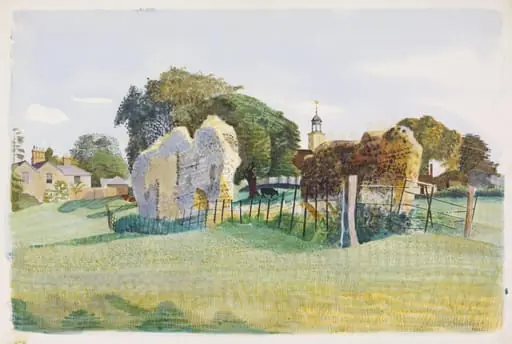 View of the Ruins of the Cloister, the Belfry of St. Mary's Church, and the Vicarage, Tilty
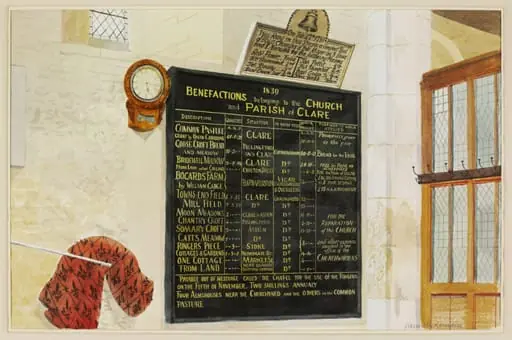 The Bellringer's Chamber, SS. Peter and Paul Church, Clare
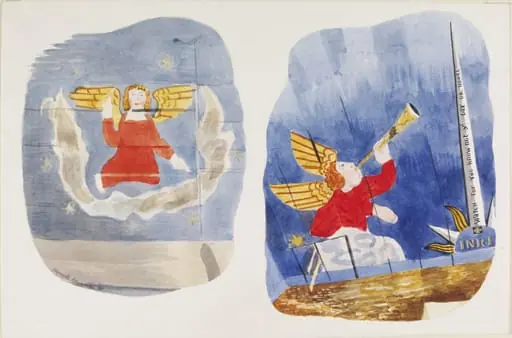 Detail of Ceiling at Gwydir Uchar Chapel, Llanrwst, Caernarvonshire
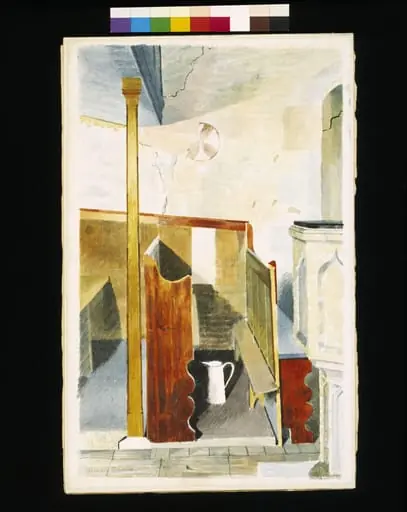 Interior of SS Peter and Paul, Little Saling, Essex
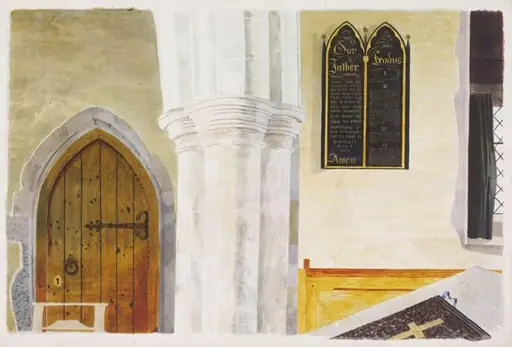 Interior of the Church of St. Mary the Virgin, Lindsell
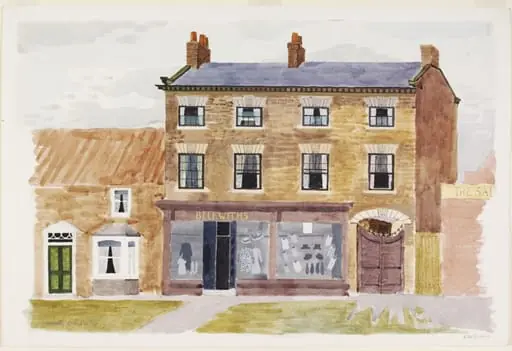 House at Easingwold
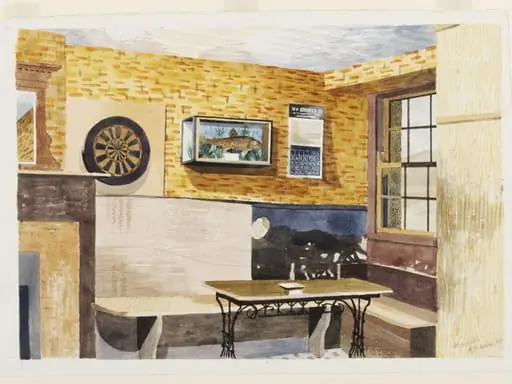 The Smoke Room, Ashopton Inn
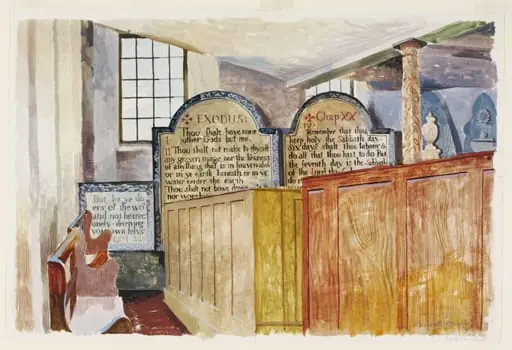 Pews in St Mary's Church, Whitby
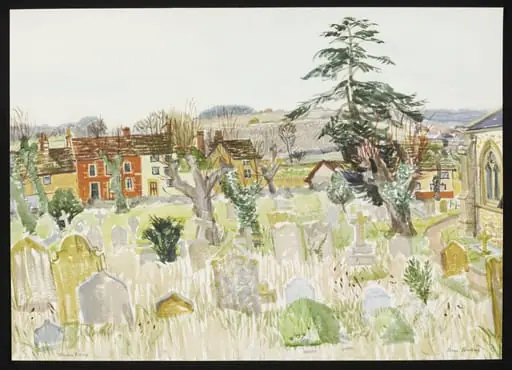 Standon Village from the Churchyard
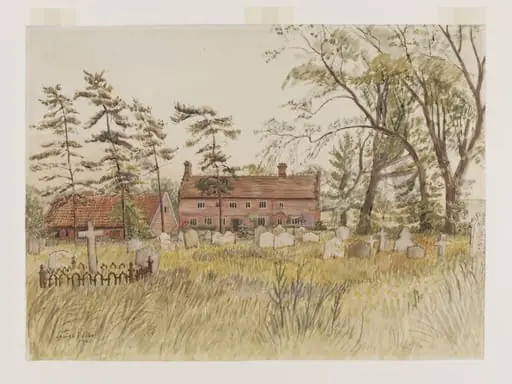 Church Farm (from the Churchyard) Sudbourne
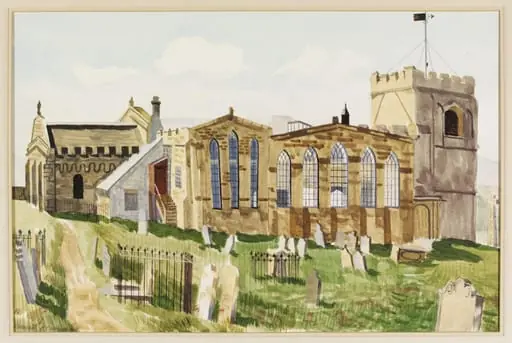 St. Mary's, Whitby - Exterior
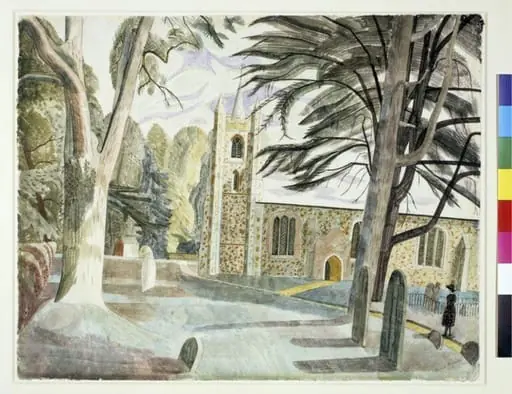 'Christ! I have been many times to church!'
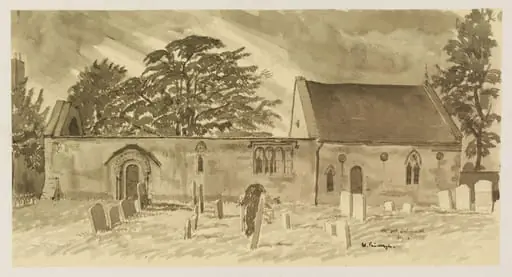 St.George's Church, Hatford
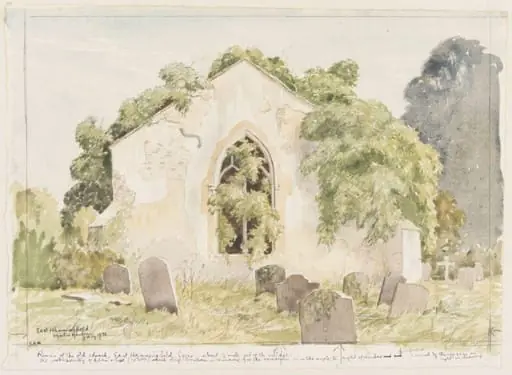 East Hanningfield Church, Essex
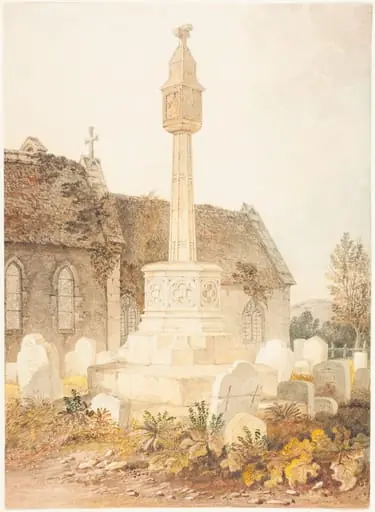 Monument in a Church Cemetery
 Tombstones, Holy Trinity Churchyard, Hinton-in-the-Hedges
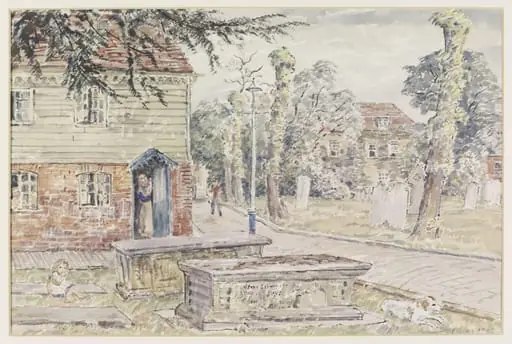 Church Row, Tonbridge