Artwork
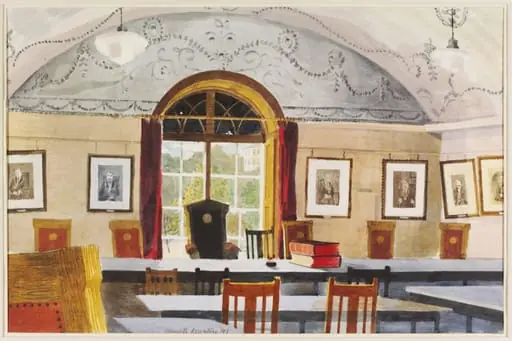
The Smoke Room, Ashopton Inn
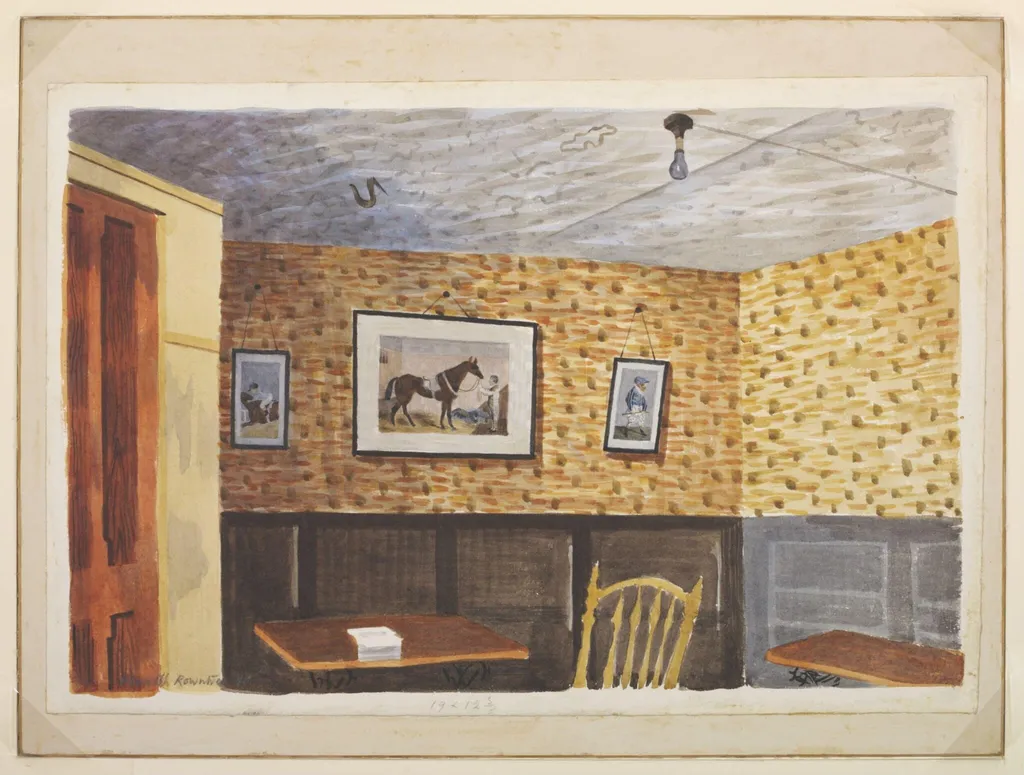
The Smoke Room, Ashopton Inn is a watercolor work on paper by the Social Realist artist Rowntree. It dates from 1940 and is held in the collection of the Victoria and Albert Museum.
About this work
The painting showcases a quiet, everyday scene, with the table and chair arranged in a simple yet inviting way.
The Smoke Room, Ashopton Inn is a watercolour painting by Rowntree, created in 1940. The image depicts a cozy interior with a brick wall, a wooden table, and a chair. The room is illuminated by a single light bulb hanging from the ceiling.
The painting showcases a quiet, everyday scene, with the table and chair arranged in a simple yet inviting way. The brick wall adds a touch of warmth and texture to the space.
This painting is held at the Victoria and Albert Museum.
Overview
Painted in 1940 by artist Rowntree, this watercolour captures the interior of the Ashopton Inn’s Smoke Room. Executed as part of the wartime Recording Britain project, the work reflects a deliberate effort to preserve ordinary British interiors during a time of national uncertainty. The piece is held in the Victoria and Albert Museum’s collection, one of over 1,500 works produced under the initiative.
Subject & Meaning
The scene portrays a modest, unadorned room with a wooden table, a single chair, and a brick wall lit by a hanging bulb. No figures are present, emphasizing stillness and quiet routine. The absence of people and the simplicity of the furnishings suggest a meditation on everyday spaces at risk of being lost to war or modernization, reinforcing the project’s goal of documenting vanishing domestic life.
Technique & Style
Rowntree employed transparent watercolour to render subtle shifts in light and texture. The brick wall is built up with layered washes, while the wood surfaces are suggested with soft, dry brushwork. The composition is restrained, focusing attention on the interplay of light and material, avoiding dramatic detail in favor of atmospheric clarity and quiet realism.
History & Provenance
Created in 1940 under the Recording Britain scheme, the painting was commissioned by the Pilgrim Trust and overseen by Sir Kenneth Clark. The project enlisted artists to record vernacular architecture and interiors before they disappeared due to wartime destruction or change. Rowntree’s work was acquired by the Victoria and Albert Museum as part of this official archive.
Context
Recording Britain emerged during the early years of the Second World War, when fears of cultural loss were acute. The initiative sought to document rural and urban interiors, landscapes, and buildings that symbolized a shared national heritage. The Smoke Room, though unremarkable in appearance, was chosen as representative of a fading social space — a place of quiet refuge in a changing Britain.
Legacy
The Recording Britain collection remains a vital visual record of mid-20th-century British life. Rowntree’s painting, like others in the series, offers a quiet counterpoint to wartime propaganda, focusing instead on the dignity of the mundane. Today, it contributes to ongoing scholarly interest in how art was used to sustain cultural memory during crisis.
Artist & collection

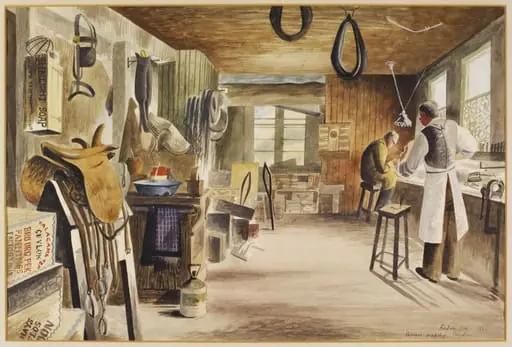 Saddler's Workshop, 70, High Street, Croydon
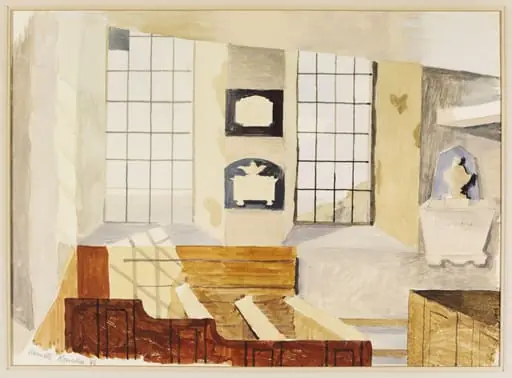 Interior of St. Mary's Church, Whitby
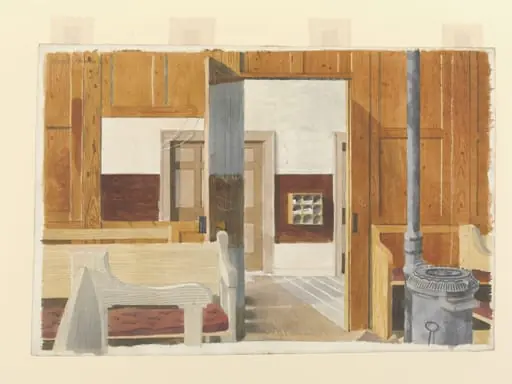 Interior of the Friends Meeting House, Great Bardfield
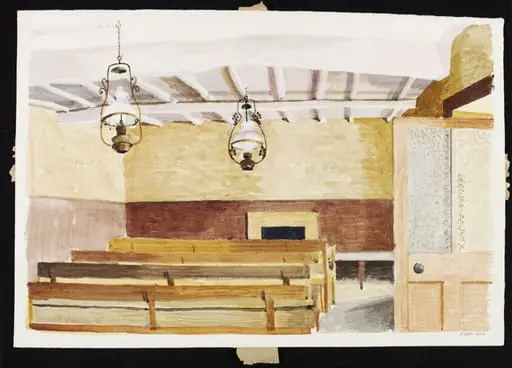 Interior of the Friends' Meeting House, Laskill, Ryedale
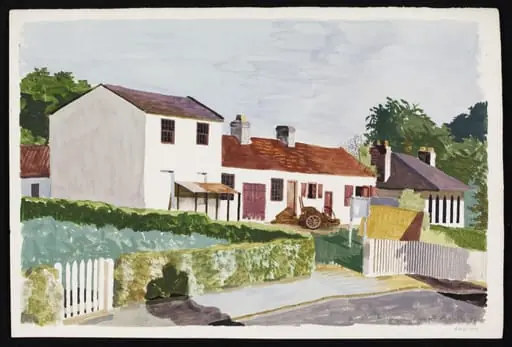 The Smithy, Crathorne
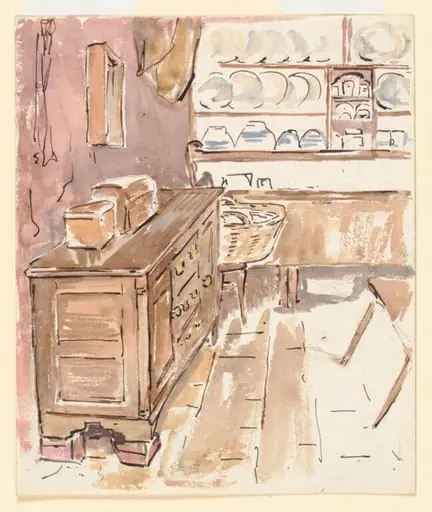 Study for Mrs Tiggy-winkle's kitchen
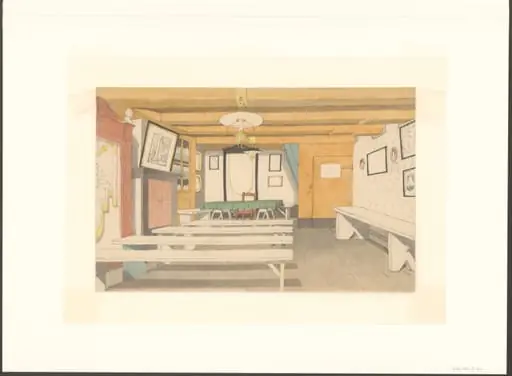 Untitled
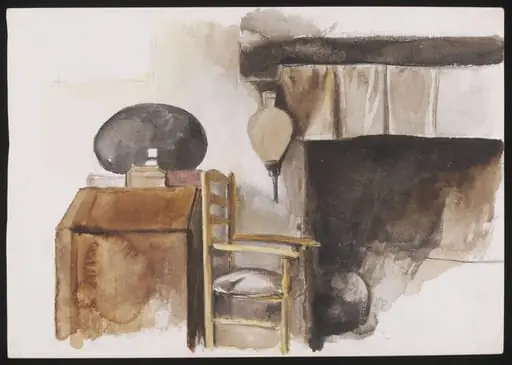 Study of a fireplace, a writing desk and a rush-seated ladderback chair
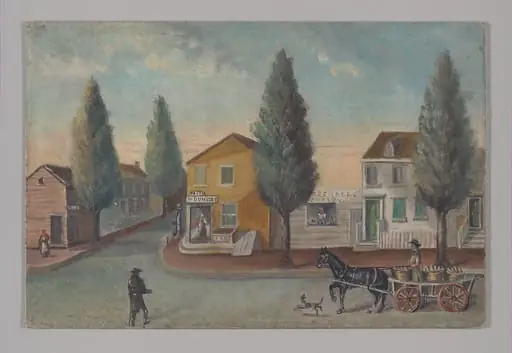 The Baker's Wagon
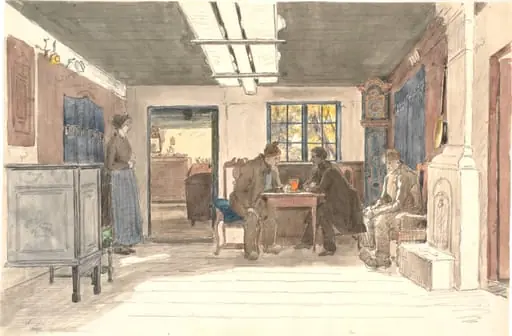 En bondestue på Samsø med en kone og tre mænd
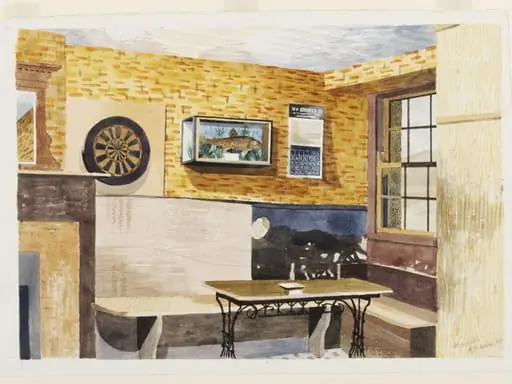 The Smoke Room, Ashopton Inn