Artwork
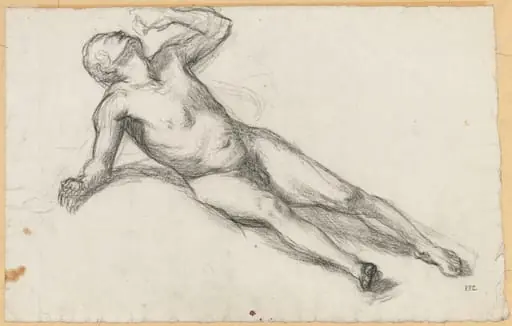
Study of the Man Raised from the Dead and Two Studies of Legs in a Kneeling Position, for figures in "Miracles of St Francis Xavier"
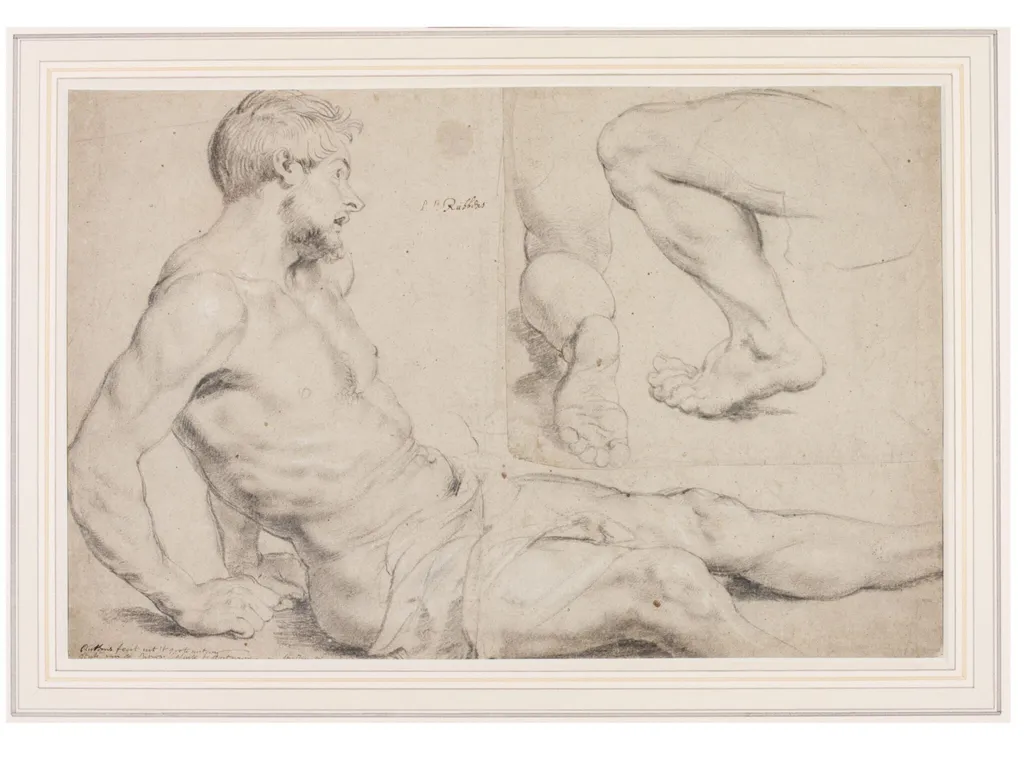
Study of the Man Raised from the Dead and Two Studies of Legs in a Kneeling Position, for figures in "Miracles of St Francis Xavier" is a drawing by the Baroque artist Peter Paul Rubens. It dates from 1618 and is held in the collection of the Victoria and Albert Museum.
About this work
Overview
Attached to the right is a separate sheet containing two ancillary sketches of a left leg, one shown from behind and the other in profile.
The work consists of a primary figure study of a nude male, rendered in profile and seated upright, his weight supported by his hands while his legs extend forward. Attached to the right is a separate sheet containing two ancillary sketches of a left leg, one shown from behind and the other in profile. The studies were prepared as preparatory material for the larger composition titled “Miracles of St Francis Xavier.”
Subject & Meaning
The central figure depicts a man who has been raised from the dead, a narrative moment drawn from the hagiographic episodes of St Francis Xavier. The accompanying leg studies explore the anatomy of a kneeling posture, likely intended to inform the depiction of other figures within the larger scene, emphasizing the physicality and dynamism of the miraculous event.
Technique & Style
Executed in fine drawing media, the artist employs precise hatching and cross‑hatching to model musculature and convey three‑dimensional form. The line work captures subtle shifts in contour, while tonal variation creates depth, particularly in the torso’s twist and the leg studies’ foreshortening. The overall approach reflects a realistic, academic treatment of the human body typical of preparatory studies in the Baroque period.
History & Provenance
The sheets entered the collection of Sir Benjamin West, later passed to Sir Thomas Lawrence, and were ultimately bequeathed to the museum by Miss Emily Dalton in 1900. Their documented chain of ownership traces a lineage through prominent British artists and collectors, underscoring the work’s value as a study material in academic circles.
Context
Prepared as part of the design process for a larger religious composition, the studies illustrate the artist’s method of dissecting complex poses into manageable components. Such preparatory drawings were common in the production of narrative paintings in the 17th and 18th centuries, allowing artists to resolve anatomical challenges before committing to the final canvas.
Artist & collection
Artist
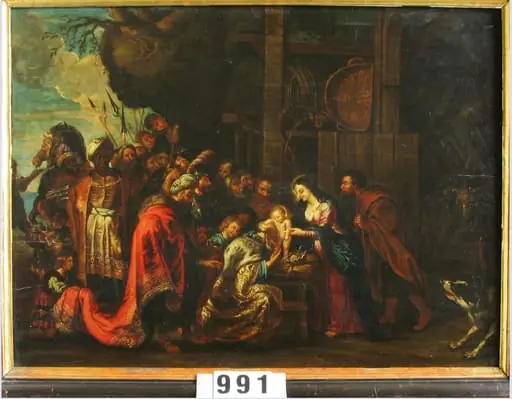
Flemish Baroque painter Peter Paul Rubens filled canvases with dramatic, muscular figures in swirling robes and golden light.

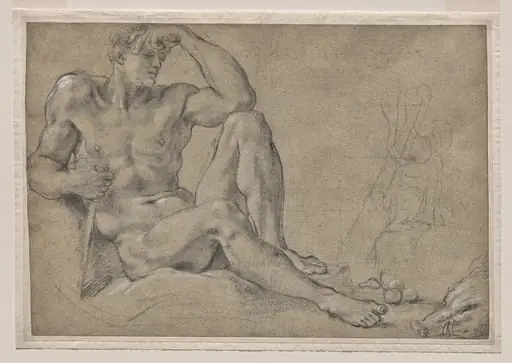 Hercules Resting (recto); Footed Vessel with Handle (verso)
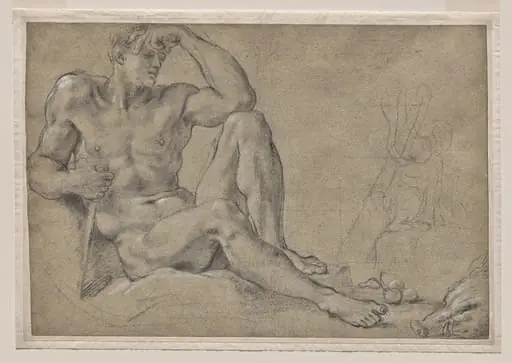 Hercules Resting (recto)
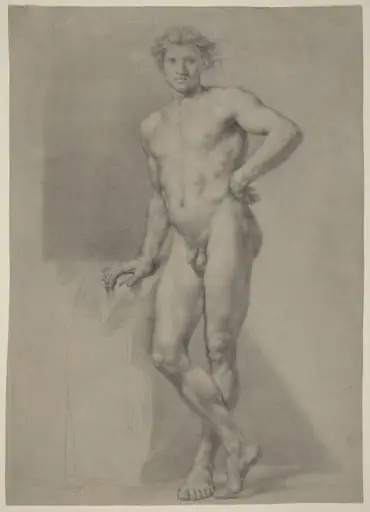 Male Nude Study
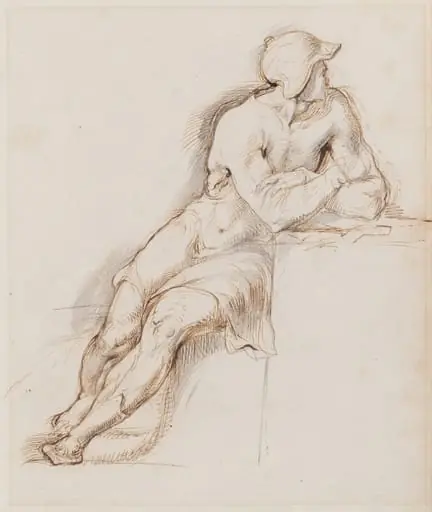 Study of a Seated Man Wearing a Helmet
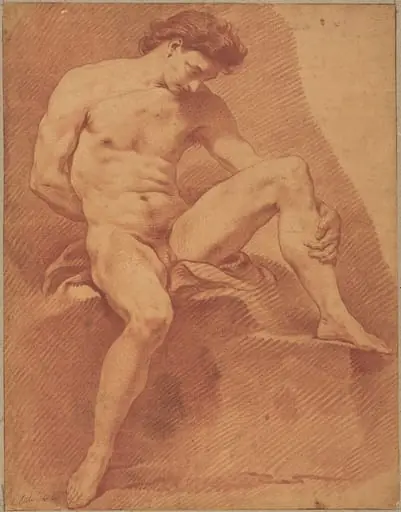 A Seated Male Nude
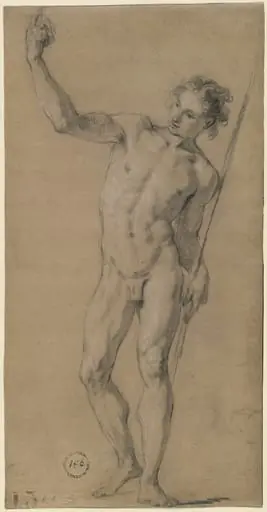 Saint John the Baptist
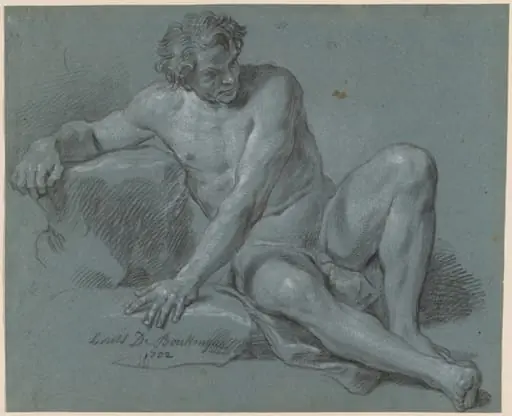 Male Nude Seated on the Ground
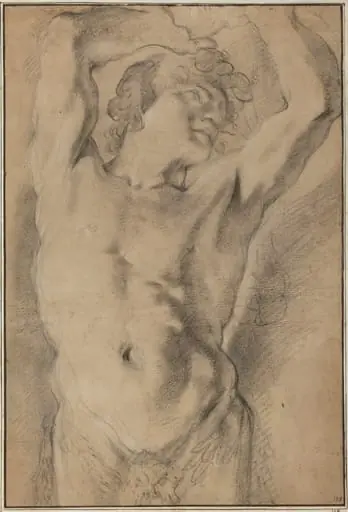 A Male Herm
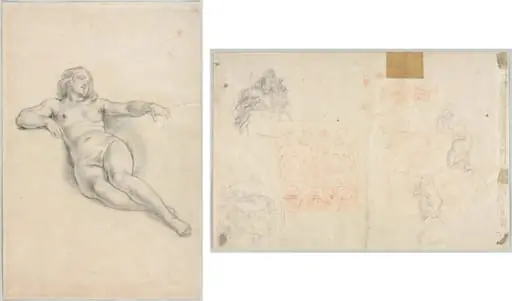 Reclining Female Nude (recto); Various Sketches of Figures and Plants (verso)
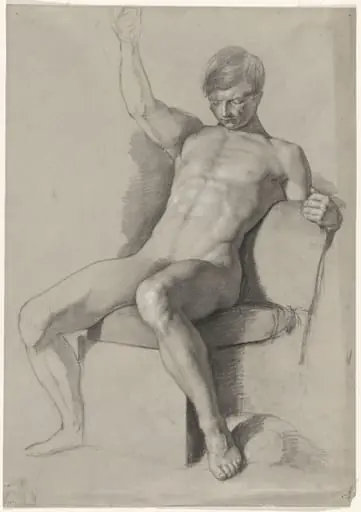 Seated Male Nude with Raised Right Hand
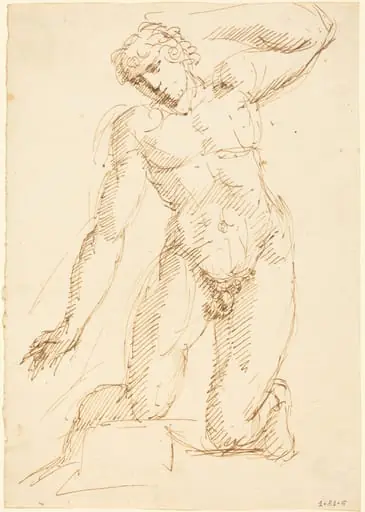 A Male Nude Kneeling
 Study for The War