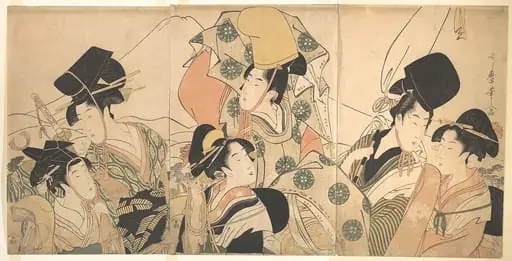
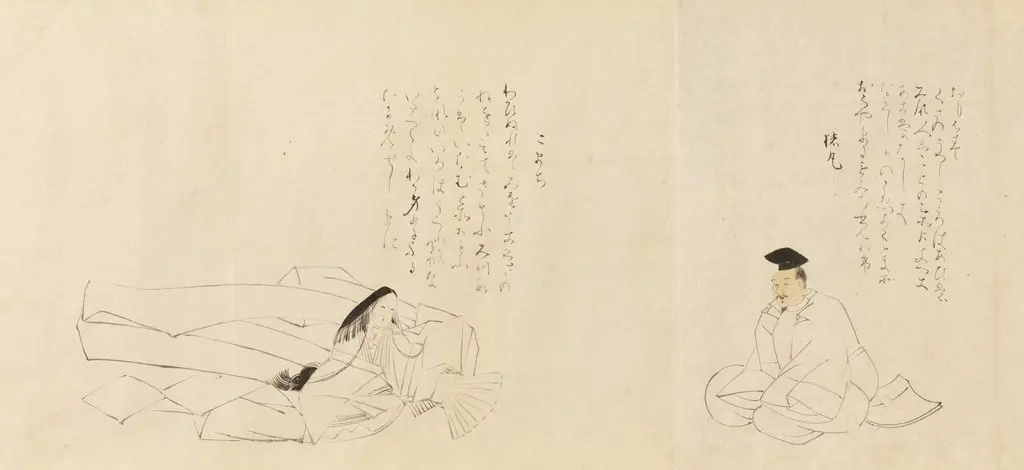
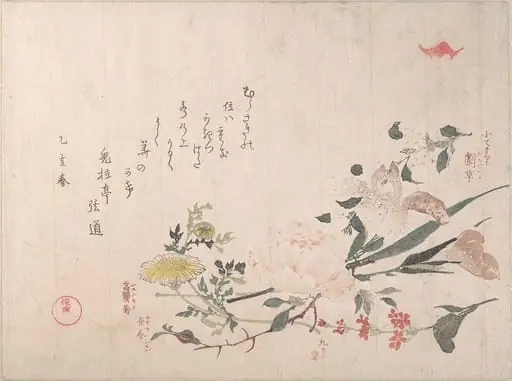
Artwork
Untitled
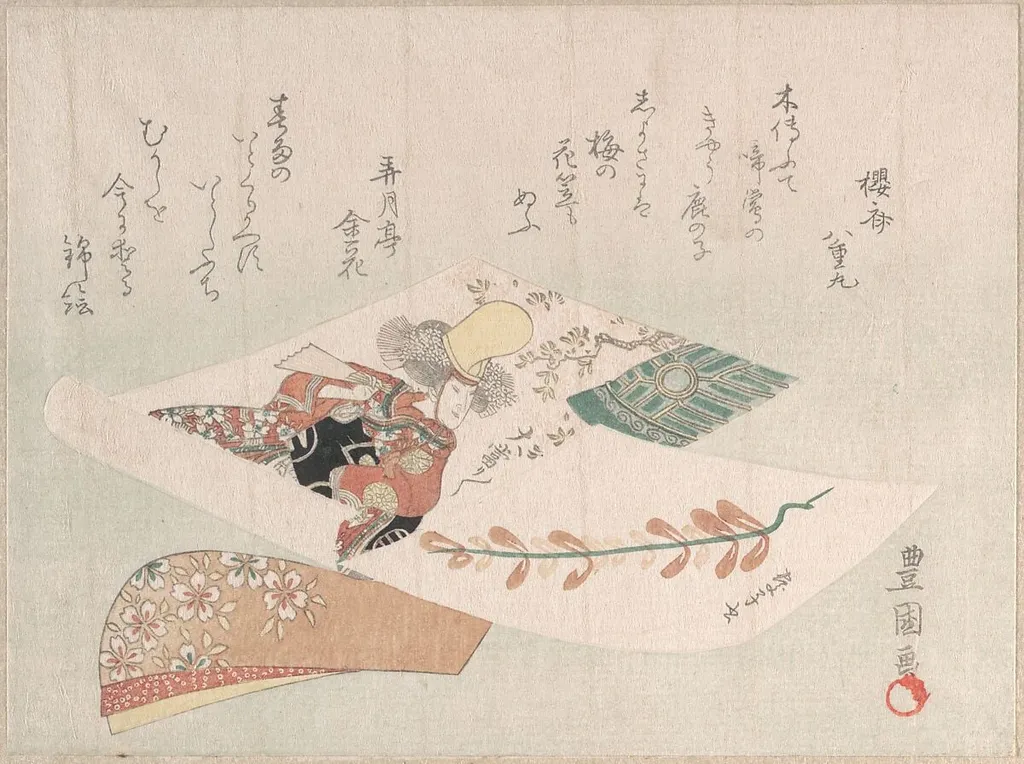
Untitled is an ink print by the Romanticist artist Utagawa Toyokuni I. It dates from 1797 and is held in the collection of the Metropolitan Museum of Art.
About this work
Overview
The work is part of The Metropolitan Museum of Art’s print collection, where it is held as an example of late Edo-period decorative printmaking.
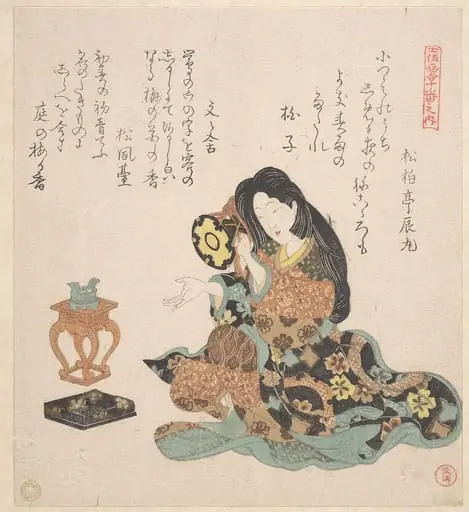
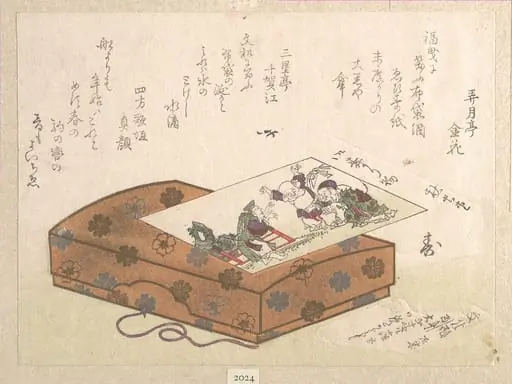
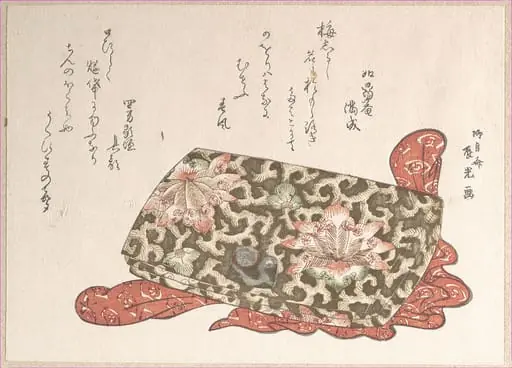
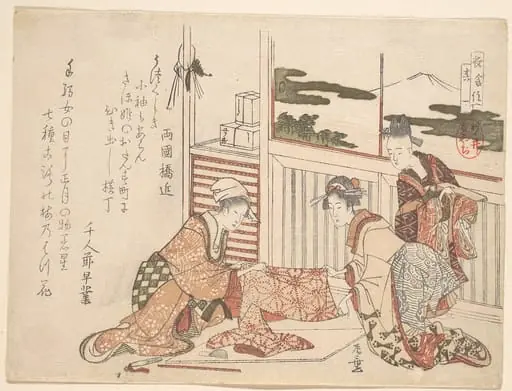
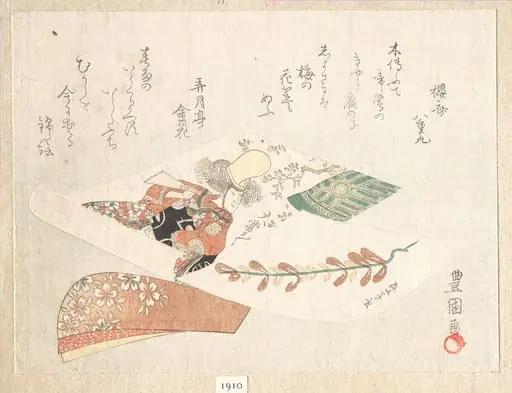
This woodblock print, dated 1797, is attributed to Utagawa Toyokuni I and belongs to the surimono genre—privately commissioned prints often produced for special occasions. Executed in ink and color on paper, it features a woman depicted with striking simplicity and vivid hues. The work is part of The Metropolitan Museum of Art’s print collection, where it is held as an example of late Edo-period decorative printmaking.
Subject & Meaning
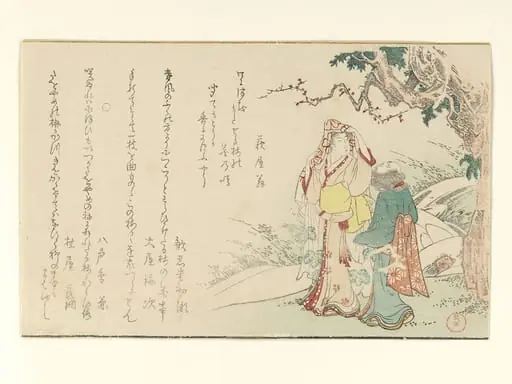
The figure is a woman dressed in a vivid red kimono adorned with black and gold motifs, holding a fan as she stands beside a flowering branch. Pink blossoms and green leaves suggest spring, while the floating yellow moon and a background fan with blue-green patterning imply a poetic, nocturnal setting. The surrounding inscriptions, likely a verse or seasonal remark, reinforce the print’s intimate, literary character, common in surimono intended for cultured audiences.
Technique & Style
The composition relies on flat planes of bold color and clean outlines, typical of Toyokuni’s approach to figure rendering. Color application is deliberate and restrained, with gold and black accents adding elegance without excess. The background elements—the moon, the fan, the branch—are simplified to essential forms, enhancing the print’s decorative rhythm. The integration of calligraphic text within the image blurs the line between visual art and poetry.
History & Provenance
Created in 1797, the print was likely commissioned for a private celebration, as surimono were often distributed among literary or artistic circles. It entered The Metropolitan Museum of Art’s collection through established acquisitions of Japanese prints in the early 20th century. Its condition and preservation reflect careful handling, consistent with its status as a refined, non-commercial print.
Context
Surimono emerged in the late 18th century as luxury prints, distinct from mass-produced ukiyo-e. They were typically produced in small editions for patrons with refined tastes, often incorporating poetry, seasonal references, and intricate designs. Toyokuni, known for actor prints, occasionally ventured into this more intimate genre, demonstrating his versatility and engagement with literary culture.
Legacy
Though not widely circulated, this print exemplifies the sophistication of surimono production and Toyokuni’s ability to adapt his style to private, poetic contexts. It contributes to the understanding of how ukiyo-e artists engaged with literary traditions and elite aesthetics, offering insight into the cultural practices of Edo-period connoisseurs.
Artist & collection

Artist
Toyokuni was a born showman who made sure the energy of Edo’s kabuki stage never faded on paper.

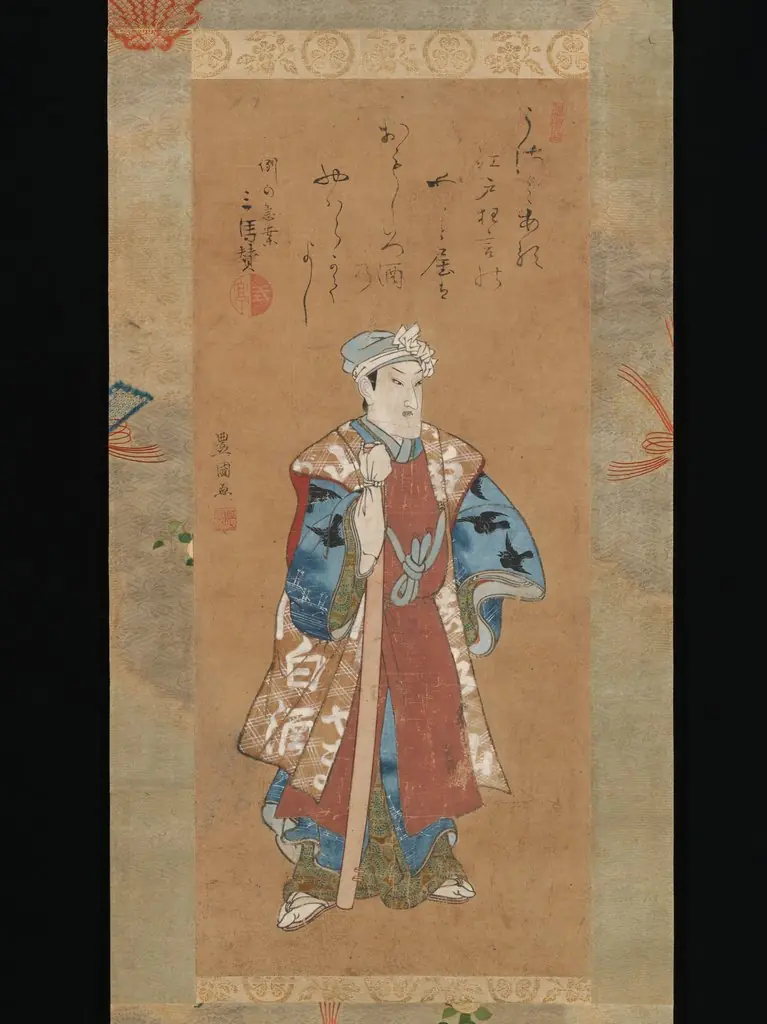 Bandō Mitsugorō II as Shinbei in the Kabuki Play "Sukeroku"
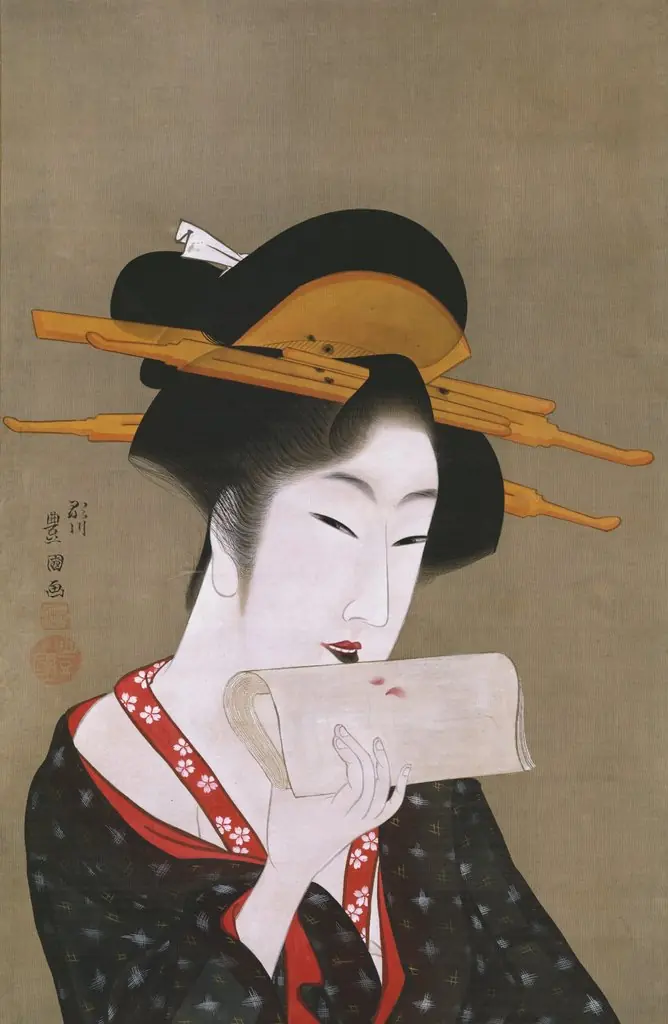 Beauty Blotting Her Lip Rouge
 Portrait of Kinokuniya Bunzaemon
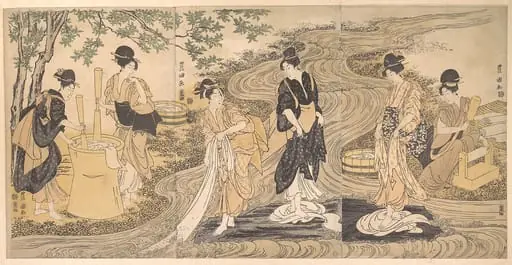 Untitled
 Tokaido Yotsuya Kaidan|Onoe Matsusuke as the Ghost of the Murdered Wife Oiwa, in "A Tale of Horror from the Yotsuya Station on the Tokaido Road"
 Untitled
 Untitled
 娘道成寺図の錦絵|Print of a Kabuki Dancer from the Maiden of the Dōjōji Temple (Musume Dōjōji)