Artwork
『蝶揃・寵愛』帯と簪|Roll of Cloth for an Obi and Tortoise-shell Hair Ornaments (“Presents for One’s Beloved”), from the Butterfly Series, from Spring Rain Surimono Album (Harusame surimono-jō, vol. 3)
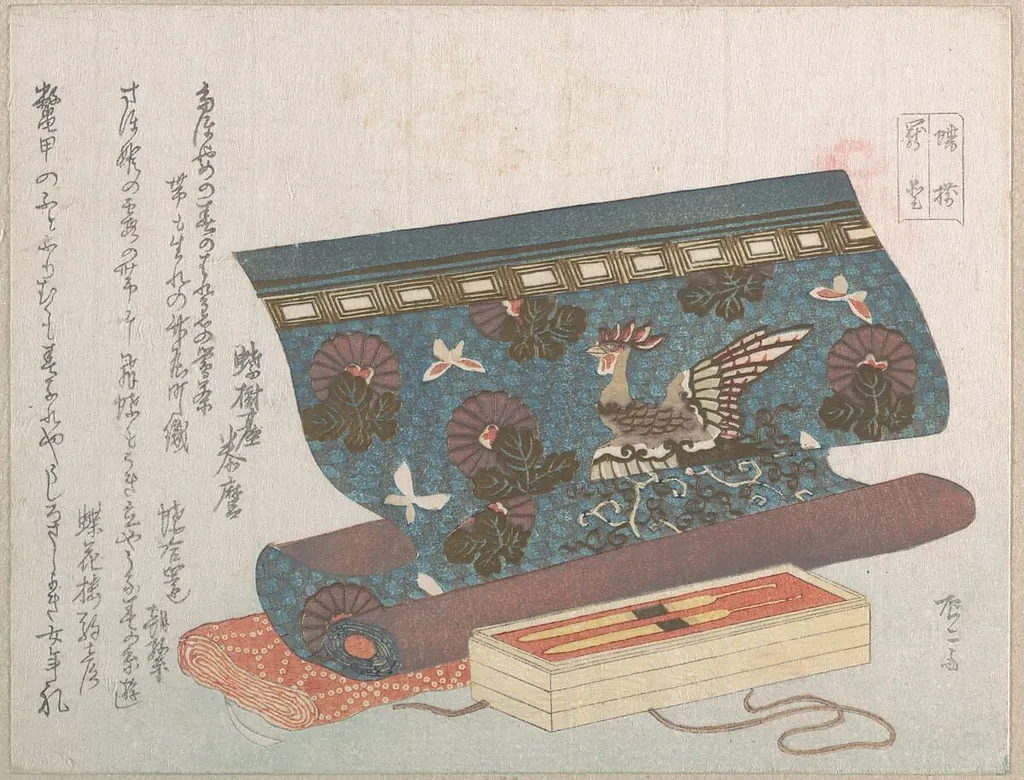
『蝶揃・寵愛』帯と簪|Roll of Cloth for an Obi and Tortoise-shell Hair Ornaments (“Presents for One’s Beloved”), from the Butterfly Series, from Spring Rain Surimono Album (Harusame surimono-jō, vol. 3) is an ink print by the Romanticist artist Ryūryūkyo Shinsai. It dates from 1808 and is held in the collection of the Metropolitan Museum of Art.
About this work
Overview
This privately published surimono, created around 1808 by Ryūryūkyo Shinsai, is a woodblock print mounted in the third volume of the Spring Rain album. It depicts a rolled blue obi sash with gold edging placed on a red cushion, accompanied by a small cord‑tied wooden box. The image forms part of the “Butterfly Series,” a set of illustrations intended as gifts for a beloved.
Subject & Meaning
The composition presents a ceremonial presentation of textile and hair accessories, symbolising affection and refinement. Floral motifs, a rooster, and fluttering butterflies adorn the obi, linking the garment to themes of vitality, seasonal change, and courtship. The inclusion of a tortoise‑shell hair ornament box reinforces the notion of a treasured personal gift.
Technique & Style
Executed as a surimono, the print employs fine line work and delicate cross‑hatching to render texture, especially evident in the rooster’s feathering, which resembles stitched detailing. Ink and color are applied on paper, with a plain background that emphasizes the intricate decorative patterns and the densely packed handwritten text along the margins.
History & Provenance
The work was produced for a limited, private audience, a common practice for surimono that were often commissioned for poetry societies or special occasions. It now belongs to the collection of the Metropolitan Museum of Art, where it is catalogued as part of the museum’s Japanese prints holdings.
Context
During the early nineteenth century, surimono served as a vehicle for artists to experiment with sophisticated printing techniques beyond commercial ukiyo‑e. Shinsai’s “Butterfly Series” reflects the era’s fascination with natural motifs and the cultural practice of exchanging elaborately packaged gifts among the educated elite.
Artist & collection

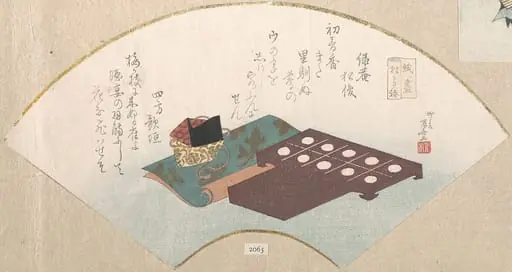 Untitled
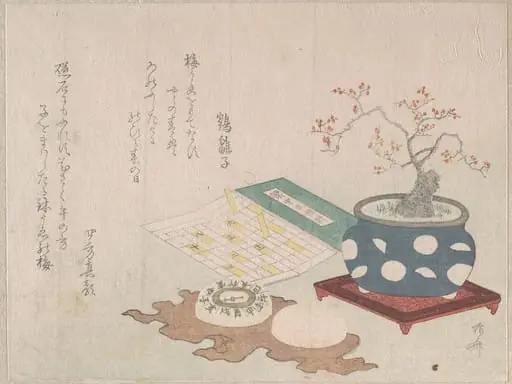 鉢梅、懐中日時計、羅針盤|Bonsai Plum, Compass, and Pocket Sundial with Design of Calendar, from Spring Rain Surimono Album (Harusame surimono-jō, vol. 3)
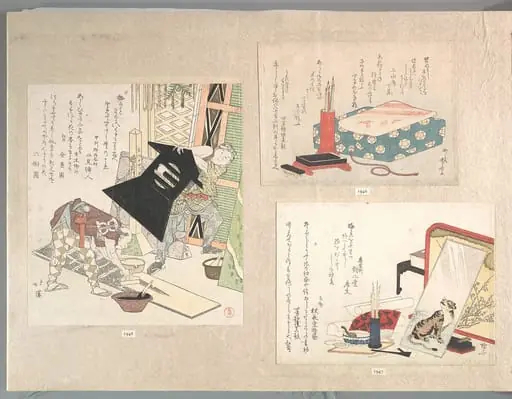 衝立、虎図、文具一式|Desk Screen, Writing Set, Painting of Tiger, and Mounting Paraphernalia, from Spring Rain Surimono Album (Harusame surimono-jō, vol. 1)
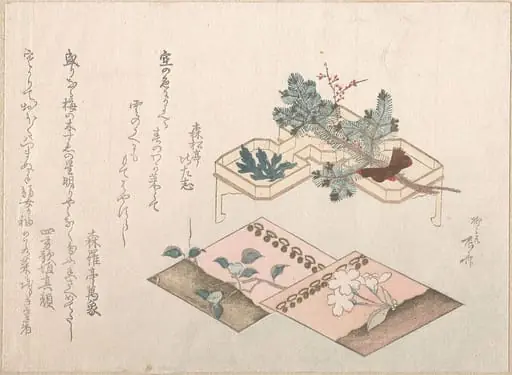 『春雨集』 摺物帖柳々居辰斎画 若松|Spring Rain Collection (Harusame shū), vol. 2: Pine Shoots and Accoutrements for New Year’s Celebrations
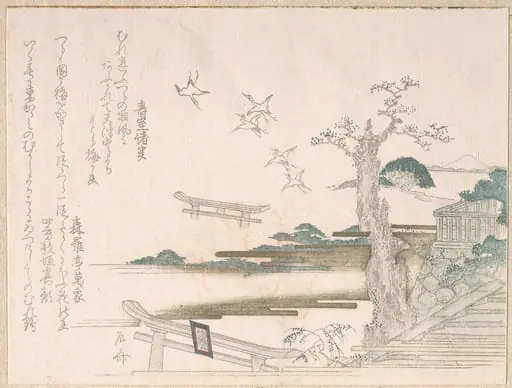 『春雨集』 摺物帖柳々居辰斎画 鎌倉の鶴岡八幡宮に鶴|Spring Rain Collection (Harusame shū), vol. 2: Cranes at Tsurugaoka Hachimangō Shrine in Kamakura
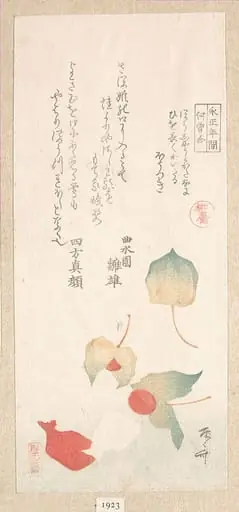 Untitled
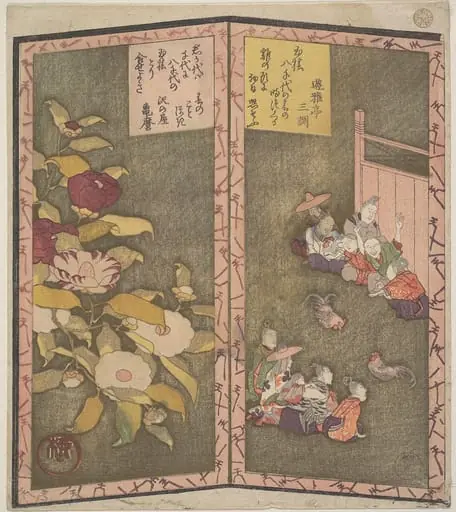 Untitled
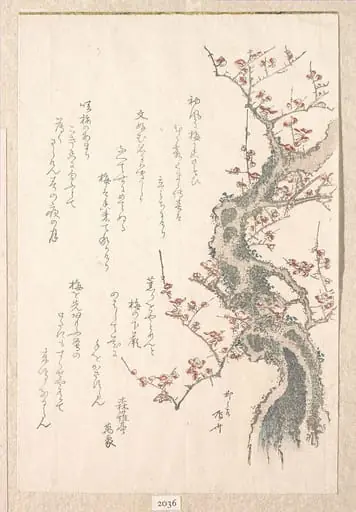 『春雨集』 摺物帖柳々居辰斎画 紅梅|Spring Rain Collection (Harusame shū), vol. 1: Plum Tree in Bloom
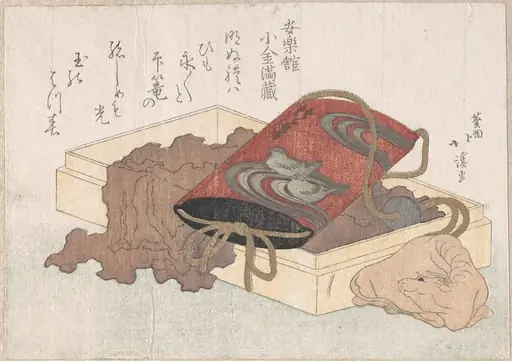 印籠と牛根付『春雨集』 摺物帖|Lacquer Inrō with Waterbirds and Ox-shaped Netsuke in a BoxFrom the Spring Rain Collection (Harusame shū), vol. 3
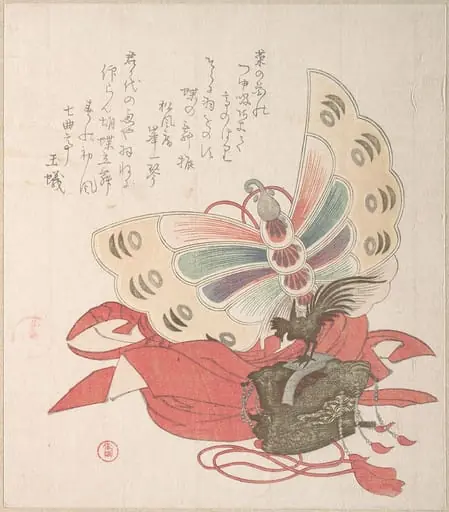 『春雨集』 摺物帖窪俊満画 胡蝶舞の衣装|Spring Rain Collection (Harusame shū), vol. 2: Costume for the Butterfly Dance (Kochō no mai)
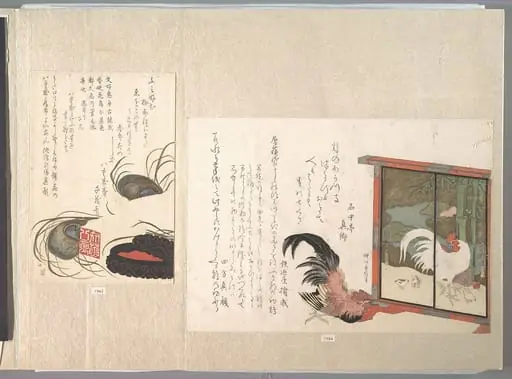 印鑑と朱に孔雀羽根|Seal-stone and Seal-ink with Peacock Feathers, from Spring Rain Surimono Album (Harusame surimono-jō), vol. 1
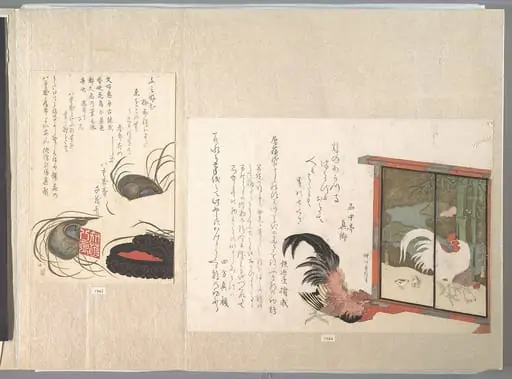 鶏図衝立を見る鶏|Cock Eyeing a Free-standing Screen Painted with Cock, Hen, and Chicks, from Spring Rain Surimono Album (Harusame surimono-jō), vol. 1
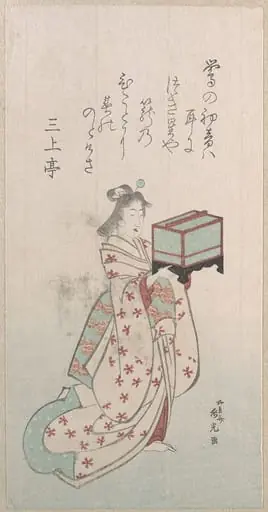 『春雨集』 摺物帖柳月斎辰光 少女に鳥かご|Spring Rain Collection (Harusame shū), vol. 2: Young Woman with a Birdcage
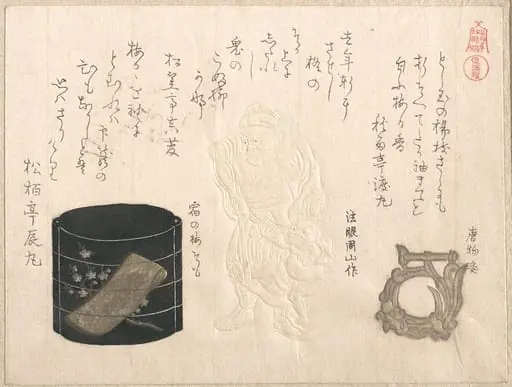 『名物革仝印籠仝根付』 印籠根付『春雨集』 摺物帖|“Inrō and Netsuke,” from the series Famous Leathers, Inrō, and Netsuke (Meibutsu kawa, inrō, netsuke)From the Spring Rain Collection (Harusame shū), vol. 2
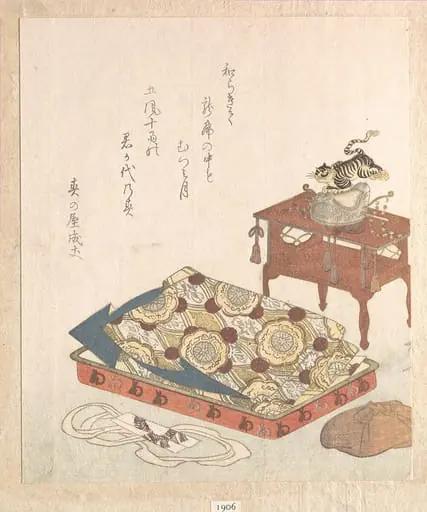 舞楽衣装『春雨集』 摺物帖|Costume for Bugaku Court DanceFrom the Spring Rain Collection (Harusame shū), vol. 1