Artwork
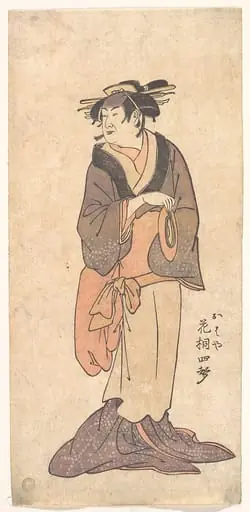
「あたらしや梅松」|The Courtesan Umematsu of the Atarashiya Brothel Costumed as an Ohara Maiden
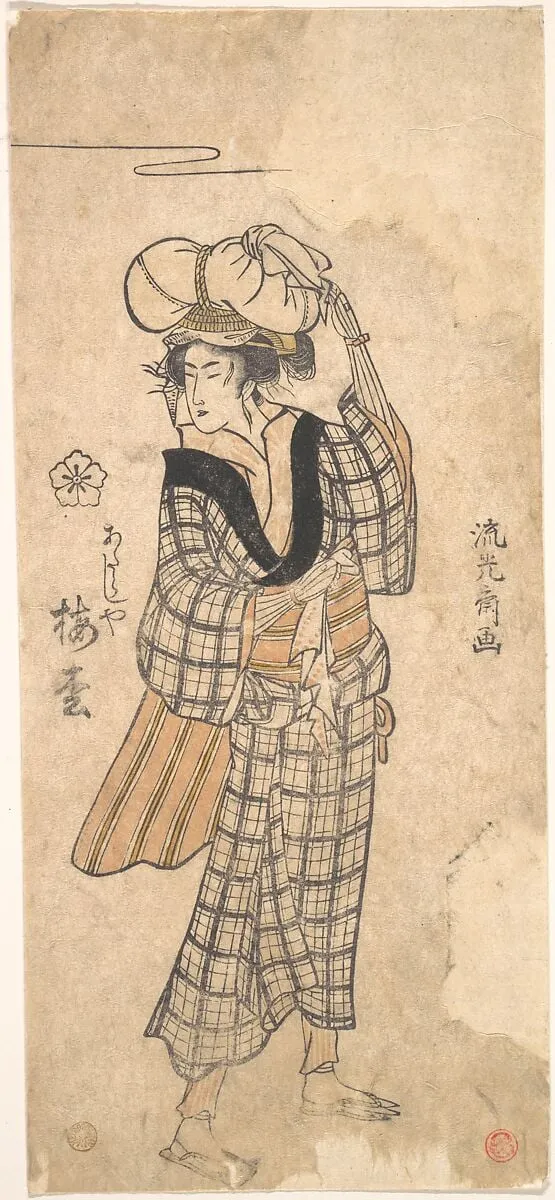
「あたらしや梅松」|The Courtesan Umematsu of the Atarashiya Brothel Costumed as an Ohara Maiden is an ink print by the Romanticist artist Ryūkōsai Jokei 流光斎如圭. It dates from 1794 and is held in the collection of the Metropolitan Museum of Art.
About this work
Overview
This woodblock print, created around 1794 by Ryūkōsai Jokei, depicts a courtesan from the Atarashiya brothel dressed in the attire of an Ohara peasant girl.
This woodblock print, created around 1794 by Ryūkōsai Jokei, depicts a courtesan from the Atarashiya brothel dressed in the attire of an Ohara peasant girl. Executed in nishiki-e technique, it is a vertical hosoban format, printed in ink and color on paper. The Metropolitan Museum of Art holds the work, which reflects the Edo period’s fascination with role reversal and theatrical identity in urban pleasure quarters.
Subject & Meaning
The figure, identified as Umematsu, is portrayed not in her professional role but as a rural maiden, a common trope in ukiyo-e that juxtaposed urban sophistication with imagined rustic simplicity. The bundle on her head and the fan suggest a journey or daily labor, contrasting with her actual status. This costume play invited viewers to contemplate identity, performance, and the boundaries between social classes in Edo society.
Technique & Style
The print employs soft, muted tones—browns, greens, and subtle pinks—alongside clean, restrained linework. Depth is suggested through delicate cross-hatching and minimal shading rather than bold color gradients. The fabric folds are rendered with precision but without excessive detail, characteristic of late 18th-century hosoban prints. The artist’s signature appears in the corner, adhering to conventions of the period’s commercial print culture.
History & Provenance
Created during a period of flourishing print production in Edo, the work was likely part of a series depicting courtesans in disguise. Its survival and eventual acquisition by The Metropolitan Museum of Art reflect its status as a representative example of Ryūkōsai Jokei’s output. While little is documented about its early ownership, its preservation underscores its value to collectors of Edo-period visual culture.
Context
In late 18th-century Edo, courtesans were celebrated figures whose public personas were carefully curated. Dressing them as rural maidens tapped into romanticized ideals of nature and purity, offering a fantasy escape from urban life. Such prints catered to a growing middle-class audience interested in both celebrity culture and idealized folk imagery, blending entertainment with subtle social commentary.
Legacy
Ryūkōsai Jokei’s print contributes to a broader tradition of ukiyo-e that explored identity through costume and role-play. While not among the most widely reproduced works of the era, it remains a quiet example of how artists used visual subtlety to engage with social themes. Its presence in major collections ensures continued study of gender, class, and representation in Edo-period printmaking.
Artist & collection