Artwork
Untitled
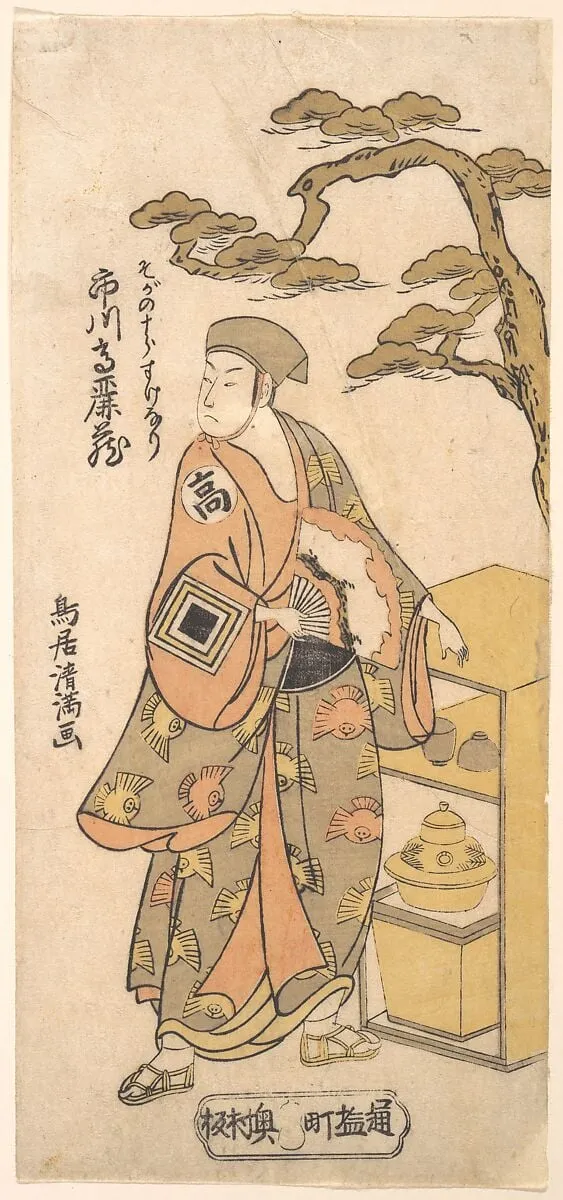
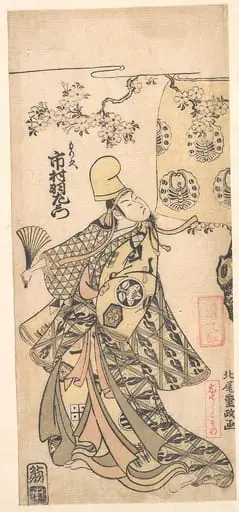
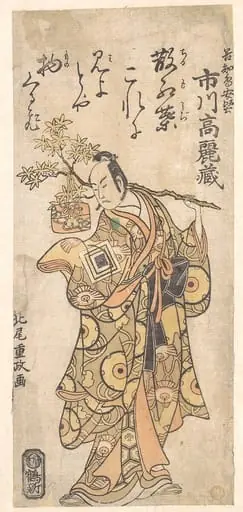
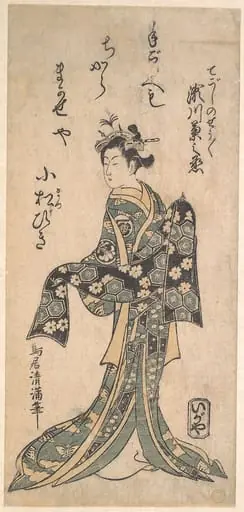
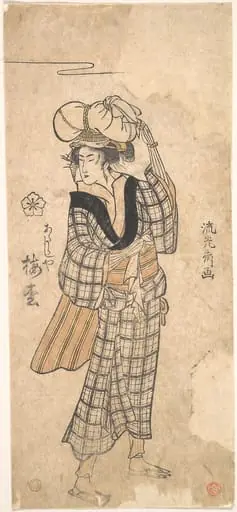
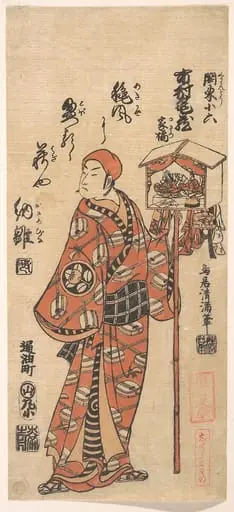
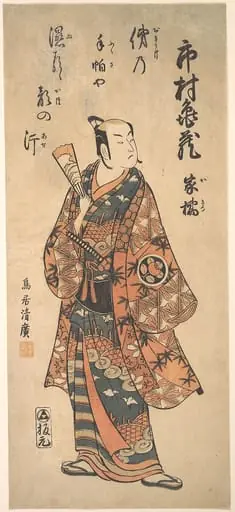
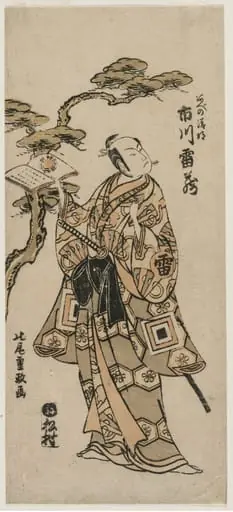
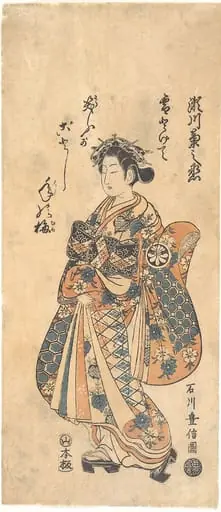
Untitled is an ink print by the Romanticist artist Torii Kiyomitsu. It dates from 1761 and is held in the collection of the Metropolitan Museum of Art.
About this work
Overview
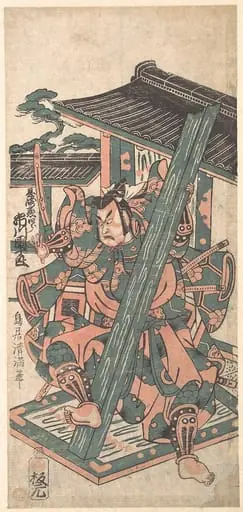
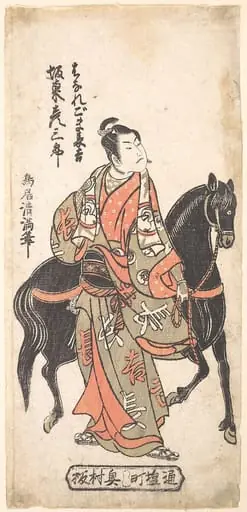
The composition presents a solitary male figure against a sparse, elevated background, emphasizing pattern and posture over naturalistic depth.
This woodblock print, dated 1761, is attributed to Torii Kiyomitsu and resides in The Metropolitan Museum of Art’s collection. Executed in ink and color on paper, it exemplifies the ukiyo-e tradition of Edo-period Japan. The composition presents a solitary male figure against a sparse, elevated background, emphasizing pattern and posture over naturalistic depth. Its production method reflects the collaborative, multi-block printing process standard in Japanese printmaking of the era.
Subject & Meaning
The central figure, dressed in a robe adorned with bold circular, fan, and wave motifs, holds a fan in a stylized gesture commonly associated with kabuki actors. His attire and posture suggest a theatrical role rather than a portrait of an actual person. The floating tree and cloud-like forms above a distant structure imply a stage-like setting, reinforcing the connection to performance culture. The image likely represents a moment from a popular play, capturing the actor’s presence in a symbolic rather than literal space.
Technique & Style
The print was made using the woodblock method, with separate blocks carved for each color—black, red, and cream—layered precisely to build the image. Lines are crisp, and flat areas of color dominate, minimizing shading and perspective. Patterns on the robe are rendered with sharp, repetitive forms, contrasting with the soft, blurred edges of the clouds and foliage. This interplay between geometric precision and atmospheric ambiguity defines Kiyomitsu’s decorative approach within the Torii school.
History & Provenance
Created in 1761, the print belongs to a period when the Torii studio dominated actor portraiture in ukiyo-e. Though unsigned, its style aligns with Kiyomitsu’s known works from the early 1760s. It entered The Metropolitan Museum of Art’s collection through established acquisitions of Japanese prints, likely in the early 20th century. Its survival in good condition reflects careful preservation, common for prints collected by Western institutions during the Meiji era’s renewed interest in Japanese art.
Context
In mid-18th century Edo, woodblock prints served as affordable visual media, often depicting actors, courtesans, and scenes from urban life. The Torii school specialized in kabuki actor portraits, which functioned as both advertising and fan memorabilia. This print reflects the era’s fascination with performance culture and the commercialization of theatrical fame. The stylized, non-naturalistic background aligns with conventions of theatrical representation, where symbolic elements replaced realistic settings.
Legacy
As part of the Torii tradition, this work contributed to the codification of actor portraiture in ukiyo-e. While less widely known than later artists like Utamaro or Hiroshige, Kiyomitsu’s emphasis on pattern and theatrical gesture influenced the visual language of Edo printmaking. The print’s preservation in a major Western museum underscores its role in shaping international understanding of Japanese print aesthetics during the 19th and 20th centuries.
Artist & collection