Artwork
Virgin and Child
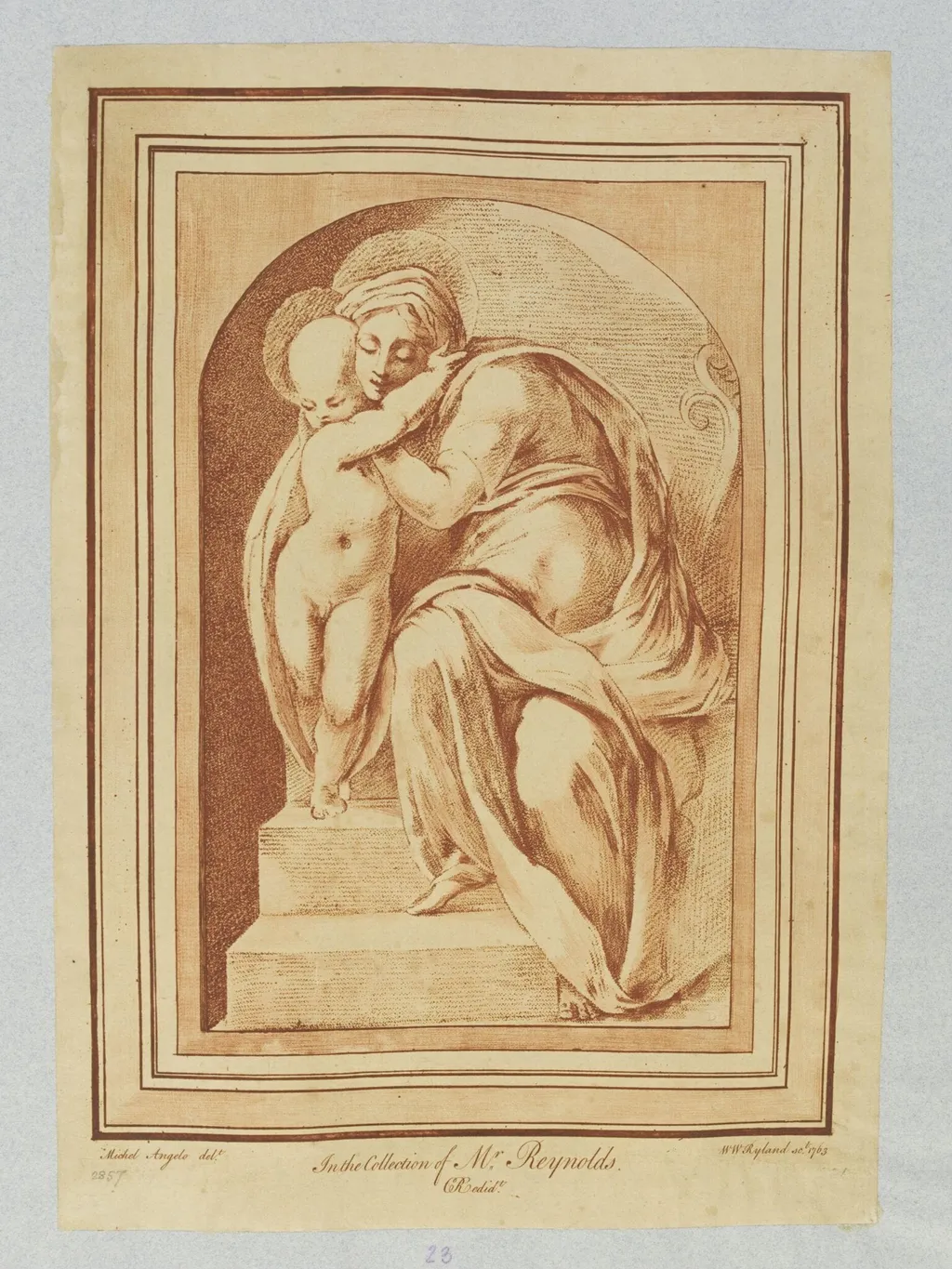
Virgin and Child is a print by the Baroque artist William Wynn Ryland. It dates from 1745 and is held in the collection of the Victoria and Albert Museum.
About this work
Overview
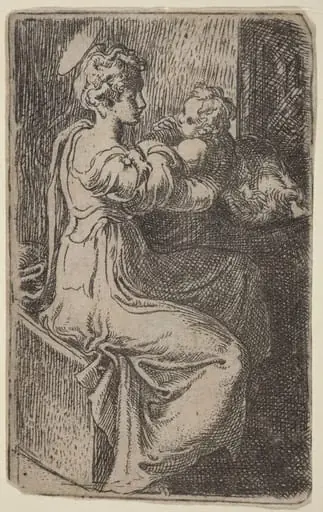
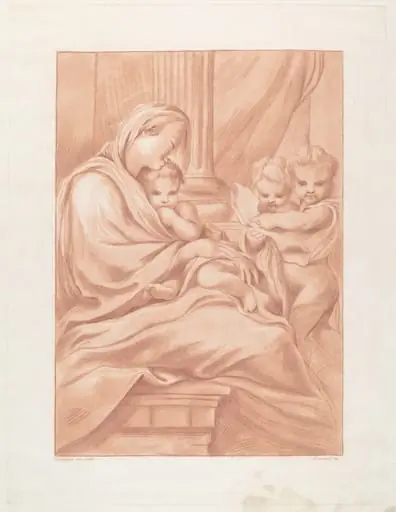
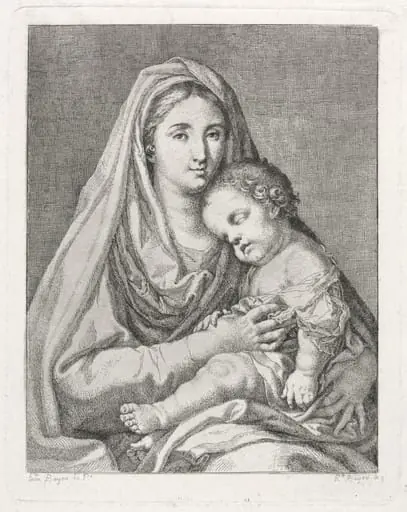
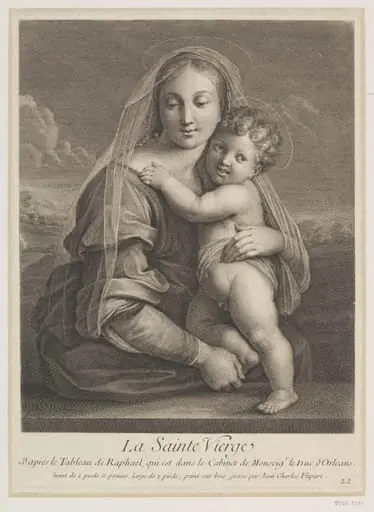
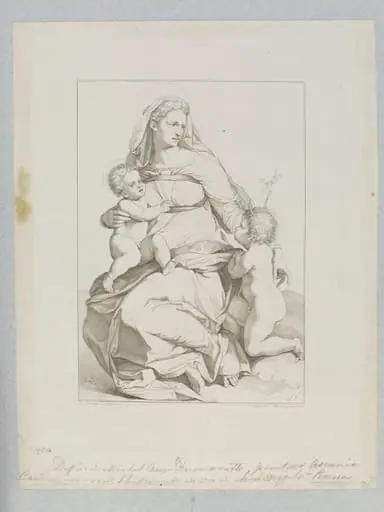
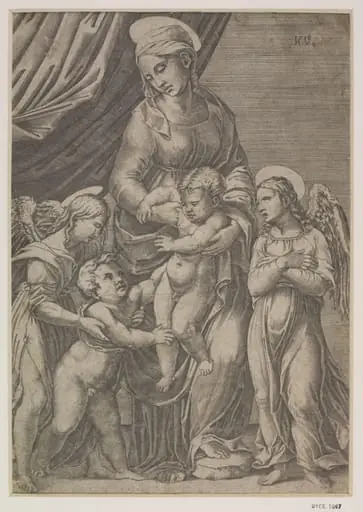
This print is a facsimile reproduction of Michelangelo's original drawing, 'Virgin and Child', created by William Wynn Ryland in 1745. It depicts the Virgin Mary kneeling on a pedestal, holding the infant Jesus, set against a plain oval background and framed by a dark border.
Subject & Meaning
The subject is a serene representation of the Virgin and Child. The Virgin's calm face contrasts with her twisted body posture, while the child appears asleep, curled against her. The composition conveys a sense of intimate, quiet devotion.
Technique & Style
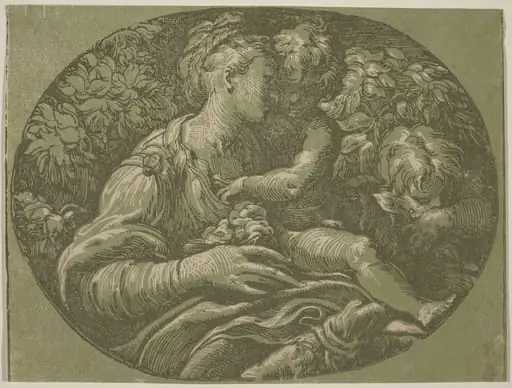
The print employs chiaroscuro to achieve a three-dimensional effect, leveraging light and shadow to add depth and volume to the figures and their drapery. The soft, heavy folds of the Virgin's clothing are particularly emphasized through this technique.
History & Provenance
Originally drawn by Michelangelo, this specific print was produced by William Wynn Ryland in 1745 as a facsimile on paper.
Context
As a reproduction of a Michelangelo work, it reflects the enduring influence of Renaissance art on later periods. Ryland's 18th-century reproduction also highlights the ongoing interest in Michelangelo's oeuvre during that time.
Legacy
This print, through its wide dissemination, contributed to the broader familiarity with Michelangelo's designs, influencing perceptions of Renaissance art and the iconic depiction of the Virgin and Child theme across different media.
Artist & collection
Artist
William Wynn Ryland made prints of religious scenes in 18th-century London. His *Virgin and Child* (1745–1783) reflects the era’s demand for devotional imagery in affordable formats. These prints traveled from workshops…