Artwork
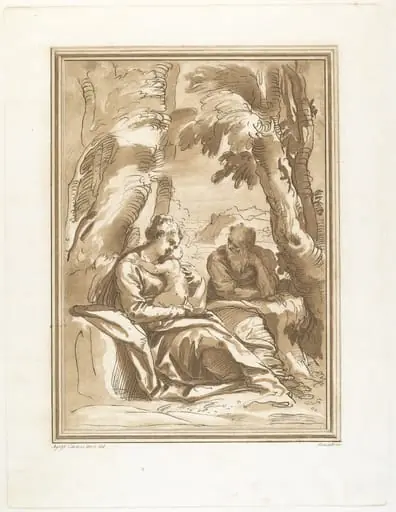
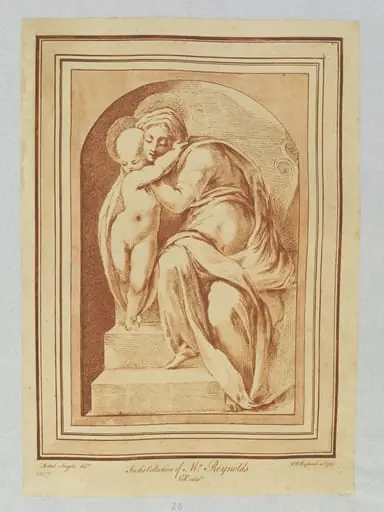
Virgin and Child with Two Angels
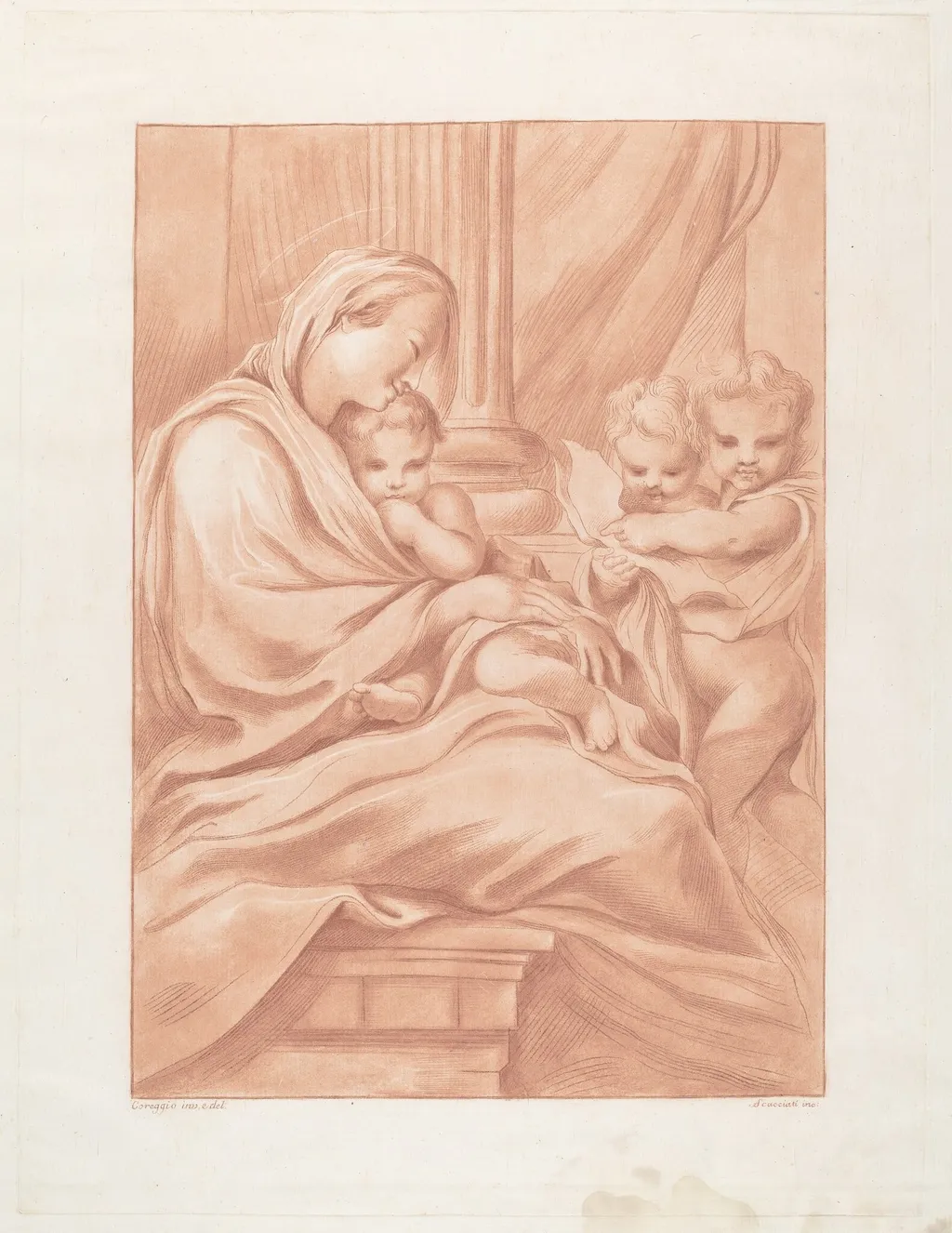
Virgin and Child with Two Angels is an ink print by the Romanticist artist Andrea Scacciati. It dates from 1766 and is held in the collection of the National Gallery of Art.
About this work
Overview
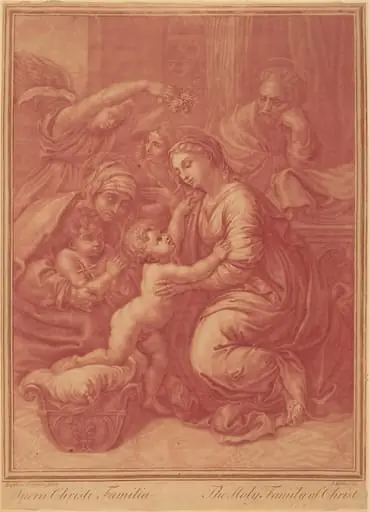
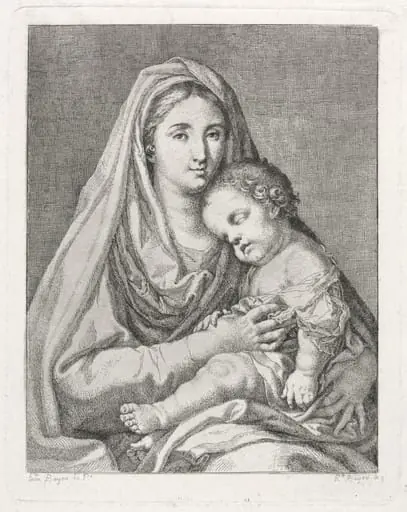
Andrea Scacciati’s etching Virgin and Child with Two Angels, dated circa 1766, presents a devotional scene on laid paper. Executed with a combination of etching, a sulfur tint, and roulette, the image is printed in a warm red hue that lends the composition a subtle, aged atmosphere. The work exemplifies the printmaking practices of mid‑18th‑century Italian religious art.
Subject & Meaning
The composition centers on a seated Virgin cradling the infant Christ, flanked by two cherubic angels that peer over a low ledge. The figures convey a tranquil intimacy, the infant’s calm demeanor reinforcing themes of divine serenity and maternal protection. The angels, rendered with youthful vigor, serve as intermediaries, guiding the viewer’s contemplation toward the sacred bond.
Technique & Style
Scacciati employed traditional etching lines to model the forms, using cross‑hatching to suggest volume and depth. A sulfur tint applied before printing imparts a reddish tone, while a roulette tool adds a fine stippled texture that softens the surface. The overall effect balances precise draftsmanship with a gentle tonal warmth characteristic of late Baroque print aesthetics.
History & Provenance
Created around 1766, the print reflects the period’s demand for portable devotional images. Though specific ownership records are scarce, the work aligns with Scacciati’s broader output of religious prints intended for private devotion and small‑scale distribution among collectors of Italian sacred art.
Artist & collection