Artwork
Christ and the Samaritan Woman
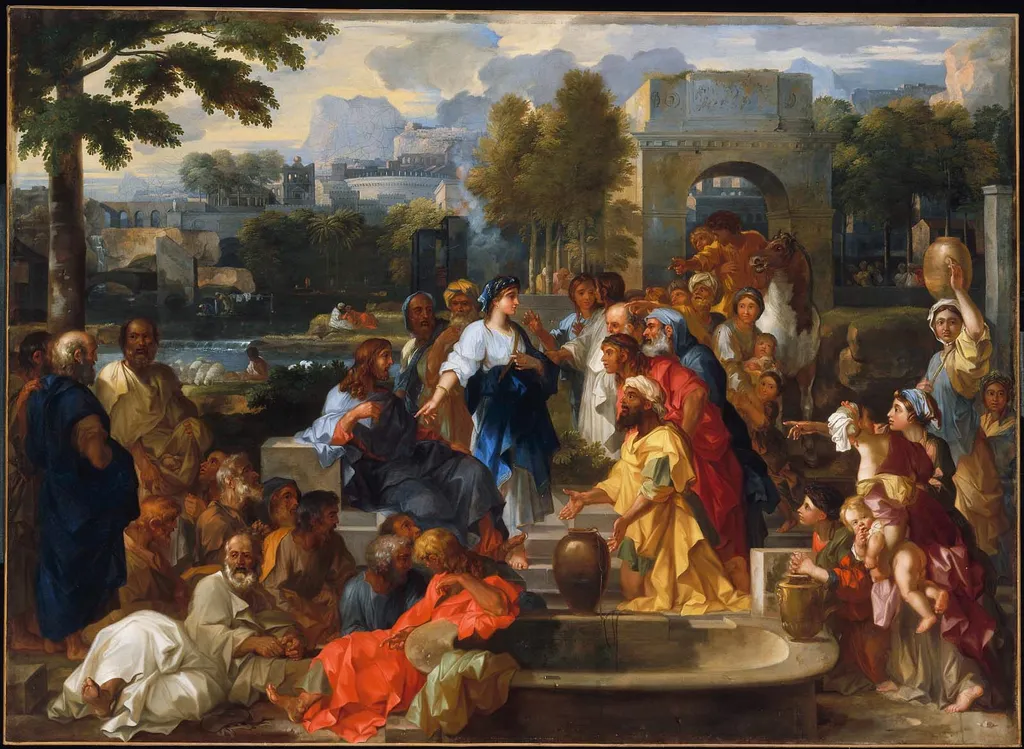
Christ and the Samaritan Woman is an oil painting by the French Classical Baroque artist Sébastien Bourdon. It dates from 1653 and is held in the collection of the Museum of Fine Arts Boston.
About this work
Overview
Created circa 1653 by French artist Sébastien Bourdon, this oil painting presents a biblical encounter rendered in the French Classical Baroque idiom. The work is part of the Museum of Fine Arts, Boston’s collection and measures the interaction between Christ and the Samaritan woman amid a bustling, open-air setting.
Subject & Meaning
The composition centers on a woman in a blue garment and a man in white, identified as the Samaritan woman and Christ, respectively. Their dialogue unfolds before a crowd gathered around a fountain, suggesting the moment when Jesus offers the woman “living water,” a theme of spiritual renewal and universal outreach.
Technique & Style
Bourdon employs a restrained chiaroscuro, allowing soft illumination to model the figures while the surrounding shadows suggest depth. The palette balances cool blues and warm earth tones, and the handling of brushwork conveys the texture of stone, foliage, and distant architecture, contributing to a realistic yet idealized atmosphere.
History & Provenance
The painting was produced during Bourdon’s mature period, when he was active as both painter and engraver in mid‑17th‑century France. It entered the Museum of Fine Arts, Boston, through acquisition in the early 20th century, where it has remained on public display.
Context
Situated within the French Classical Baroque movement, the work reflects contemporary interests in dramatic narrative and moral instruction. Bourdon’s choice of a well‑known Gospel episode aligns with Counter‑Reformation efforts to communicate theological ideas through accessible, emotionally resonant imagery.
Artist & collection
Artist
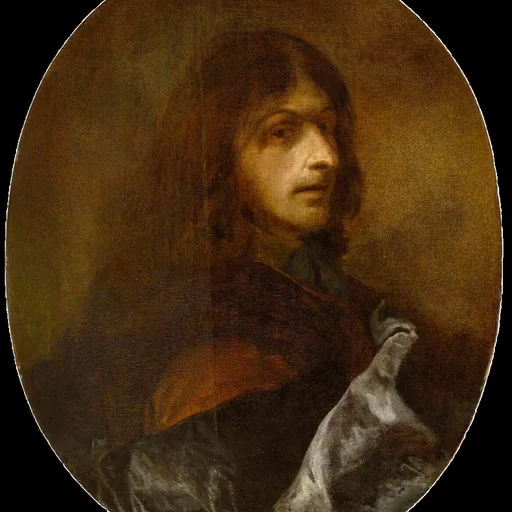
Sébastien Bourdon (French pronunciation: ; 2 February 1616 – 8 May 1671) was a French painter and engraver. His chef d'œuvre is The Crucifixion of St. Peter made for the cathedral of Notre Dame.

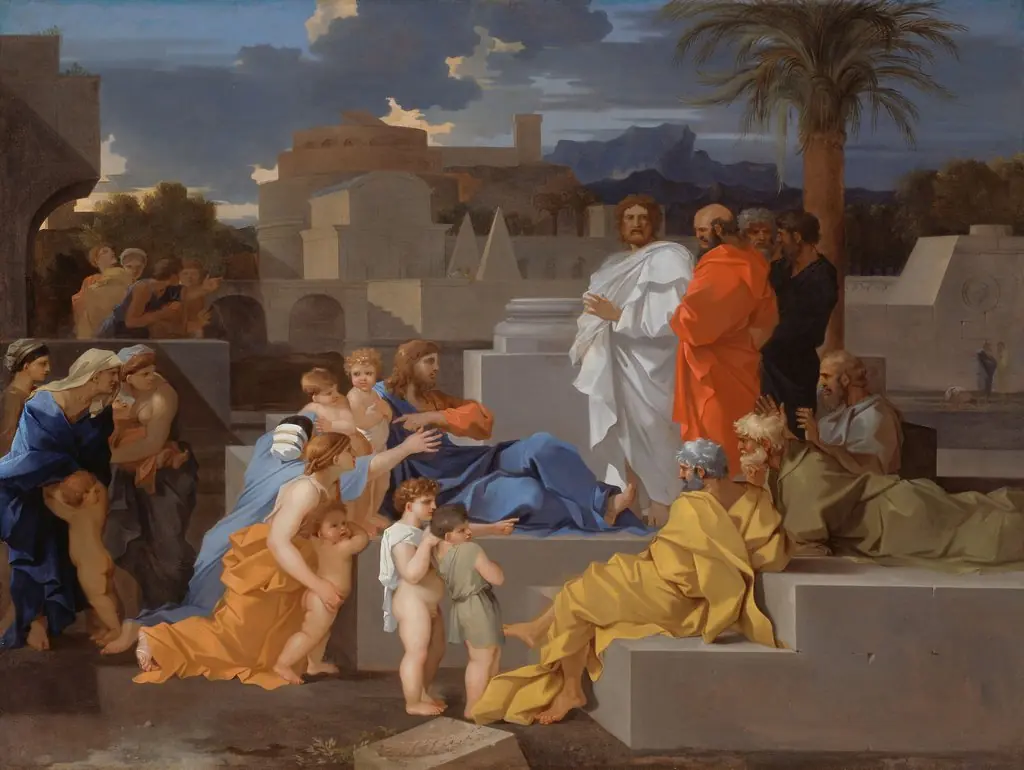 Christ Receiving the Children
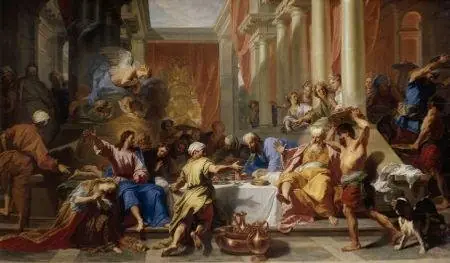 The Meal at Simons
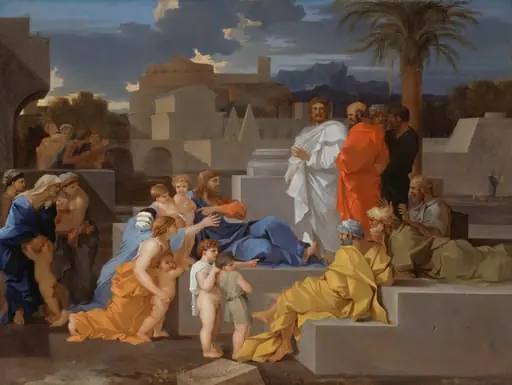 Christ Receiving the Children
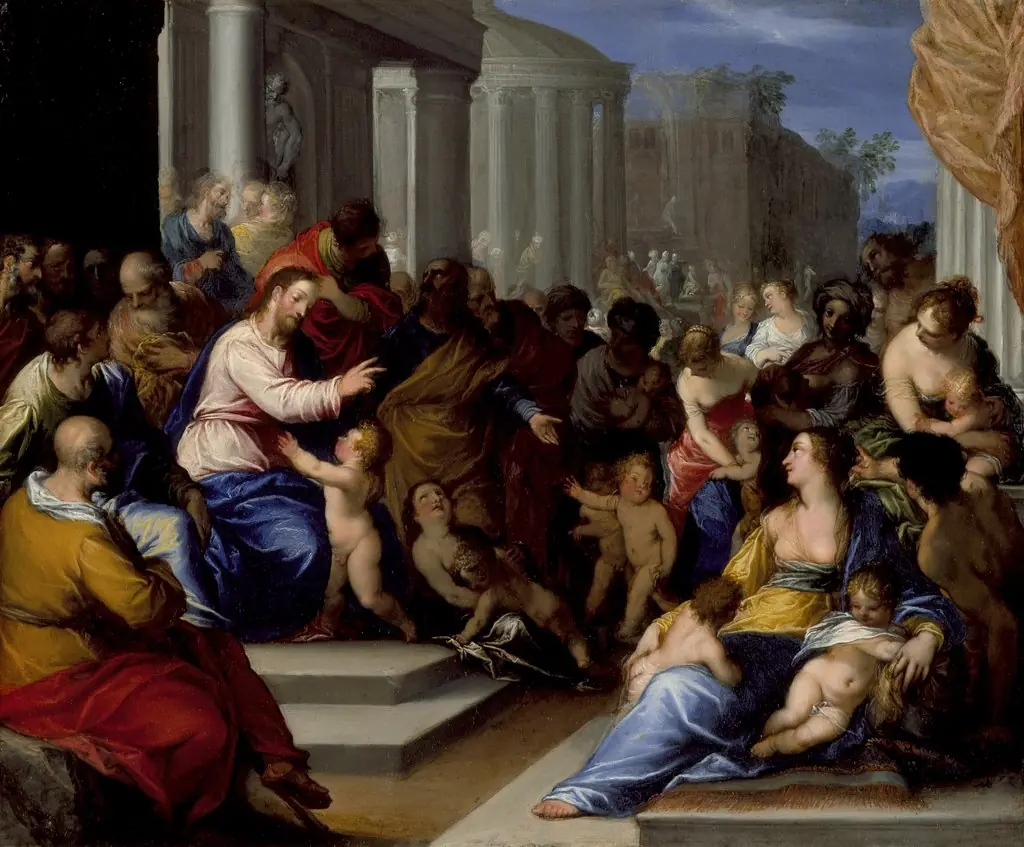 Suffer Little Children to Come Unto Me
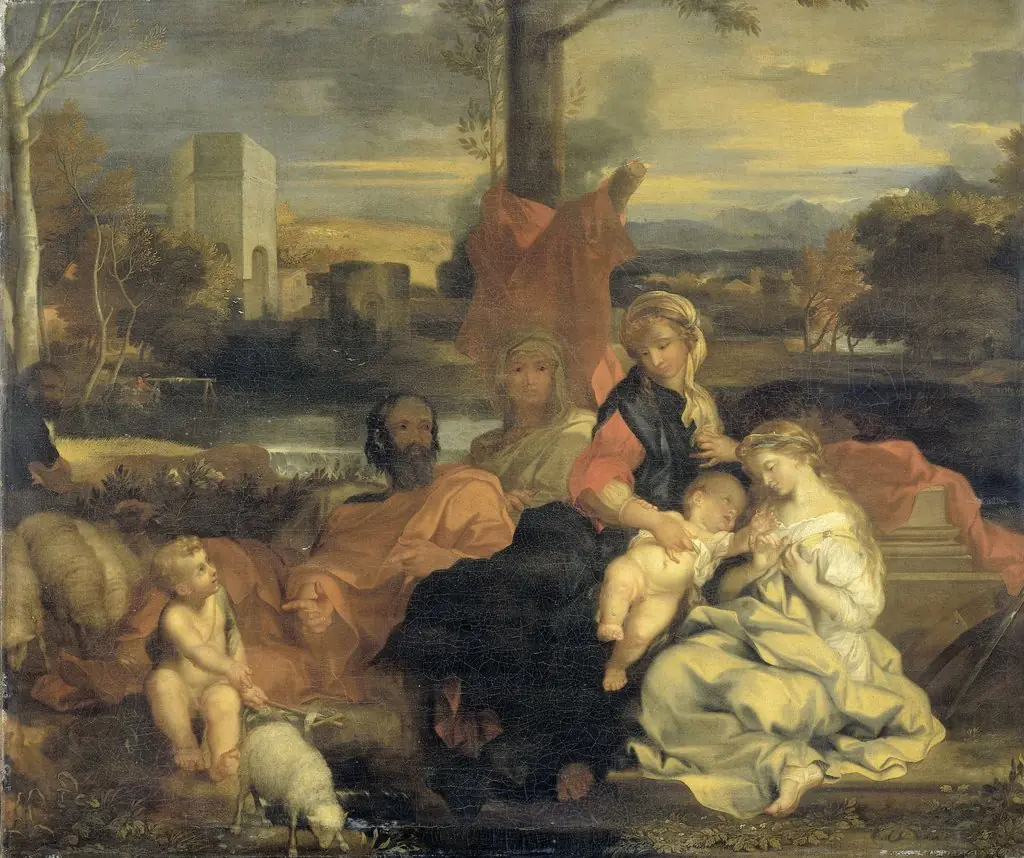
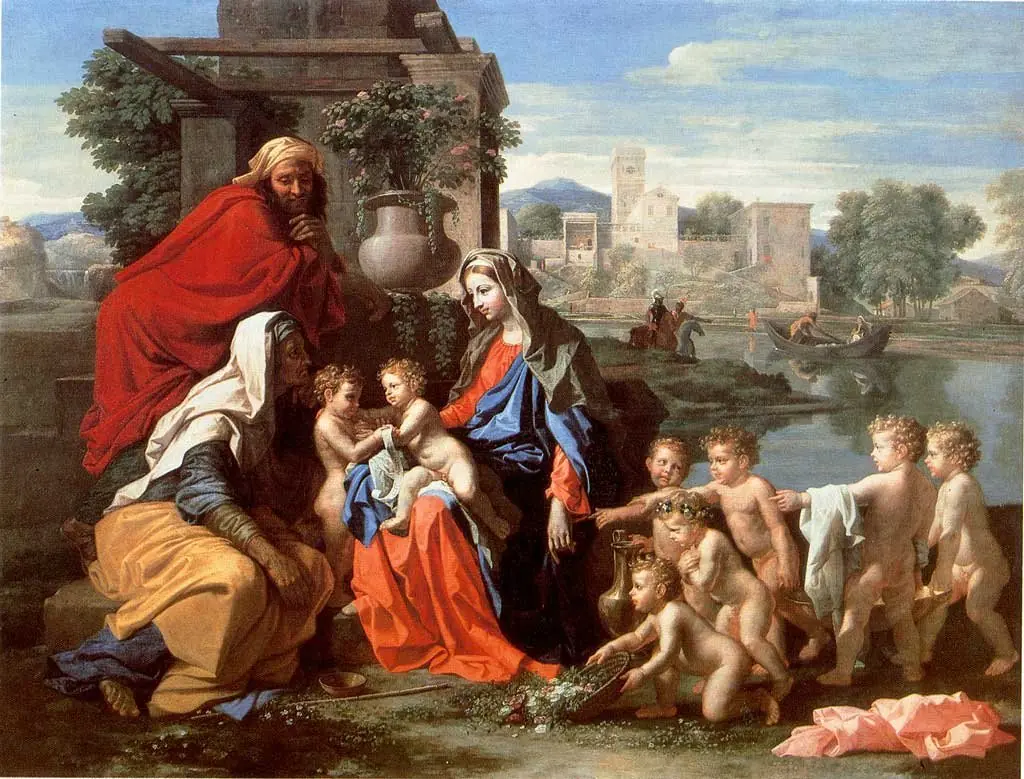 The Holy Family with the Infant St. John the Baptist and St. Elizabeth
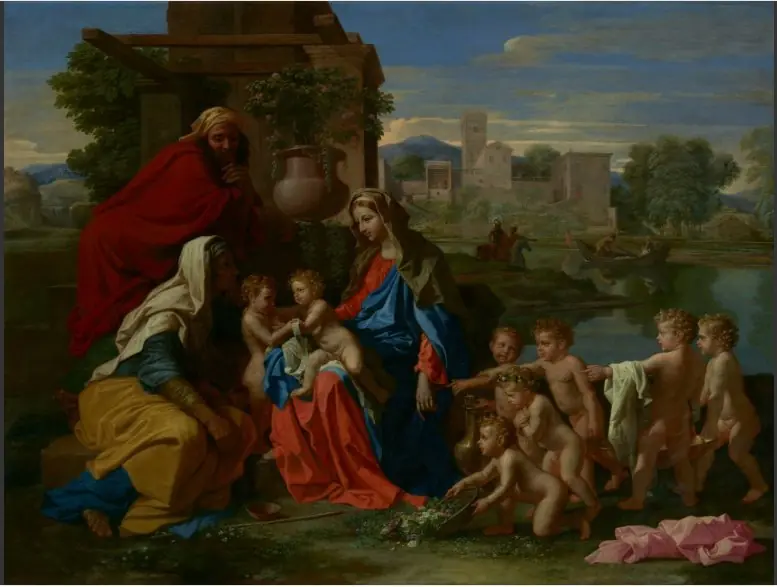 The Holy Family
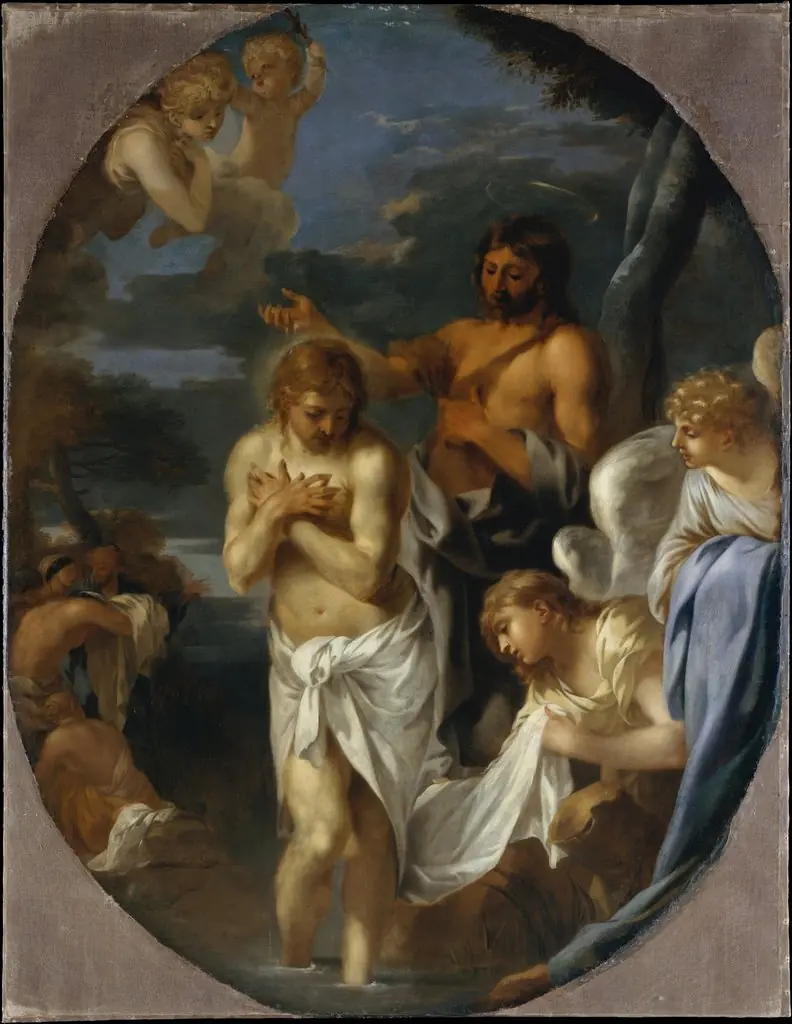
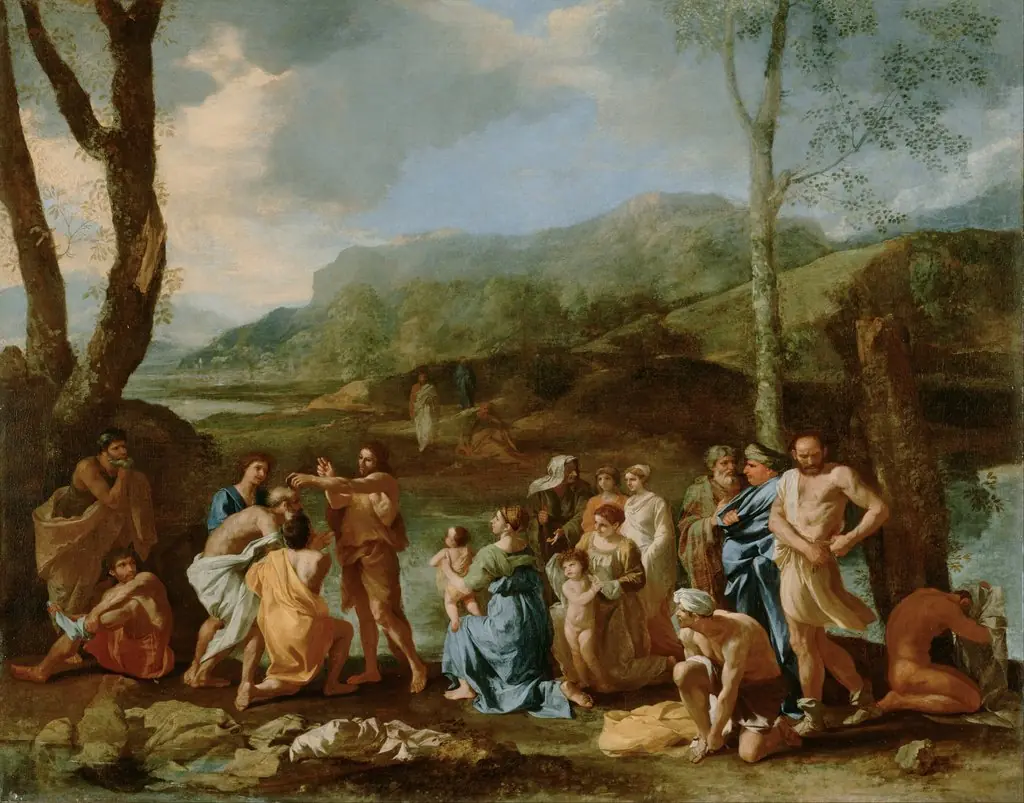 Saint John Baptizing in the River Jordan
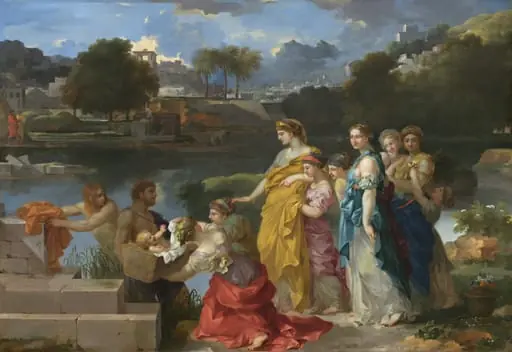
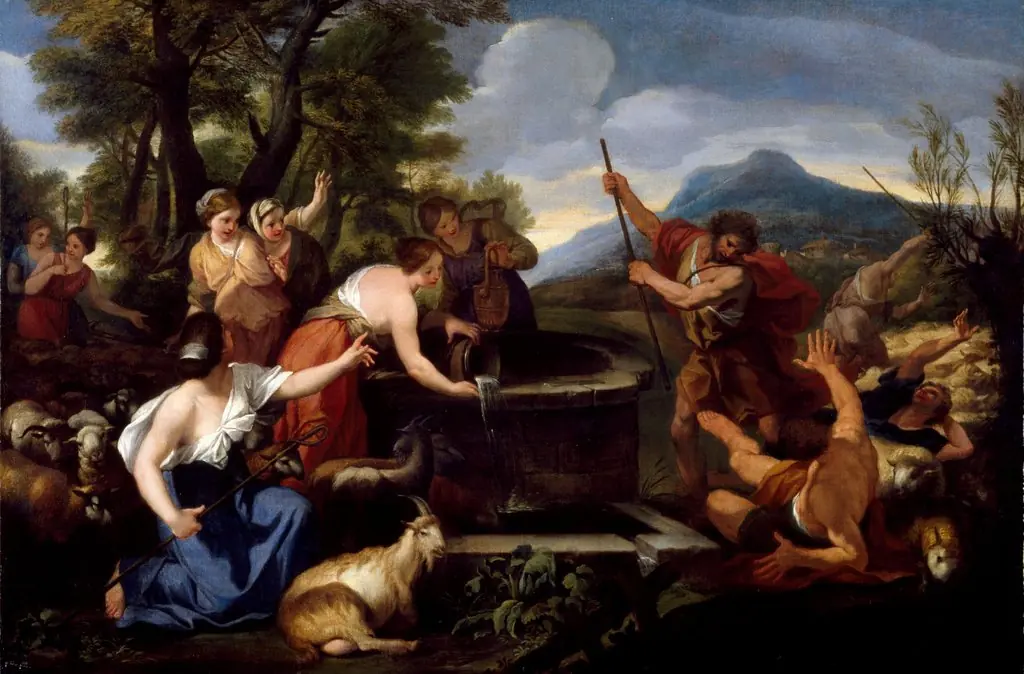 Moses and the Daughters of Jethro
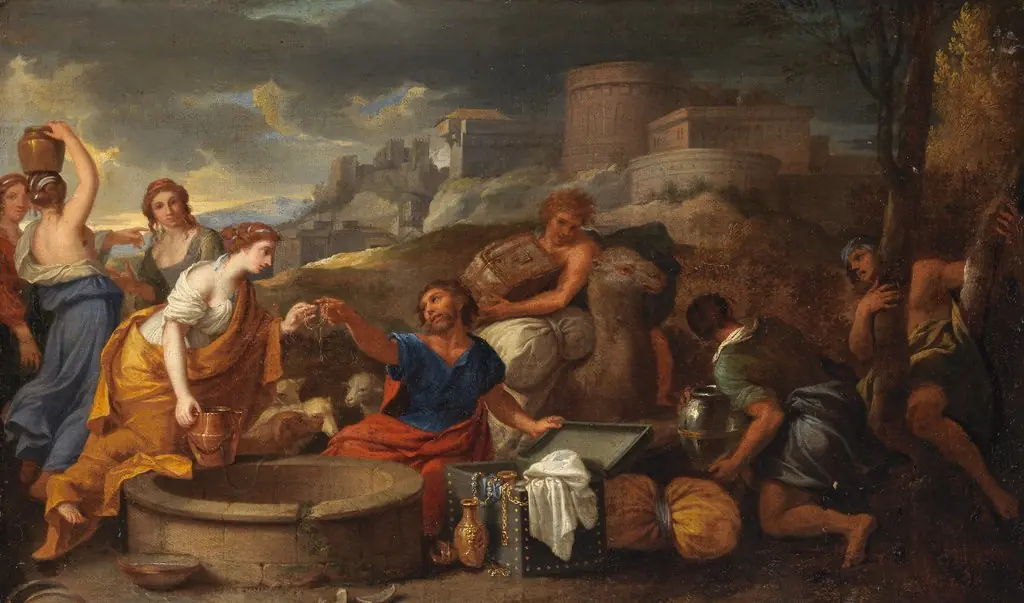 Rebecca at the Well
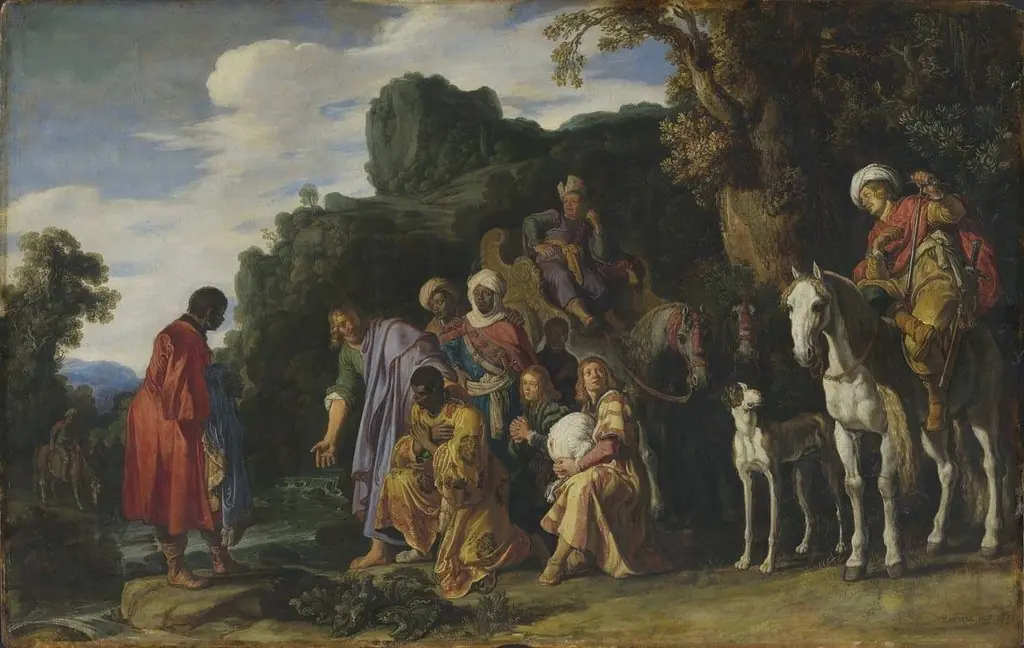 Die Taufe des Mohrenkämmerers
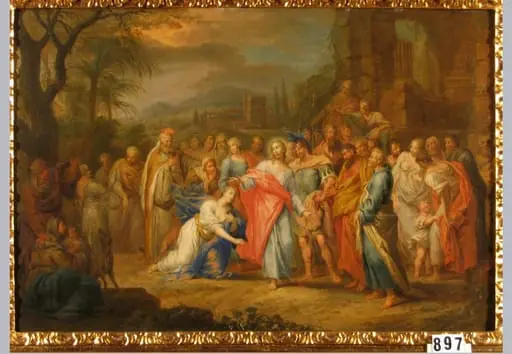 Christos tămăduitorul
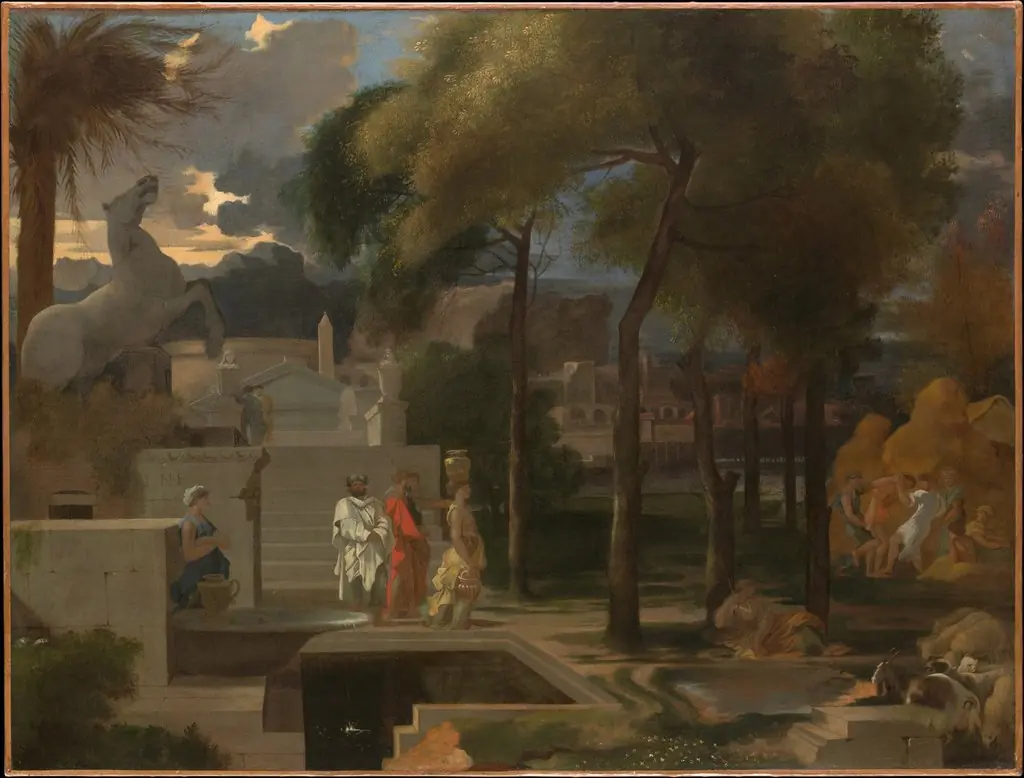
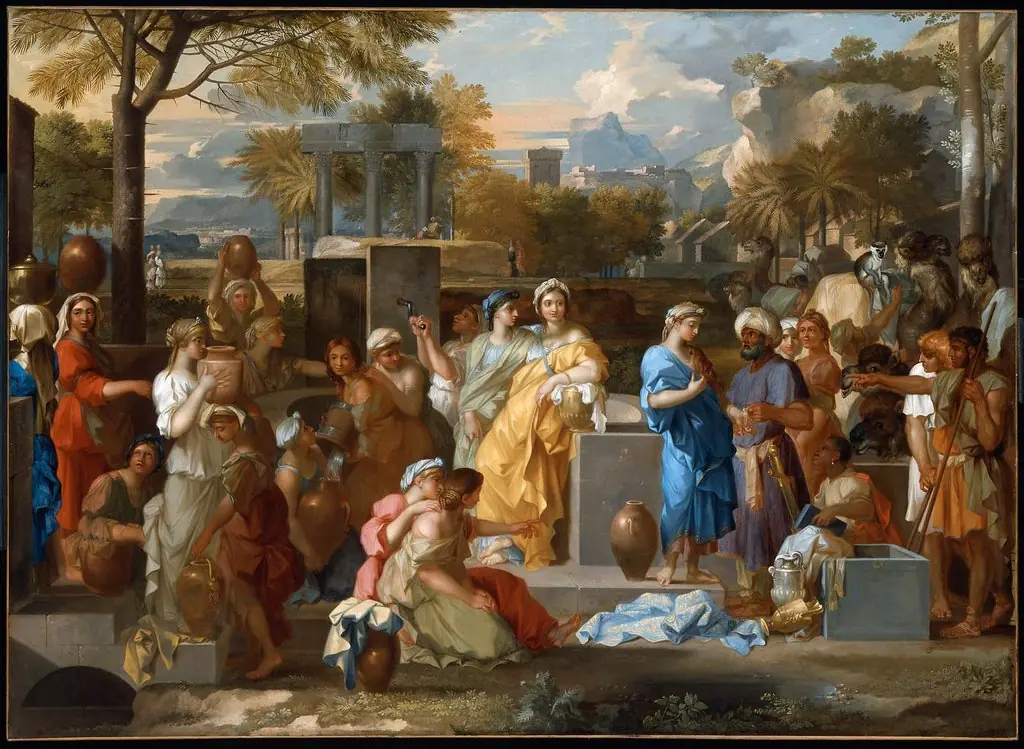 Rebecca and Eleazar