Artwork
John Fitzgibbon, Earl of Clare
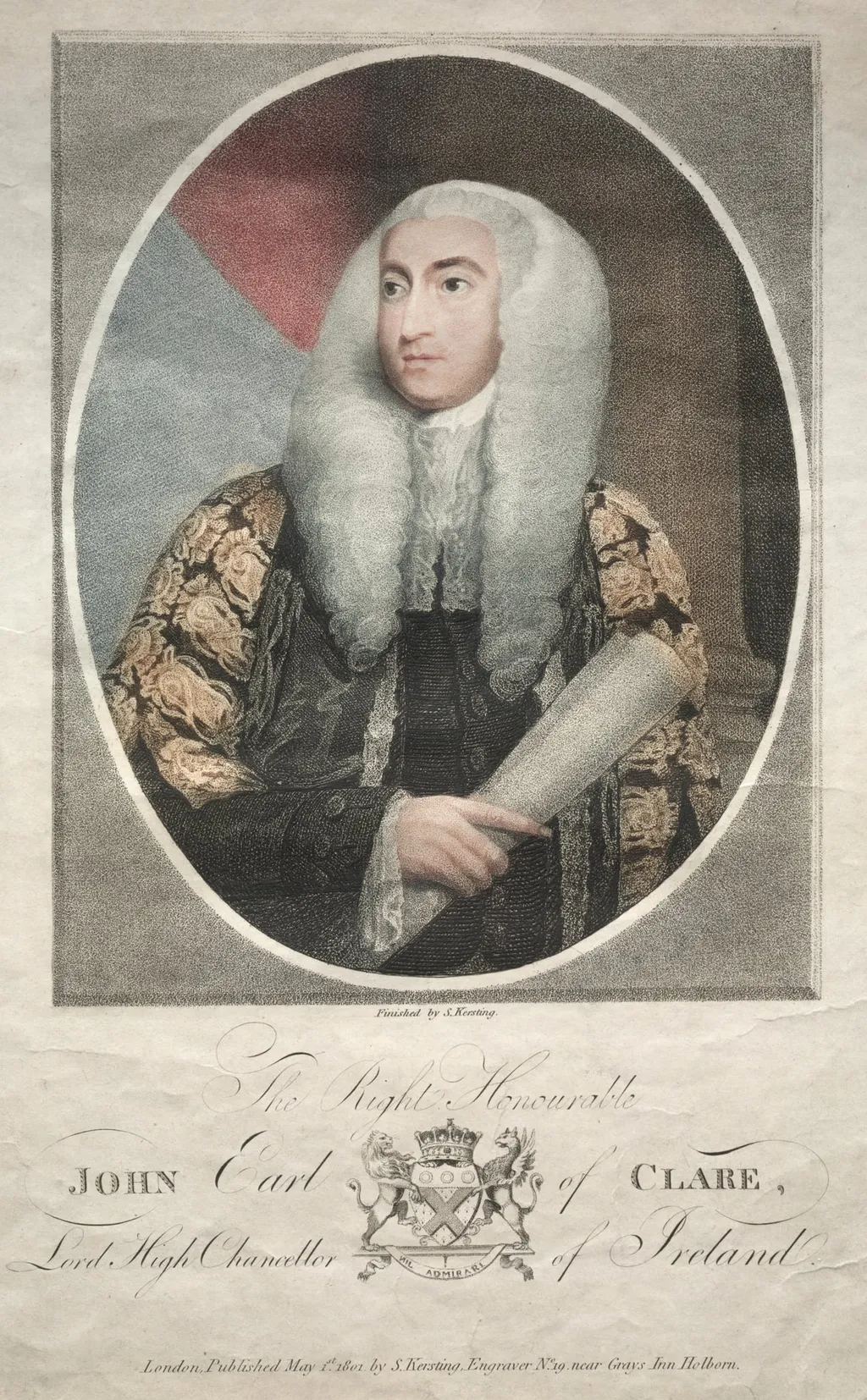
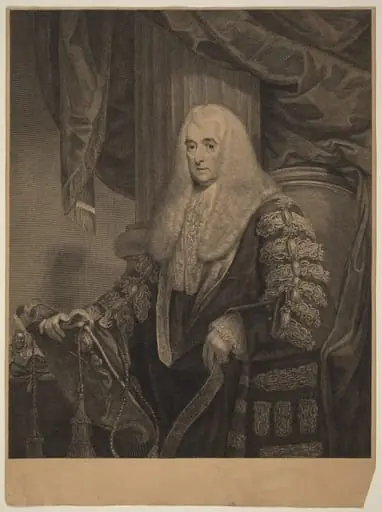
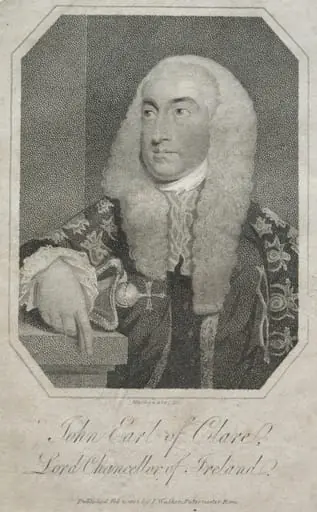
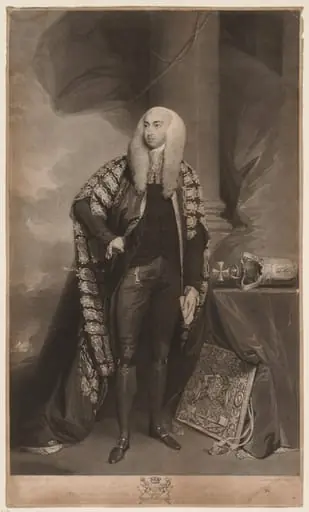
John Fitzgibbon, Earl of Clare is a print by the Romanticist artist S. Kersting. It dates from 1801 and is held in the collection of the Cleveland Museum of Art.
About this work
His hands rest on the arms of his chair, and there’s a small crest or coat of arms below his name.
This is a black-and-white portrait of a serious-looking man in old-fashioned clothes. He wears a white wig, a dark coat with fancy gold buttons, and a high collar. His hands rest on the arms of his chair, and there’s a small crest or coat of arms below his name.
The print is signed by S. Kersting, who worked in 1801. The text calls him "The Right Honourable John Earl of Clare, Lord High Chancellor of Ireland."
Look up The Cleveland Museum of Art to see more prints like this.
Overview
This 1801 black-and-white print depicts John Fitzgibbon, Earl of Clare, produced by the artist S. Kersting. It is part of the collection at The Cleveland Museum of Art. The portrait follows the conventions of formal 18th-century engraving, emphasizing status through attire and posture rather than expressive detail. The work is signed by the artist and includes an inscription identifying Fitzgibbon’s official title.
Subject & Meaning
John Fitzgibbon, Earl of Clare, served as Lord High Chancellor of Ireland, a position of considerable legal and political authority. The portrait presents him in formal attire befitting his rank: a powdered wig, high collar, and ornate coat with gold buttons. His hands rest calmly on the chair arms, conveying composure and authority. The inclusion of a family crest reinforces lineage and institutional legitimacy, common in portraits of public officials of the era.
Technique & Style
Executed in monochrome, the print relies on fine linear engraving to define texture and form. Kersting uses precise hatching to render the lace of the collar, the sheen of the coat, and the depth of the chair’s upholstery. The composition is frontal and symmetrical, typical of official portraiture, with minimal background detail to focus attention on the figure. The signature and title are integrated into the lower margin, following standard practice for engraved portraits.
History & Provenance
Created in 1801, the print was likely made to commemorate Fitzgibbon’s tenure as Lord Chancellor. It entered the collection of The Cleveland Museum of Art at an undetermined date, possibly through a donation or acquisition of British prints from the early 19th century. No record of earlier ownership is publicly documented, but its preservation suggests it was valued as a representation of Irish legal authority during the Union period.
Context
Fitzgibbon’s portrait reflects the visual culture of British and Irish governance at the turn of the 19th century. As a key figure in enforcing the Act of Union, his image would have circulated among legal and political circles. Engraved portraits like this one served as tools of public recognition, reinforcing hierarchy and institutional power through standardized, dignified representation.
Legacy
The print endures as a documentary artifact of early 19th-century Irish administration. While not widely reproduced, it remains a reference for understanding how legal authority was visually constructed during a period of political transformation. Its presence in a major American museum underscores the transatlantic circulation of British portraiture and its role in shaping historical memory.
Artist & collection