Artwork
Francisco Cornaro
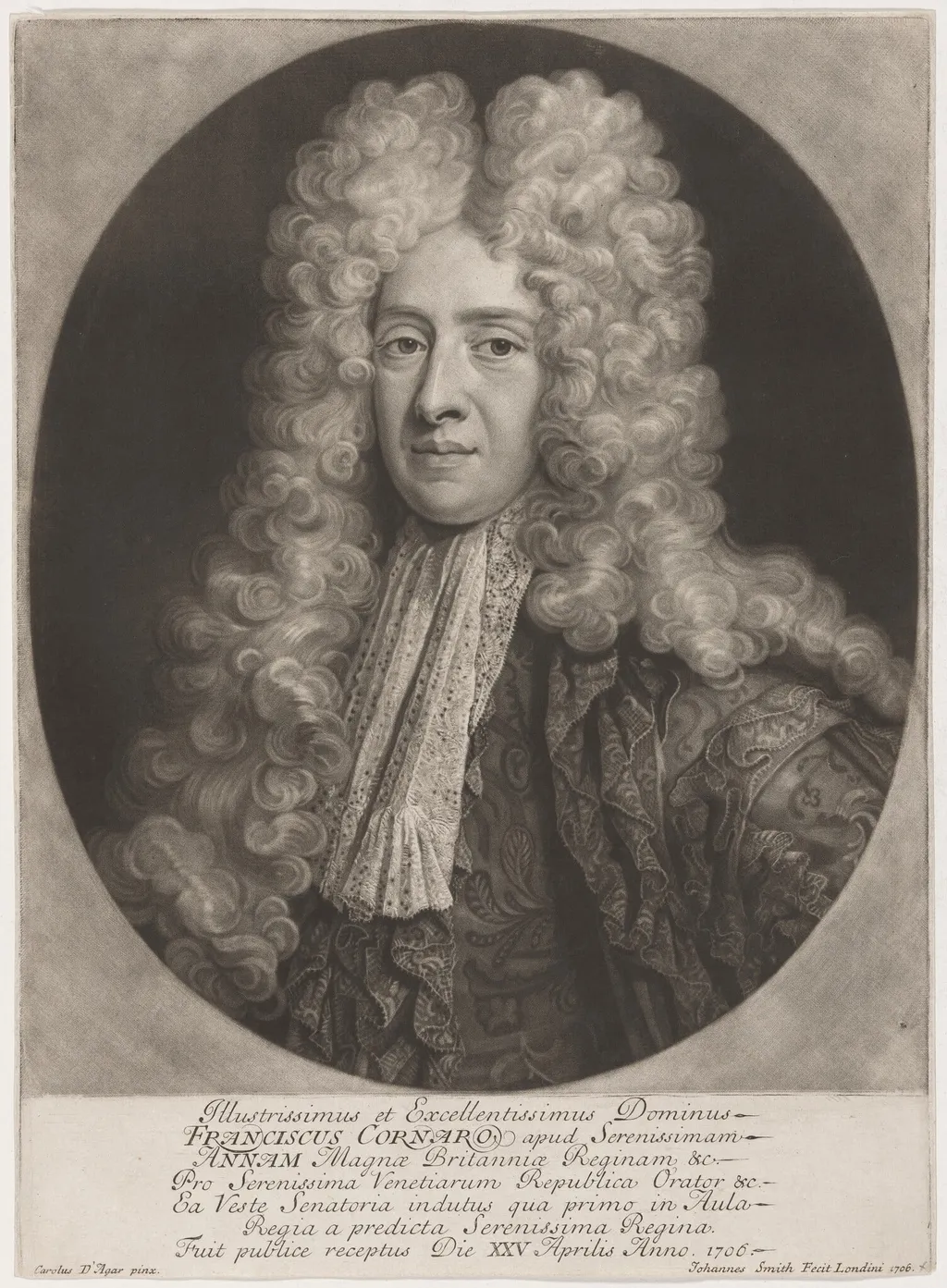
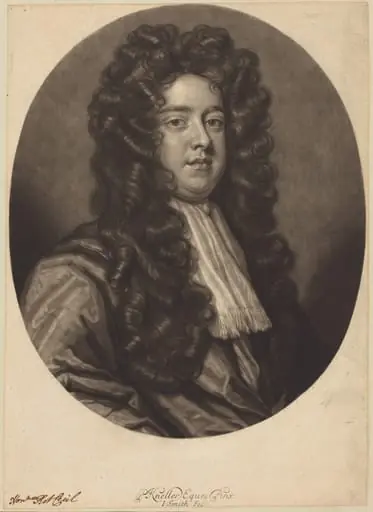
Francisco Cornaro is an ink print by the Baroque artist John Smith. It dates from 1706 and is held in the collection of the National Gallery of Art.
About this work
Overview
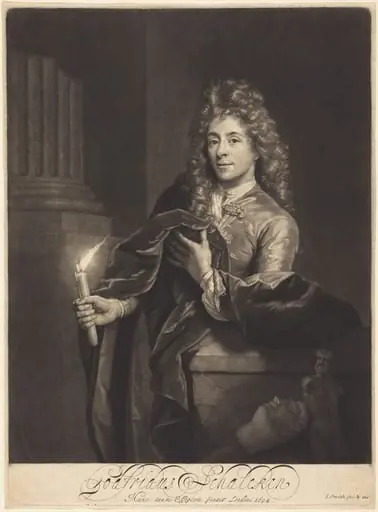
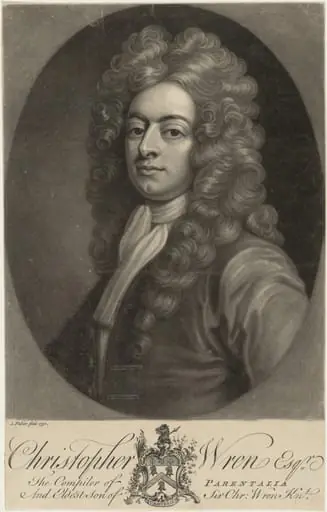
This 1706 mezzotint by John Smith depicts Francisco Cornaro, a Venetian nobleman, rendered in fine tonal gradations. The print captures a full-length portrait against a deep, unmodulated background, emphasizing the sitter’s presence through contrast. Smith’s technique exploits the mezzotint’s capacity for rich blacks and subtle midtones to model form with quiet precision.
Subject & Meaning
His elaborate lace collar and ruffled sleeves suggest aristocratic status, while the loose curls falling to his shoulders reflect contemporary male fashion.
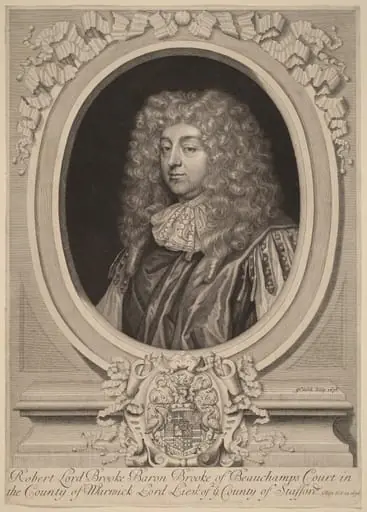
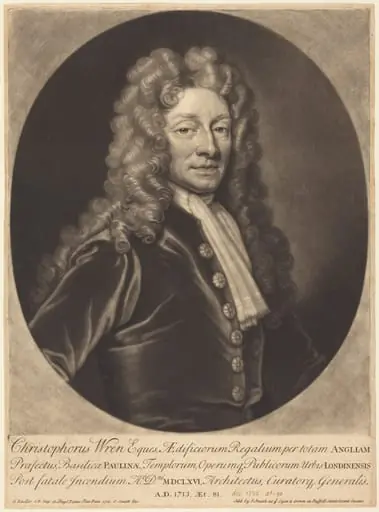
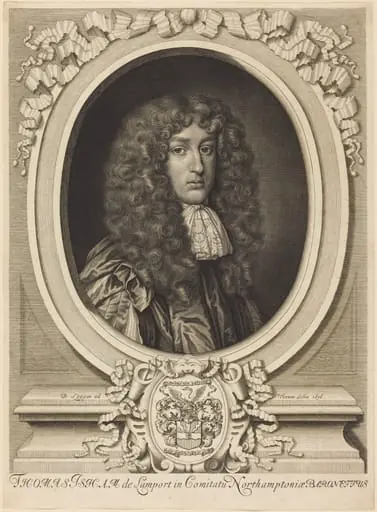
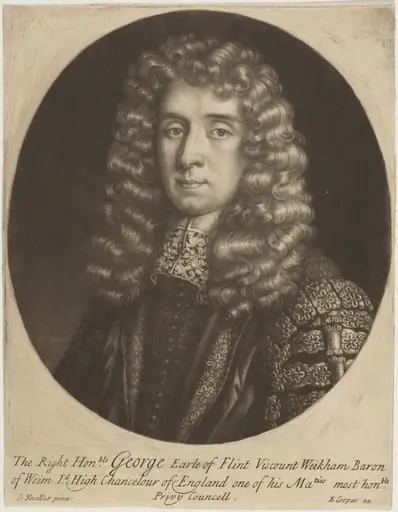
Francisco Cornaro is portrayed with composed dignity, his direct gaze and still posture conveying authority without ostentation. His elaborate lace collar and ruffled sleeves suggest aristocratic status, while the loose curls falling to his shoulders reflect contemporary male fashion. The absence of symbolic objects or setting focuses attention on personal bearing, aligning the image with portraiture as a statement of identity rather than narrative.
Technique & Style
Smith employed mezzotint, a process involving roughening a copper plate to hold ink, then smoothing areas to create light. The result is a velvety tonal range, particularly evident in the shadowed folds of fabric and the soft transitions of skin. The lace is rendered with delicate, fine lines, contrasting with the broad darkness behind. This method prioritizes texture and depth over linear definition, characteristic of late Baroque printmaking.
History & Provenance
The print was produced during Smith’s active period as a leading English reproductive engraver, known for translating portraits into mezzotint for elite collectors. Francisco Cornaro, a Venetian diplomat, likely sat for the original painting now lost. Smith’s version circulated in Britain, where such prints served as status objects, bridging continental portraiture and domestic taste.
Context
In early 18th-century Europe, mezzotint was the preferred medium for aristocratic portraiture due to its ability to mimic the softness of oil paint. Smith’s work reflects the transnational exchange of artistic styles, with Italian subjects rendered in English techniques. The portrait aligns with a broader trend of commissioning prints to disseminate likenesses of foreign dignitaries among British elites.
Legacy
John Smith’s mezzotints, including this one, helped establish the medium’s reputation for nuanced portraiture in Britain. Though Cornaro himself is not widely remembered, Smith’s print survives as an example of how print culture extended the reach of elite imagery. The work remains a reference point for understanding the technical and social role of reproductive prints in the early modern period.
Artist & collection