Artwork
Lampun alla
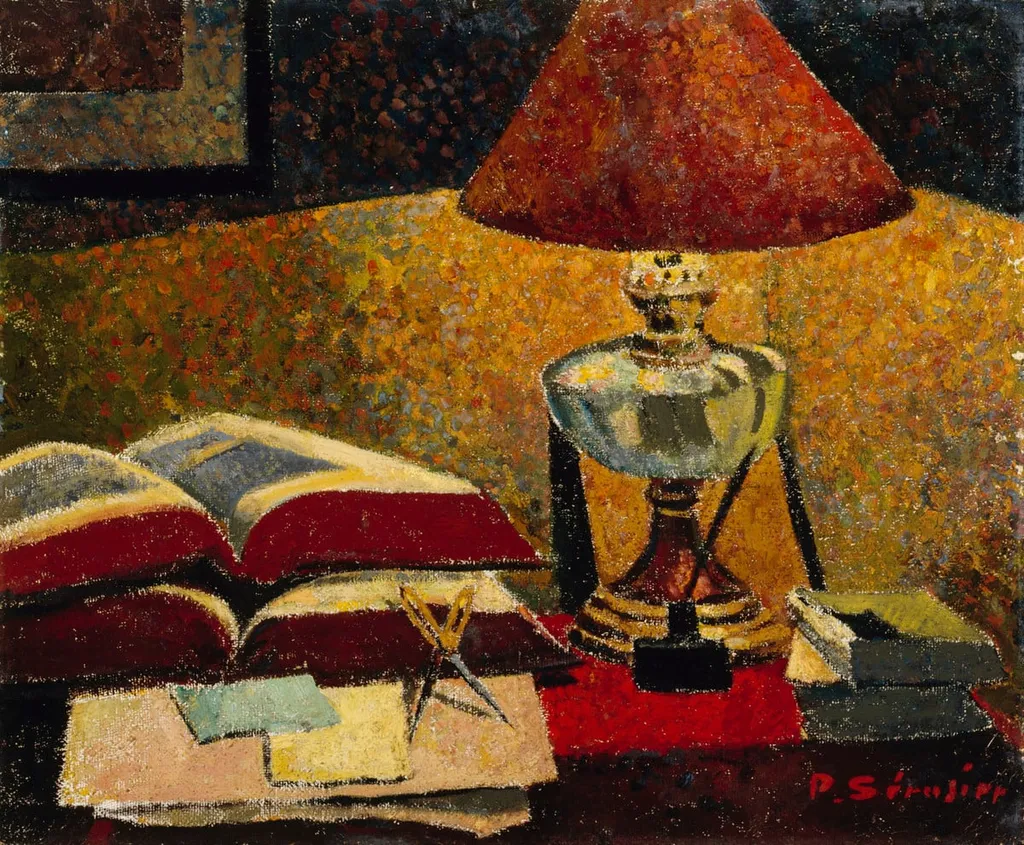
Lampun alla is an unspecified painting by Paul Sérusier. It dates from 1906 and is held in the collection of the Finnish National Gallery.
About this work
Overview
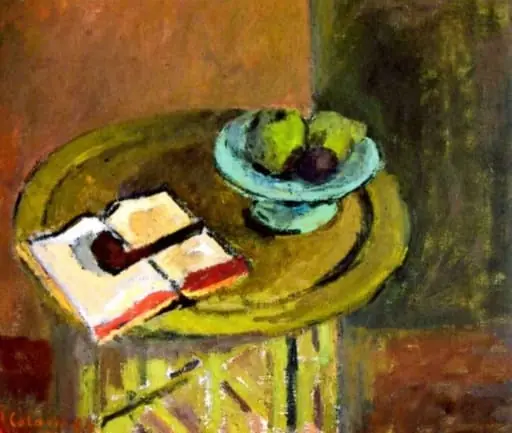
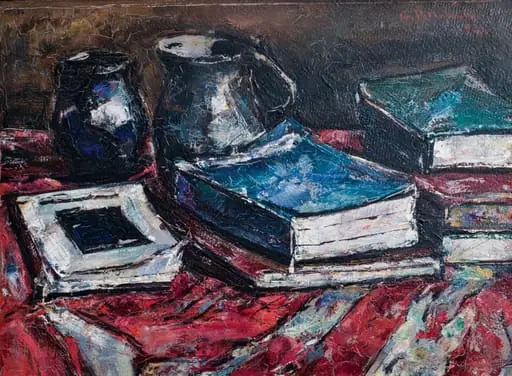
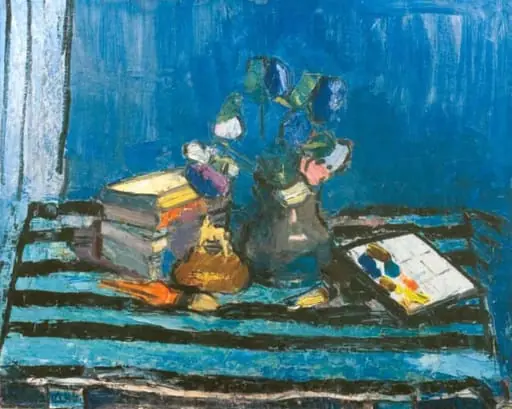
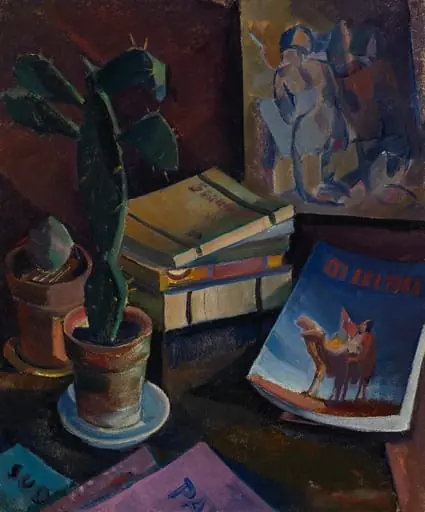
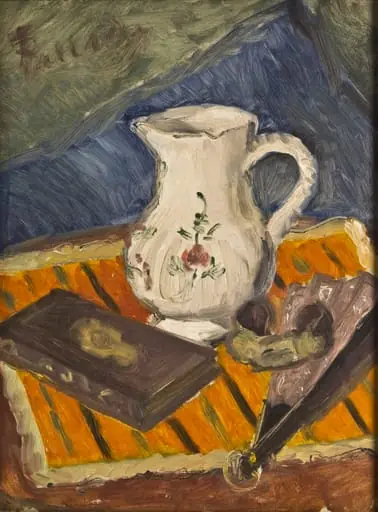
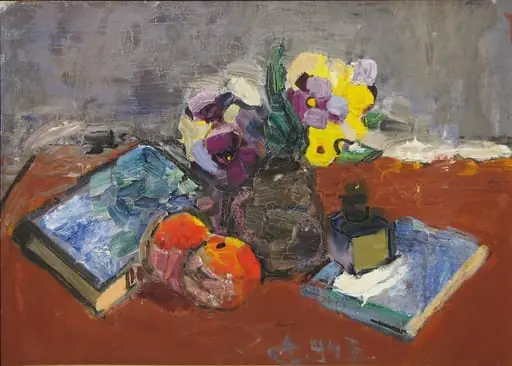
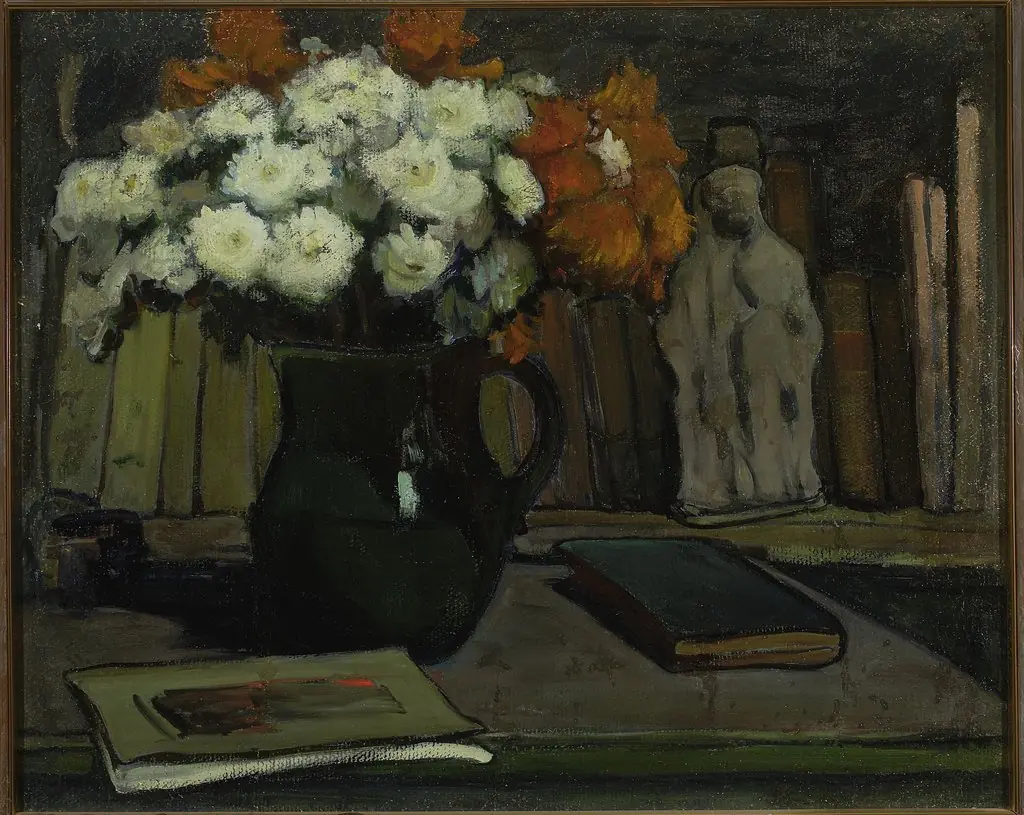
Painted around 1906 by Paul Sérusier, this work presents a quiet interior scene centered on a lamp, books, and scissors. Rendered in muted yet warm tones, the composition avoids dramatic action, instead focusing on the stillness of everyday objects. The arrangement suggests a moment of pause, perhaps after reading or writing, capturing the intimacy of a private space without narrative intrusion.
Subject & Meaning
Together, they form a silent testament to quiet contemplation, devoid of symbolism but rich in atmospheric suggestion.
The objects— a red-shaded lamp, open books, and a pair of scissors—hint at intellectual labor and domestic routine. The lamp, the sole source of light, implies evening hours and focused attention. The open books suggest recent use, while the scissors, resting atop one, imply interrupted work. Together, they form a silent testament to quiet contemplation, devoid of symbolism but rich in atmospheric suggestion.
Technique & Style
Sérusier employs flat planes of color and softened edges, reflecting his association with Synthetism. The red of the lampshade and cloth anchors the composition, harmonizing with the golden background. Forms are simplified, with minimal modeling, emphasizing tone and arrangement over realism. Brushwork is deliberate but unobtrusive, contributing to the calm, meditative quality of the scene.
History & Provenance
Created during Sérusier’s later years, the painting reflects his continued interest in intimate, domestic subjects after his early involvement with the Nabis. Its provenance is not widely documented, but it aligns with his post-1900 practice of exploring still life and interior scenes. The work remained within private collections, never entering major public institutions during his lifetime.
Context
In the early 20th century, many artists turned from grand narratives to personal, domestic themes. Sérusier’s focus on a single room echoes this shift, paralleling contemporaries like Bonnard and Vuillard. His use of color and simplified form connects to Symbolist ideals, yet the subject matter is grounded in ordinary life, reflecting a broader cultural turn toward introspection and quietude.
Legacy
Though not among Sérusier’s most widely exhibited works, this painting exemplifies his mature style—calm, deliberate, and emotionally restrained. It contributes to understanding his evolution beyond the avant-garde experiments of the 1890s, revealing a sustained engagement with the poetry of everyday objects. Its quiet presence continues to resonate in studies of early modernist still life.
Artist & collection