Artwork
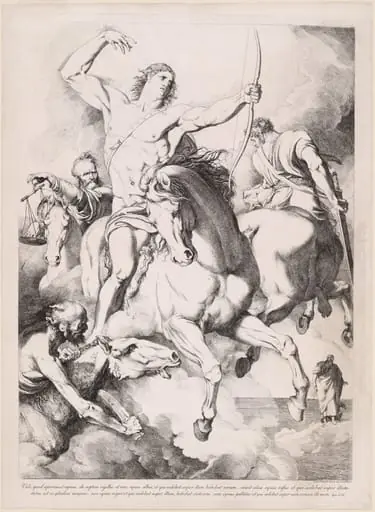
Vidi, quod aperuisset agnus... (The Four Horsemen of the Apocalypse)
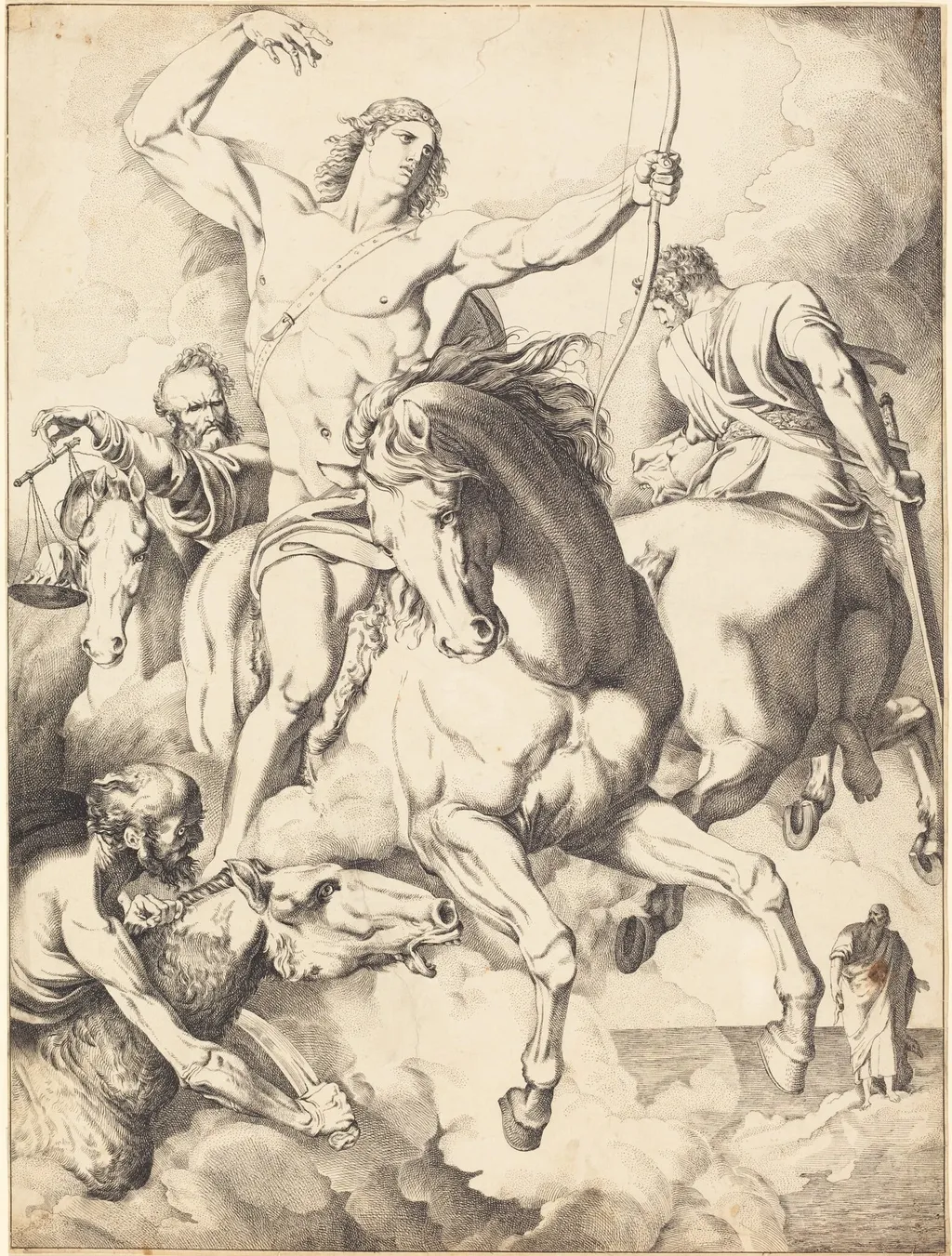
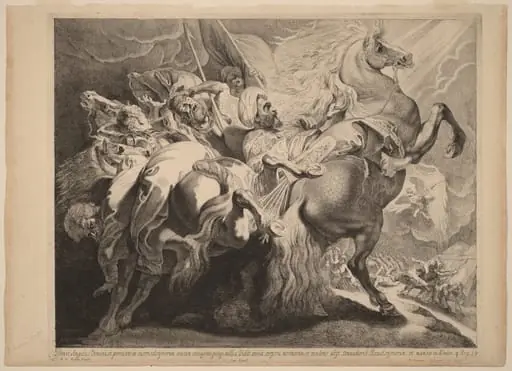
Vidi, quod aperuisset agnus... (The Four Horsemen of the Apocalypse) is an ink drawing by the Romanticist artist Luigi Sabatelli I. It dates from 1810 and is held in the collection of the National Gallery of Art.
About this work
Overview
Created in 1810 by Italian draughtsman Luigi Sabatelli I, this drawing bears the Latin title Vidi, quod aperuisset agnus…—a reference to the biblical vision of the Four Horsemen of the Apocalypse. Executed on wove paper backed with Asian paper, the work combines pen and ink with chalk, presenting a compact yet detailed interpretation of the apocalyptic riders.
Subject & Meaning
The composition illustrates the four riders foretold in the Book of Revelation, each symbolizing conquest, war, famine and death. By invoking the scriptural phrase, Sabatelli aligns his visual narrative with the prophetic text, inviting contemplation of humanity’s vulnerability and the moral reckoning implied by the apocalyptic vision.
Technique & Style
Sabatelli employs fine pen lines to delineate the figures and their steeds, while chalk washes provide tonal depth and atmospheric contrast. The use of wove paper backed with Asian paper offers a smooth surface that supports delicate rendering, allowing the artist to balance precise linear detail with subtle shading.
History & Provenance
The drawing was produced early in Sabatelli’s career, a period marked by his engagement with classical and religious themes. Though specific ownership records are sparse, the work has been documented in collections of 19th‑century Italian drawings, reflecting its inclusion in scholarly surveys of the artist’s output.
Context
In the early 19th century, European artists frequently revisited biblical and mythological subjects, often as allegorical commentaries on contemporary upheavals. Sabatelli’s choice of the Apocalypse aligns with this trend, echoing the era’s fascination with dramatic, moralizing narratives rendered through disciplined draftsmanship.
Artist & collection


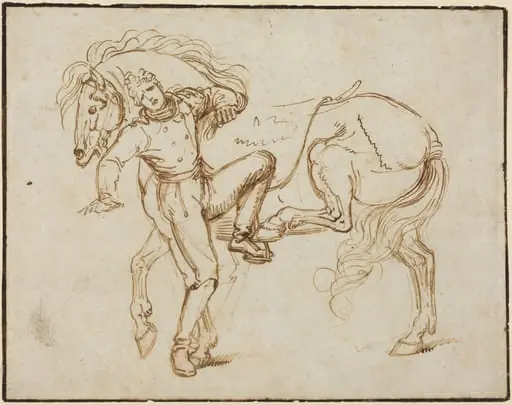 Cavalryman Mounting a Horse
 Vidi, quod aperuisset agnus... (The Four Horsemen of the Apocalypse)
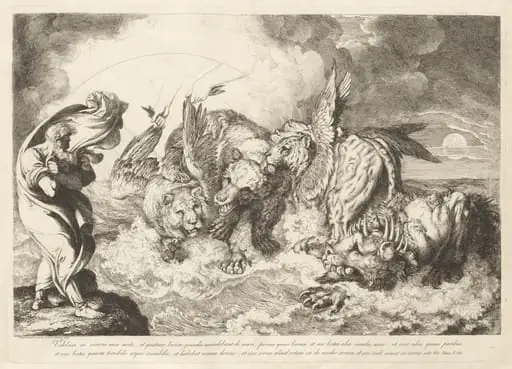 Daniel's Vision
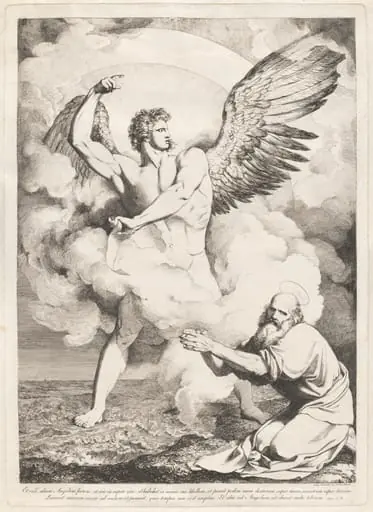 Et vidi alium angelum fortem... (The Angel of the Apocalypse Appearing to Saint John)
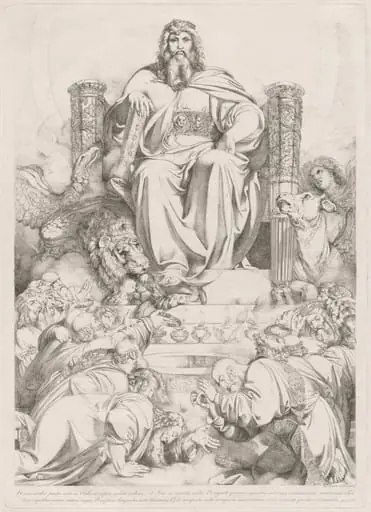 Et ecce sedes posita erat in coelo... (God the Son in Majesty on the Throne Surrounded by the Four Creatures and Worshipped by the Twenty-four Elders)