Artwork
The Rape of Proserpina
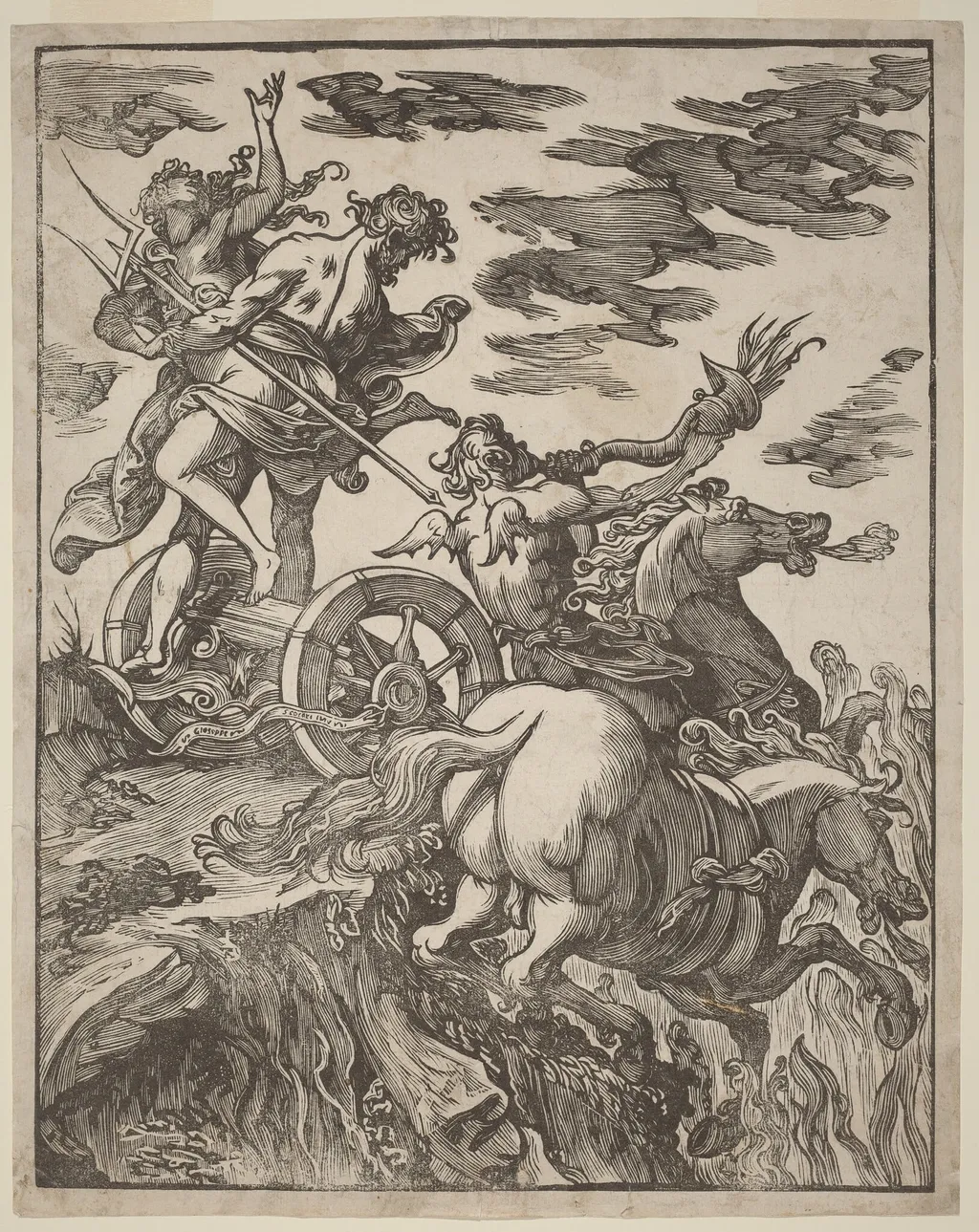
The Rape of Proserpina is an ink print by the Renaissance artist Giuseppe Scolari. It dates from 1600 and is held in the collection of the National Gallery of Art.
About this work
Overview
Giuseppe Scolari’s print, titled The Rape of Proserpina, dates from around 1600. Executed as a combination of woodcut and wood engraving on laid paper, the work presents a dynamic narrative scene rendered in intricate line work.
Subject & Meaning
The composition portrays the mythological abduction of Proserpina: a woman in a flowing robe is seized by a mounted figure wielding a spear, while a secondary figure watches from the foreground. The violent removal and the rearing horse convey the turmoil inherent in the story.
Technique & Style
Scolari employs dense cross‑hatching and stark chiaroscuro to model forms and suggest depth. The contrast between dark, heavily inked areas and lighter spaces creates a three‑dimensional effect, while the fine incised lines give texture to the figures, the horse, and the surrounding landscape.
Context
The print reflects the late‑Renaissance fascination with classical mythology and the technical possibilities of wood engraving. Its compositional vigor and use of dramatic lighting echo the approaches of earlier Northern European printmakers such as Albrecht Dürer, whose cross‑hatching methods informed Scolari’s style.
History & Provenance
Created at the turn of the seventeenth century, the work remains catalogued as a singular print by Scolari. Its survival on laid paper indicates it was likely intended for a limited audience of collectors familiar with mythological subjects.
Artist & collection


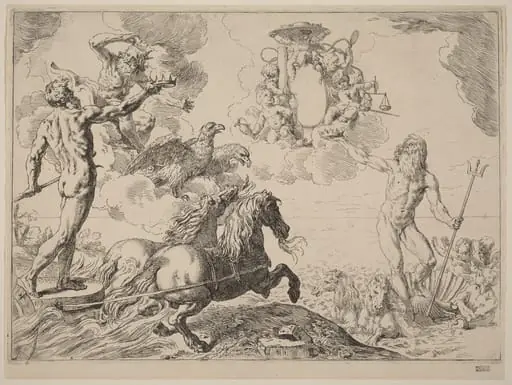 Jupiter, Neptune and Pluto
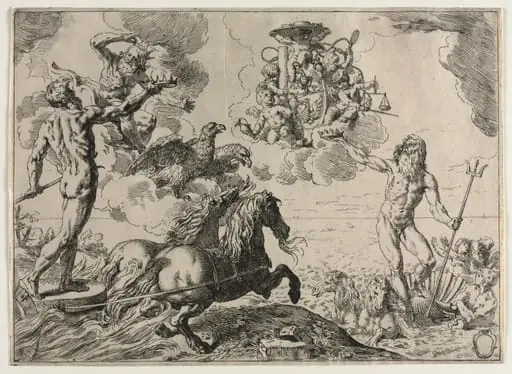 The "Quos Ego"
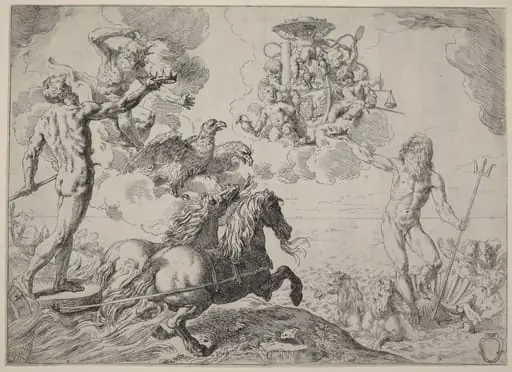 Jupiter, Neptune and Pluto
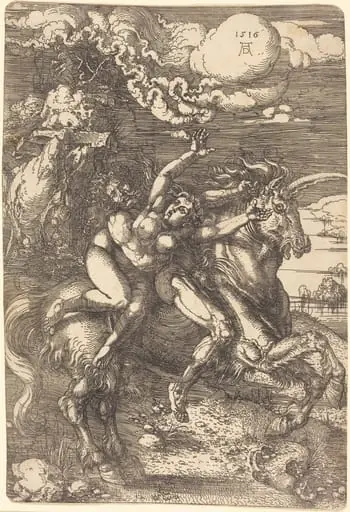 Abduction on a Unicorn
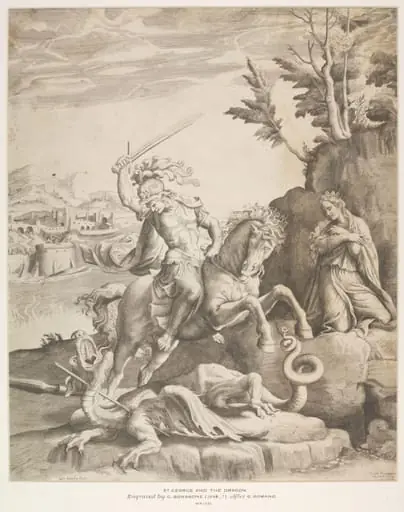 St. George and the Dragon
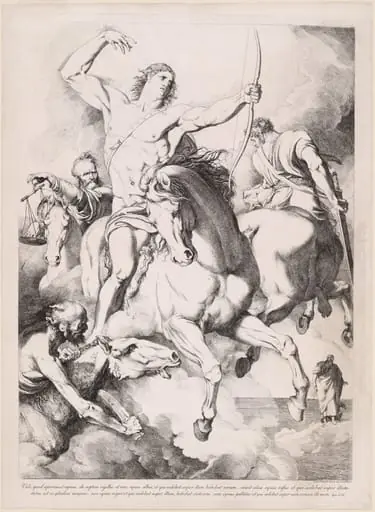 Vidi, quod aperuisset agnus... (The Four Horsemen of the Apocalypse)
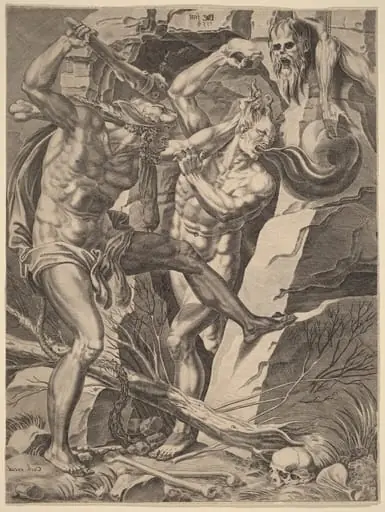 Hercules Killing Cacus
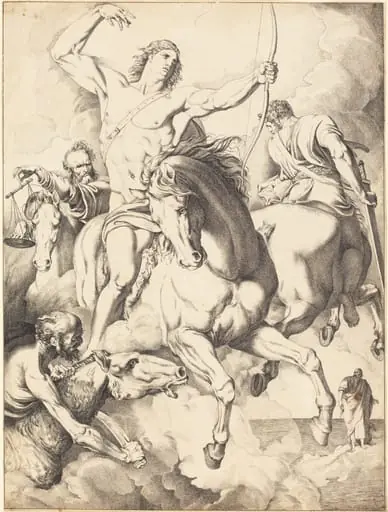 Vidi, quod aperuisset agnus... (The Four Horsemen of the Apocalypse)
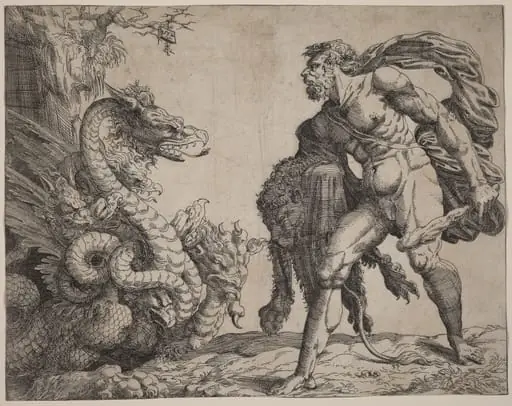 Hercules and the Hydra
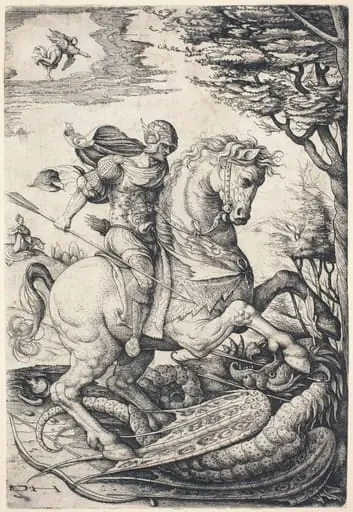 Saint George on Horseback Slaying the Dragon