Artwork
Mare (The Sea)
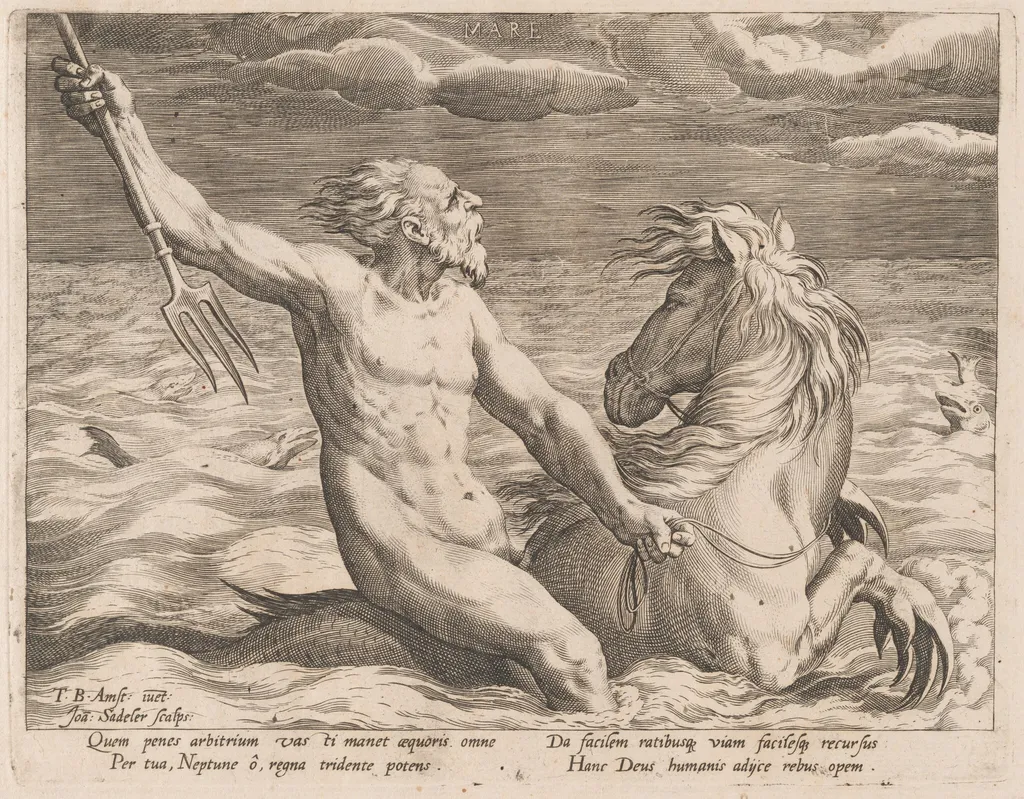
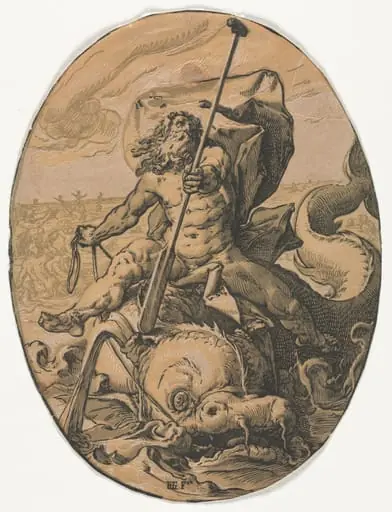
Mare (The Sea) is an ink print by the Renaissance artist Jan Sadeler I. It dates from 1587 and is held in the collection of the National Gallery of Art.
About this work
Overview
Mare (The Sea), an engraving dated around 1587, is the work of Jan Sadeler I, a Flemish printmaker active in the late Renaissance. Executed on laid paper, the image captures a mythic figure emerging from the ocean on a hybrid creature. The print resides in the National Gallery of Art in Washington, D.C., as part of its collection of early modern European prints.
Subject & Meaning
The scene evokes classical associations with oceanic powers, possibly referencing Neptune or a similar figure, though no specific narrative is confirmed.
The central figure is a nude male, likely a sea deity or mythic rider, wielding a trident while mounted on a creature with the body of a horse and the tail of a fish. His flowing hair and beard suggest motion, as if caught in a storm. The scene evokes classical associations with oceanic powers, possibly referencing Neptune or a similar figure, though no specific narrative is confirmed. The imagery conveys dominion over the sea’s wild forces.
Technique & Style
Sadeler employed fine cross-hatching to model form and suggest depth, with meticulous lines rendering the textures of skin, fur, waves, and clouds. The composition is tightly controlled, emphasizing the figure’s dynamic pose against a turbulent backdrop. The engraving’s precision reflects the Northern Renaissance tradition of detailed draftsmanship, where each stroke contributes to a sense of movement and atmospheric tension.
History & Provenance
Created during Sadeler’s time in Venice, the print circulated among collectors of Northern European engravings. It entered the National Gallery of Art’s collection through established acquisition channels in the 20th century. No earlier ownership records are publicly documented, but its survival in good condition suggests it was preserved as a specimen of skilled printmaking rather than as a mass-produced image.
Context
In the late 16th century, mythological and allegorical subjects were popular in printmaking, especially among artists connected to the Habsburg courts. Sadeler, part of a family of engravers, worked within a network that disseminated such imagery across Europe. This piece aligns with contemporary interests in classical themes, natural forces, and the fusion of animal and human forms in symbolic imagery.
Legacy
Though not widely reproduced or studied today, Mare (The Sea) exemplifies the technical refinement of late Renaissance engraving. It reflects the enduring appeal of mythological subjects in print culture and the skill required to translate complex imagery into fine line work. The print remains a quiet testament to the era’s fascination with the boundary between the terrestrial and the marine divine.
Artist & collection


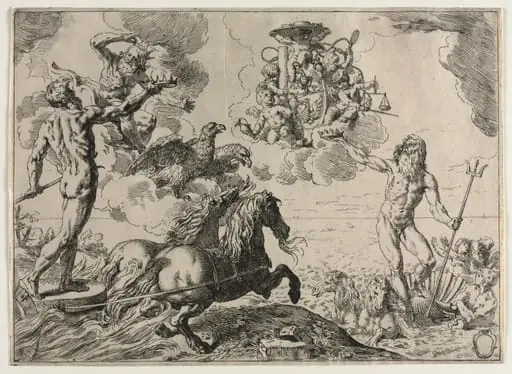 The "Quos Ego"
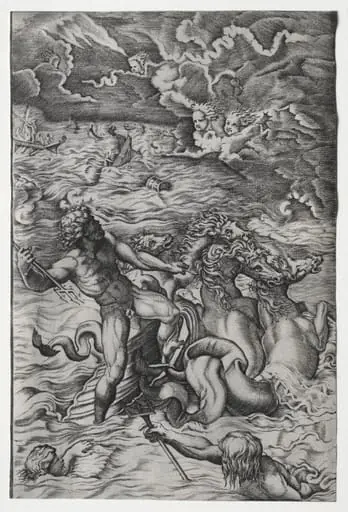 Neptune Calming the Tempest That Aeolus Raised Against Aeneas's Fleet
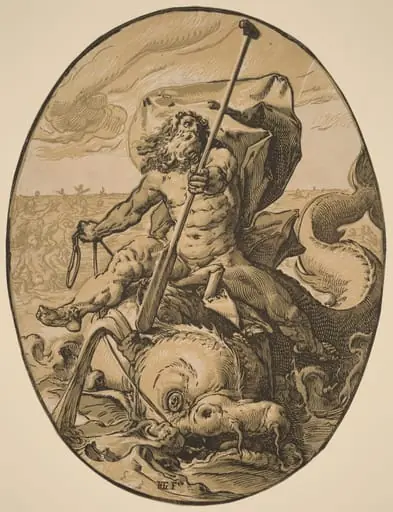 Oceanus
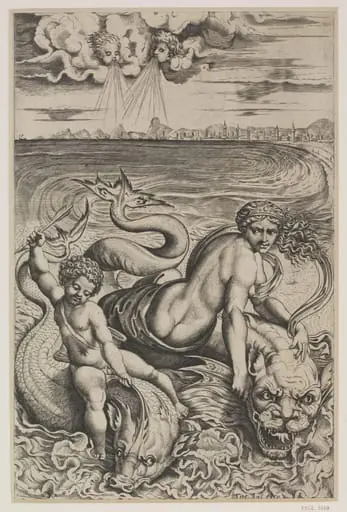 Venus and Cupid on the Sea Riding on Dolphins
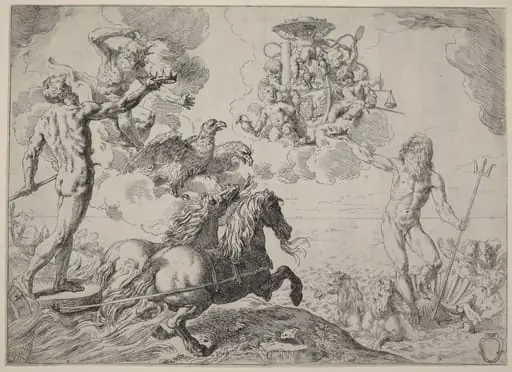 Jupiter, Neptune and Pluto
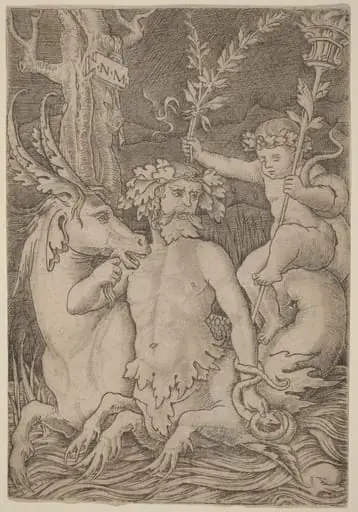 Triton Carrying a Child
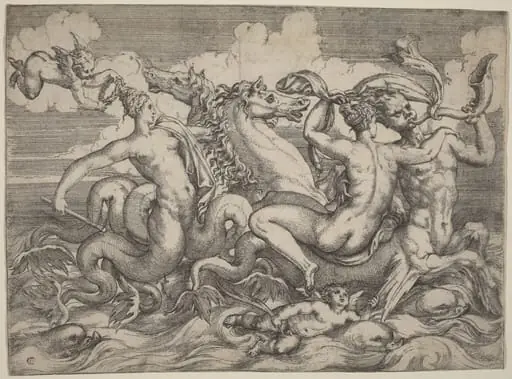 Sirens, Naiads, and Tritons
 The Deities: Oceanus
 Neptune and Amphitrite
 Neptune
 Two Tritons fighting - Battle of the Sea Gods (right portion)