Artwork
Neptune Calming the Tempest That Aeolus Raised Against Aeneas's Fleet
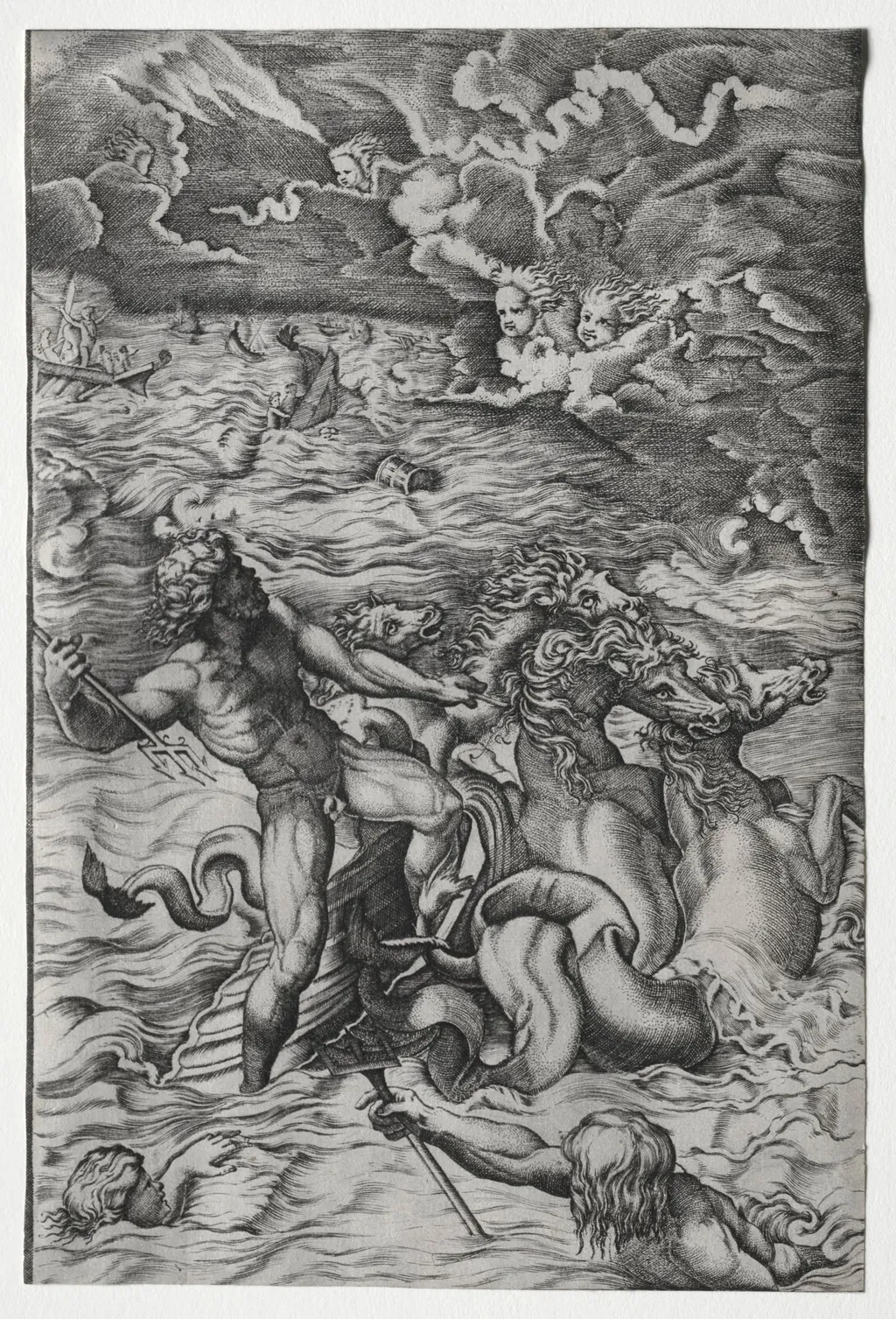
Neptune Calming the Tempest That Aeolus Raised Against Aeneas's Fleet is a print by the Renaissance artist Marcantonio Raimondi. It dates from 1516 and is held in the collection of the Cleveland Museum of Art.
About this work
Overview
This metalpoint engraving illustrates a scene from Virgil’s Aeneid, in which the sea god Neptune intervenes to still a storm unleashed by Aeolus.
This metalpoint engraving illustrates a scene from Virgil’s Aeneid, in which the sea god Neptune intervenes to still a storm unleashed by Aeolus. The composition centers on Neptune, emerging from a seashell chariot, as he raises his trident to subdue the chaotic winds. Though the original drawing by Raphael is lost, this print preserves its composition through the skilled hand of an unknown engraver, likely active in the mid-16th century.
Subject & Meaning
The scene captures Neptune’s divine authority over nature, restoring order to the sea after Aeolus’s winds threaten Aeneas’s fleet. The storm symbolizes the trials faced by the Trojans in their quest to found a new civilization. Neptune’s calm intervention reflects the theme of fate guiding Aeneas toward his destined role, even amid natural and divine turmoil.
Technique & Style
Executed as a detailed engraving on metal, the work employs fine, controlled lines to render turbulent waves, fluttering wind spirits, and the muscular form of Neptune. The wind-boys, rendered with rounded, cherubic features, contrast with the rigid geometry of the chariot and the fluidity of the sea. The style reflects Renaissance ideals of classical harmony, adapted through the precision of printmaking.
History & Provenance
The engraving reproduces a now-lost preparatory drawing by Raphael, suggesting it was made as part of a broader effort to disseminate his designs in print form. Likely produced in Italy during the 1530s–1550s, it belongs to a tradition where master drawings were translated into engravings for wider circulation among collectors and artists.
Context
During the Renaissance, classical texts like the Aeneid were revived as sources of moral and aesthetic authority. Artists turned to mythological narratives to demonstrate intellectual depth and technical skill. Raphael’s designs, even in reproduction, became benchmarks for how ancient stories could be rendered with dignity and dynamism in contemporary visual language.
Legacy
Though the original drawing is gone, this engraving preserves Raphael’s compositional vision and influenced later interpretations of classical themes in print. It stands as evidence of how Renaissance artists relied on print to extend the reach of their ideas, ensuring that mythological narratives remained part of visual culture beyond the confines of painting or fresco.
Artist & collection

Artist
Marcantonio Raimondi, often called simply Marcantonio (c. 1470/82 – c. 1534), was an Italian engraver, known for being the first important printmaker whose body of work consists largely of prints copying paintings. He…

![Battle of the Sea Gods [left half], by Andrea Mantegna](https://artifactworldgallery.com/img/andrea-mantegna--battle-of-the-sea-gods-left-half--084dd803fb0016b2-w320.webp) Battle of the Sea Gods [left half]
Battle of the Sea Gods [left half]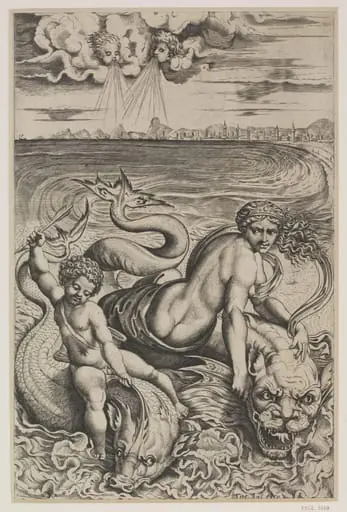 Venus and Cupid on the Sea Riding on Dolphins
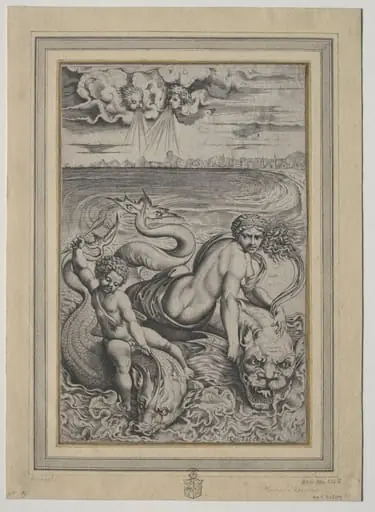 Love and Cupid Carried by Dolphins
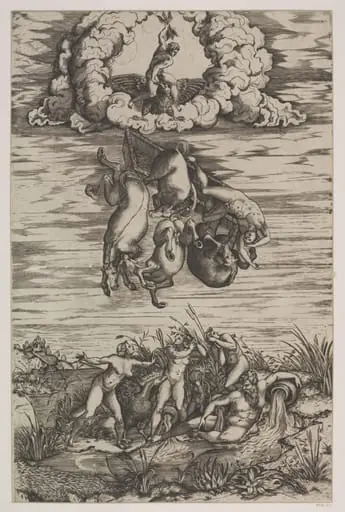 Fall of Phaeton
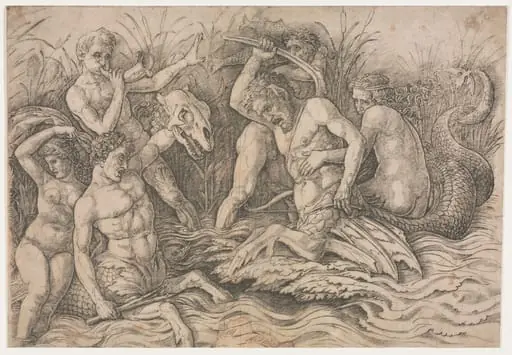 Battle of the Sea Gods - right portion
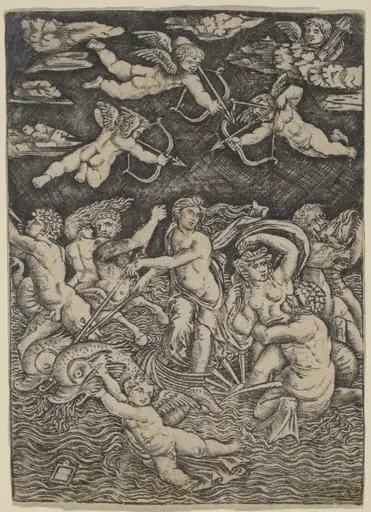 The Triumph of Galatea
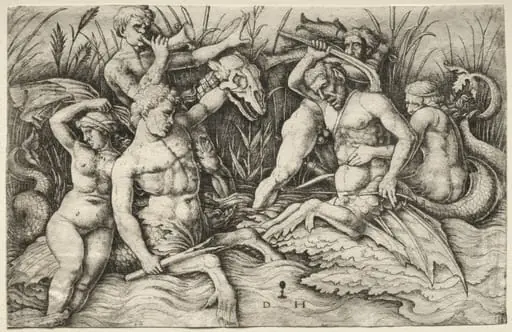 Two Tritons fighting - Battle of the Sea Gods (right portion)
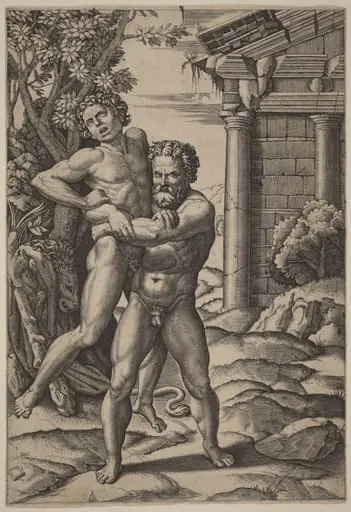
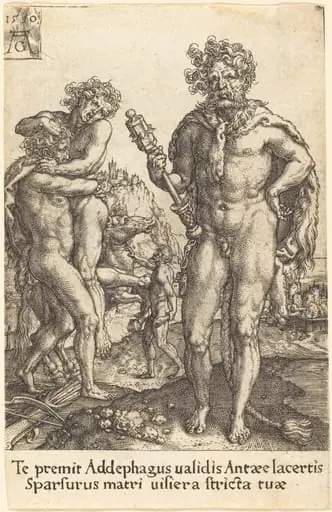 Hercules and Anthaeus
 Arion and a Nereid
 Untitled
 Abduction on a Unicorn
 The Rape of Proserpina