Artwork
Emperor Rudolph II
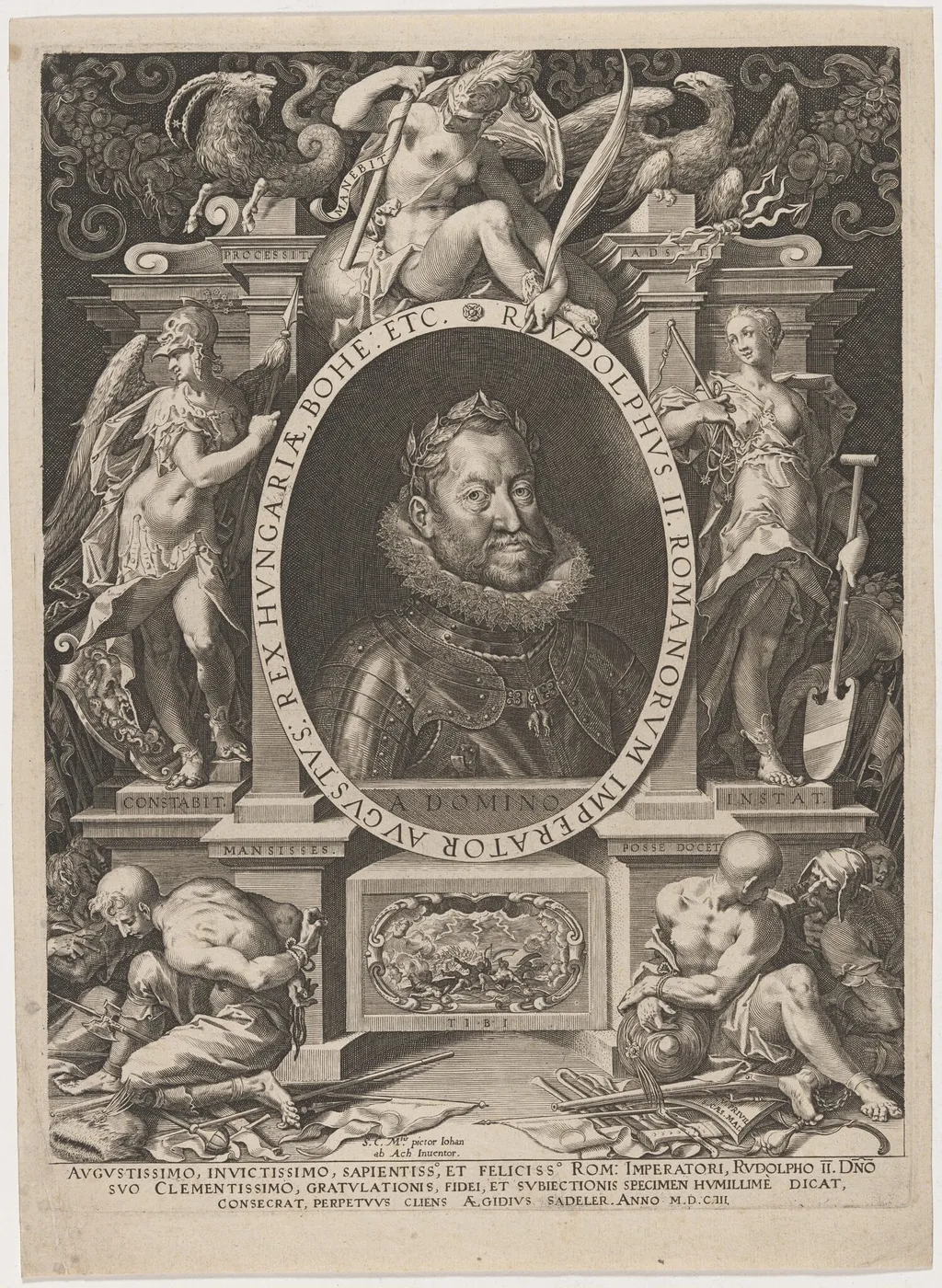
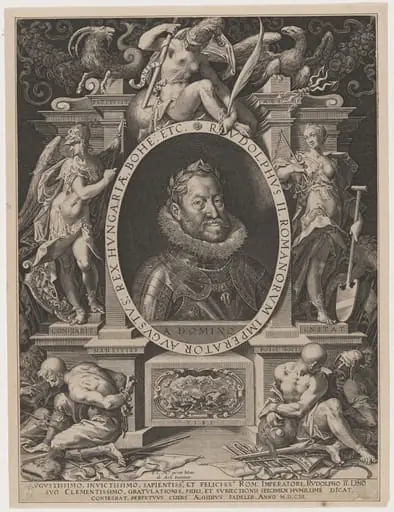
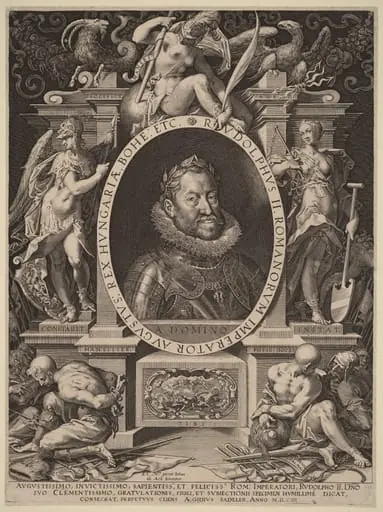
Emperor Rudolph II is an ink print by the Renaissance artist Aegidius Sadeler II. It dates from 1603 and is held in the collection of the National Gallery of Art.
About this work
Overview
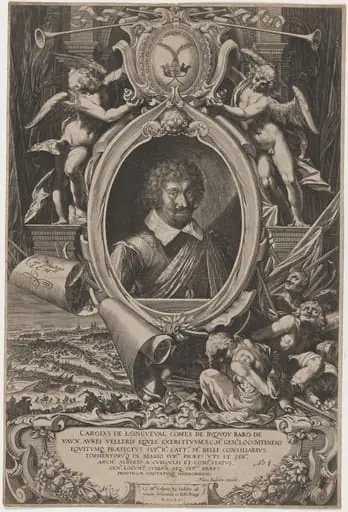
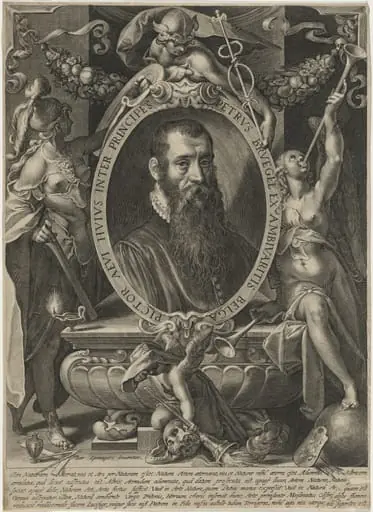
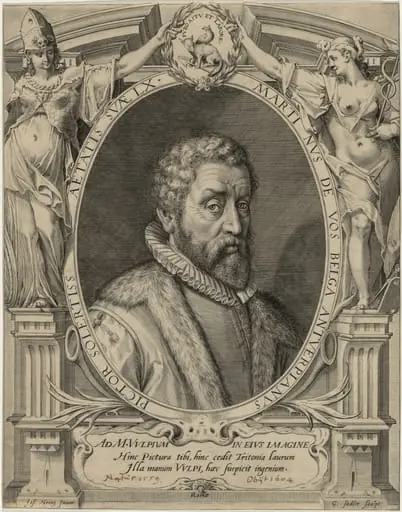
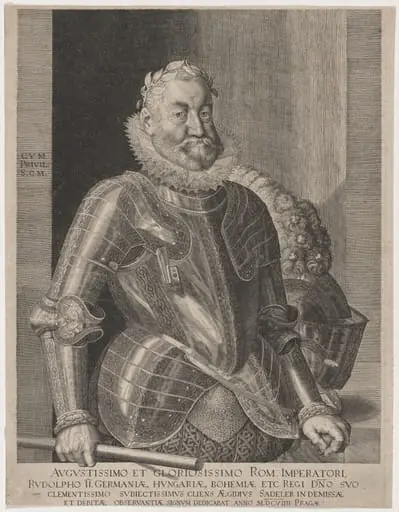
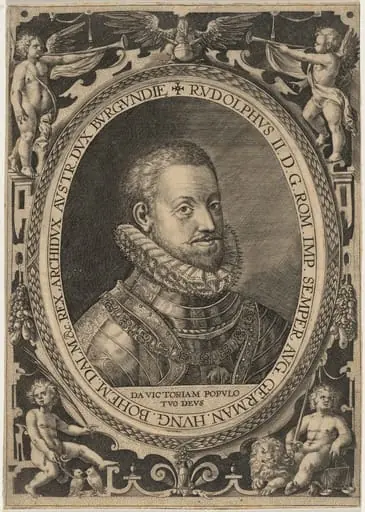
Aegidius Sadeler II, a Flemish engraver active in the early 1600s, produced an engraved portrait of Holy Roman Emperor Rudolf II in 1603. Executed for the Prague court, the print presents the ruler in armor, surrounded by allegorical figures and small narrative vignettes, all rendered through incised lines on a metal plate.
Subject & Meaning
The central figure is the bearded emperor, depicted in full armor to emphasize his martial authority. Flanking him are four personifications standing on pedestals; two support a banner bearing a Latin inscription, while the other two hold objects that suggest artistic or scientific pursuits, reflecting Rudolf II’s reputation as a patron of the arts and sciences.
Technique & Style
Sadeler employed traditional copper engraving, incising fine lines that create tonal variation and detail. The contrast between the darkened areas and the white of the paper produces a sculptural sense of depth. The composition combines portraiture with allegorical and narrative elements, a common approach in courtly prints of the period.
History & Provenance
Created while Sadeler was employed at the Habsburg court in Prague, the print was likely intended for circulation among the emperor’s circle of scholars and collectors. The inscription at the bottom identifies both the sitter and the artist, a customary practice that helped authenticate court commissions.
Context
Rudolf II’s reign (1576‑1612) was marked by a vigorous patronage of alchemy, astronomy, and the visual arts, turning his court into a cultural hub. Sadeler’s portrait aligns with this environment, using allegorical companions to signal the emperor’s intellectual interests alongside his political power.
Artist & collection
Artist
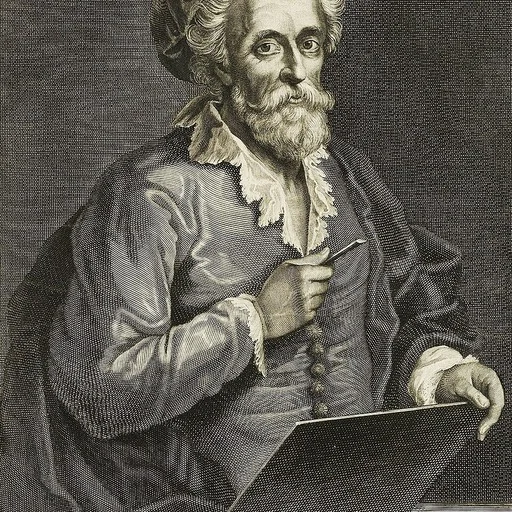
Aegidius Sadeler or Aegidius Sadeler II (1570–1629) was a Flemish engraver who was principally active at the Prague court of Rudolf II, Holy Roman Emperor and his successors.