Artwork
Frontispiece: J.J. Rousseau
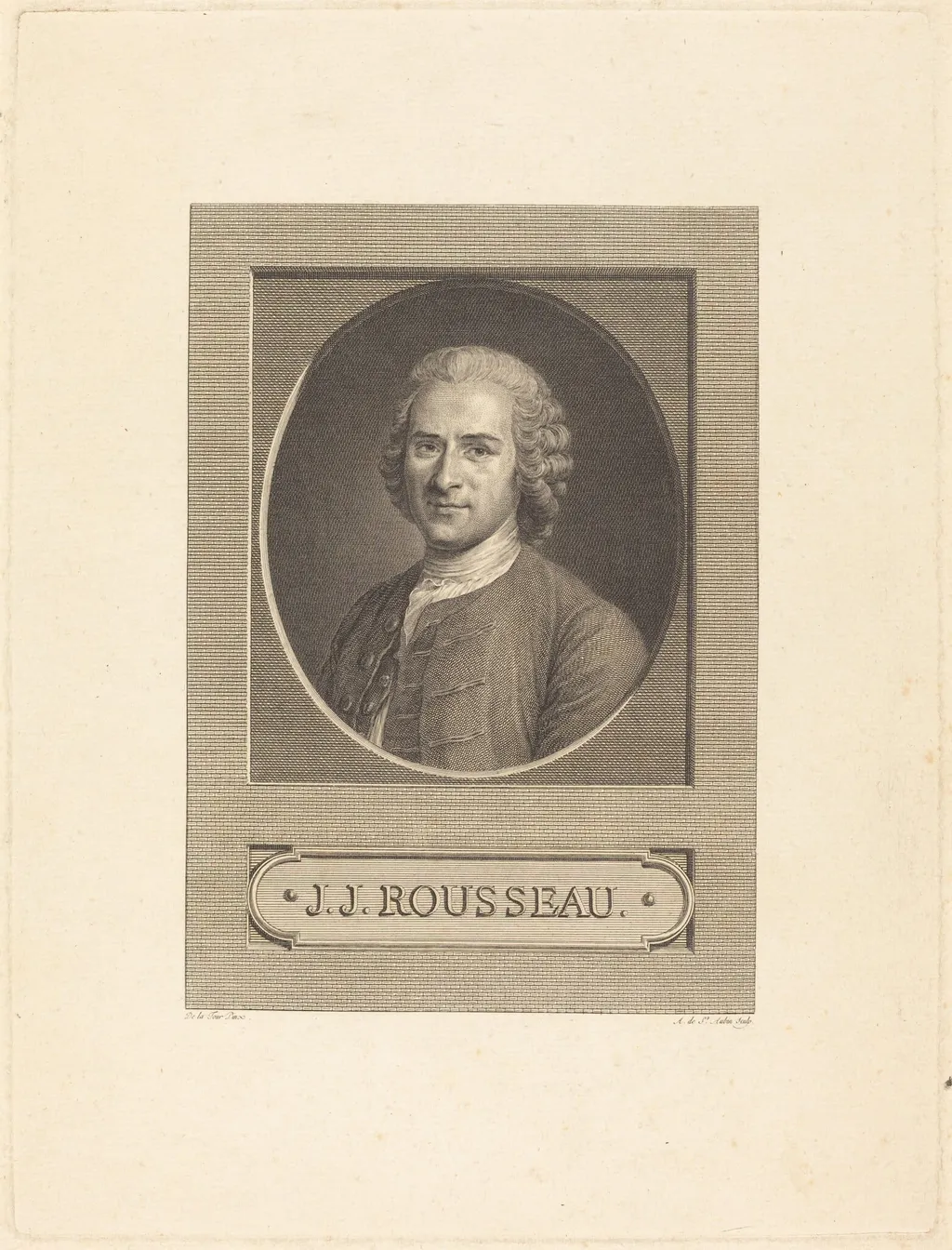
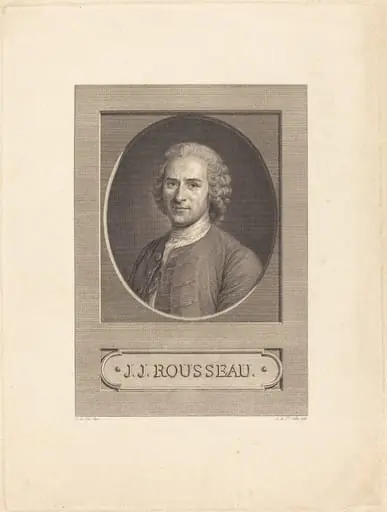
Frontispiece: J.J. Rousseau is an ink print by the Romanticist artist Augustin de Saint-Aubin. It dates from 1777 and is held in the collection of the National Gallery of Art.
About this work
Overview
Augustin de Saint‑Aubin, a French engraver active in the late eighteenth century, produced a portrait frontispiece of the philosopher Jean‑Jacques Rousseau in 1777. Executed as a combined etching and engraving, the print presents a monochrome likeness framed by an ornamental border and identified by a modest caption beneath the image.
Subject & Meaning
The work depicts Rousseau, recognizable by his curly hair, high white collar, and oval‑shaped facial outline. Positioned within a decorative frame, the portrait serves as a visual introduction to texts associated with the thinker, emphasizing his intellectual stature while adhering to the conventions of portraiture used for authors of the period.
Technique & Style
Saint‑Aubin employed both etching, which allows for delicate, spontaneous lines, and engraving, which provides precise, controlled strokes. This hybrid approach yields fine hatching and subtle tonal gradations, characteristic of eighteenth‑century French portrait prints that sought to convey detail and texture without the use of colour.
Context
The frontispiece belongs to a broader tradition of French graphic arts in the 1700s, when portrait prints were commonly used to accompany literary works. Saint‑Aubin’s family was renowned for such productions, and his 1777 portrait reflects the era’s demand for reproducible, high‑quality images of prominent cultural figures.
Artist & collection
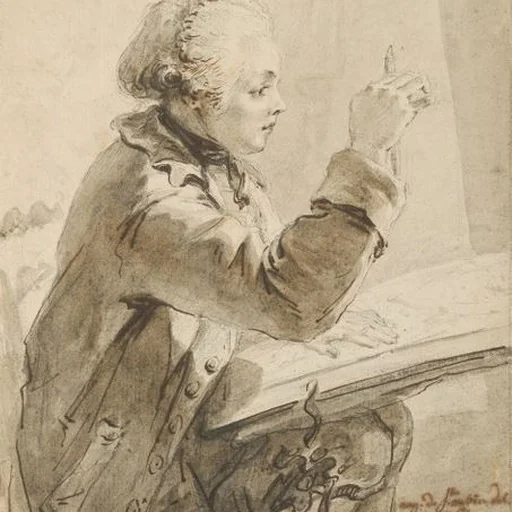
Artist
Augustin de Saint-Aubin sometimes styled Auguste de Saint-Aubin (3 January 1736 – 9 November 1807), belongs to an important dynasty of French designers and engravers.

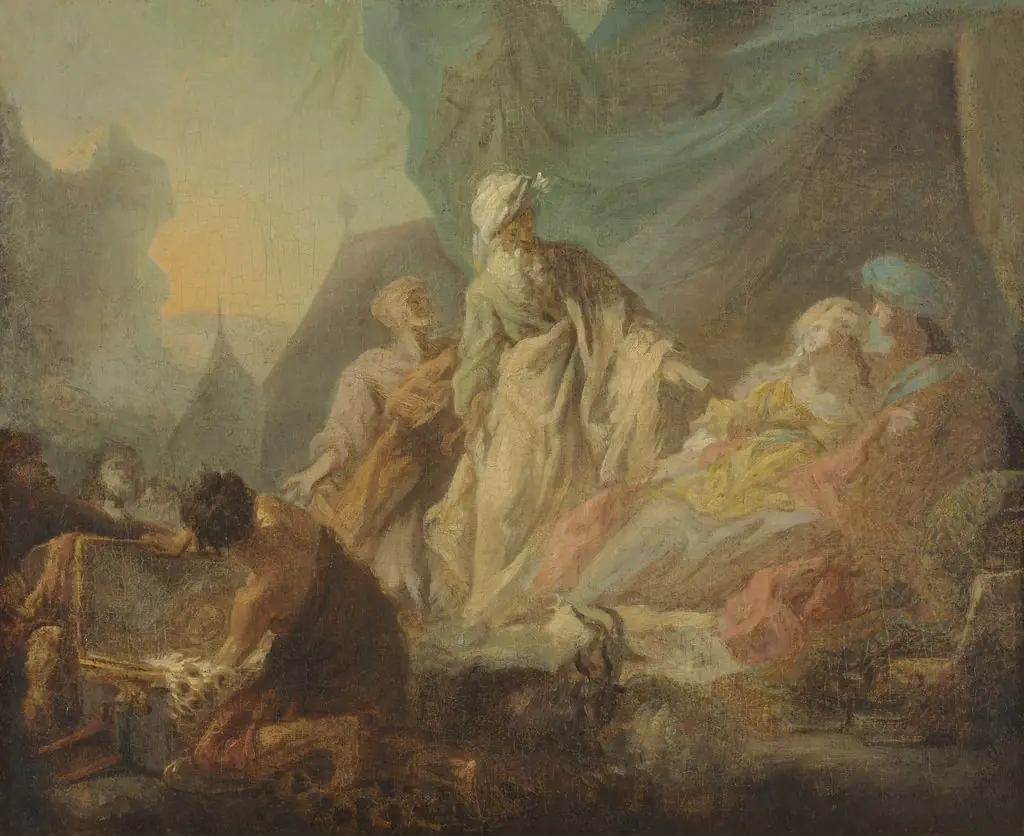 Laban Searching for His Stolen Gods
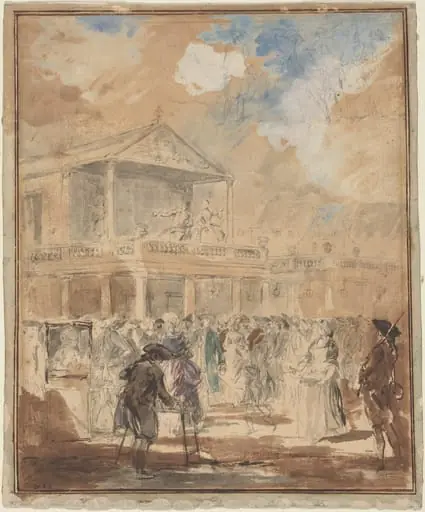 Parade (A Theatrical Procession in Paris)
 Le baiser envoyé
 Pierre Jeliote
 Le lever de la mariée russe (Custom of the Russians after the Marriage Ceremony and before the Wedding Feast)
 J.J. Rousseau
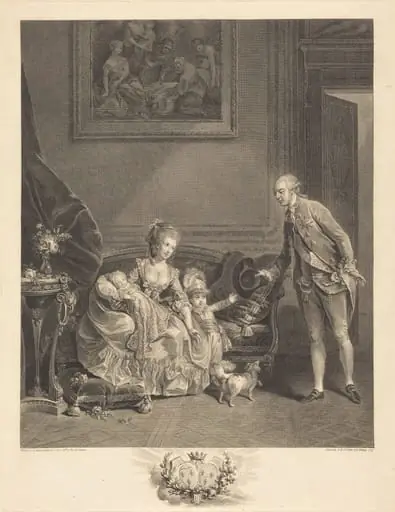 Le duc de Chartres, son epouse et ses enfants
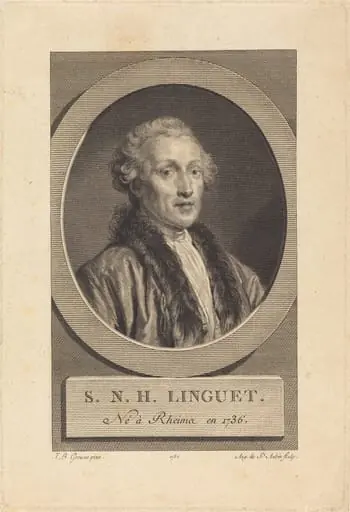 Simon-Nicolas-Henri Linguet