Artwork
Le baiser envoyé
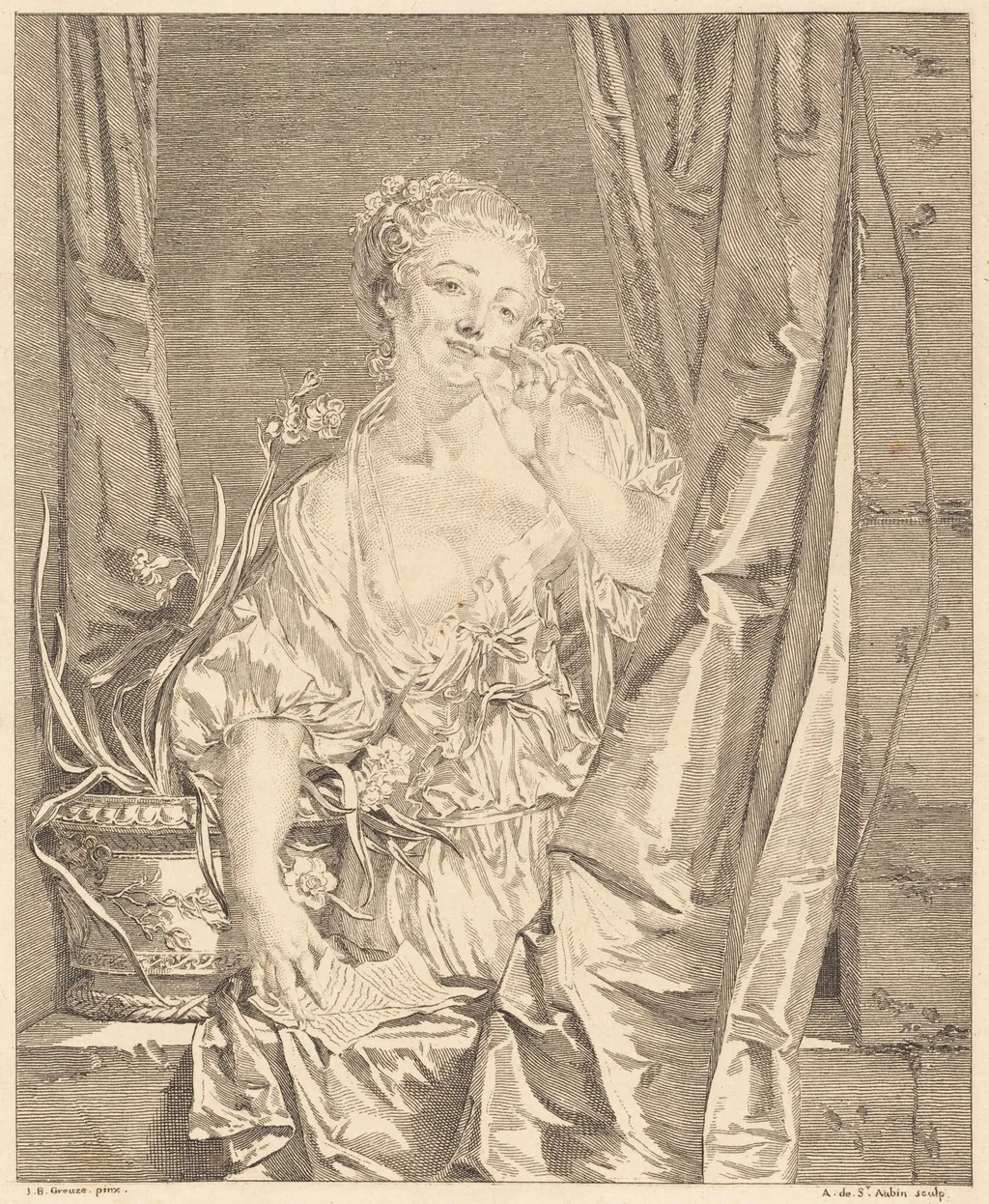
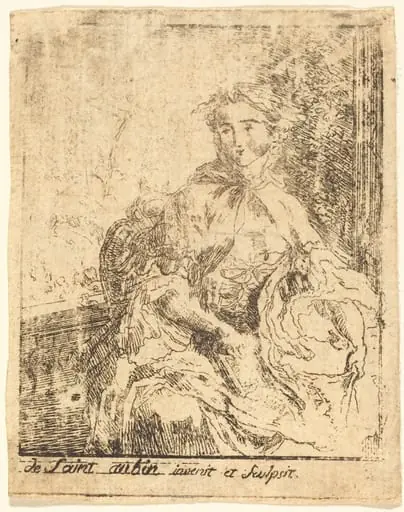
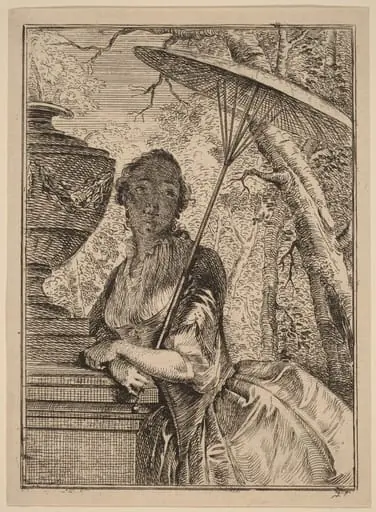
Le baiser envoyé is an ink print by the Romanticist artist Augustin de Saint-Aubin. It dates from 1771 and is held in the collection of the National Gallery of Art.
About this work
Overview
Created in 1771 by Augustin de Saint-Aubin, *Le baiser envoyé* is an etching and engraving that exemplifies the precision of 18th-century French printmaking.
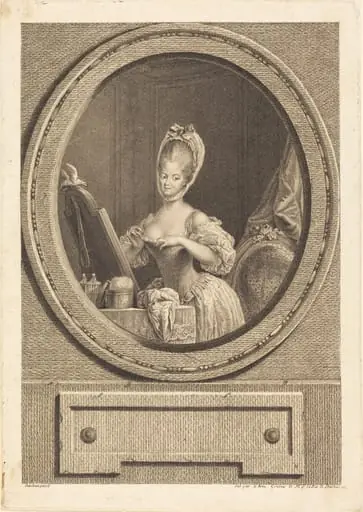
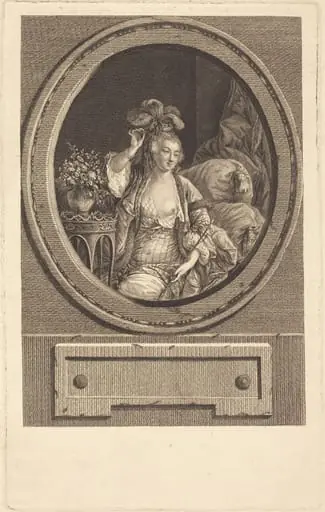
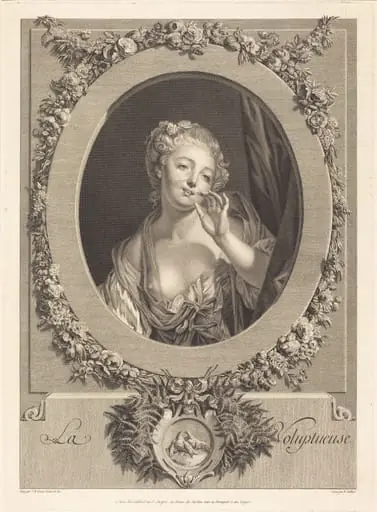
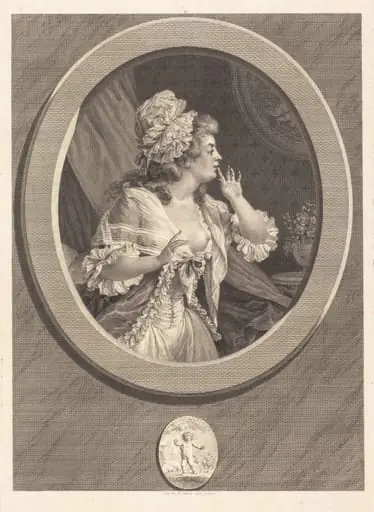
Created in 1771 by Augustin de Saint-Aubin, *Le baiser envoyé* is an etching and engraving that exemplifies the precision of 18th-century French printmaking. As part of a prominent family of artists, Saint-Aubin specialized in delicate graphic work, and this piece reflects his mastery of line and texture. The composition captures a solitary figure in a moment of quiet reflection, rendered with technical finesse characteristic of the period’s illustrated arts.
Subject & Meaning
The image depicts a woman seated before a window, holding a letter in one hand while her other touches her face. Her calm expression and the presence of flowers suggest an intimate, private moment—perhaps the contemplation of a distant love. The letter implies communication across space, and the window frames a threshold between inner emotion and the external world, reinforcing themes of longing and restraint.
Technique & Style
Saint-Aubin employed fine etching and engraving to achieve subtle gradations of tone and intricate detail. The texture of the robe, the delicate lines of the flowers, and the soft modeling of light through the window demonstrate his command of line weight and cross-hatching. The restrained palette of ink on paper enhances the quiet mood, with no color to distract from the interplay of shadow and form.
History & Provenance
The print emerged from a family tradition of artistic craftsmanship in Paris, where the Saint-Aubins were known for their work in book illustration and decorative arts. *Le baiser envoyé* was likely produced for a private or elite audience, circulating among collectors of graphic art rather than as public propaganda or mass reproduction. Its survival in institutional collections attests to its enduring technical merit.
Context
In the decades before the French Revolution, French print culture flourished with scenes of domestic life, often idealized and emotionally restrained. This work aligns with a broader trend in graphic arts that favored introspective, aristocratic interiors over grand narratives. While not part of Romanticism, its emotional subtlety anticipates later 19th-century interests in private psychological states.
Legacy
Augustin de Saint-Aubin’s prints, including *Le baiser envoyé*, are valued today for their technical discipline and quiet narrative power. Though overshadowed by larger movements, his work remains a reference for scholars of 18th-century printmaking, illustrating how intimate subjects could be rendered with exceptional skill within the constraints of the medium.
Artist & collection
Artist
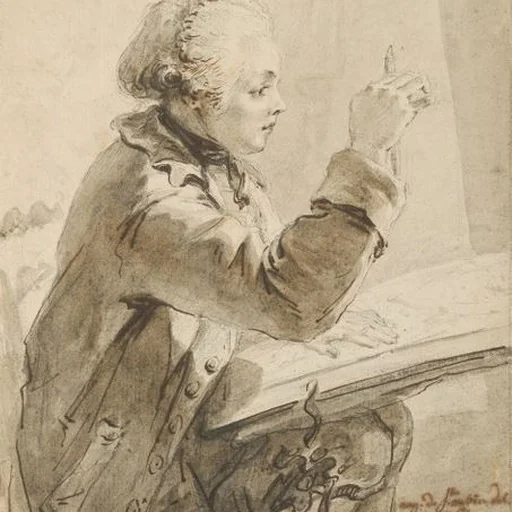
Augustin de Saint-Aubin sometimes styled Auguste de Saint-Aubin (3 January 1736 – 9 November 1807), belongs to an important dynasty of French designers and engravers.

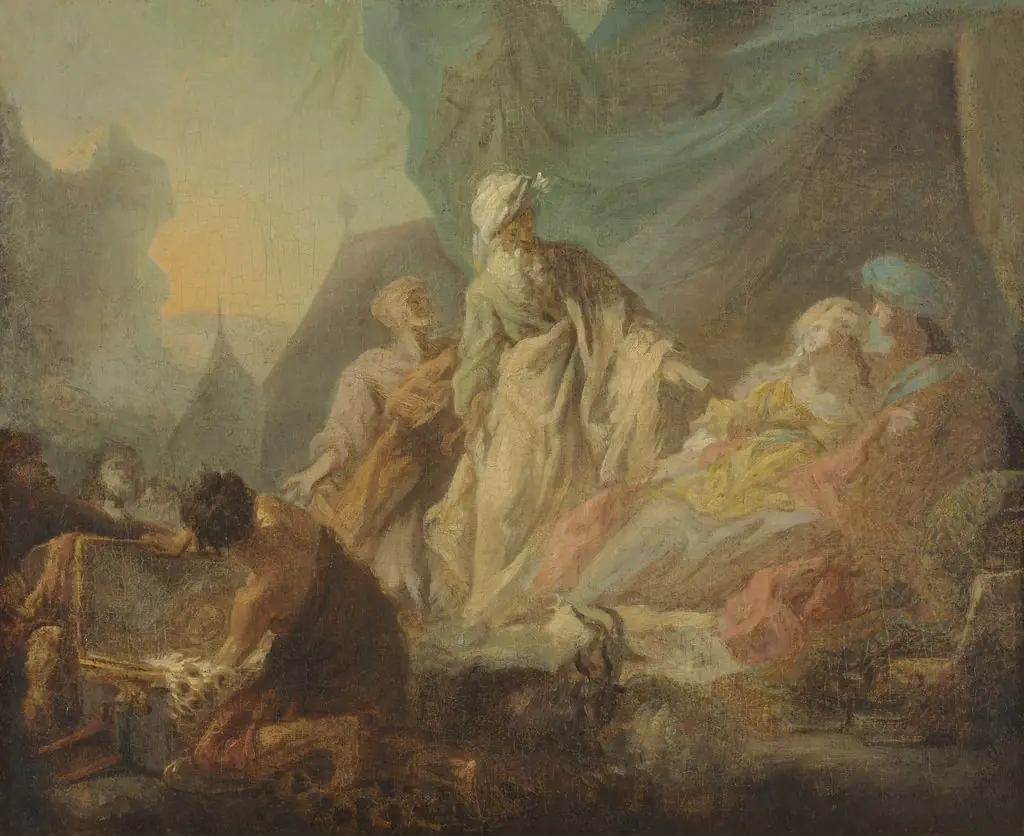 Laban Searching for His Stolen Gods
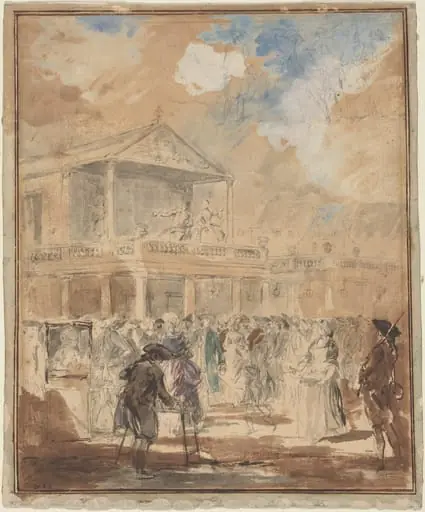 Parade (A Theatrical Procession in Paris)
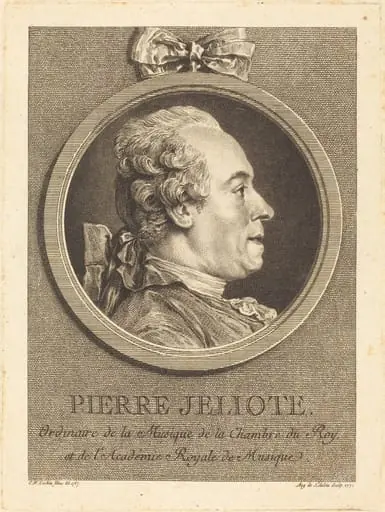 Pierre Jeliote
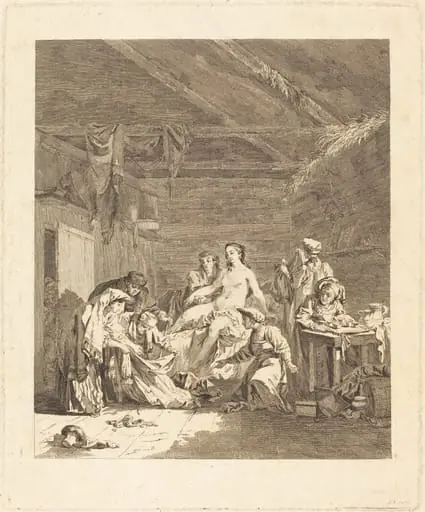 Le lever de la mariée russe (Custom of the Russians after the Marriage Ceremony and before the Wedding Feast)
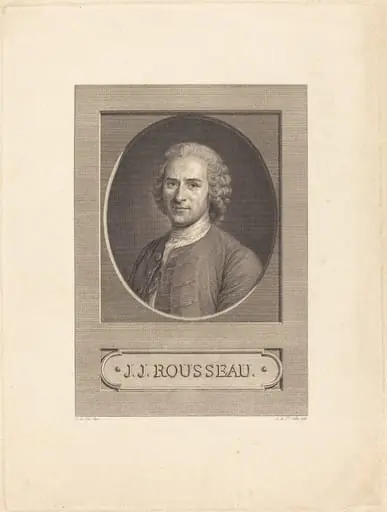 J.J. Rousseau
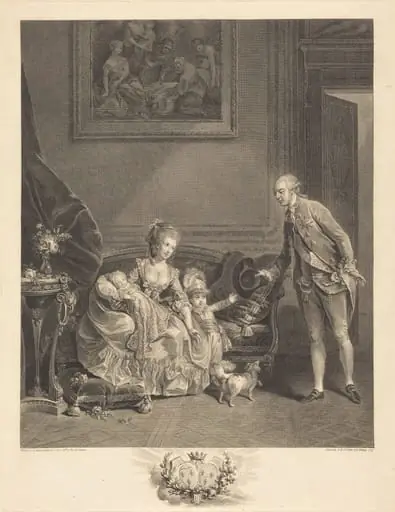 Le duc de Chartres, son epouse et ses enfants
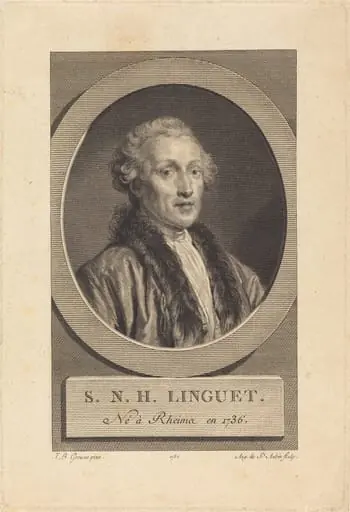 Simon-Nicolas-Henri Linguet
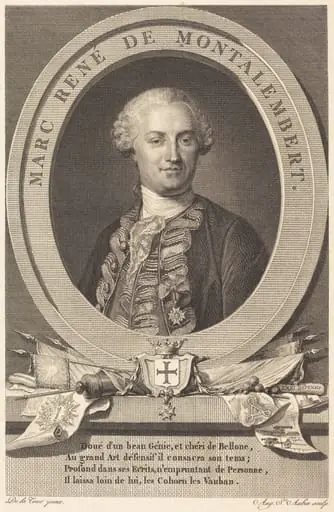 Marc Rene de Montalembert